Same campaign, different accounts: varied needs can pull companies in different directions.
B2B market segmentation lets marketing and sales teams sort those accounts by need and decision-making process. That gives them room to tailor messages and direct their attention toward accounts most likely to become customers, keeping the broader B2B digital marketing strategy aimed at the right accounts.
The B2B Market Segmentation Methods That Actually Work
B2B segmentation turns business customers into useful groups based on shared traits, including industry, company size, technology stack, needs, and buying behavior.
A market can be split in plenty of ways, but the established methods still pull their weight. They turn a sprawling account list into groups your team can use.
Firmographics
Firmographic grouping starts with company details: Business size, Industry, Locations, Revenue, and Growth trends. The company comes first here.
Firmographics
- Company size
- Industry
- Locations
- Revenue
- Growth trends
In B2B, firmographics serve a role similar to demographics in B2C: marketers sort customers according to common characteristics of their companies. This split between digital marketing B2B vs B2C shapes how each side groups its audience.
Firmographic details are usually fairly easy to gather, and government registers offer a sensible starting point. For U.K. companies, use Companies House, then check the company website and social profiles, especially LinkedIn.
Firmographic data alone offers B2B segmentation limited nuance. A SaaS company may have no need for a marketing automation tool, whereas a company bringing in more than five million USD annually may have no need for a complete HR solution.
Look-alike audiences built from firmographics alone can get ridiculous (Microsoft might represent one tiny department). Closing a deal still won’t tell you which business unit made the purchase.
You need to identify the business units involved and the people who joined the decision. That moves the view beyond the company as one big account.
Needs-Based Segmentation
Needs-based segmentation sorts customers by the outcome they want from a product or service. One group may care about lower costs, while another needs stronger features or something built to last longer.
This lens groups customers around what they’re seeking, which can create very precise client categories. Start with what brings leads to you, then split the groups as far as the real needs require. Clear definitions are the hard part.
Customer needs can be hard to pin down, and sales reps may struggle to use them later in the funnel. The handoff needs plain language.
Behavioral Segmentation
Behavioral segmentation uses engagement data to group leads and existing clients, including purchase history, support inquiries, email opens, campaign interactions, and page visits. The dividing line is what customers do.
A lead may interact with LinkedIn posts, browse product pages, or download a whitepaper without taking the next step. That website activity can support targeted ads for the product they viewed.
The landing pages a lead visits can reveal what holds their attention. When prospects weigh competing solutions, a comparison guide can place your product beside those competitors.
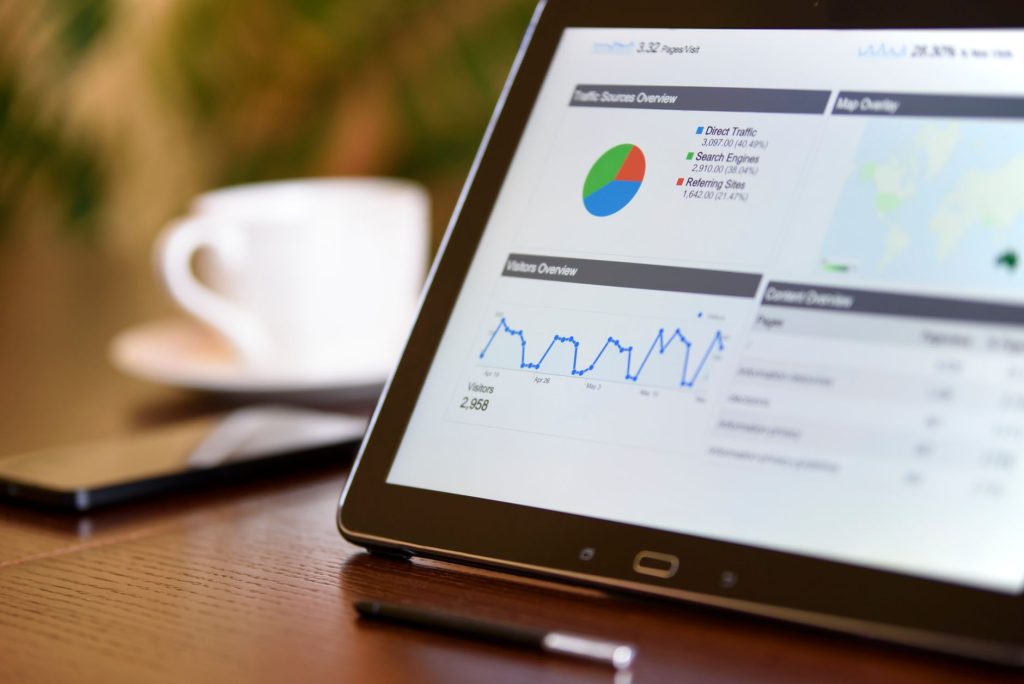
Behavior-based targeting can uncover companies that closely fit your ICP. AI examines patterns tied to an account becoming an opportunity, then helps you identify and prioritize the accounts that matter most.
This lens can also flag an upsell opportunity or a possible churn risk. Dig into how current customers use the solution, then ask two basic questions:
- Can this customer benefit from extending their present solution?
- Is this customer on the verge of dismissing our solution?
Tiering
Tiering ranks customers by how closely they match your company goals. It weighs each lead or client against the revenue that account could bring.
Send a high-potential account with immediate strategic fit to one-on-one sales outreach. A strong-fit account with a modest deal size may belong in self-serve nurture sequences.
After building the audiences, order them from highest to lowest priority and assign resources to each level (the labels matter less than the routing). Lower-priority accounts can suit personalized ABM campaigns directed at multiple prospects, while the highest-priority accounts may require one-to-few or one-to-one outreach. Priority sets the contact model.
Personas
Persona-based segmentation profiles company decision-makers and the people who influence the purchase. It points outreach toward those with the greatest say in whether the company chooses your solution.
A solution may fit HR, sales, or finance. B2B purchases can also bring in procurement and operations, and some companies involve ten or more decision-makers. Buying committees rarely stay small.
A single message can’t speak sensibly to every role at once. Build it around the people involved and the responsibilities each person carries.
Millennial purchasing authorities now feature on 73% of B2B sales invoices and rank among the most personalized populations.
Journey stages
Journey-stage segmentation groups customers by their position in the buying journey. Some are just starting, some are comparing options, and others are ready to buy now.
The prospect’s stage tells you what message fits that moment. Early researchers may need explanatory resources, including blog posts or eBooks, that explain their problems and show how your product can help. The stage changes the message.
Prospects comparing options may need product demos, case studies, or customer testimonials that show exactly how your solution works.
Before contacting a sales professional, today’s B2B buyers have already progressed through 70% of the buyer’s journey.
A Step-by-Step B2B Market Segmentation Framework
Map B2B segmentation by setting market boundaries, naming target accounts, and ranking audiences. Keeping that sequence makes the work practical, so begin there.
- Break your total addressable market (TAM) into a target market
- Identify your target account list (TAL)
- Segment and prioritize your audiences
You’ll spend real time gathering and analyzing the needed data, but that early effort gives later communication and marketing a better shot at landing well.
Market sizing
TAM, or total addressable market, measures the complete revenue opportunity for a product or service. It includes every account that could benefit after adopting your solution, which shows how much potential market exists.
Next, carve that TAM into a target market by using the traits in your ideal customer profile. That first cut gives the team a sound starting point.
Use industry and organization size as the first filters for deciding whom to pursue. These are broad, often firmographic traits, but they sketch the market and give the team a workable place to start.
Customer data collection
Pull together information on current and potential customers.
Bring in purchase history, Google Analytics, industry analyses, company websites, location data, and company size. Once the database has those inputs, it has something useful to tell you.
Customer feedback, service questions, and customer requests can add useful detail. Review newsletter opens and campaign activity, check company websites and social profiles, especially LinkedIn, and use prospecting surveys to learn about revenue and market share. Keep every source in view.
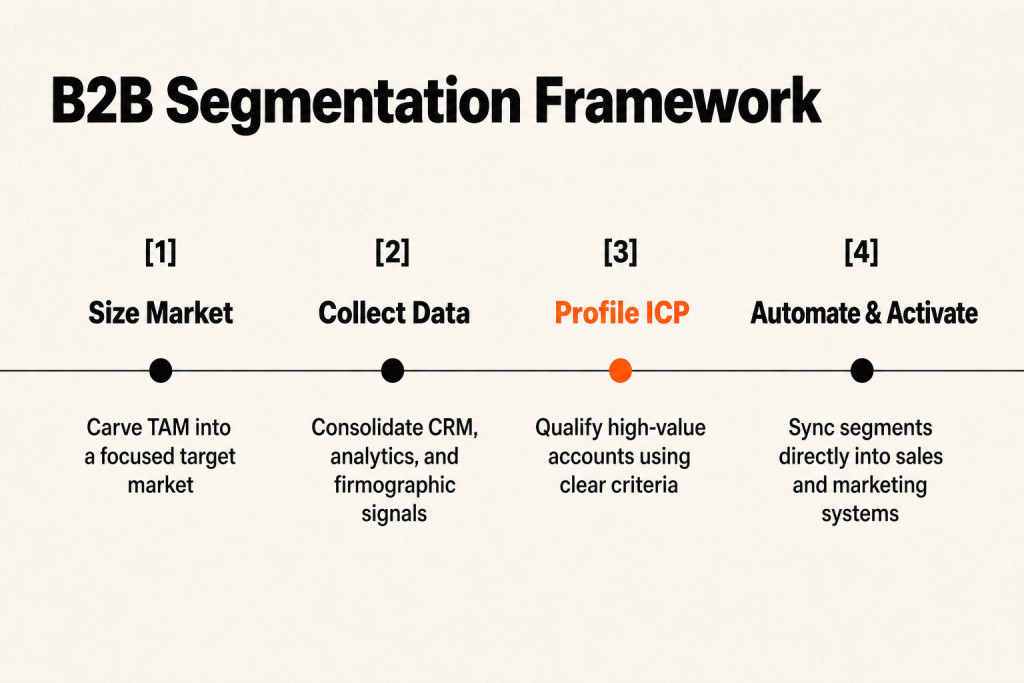
Tidy the database before you sort the audience. A consolidated customer-data system can gather information from inside and outside the company, then keep it orderly and easy to reach.
Surveys, customer records, interviews, and industry reports shed light on the market. Social listening adds a view of the problems customers are dealing with right now.
Ideal customer profiling
Begin with existing customers, since they’ve already bought from you and leave less guesswork. They should make up the first, most important segment.
Find out what brought them in, which problems you fixed, whether their pain points matched, and whether their business traits fit. Look at the range from a small local start-up to a large international company, then note who bought your goods and the reason behind it.
Your ideal customer profile sets out the main traits shared by your most valuable customers. Use those traits to find matching companies and spell out exactly what kind of business and buyer you want.
Choosing segments before deciding which companies matter or which traits should guide the split puts the cart before the horse. Once the target is clear, content fits better, and sales and marketing teams can direct their effort.
Predictive modeling
Within ABM, predictive B2B digital marketing software can combine CRM records with current outcomes to surface companies that look like strong opportunities. They can automate the hunt for businesses matching your ICP, as long as the CRM data is clean.
Watch real-time buying alerts tied to funding, hiring, leadership changes, and technology installs. They need solid quantitative data, but unlike predictive analytics, that data doesn’t have to live in your CRM.
Qualification criteria
A useful segment must be measurable, big enough to matter, reachable, distinct enough for separate targeting, actionable, and accessible. It also needs enough accounts to support focused marketing efforts.
Tailoring marketing for a segment with only a handful of customers usually offers little return. You can still keep that group in mind as you shape the marketing strategy.
Dependable B2B segmentation rests on data that’s clean and current. Clean the database before sorting the audience.
Audience profiling
Give each target cluster an operating brief that ties together marketing messages, sales playbooks, and product positioning. Your ideal customer profile can steer that work.
Start with these questions:
- What do the companies have in common?
- Which companies differ the most from each other?
- What needs and challenges does the largest group have?
- Does any group have entirely unique needs?
Put the findings somewhere people can view, search, and update them, whether that’s a document, spreadsheet, or another shared place. Keep the people involved from start to finish so they feel included in the process.
Workflow automation
Link the company database with sales and marketing systems through B2B marketing automation, letting teams find company details in the tools they use each day.

Useful organizational information lets you sort and tell businesses apart using the traits effective segmentation requires. Without that information, the job becomes close to impossible.
Company details support specific segments, including micro-segments, and give sales and marketing outreach the context needed for personalization. Feed that information into business systems.
Once the company database connects to a business system, sales and marketing teams can build new segments whenever the need arises. Sales may want companies to contact, while marketing may need companies to approach with a new product offering.
Industry codes such as “Offices of Other Holding Companies (551112)” are not always useful enough on their own. An AI model can read a company’s website and group businesses into distinct industries that explain more clearly what each one does.
Campaign execution
ABM calls for putting limited resources into individualized campaigns for a smaller set of high-value customers with shared traits.
Pick one approach or combine several when focusing on target account audiences, meaning the companies worth pursuing. Content and stories built around each segment’s needs and problems can improve the odds of earning interest and making sales.
B2B segmentation insights can also help newsletters, social media campaigns, and Google Ads reach audiences with tighter targeting.
Personalization may raise sales by 10%, while market segmentation provides a direct path to creating a customized campaign.
B2B Segmentation Examples
These B2B digital marketing case studies show how two companies put segmentation into practice.
Workforce Pro
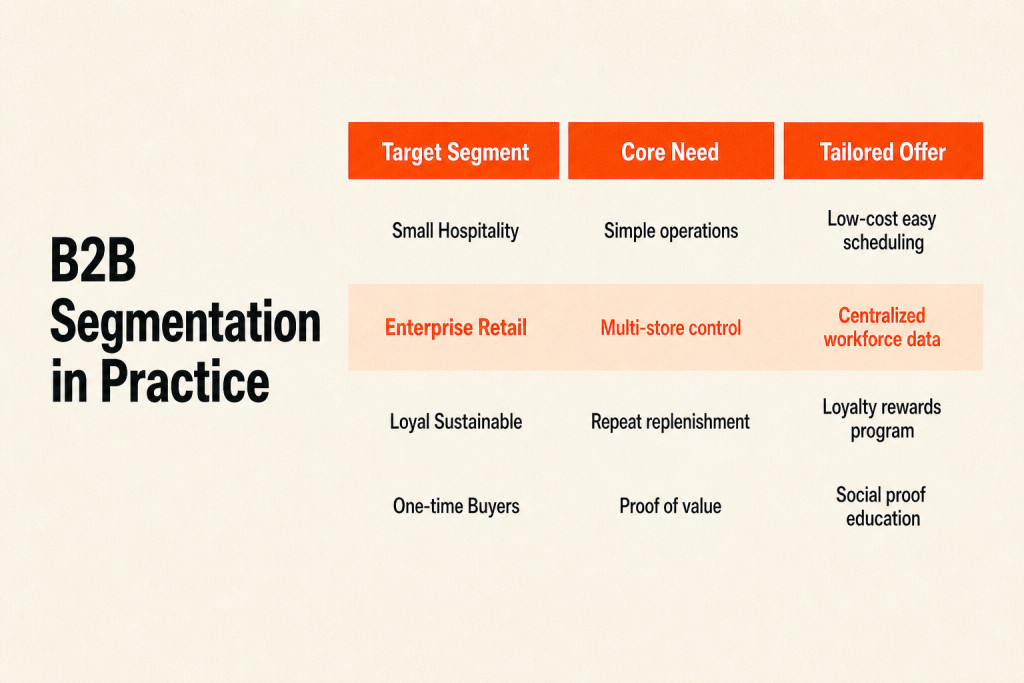
Using workforce management software, Workforce Pro applies firmographic segmentation across industry and company size, including Restaurants and hotels and Retail, then sorts each audience into small, medium-sized, and large businesses. Every industry gets its own message.
That setup lets Workforce Pro put its offers forward in different ways.
Restaurants and hotels
For small restaurants and hotels, the message centers on ease of use and low prices. Larger ones get scalable solutions with advanced scheduling, planning, and task tracking.
Retail
Small shops get straightforward inventory management and scheduling. For larger shops and retail chains, the offer focuses on planning, coordinating schedules, and tracking employee data across stores in different locations.
GreenOffice
GreenOffice offers Organic and sustainable office supplies, including printer paper, pens, and cleaning products, then uses behavioral segmentation to sort existing customers into three groups.
Loyal customers
For Loyal customers, GreenOffice checks purchase history to surface products they may be interested in, then rewards them with special offers and the chance to join a loyalty programme. Purchase history shapes those offers.
Occasional buyers
Occasional buyers learn about the benefits of a range of different products they haven’t bought before.
One-time buyers
Email keeps One-time buyers engaged with great offers, social proof, and informative content explaining the benefits of choosing sustainable office supplies.
Best Practices for B2B Segmentation
Database hygiene
Begin with the records already in hand before collecting anything new. They can reveal the products customers buy most and what they spend, while also indicating how often they respond to outreach; social media listening can add context about the problems those customers face now. Track marketing engagement frequency as well. Current data comes first.
External data enrichment
What if your client database isn’t extensive, or you want B2B market segments that reach beyond your current base? You can get more data.
Several data companies can support B2B planning with firmographic data about companies in your sector. Before you pick a database, confirm that it covers your markets and contains the information you need. Check the database first.
A company database usually takes on the heavy lifting of collecting information that may help you build detailed, meaningful B2B segments.

Qualitative research pairing
The best examples of B2B segmentation pair qualitative work with quantitative study. Quantitative work gives you hard numbers; qualitative work reveals the reasons and processes shaping customer behavior. Both belong in the plan.
Talk with prospects and current customers, especially people in newer segments. Hearing from both groups gives you a deeper read on their needs and pain points, including their preferences. Ask each group directly during interviews.
Cross-functional alignment
At the planning table, sales and outreach teams, along with all other involved groups, need to understand and use the buyer personas because B2B segmentation touches many teams. Give every team the same definitions.
Once the target audience is clearer, meeting its demands gets easier. Those insights can also guide the creation of new products suited to specific market segments.
Outreach teams can use the information to build targeted campaigns, while salespeople use it to find and contact relevant companies.
What Are The Core Benefits?
B2B segmentation points communication and marketing activity at a specific audience, while well-matched groups raise the odds of winning new customers and keeping them.
Niche groups give you room to refine the plan around exact market needs, keeping marketing, sales, and even R&D aimed at the audience that fits.
Satisfied customers can become your strongest salespeople, sharing glowing reviews and sending referrals straight to your business.
Revenue growth
Digging through segmentation data can uncover previously overlooked B2B customer groups. Use those findings to reshape outreach, offers, and positioning, opening new sources of revenue. R&D targets the right audience.
Marketing efficiency
Strong segmentation lets you create targeted, individualized marketing while making your budget go further.
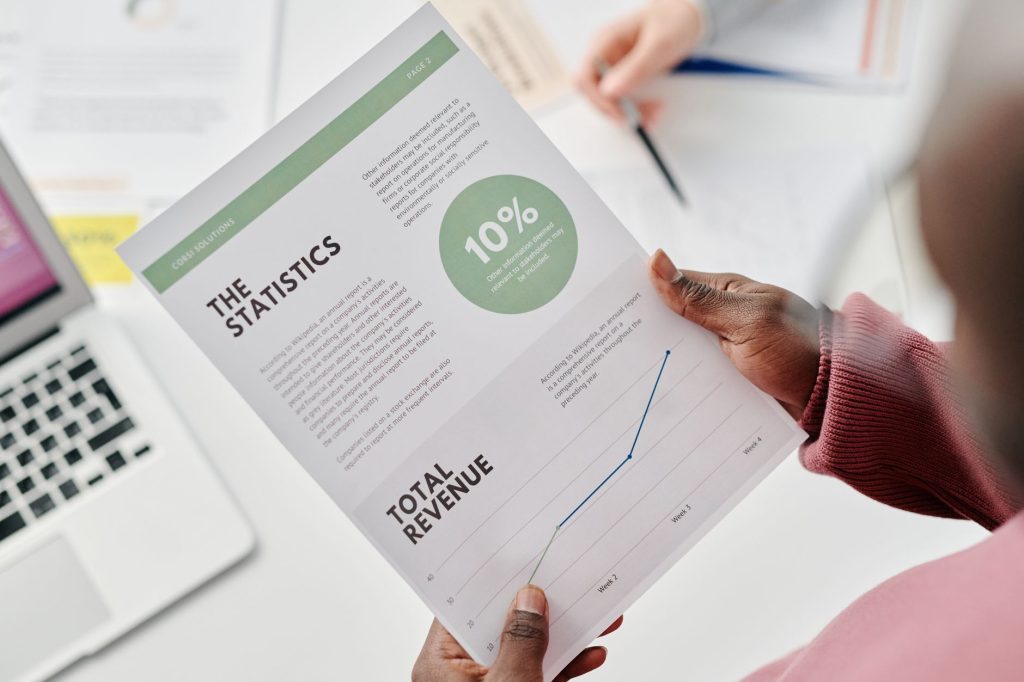
When segmentation gets sharper, your marketing improves and lead quality rises with it. Customer insight makes that marketing far more effective, although segmentation takes time and planning. Over time, you may see newsletter open rates, website traffic, and ultimately your conversion rate move in a positive direction.
Track Lead scoring to see which efforts are working and which prospects deserve your time. It also reveals how quickly deals are closing and identifies the segments generating the most business.
Client retention
Put time and effort into segmentation, then send each business the message that fits; customer satisfaction can improve as a result.
Retention efforts can pair advanced features for experienced users with onboarding support designed for new customers.
Product development
Segmentation insight gives you a way to tune products, solutions, and services to customer needs while strengthening trust in the brand. R&D targets the right audience.
Product development, advertising, marketing, and sales all draw support from these categories.
Frequently Asked Questions
What is the purpose of B2B segmentation?
B2B market segmentation breaks a broad target market into smaller customer groups with shared traits. Instead of sending one generic message to everyone, use an adapted approach shaped around specific needs to increase the chances of turning leads into loyal customers.
How can you segment B2B customers?
Group B2B customers by Firmographics, Behavior, Needs, and Technographics.
- Firmographics: Company size, industry, location, and revenue.
- Behavior: Previous purchases and website interactions.
- Needs: Specific business challenges.
- Technographics: The technology tools businesses use.
Layer those segments together for a clearer picture of your target customers and more relevant outreach.
How do you segment a B2B market?
First, review the information you’ve gathered across different customer groups; then organize the market according to the recurring themes, points of contrast, and distinct requirements you identify.
Do the comparison before anything else. Once that’s done, the market can be split into B2B segments based on the recurring patterns, notable distinctions, and specific needs identified across those businesses.
Key takeaways
Firmographics, Needs, Behavior, Tiering, Personas, and Journey stages work together to form a complete picture of your ideal customer. Use that picture to build segments aimed at the right accounts with greater precision.
Comparison across customer groups surfaces their patterns, differences, and unique needs. From there, B2B market segmentation turns those findings into focused groups. Firmographics, Needs, Behavior, Tiering, Personas, and Journey stages together create a complete picture of your ideal customer and a clear base for segments that target the right accounts more effectively. The analysis comes first; the segments follow.