Generate predictable pipeline revenue across business-to-business commerce by setting up an integrated B2B digital marketing strategy.
Juggling prolonged purchasing cycles and multi-stakeholder buying groups (I completely missed both early on) requires serious coordination. You’ve got to lock down your strategic frameworks, channel tactics, and measurement setups first. Doing so gives your entire team the exact tools to turn digital touchpoints into closed deals.
How to Build a B2B Digital Marketing Plan
B2B marketing works when you get the right material to the right accounts on the right channels. Ground your campaigns in established B2B digital marketing best practices so your tactics match how companies actually buy products. That practical alignment keeps every B2B digital marketing plan steady.
Establish Measurable Business Objectives
Marketing OKRs Set concrete OKRs for your team before you touch anything else. I ran marketing for years without setting real benchmarks, but you need them to steer day-to-day work. Tie your targets directly to these markers so picking tactics, channels, content types, and KPIs becomes straightforward. Every goal must be SMART, meaning specific, measurable, attainable, relevant, and time-bound.
It should match your business stage very, very clearly. Different stages always need different numbers. You might try to lift web traffic by 75% within three months when you are just getting started. A mature company might aim for generating 100 MQLs over a quarter to keep its pipeline moving at a steady pace. Write every single goal with this basic formula: I want to [your marketing objective] by [quantifiable increase or amount] within [timeframe]. For instance, an insurance business can focus on boosting page one rankings in Google by 50% within six months.
Business Outcome Alignment Building a digital marketing strategy for a B2B company requires giving your marketing efforts a clear commercial job to do. I spent months chasing vanity metrics before I started tracking genuine business results. Connect your daily tasks directly to company growth, and you will raise customer lifetime value in a steady way. Do not waste energy on surface numbers like impressions, page clicks, or raw lead counts. Instead, establish firm conversion goals like securing X email leads or booking X product demos. Clear targets keep the whole team honest.
Conduct Target Audience Research
Ideal Customer Profiles and Buyer Personas Talk to your sales reps and dig through CRM records to build ideal customer profiles. I used to mix up companies with the actual people working inside them, but you need both account profiles and buyer personas. Chart firmographics like industry sectors, employee headcounts, and exact job titles so you know who signs the contract. Looking beyond basic company data pays off. Use rep notes and call feedback to uncover the daily headaches your prospects face. Real buyers always navigate complex internal approval chains before buying anything.

Behavioral Intelligence and Market Research Buyers spend time across dozens of digital spaces every day. Watching where they go can feel daunting, but clear patterns always emerge. Audience research tools show demographic breakdowns and competitive affinities. Looking at channel data tells you if an investment makes money, keeping your marketing budget protected in a sensible way. Checking competitor websites reveals age and gender splits alongside device habits, including mobile versus desktop use. Studying top domains highlights rival strengths, but uncovering the genuine problems buyers deal with shows you how to position your commercial offer. Real research guides every single piece of your campaign.
Select Distribution Channels and Produce Content
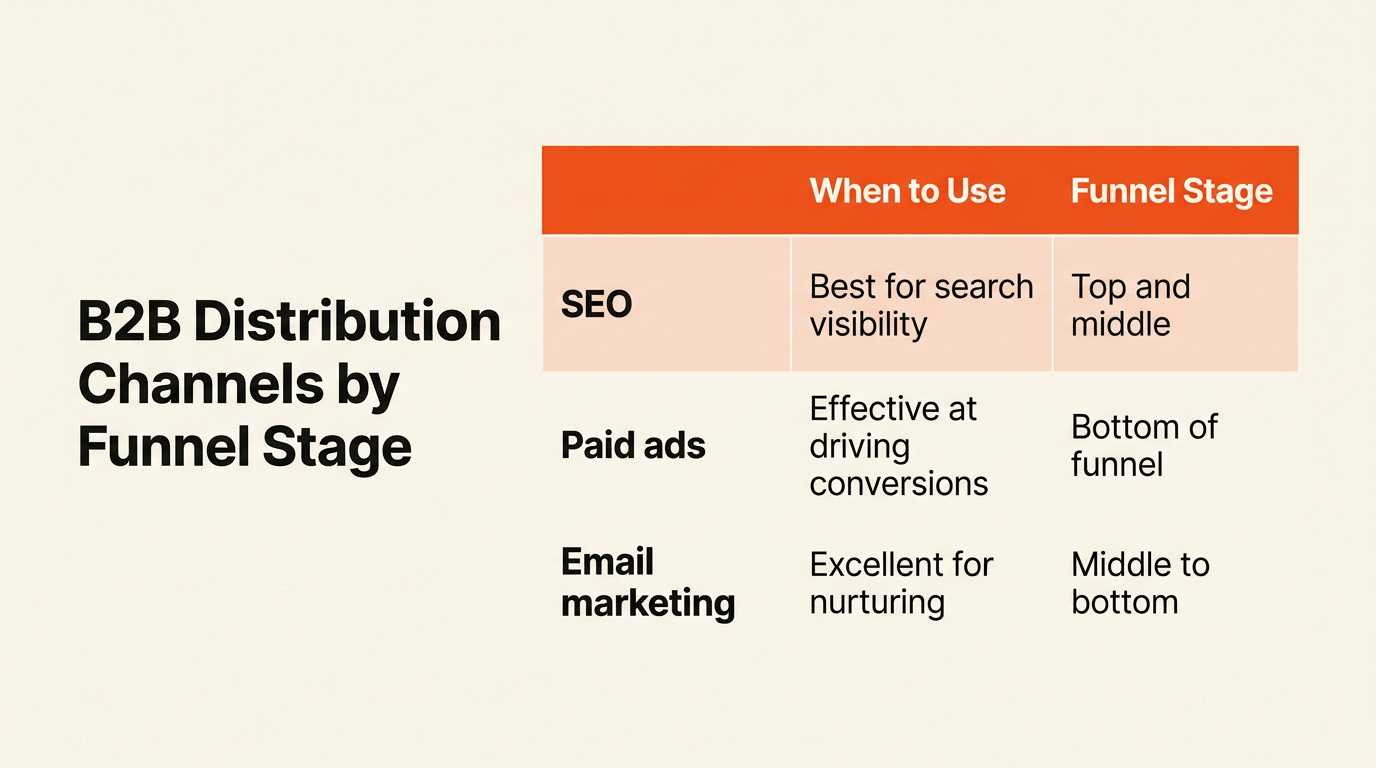
Align each distribution channel with specific buying stages so prospects find you while researching solutions:
| Channel | When to use it |
|---|---|
| Organic social media | Great for building brand awareness and nurturing relationships |
| SEO | Best for generating leads at the top and middle of the funnel |
| Paid ads | Effective at driving bottom-of-the-funnel leads |
| Email marketing | Excellent at nurturing existing leads, retaining customers and building loyalty |
| Webinars | Suitable for educating users at the top and middle of the funnel |
| Trade shows | Powerful B2B strategy that works at all funnel stages |
In any digital marketing strategy for b2b, master one main channel before you start testing other avenues. Validates channel performance before committing budget to secondary channels. Stretching your team across too many platforms spoils good work. Sticking to one route reduces production strain and gives you enough space to polish your central message.
- Avoid spreading yourself across Organic social media, SEO, Paid ads, Email marketing, Webinars, or Trade shows until you validate one single primary channel.
- Sticking to one channel streamlines content creation, because using fewer distribution formats means your team produces less raw copy while spending far more hours getting the core messaging clear, simple, and completely persuasive.
- LinkedIn advertising delivers unmatched access to professional audiences through granular targeting filters, producing significantly higher engagement rates for B2B material than consumer social networks ever manage to achieve.
- Connected TV enables business brands to use video storytelling for awareness building, placing targeted CTV advertisements before senior decision-makers on premium shows across their home’s largest screen with precision that rivals digital display advertising.
- Paid search captures high-intent prospects actively evaluating solutions, and combining paid search campaigns with SEO maximizes overall visibility during the critical research phases when buyers compare different vendor options.
- Digital audio and podcast advertising provides an emerging channel with minimal competitive noise and rising audience engagement, offering early adopters an edge before broader commercial interest inevitably drives up inventory ad prices.
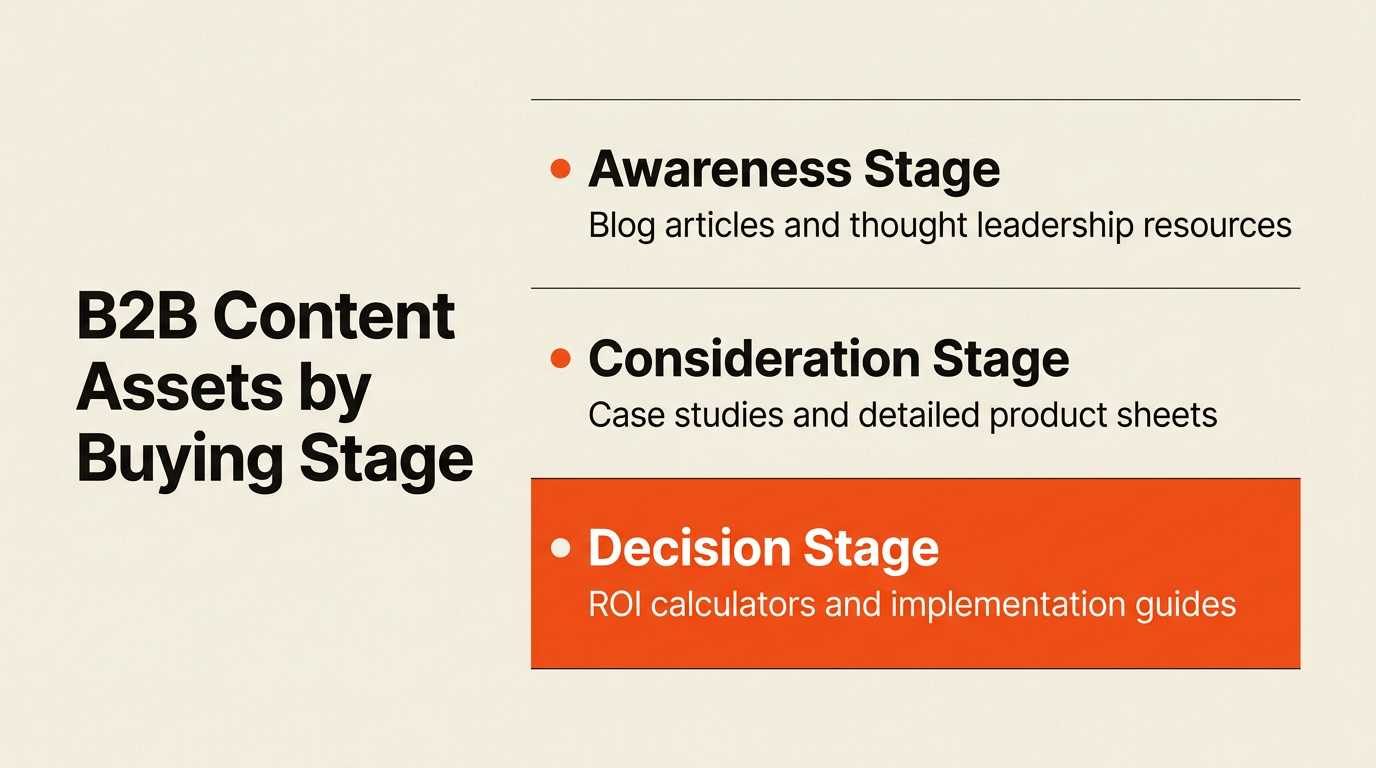
Spend your content budget on platforms where qualified buyers hang out, matching material to how they evaluate products. Decision stage provides ROI calculators and detailed implementation guides for final evaluation:
- Awareness: Blog articles and thought leadership resources raise awareness and attract early prospect attention.
- Consideration: Case studies and data sheets help during consideration, answering specific practical concerns while building lasting commercial trust.
- Decision: ROI calculators or detailed implementation guides speak directly to final decision-makers weighing their options.
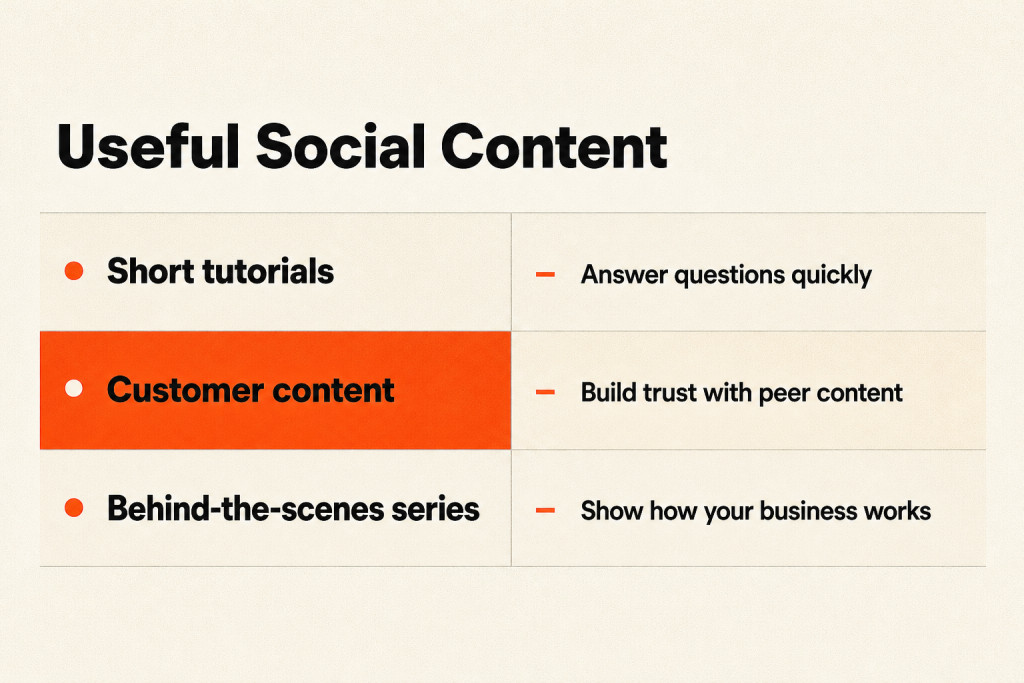
Smart automation helps you produce more content without hiring extra staff. Plug CRM records and customer notes into AI tools to draft email copy for your ESP, or set up pipelines for articles, guides, and videos. Software handles the repetitive formatting while your team protects overall quality.
Configure Data Capture and Sales Routing
Build straightforward capture points and routing workflows to turn website traffic into qualified sales leads:
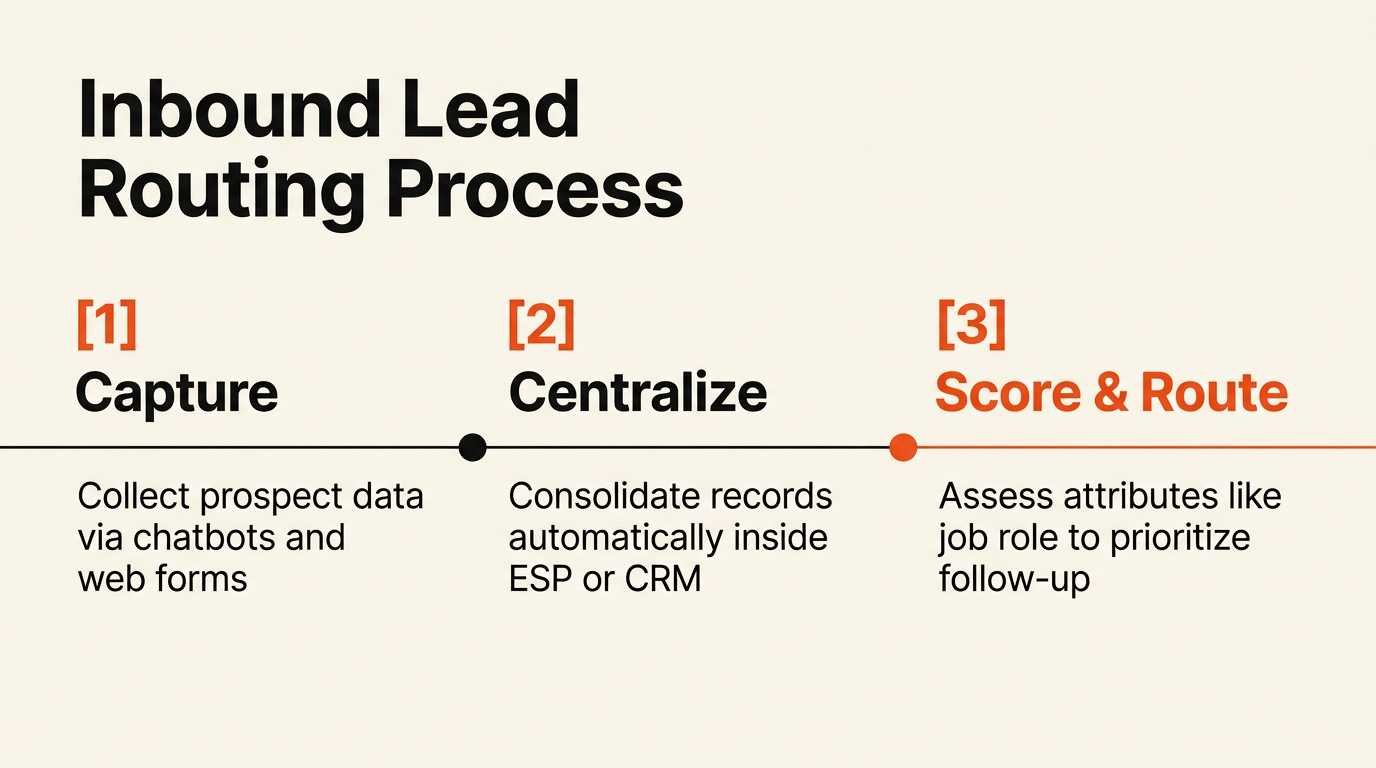
- Capture inbound prospect information using integrated web assets. Deploy automated chatbots that capture key information and direct visitors to relevant pages, offer live web chat functionality to speak to prospects directly, and embed custom web forms to collect visitor contact details. For example, a company could program a chatbot to start a conversation when users have spent two minutes on a page, or use a web lead form to capture a prospect’s name, job title and email address for a whitepaper download.
- Centralize captured lead data automatically. Automated lead management ensures leads fill out forms and their data goes directly into appropriate customer segments in your ESP or CRM. Centralizing all data enables sales teams to send immediate follow-up messages or call prospects directly.
- Implement lead scoring to qualify and route prospects. Lead scoring is a proven methodology used by B2B businesses to rank prospects on a scale to prioritize sales interactions and separate marketing qualified leads (MQLs) from sales qualified leads (SQLs):
- Industry: Assign higher point values to specific target industry sectors that are clearly more likely to purchase.
- Job Role: Assign significantly more points to decision-maker job titles such as CEO, manager, or head of sales.
- Online Behavior: Award much higher scores to high-intent actions, such as viewing a pricing page, compared to low-intent actions like visiting a homepage.
- Email Engagement: Assign points to ongoing email interactions, such as clicking links within commercial messages.
- Negative Attributes: Identify characteristics and behaviors common among contacts who did not become customers to avoid routing unqualified leads anywhere.
Enforce a strict sales response SLA under 15 minutes for hot inbound requests like demo bookings. Lead qualification drops off sharply after the first hour. Set CRM triggers to ping your team in Slack immediately, and reroute unattended leads to a backup rep after 30 minutes.
Monitor Funnel Velocity and Refine Tactics
Tracking metrics across your whole marketing funnel shows you where buyers move quickly and where deals stall:
- Top of funnel metrics: Website traffic, lead volume, clickthrough rate, and bounce rate.
- Middle of funnel metrics: Engagement rate, time spent on site, lead quality, and MQL to SQL conversion rate.
- Bottom of funnel metrics: Customer acquisition cost (CAC), conversion rate, and customer lifetime value (CLV).
Find customer lifetime value using this standard formula: average sale value times retention period times total number of transactions.
Measure return on ad spend, or ROAS, by dividing the total revenue you make by your complete digital marketing expenditure.
Use controlled tests to check channel lift instead of relying only on last-click attribution models. Comparing single tactics against a clear baseline confirms what actually brings in money. Constant A/B testing and steady experimentation give you the plain clarity you need to find sustainable growth levers.
Preparing Your B2B Digital Marketing Strategy
Before committing any real budget or deciding how to choose a B2B digital marketing agency, establishing a solid B2B digital marketing strategy template steers your money toward the best opportunities.
Ideal Customer Profiles and Buyer Personas
How do you define your buyers? Separate the corporate account from the actual human:
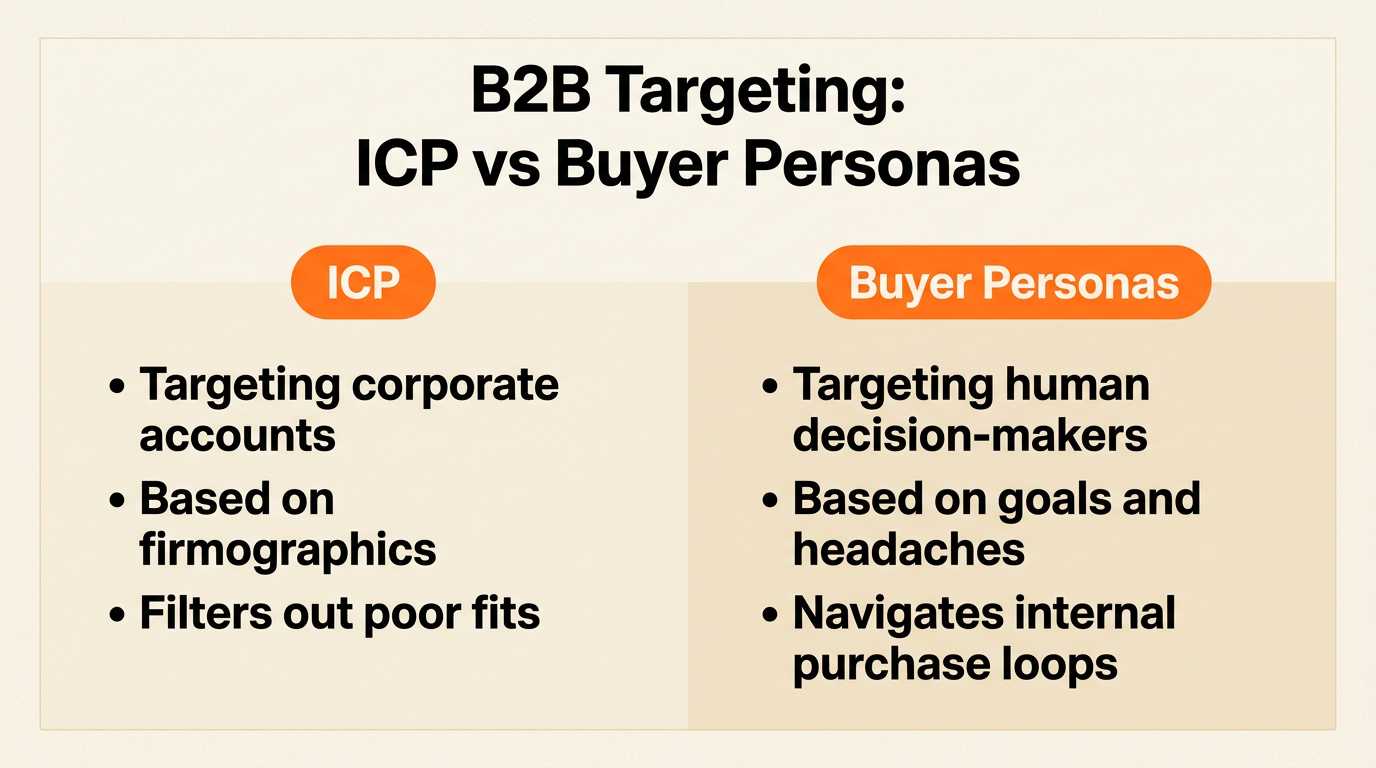
- Ideal Customer Profile (ICP): An Ideal Customer Profile sets hard boundaries around target companies using firmographics like company size, geographic location, and industry sector to filter out poor fits.
- Buyer Personas: Buyer Personas map the actual human inside the account, tracking their day-to-day goals, technical headaches, and how they navigate internal purchase decisions.
- Buying Roles and Committees: Enterprise purchases involve buying groups where everyone brings different reservations to the table. Your assets have to speak to every stakeholder involved, from technical specialists, finance reviewers, and procurement teams up to C-suite executives like the CEO or head of sales.
- Account Targeting: Account-based targeting focuses your outreach directly on chosen enterprise accounts. Run IP targeting against corporate offices, set geographic boundaries around key industry events, and rely on firmographic data to isolate qualified target accounts.
- Predictive Lookalike Modeling: Pull historical CRM data to identify accounts with the highest lifetime value based on actual spend and retention. Building machine-learning lookalike models helps find untapped accounts that match the specific behaviors and operational habits of your best current customers.
- 1:1 Personalization Demands: Tailoring touchpoints across the entire buying path matters. Across modern digital marketing strategy B2B, industry data shows 86% of B2B marketers consider tailored 1:1 outreach essential to their pipeline.
Brand Positioning
Positioning Statement Architecture A solid positioning statement spells out who you help, what you sell, and why clients should pick you. You have to state that value clearly across pitch decks, website copy, and everyday sales calls. Standing out this way cuts right through competitor noise. It also steadily reduces what you spend to win new accounts, driving down acquisition costs.
Emotional Appeal and Tone Product features matter in demos, but buyers care just as much about who you are and your story. Corporate committees review technical requirements, but people run companies. Even executive decision-makers like the CEO and head of sales rely on gut feelings when evaluating software platforms. Most rival messaging is very, very dry. Speaking with simple warmth sets you apart, while heavy technical jargon loses attention.
Cross-Channel Consistency and Reputation Sticking to a consistent look, tone, and voice across every digital channel builds lasting recognition. I let our messaging drift once. Showing up the same way on your website, email nurture sequences, and social profiles earns genuine trust with prospective buyers. Many companies anchor their reputation to compliance, sustainability, or technical leadership. Build your online reputation strategy steadily over time.
Competitive Auditing
Rival channels hold clues that reveal clear market gaps:
- Organic Search and Messaging: Audit competitor websites, messaging, SEO content, and organic keyword rankings. Tracking their search footprint shows you exactly which topics and terms generate their inbound organic traffic.
- Paid Search Strategy: Inspect rival ad campaigns to understand what keywords competitors target. Check how many search terms rival sites bid on, the traffic their ads produce, their ad positions, keyword search volumes, and the average price paid per click. To build high-return PPC campaigns, locate keywords that bring competitors strong volume for very little spend.
- Competitor Audience Demographics: Evaluate rival web domains to map audience demographics, including age brackets and gender splits across their traffic.
- Browsing Behavior and Platform Preferences: Review the sites rival buyers visit, the topics they research, and the physical devices they use while browsing.
Put competitor notes into one central doc tracking their strengths, weaknesses, and positioning. Reading how to do a competitive analysis in digital marketing B2B gives you a practical framework to evaluate rival marketing efforts. That disciplined process points out plain vulnerabilities your team can target.
Market Environment Analysis
Category Dynamics and Sizing Market leadership requires an eye on broader industry shifts, category valuations, growth paths, and rival positioning. Check total market size, category market share, and web traffic numbers to uncover neglected niches before others do.
Macroeconomic and Regulatory Shifts Sudden economic swings and regulatory updates can shift buyer behavior overnight. Tracking these broader patterns helps you catch fresh openings and adjust plans early. At the same time, digital buying and hybrid habits keep picking up speed across major sectors like tech, financial services, and manufacturing.
Privacy and First-Party Data Mandates Changing privacy rules and messy attribution will keep testing marketing teams. The move away from third-party cookies directly limits targeting reach, especially when trying to reach specific professional accounts. Complying with rules like GDPR requires you to build owned first-party data systems while testing out modern identity resolution tools.
Evolving Buyer Behaviors Today, business buyers evaluate tools, compare options, and pick solutions on their own online rather than following traditional sales steps. Social selling matters a lot here. In fact, research from LinkedIn shows that 62% of B2B practitioners view social platforms as vital tools for closing deals. Focus your efforts on gathering proprietary customer records, testing current digital channels, and creating attribution models that link spend directly to closed revenue.

Measurement, Metrics, and Attribution
Keeping close track of core commercial metrics shows you which marketing efforts actually help your business grow:
- Lead Quality, Tracks how well captured leads fit your ideal customer profile. That fit directly impacts conversion rates and sales efficiency.
- Conversion Rate, Conversion rate measures the share of total site visitors who complete a purchase. These users interact with your campaign assets and end up buying. It is a core metric to gauge how effectively your B2B business reaches its goals. Higher conversion rates point directly to more successful marketing execution.
- Customer Acquisition Cost (CAC), Customer acquisition cost (CAC) reflects the total expense required to win a new client. Calculating this figure gives B2B companies visibility into the real efficiency of their sales and marketing spend. It shows which acquisition tactics remain profitable and where workflows need improvement.
- Customer Lifetime Value (CLV), Customer lifetime value (CLV) projects the total volume of revenue an account will generate across its entire engagement with your business. Tracking this metric confirms whether acquisition efforts attract valuable accounts or drain resources, steering both client retention and acquisition planning. The formula to calculate CLV is: average sale value x retention period x number of transactions.
- Return On Ad Spend (ROAS), Return On Ad Spend (ROAS) tracks the direct revenue earned for each dollar put into paid advertising. It is a key performance indicator (KPI) across annual marketing budgets and standalone promotional pushes alike. To calculate ROAS, divide the revenue generated by the total cost spent on online business marketing.
Running regular campaign experiments and tests gives you the clarity you need to sharpen these baseline metrics:
- Conduct A/B tests: Compare two versions of web pages, emails, or ads to see which delivers better results, providing clear data for improvements.
- Try multivariate testing: Test several variables at once (like different headlines or images) to optimise full campaign elements faster.
- Iterate campaigns: Use insights from each test to tweak and refine ongoing marketing programmes, staying agile in competitive markets.
- Implement data-driven decisions: Build a habit of reviewing analytics and making adjustments based on real outcomes, not assumptions.
- Pay-per-click (PPC) ads return $2 for every $1 spent on average.
- Email marketing returns anywhere between $36 and $40 for every $1 spent on average, with certain campaign studies showing up to 44 dollars to each $1 spent on email marketing.
- Search engine optimization (SEO) could return anywhere from $2.75 to $7.48 for every $1 spent.
Frequently Asked Questions
What is B2B online marketing?
The digital side of B2B marketing simply means selling products and services online to other companies. Early on, I treated business outreach like consumer marketing, but business campaigns have to answer strict organizational requirements. You reach buyers across SaaS, wholesale, manufacturing, and IT services through an optimized website, valuable content, LinkedIn, personalized email, and paid ads. Today, 56% of B2B marketers put their budget into comprehensive digital marketing services.
What are the 4 types of B2B marketing?
The four types cover four disciplines: product marketing, service marketing, digital marketing, and traditional marketing. On the buyer side, you sell to Producers who manufacture goods, Resellers who distribute them, Government agencies that buy at scale, and Institutions like schools and hospitals. Knowing which type you target matters, because each one evaluates vendors and commits budget in its own way.
How to do B2B digital marketing?
Start by defining clear goals and setting OKRs that stay specific, measurable, attainable, relevant, and time-bound. Work with your sales team, pull data from your CRM, and build detailed buyer personas and ICPs. Pick channels based on who you target, and don’t overwork yourself running too many at once. Set up your CRM before launching to capture leads through chatbots and forms, then track funnel-stage KPIs and refine against real outcomes.
What are the 4 C’s of B2B marketing?
Content, Connection, Communications, and Conversion work together to attract, nurture, and close buyers. Content solves operational problems through blogs, white papers, and case studies, while Connection builds relationships across LinkedIn, X, and Facebook. Communications keeps your brand top of mind through website copy and email sequences, and Conversion turns traffic into pipeline with capture forms and clear calls to action. Early on, I burned months chasing traffic spikes that led nowhere, but these four pillars keep your pipeline matched to how companies actually buy.
Winning at B2B marketing never comes from clever shortcuts or chasing hollow pageviews. You have the clear frameworks now to organize your team, set honest OKRs, and execute a comprehensive b2b digital marketing strategy that matches how corporate committees make purchases. Put your energy into answering real operational questions, routing qualified intent into your CRM, and measuring results against closed pipeline instead of vanity metrics. Keep the machinery simple and do the work every single day. When your content and qualification engines run together smoothly, predictable revenue follows.