Notice how social media marketing for dentists can help a practice appear well before patients are ready to book.
That early view can decide whether the practice seems trustworthy and visible, with an easy way to get in touch. First impressions start there.
Picking a dentist usually takes several steps: patients read reviews, visit the website, weigh their options, and increasingly look at social media profiles before they choose.
Review those places before the patient calls. Choosing a practice takes several stops along the way.
A dental practice may enter a patient’s view well before booking feels like the next move.
That glimpse can make the practice seem trustworthy and visible, with an approachable way to make contact (sometimes before the practice realizes anyone is watching).
Before choosing a practice, patients generally do more than find a dentist: they read reviews, visit the website, compare options, and increasingly check online profiles.
A practice’s social profile now helps form that first impression. Keep both outdated and abandoned profiles out of the patient’s decision-making path.
Paid Social Media Marketing for Dentists
Paid social works best inside a wider system, rather than as a switch that is simply turned on; organic content shows which messages earn attention. Paid campaigns can then amplify testimonial reels and before-and-after carousels. Organic comes first.
For UK dental targeting, Meta’s local-radius targeting on Facebook and Instagram routinely produces a £25-£75 cost-per-lead. Cold paid creative without an organic foundation typically costs 30-50% more per lead.
The practice’s capacity, revenue, treatment margins, and response time for enquiries decide whether paid campaigns should start now or wait until intake improves. Timing matters.
Readiness Criteria for Paid Campaigns
These criteria show whether paid campaigns have enough capacity and treatment margin behind them to support growth.
- Practice capacity: The practice should have 2+ chairs. Pause paid ads if chairs are booked solid and front-desk staff cannot answer inbound inquiries promptly; Open operatory time makes launching paid campaigns more useful for filling the schedule.
- Monthly revenue: Monthly revenue should exceed £15,000.
- High-margin treatment line: The practice should have at least one high-margin treatment line, such as implants, Invisalign, veneers, or cosmetic bonding, where a single converted enquiry covers 8-12 weeks of ad spend.
Below that threshold, organic activity can deliver a better return because paid management costs, including agency fees, creative production, and attribution, take more from a smaller margin.
A £3,000 implant case with a 60-70% consultation-to-treatment conversion produces a £40-£125 acquisition cost, which remains inside the economic limit for any private dental practice.
Paid Testing Frameworks
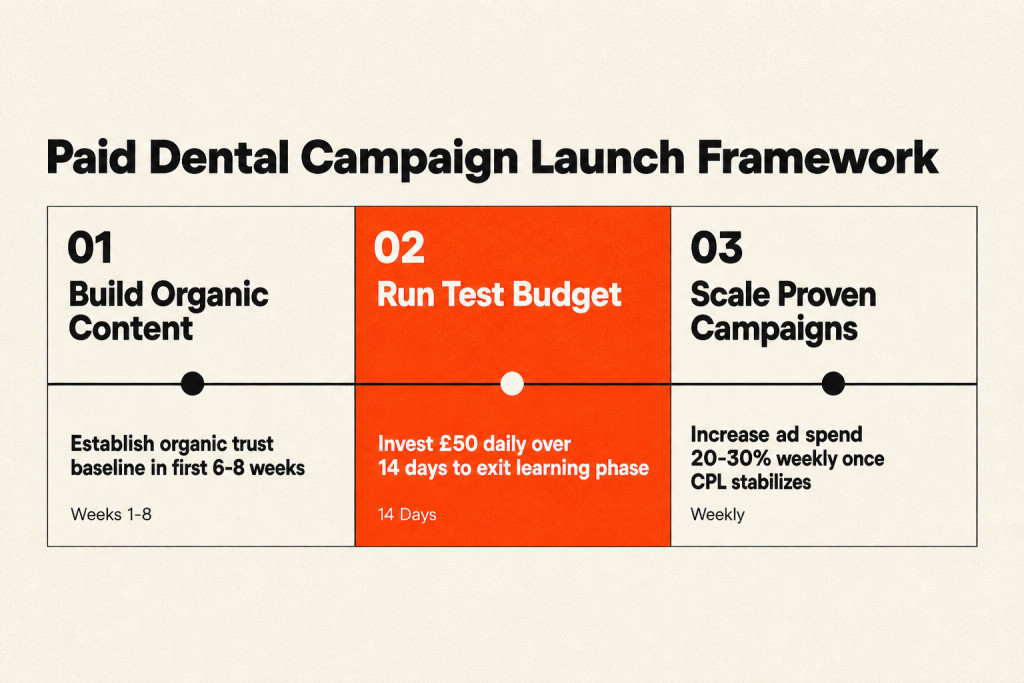
Paid should follow the initial organic build rather than come first; the testing process is straightforward enough to keep on a calendar.
- Build organic content first, then layer paid into the strategy in week 6-8.
- Apply the “test budget” rule to every new dental ad account: £50/day for 14 days minimum (£700 total). With less than that, Meta’s algorithm cannot exit the learning phase, which can lead to inconsistent delivery and inflated CPLs.
- After the campaign clears learning and produces leads in the £25-£75 range, scale by 20-30% per week. Faster scaling resets the cost curve.
Retargeting and Radius Targeting
Local Awareness Facebook ad
A Local Awareness Facebook ad can promote services within a particular area by targeting chosen demographics nearby. That helps avoid paying for people who would never visit the office.
Ad information
The same ad can include the practice address, hours of operation, and a “Get Directions” link. Patients may also be able to make appointments through the prompt in the ad.
Follow-up retargeting
Targeted ads can reach social visitors who engaged with the practice’s content but did not book. Staying visible gives those visitors more time to decide.
Geographic targeting support
A local social media marketing agency can help practices manage geographic targeting and follow-up campaigns.
Conversion Tracking and ROI
Setting up measurement before campaigns gives decision-makers the tracking they need; without attribution, a clinic may decide social doesn’t work when the data is simply missing.
Commercial Attribution Systems
Tie every campaign to enquiries and booked treatment using channel-specific tracking and CRM records. That keeps commercial return in view instead of leaving leads disconnected.
Acquisition Cost Versus Patient Lifetime Value
Judge spend against treatment economics: £2,000 producing 5 new patients means £400 per patient, excellent for £3,000 and £5,000 implant cases but uneconomical for £100-margin routine cleanings. Dental patients often stay for many years, so track multi-year patient lifetime value rather than first-visit revenue alone. Track those years.
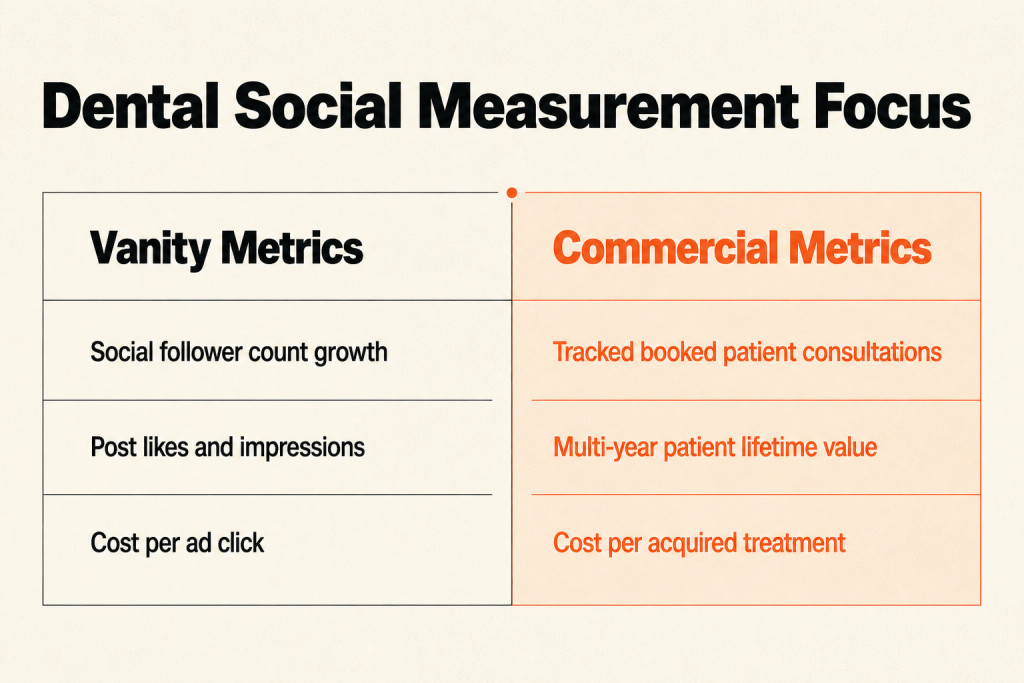
Followers are not patients.
Lead Conversion Infrastructure
Remove friction between enquiry and booking. Automated scheduling can cut obstacles, and a clearer path to an appointment improves ROI; moving enquiry-to-booking conversion from 50% to 60% delivers higher ROI than increasing spend.
Search Engine Synergy
Distribute content while reinforcing Google Business Profile and local search. Social can strengthen SEO indirectly, and the benefits build over 6-12 months; because over 60% of searches end without a click, greater exposure may make it easier for prospective patients to locate the practice.
Best Platforms for Social Media Marketing for Dental Clinics
For dental clinic social media marketing, choose one primary channel based on your patients and services, then add a supporting one. Reusable content is far easier for a clinical team to manage than keeping several inactive profiles alive.
Facebook makes the strongest first choice for general-dentistry and family practices. Its 30-65 audience matches the longer trust-building path family patients often follow, and community-focused communication can build confidence. Cosmetic and aesthetic-led practices should consider Instagram as the main channel. Before-and-after and Invisalign content drive higher enquiry rates.

Give Google Business Profile a clear supporting role for “dentist near me” searches. Keep the listing accurate, including contact details and business hours, to improve your chance of showing in local map results. Replying to reviews can also strengthen trust and visibility.
TikTok can serve as the primary channel for under-35 patients looking for cosmetic bonding, whitening, or aligners. A clinician who’s comfortable on camera can create short videos naturally with a smartphone and natural light. YouTube suits search-led education, with Shorts directing viewers to longer lessons that appear prominently in Google results. TikTok’s average 8.3% engagement rate keeps short-form video practical.
Keep Yelp supplementary, since patient feedback there can influence people choosing a dentist.
High-Performing Content Formats
Original photos and videos create trust and connection faster than stock images because patients respond to real people.
Before-and-After Smile Transformations
For dental practices, before-and-after posts remain a top format: visible outcomes build credibility quickly and encourage cosmetic treatment inquiries. Results get attention.
One cosmetic dentistry client lifted Instagram Invisalign inquiries by 45 percent within three months.
Secure patient consent before posting, then keep the lighting and camera angles consistent so the changes remain easy to judge. You can also turn those results into quick videos using captions like “From Nervous to Confident” or “What One Visit Can Do,” with background music or trending audio to support Instagram and TikTok reach. Keep the setup steady.
Patient consent comes first.
One transformation each week, paired with a clear caption and CTA button, drove the result.
Educational Carousels
Carousels break treatment into swipeable steps, making procedures easier for patients to understand. That useful guidance helps the clinic become a trusted educator, delivers immediate value to patients, and gives each post a professional look while strong posts can earn saves and shares from people beyond its existing followers. Saved content keeps circulating.
Branded colors and steady typography still matter.
Together, they make each slide feel polished and easy to recognize.
Examples include:
- “What to Expect During Your First Invisalign Appointment”
- “5 Myths About Teeth Whitening”
- “Step-by-Step Dental Implant Process”
- Causes of tooth sensitivity
- Common dental myths
- Oral hygiene tips
- What to expect during specific procedures
- Preventive care recommendations
Carry the same visual system from the opening slide to the last one.
Short-Form Procedure Video
Short videos
Short videos show a dental practice’s skill and personality while building trust, and they continue to dominate social media algorithms. This format already pulls its weight. Clips explaining Invisalign fitting add practical value.
- Quick oral health tips
- Procedure explanations
- Office tours
- Team introductions
- Frequently asked questions
You don’t need studio production; patients often respond better to something genuine, and a helpful 30-second smartphone video can outperform polished content because it feels personal and relatable. A phone works.
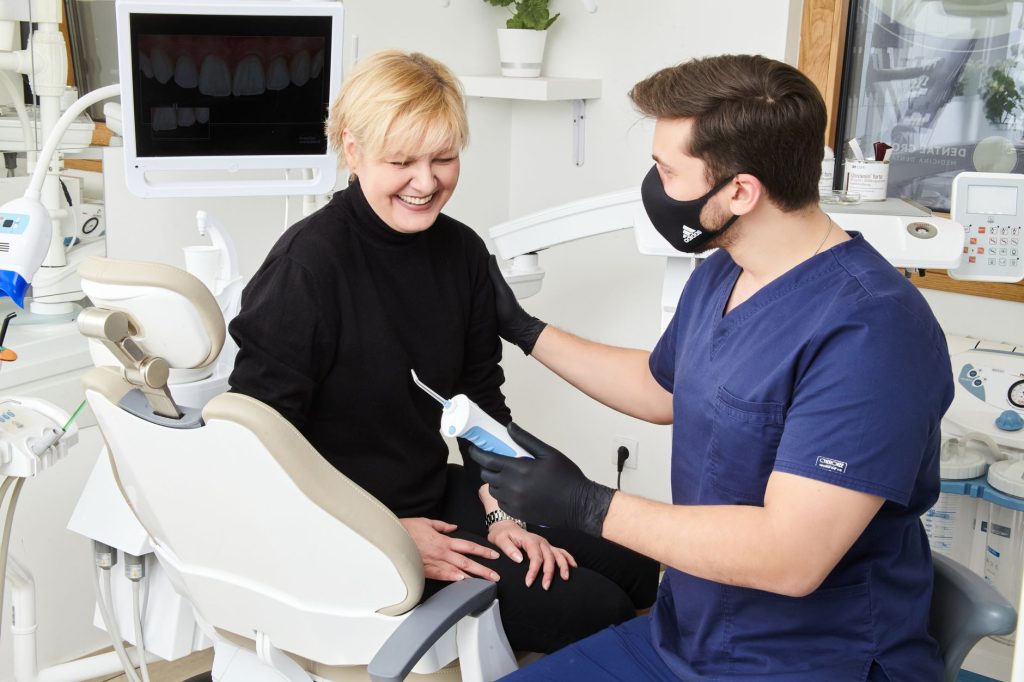
Effective dental video
Effective dental video doesn’t require expensive equipment because patients want real people, not actors. Whitehat’s dental onboarding puts iPhone footage first for the first 90 days, requiring it to prove the format before the practice pays for studio production. Start with the phone.
- 15-second dental hygiene tips
- Clips explaining procedures like Invisalign fitting or veneer preparation
- Behind-the-scenes clips of the team preparing for a day at the clinic
Patient Video Testimonials
Social proof is powerful.
Patient testimonials tell relatable stories that help prospective patients connect with the practice and its results.
Short video testimonials
Record brief video testimonials after appointments to capture and share patient experiences.
Quote cards
Quote cards turn patient feedback into posts suited to digital channels.
“Smile stories”
Smile stories trace a patient’s path from the first consultation through the final results.
These posts ease hesitation and lift conversion rates; someone considering Invisalign is more likely to book after hearing a patient describe a positive outcome in relatable terms. Hesitation falls.
Patient video testimonials produce 67% higher conversion than written reviews. A 15-30 second video testimonial suits social media, especially with a light CTA such as “Book your consultation today” or “Start your smile journey.”
Team and Practice Culture
People connect more readily with real faces than faceless businesses. Personal posts build loyalty and emotional connection, often outperforming promotional content by making the clinic feel relatable and trustworthy. Familiar faces stick.
Ideas include:
- Introduce team members with fun facts
- Share behind-the-scenes clinic moments
- Celebrate birthdays, milestones, or community involvement
After a clinic introduced each team member in weekly Instagram stories, DMs from new patients rose 35 percent within two months.
Team milestones, celebrations, community involvement, and behind-the-scenes moments make the practice feel human. These posts may not bring the highest engagement numbers, but they build familiarity and trust. Familiarity comes from repetition.
Managing Your Dental Practice Social Media Marketing
Because familiarity grows through repetition, social media can become a hefty task. Learning and steady effort, alongside sound best practices, help your dental office make an impact, and the work may lift office morale.
Set up one process for developing all content, including written material and photos or videos; the right social media marketing tools can keep regular, consistent posts on schedule.
Brand Guidelines
Amplify your personality.
Dentist social media marketing should balance personality with professionalism and fit the practice’s offerings. A pediatric dentistry office may lean on kid-friendly colors, while a cosmetic dentistry practice may showcase sleek smile makeovers.
Choose a style.
Choose visual and verbal elements that reflect your practice, then use them consistently to create cohesive, visually appealing content.
Make the most of visuals.
Since dental work is naturally visual, use social media to feature high-quality team imagery and candid office photos, including stunning smile makeovers.
Carry the same brand identity and messaging across your website, ads, social media, and in-office experience. Keep every patient touchpoint aligned.
Content Calendars and Batching
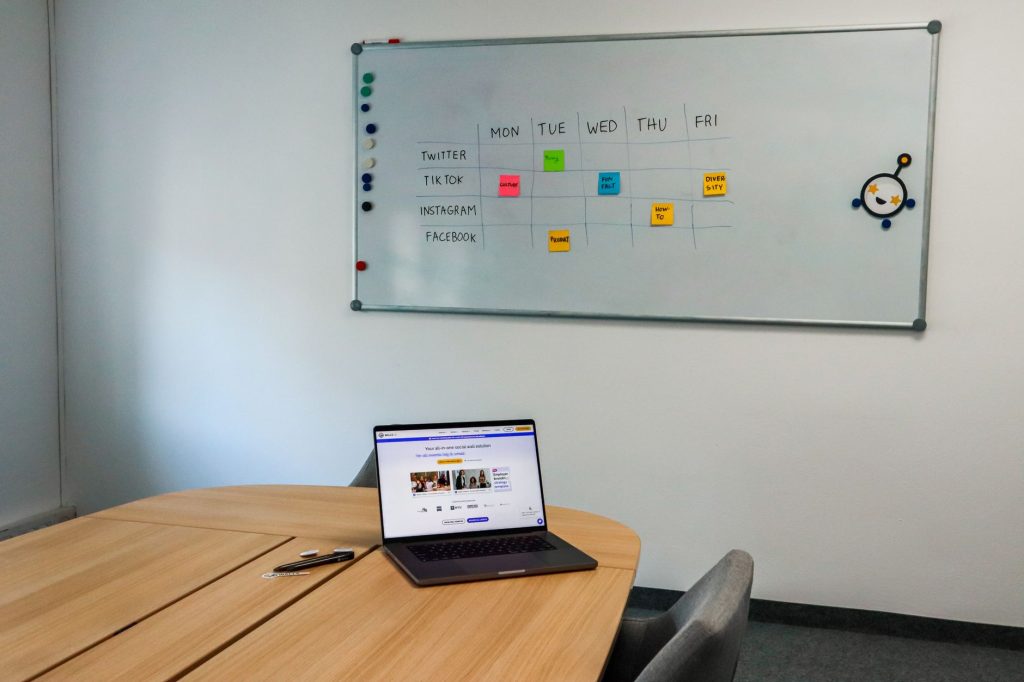
Use a content calendar to map social activities, record what goes live and when, and assign each post to its channel. It should also keep educational, promotional, and engaging posts in rotation.
Posting schedule

Keep a posting schedule and build a content calendar so your social media activities stay organized.
Timely content
Mark holidays and oral health awareness month on the calendar to keep posts timely and relevant. Holiday, awareness-day, and seasonal dental tie-ins give each post a clear reason to exist.
Posting Frequency and Scheduling
A steady rhythm beats frequent posting; use platform analytics to identify audience activity and keep the practice active without overwhelming followers:
- Three good posts per week, every single week, are better than seven posts in one week followed by nothing for three weeks. Choose a rhythm you can sustain forever.
- Each social media platform has its own culture, audience, and content preferences.
- Posting 3 to 4 times per week is generally a good starting point, keeping the practice active in followers’ feeds.
- Mid-morning (9-11 AM) on weekdays usually works well, but Instagram and Facebook analytics can show when your specific audience is most active. Post when your audience is most likely to see it.
Community Interaction and Response Protocols
Answer comments and messages within an hour, since that can significantly increase conversions, while engaging with commenters improves their social media experience. Answer questions, reply to post comments, and run polls or Q&A sessions to foster community. These actions show that you value input and want to connect on a personal level.
Benefits of Dental Social Media Marketing
Recognizable faces and an approachable personality give a dental practice a human presence, especially when posts show the friendly people and comfortable setting behind the care while shaping its brand. That familiarity keeps the practice in patients’ minds between appointments and builds trust. It can bring in new bookings and encourage existing patients to return. Familiar visits can ease patient anxiety, strengthen clinical credibility and visibility, and show you who your audience is so communication stays tailored.
Common Dental Marketing Pitfalls
A practice loses its footing when it follows vanity metrics instead of local conversions. Measure scheduling requests from social channels by cost per acquisition (CPA) and ROI, not reach or distant engagement. Intake follow-up matters just as much: answer comments within hours and return direct messages quickly, before inquiries vanish. Track inquiries, not applause.
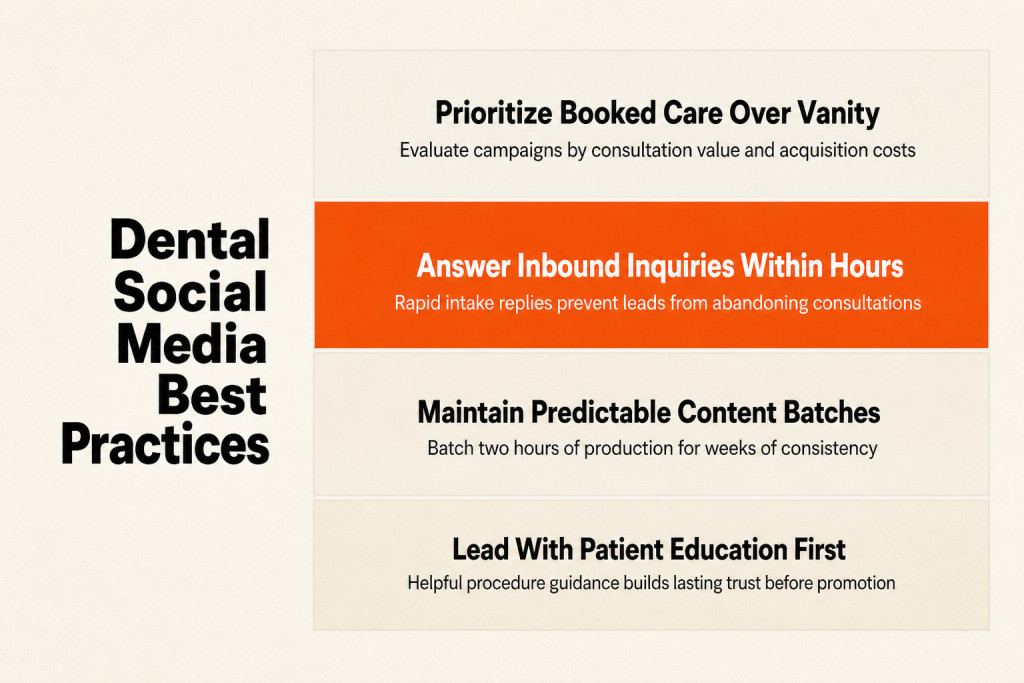
Promotional posts pushed too hard can chip away at trust, while useful, reassuring education works better than turning social media into a billboard. A stop-start posting schedule can weaken results too, so set a steady rhythm, such as a two-hour batch that produces 6-8 weeks of content. An outdated website, especially a slow or poorly designed one, can keep prospective patients from contacting the practice. Make every digital touchpoint easy to use.
Frequently Asked Questions
How Do You Choose a Dental Social Media Marketing Firm?
Choose an agency that can run your social media, produce custom photos and videos, manage Meta Ads, and track every lead through to the booked appointment. PatientLoop™ follows each lead from the first click to the booked appointment. Make sure the pieces connect: SEO, AI search optimization, a conversion-focused website, Google Ads, and lead tracking should all feed the same CRM pipeline, the way Whitehat connects paid social leads into it.
What Do Dental Social Media Marketing Services Cost?
Costs depend on the practice’s goals and market, which set the starting point. Lasso MD management plans start at $500 per month (Starter) and $750 per month (Advanced), most practices put $1,000 to $5,000 per month into Meta Ads, and UK dental practices spend £500 to £5,000+ per month on SEO.
Is paid social media for dentists worth the spend?
Yes, for practices with 2+ chairs, monthly revenue above £15,000, and at least one high-margin treatment line, which drives the maths. UK dental targeting brings typical Meta CPMs of £8-£18 and cost-per-lead of £25-£75, so a £3,000 implant case supports the economics while routine cleanings with a £100 margin rarely make paid social worthwhile.
How much do social media ads for dentists cost in the UK?
It depends on platform and treatment fit. Meta (Facebook and Instagram) runs £500-£2,000 per month at £8-£18 CPM and £25-£75 CPL, best for implants, Invisalign, and family dentistry with the strongest local targeting; TikTok runs £300-£1,200 at £4-£10 CPM and £18-£55 CPL for cosmetic bonding, whitening, and aligners under 35; YouTube runs £400-£1,500 at £6-£14 CPM and £35-£90 CPL for educational longform, implants, and sedation dentistry; LinkedIn is rarely viable at £20-£45 CPM and £120+ CPL, being better suited to B2B social media marketing than to dental.
Whitehat assigns each new dental ad account a test budget of £50/day for a 14-day minimum (£700 total), then judges platform and treatment fit by the results.
What GDC rules apply to dental social media advertising?
GDC and ASA rules cover consent, advertising claims, prescription-only medicines, and compensated testimonials. The GDC requires signed, dated consent specifying exactly where images will appear and for what purpose, claims like “guaranteed straighter smile in 18 months” violate advertising standards, and the ASA prohibits public advertising of prescription-only medicines including botulinum toxin. Compensated testimonials, including free or discounted treatment, must be disclosed with #AD or #Gifted, and testimonials cannot be AI-generated or acted, with atypical results requiring a disclaimer.
How do you measure social media ROI for a dental practice?
Whitehat measures four areas: new-patient enquiry attribution through UTM codes or call-tracking, cost per booked consultation rather than cost per click, lifetime value of social-acquired patients set beside patients from other channels, and the engagement-to-enquiry conversion ratio. Followers don’t count here. A simple ROI formula is (revenue from new patients minus marketing costs) ÷ marketing costs.
Can influencer marketing for dentists really work?
Yes, local micro-influencers can draw genuine attention to a clinic through content and community activity, provided the partnership is disclosed clearly. Invite influencers for a complimentary consultation and share their experience, collaborate on educational content such as Q&A videos, and host community events with influencer participation. Compensated partnerships must carry clear sponsorship tags to meet trade regulations.
How often should dental clinics post on social media?
Post 1-3 times per week on your primary platform, not daily, ideally 3-5 times combining educational, testimonial, and promotional content. Add 3-5 Stories per week on Instagram or Facebook and 1-3 Google Business Profile posts per week.
For social media marketing for dentists, the sensible route is to build organic trust first, add paid promotion when the numbers fit, and track booked treatment through the same pipeline. Keep the cadence manageable for the team, because an abandoned calendar won’t produce enquiries.