Trying to make sense of “what does impressions mean on meta ads” in a report can leave you unsure whether delivery is reaching new people or repeating to the same audience.
Reading on will help you compare impressions with reach, find the figures in Ads Manager, and use frequency and cost to decide what to adjust. First, a quick answer to what does impressions mean on Meta Ads: it is every single time your ad is displayed on a screen. One detail worth checking: a video ad can register an impression even when playback hasn’t begun.
What Does Impressions Mean on Meta Ads
An impression is one display of your ad on a user’s screen. It counts when the ad appears in a feed, story, or other placement, and one person seeing it three times in a single day produces three impressions. For Facebook ads, the monthly median is about 199K impressions for B2B companies (anonymized data from close to 500 companies) and 245K for B2C (over 450 companies).
A high impression count shows frequent delivery across your Meta and Facebook ads. It won’t tell you whether new people saw the ad or the same people saw it more than once.
Meta counts an impression under these rules:
- Each time your ad appears on screen for the first time, it counts as an impression.
- If the same person sees an ad twice in one day, Meta counts two impressions.
- A video does not need to start playing to count as an impression.
- Impressions from detectable non-human traffic do not count.
Served Impressions
A served impression is logged once Meta tries to deliver your ad to a user’s device, whether or not the person actually sees it. A quick scroll past the ad before it finishes rendering still counts.
Viewable Impressions
Viewable impressions show that the ad actually entered the visible screen, based on Meta’s visibility standards. Meta doesn’t publish every detail of those standards, but viewable impressions track attention more closely than served ones. Even so, an ad can enter the screen and be scrolled past immediately, so an impression signals exposure, not focused attention.

Impressions Compared to Reach
Reach counts unique people, while impressions count every time an ad appears, repeats included. If 5,000 different people see your ad during the week, reach is 5,000 no matter how many times each person saw it. Reach can never exceed impressions.

The arithmetic makes the difference plain. An ad shown 10,000 times to 2,500 people has a reach of 2,500 and 10,000 impressions, an average of four views per person. If 1,000 people see an ad twice, reach is 1,000 and impressions total 2,000.
The better number to watch depends on the ad’s job. To introduce a product or service to as many new people as possible, watch reach, since it shows how far the message spreads. To keep the message in front of potential customers, watch impressions, since they show how often people see it. In retargeting campaigns, repeat impressions can prompt recall and encourage action.
Locating Impression Metrics in Ads Manager
Ads Manager shows reach and impressions in the Performance column preset, at campaign, ad set, and ad level.

- Open Ads Manager.
- Click Columns, then select Performance.
- Read overall reach and impressions for each campaign.
- Keep Performance selected and click into ad sets and individual ads to break the figures down.
- For video ads, switch Columns to Video Engagement to see plays alongside impressions.
Figures such as amount spent are estimates at first, since processing all ad data can take up to 48 hours.
Calculating Related Delivery Metrics
Impressions show raw delivery volume and serve as the denominator for several efficiency metrics. Click-through rate is one of them: CTR = clicks / impressions, the share of views that produced a click.
Frequency
Frequency is the average number of times each person reached saw your ad over a date range:
frequency = impressions / reach
At a frequency of 1.0, each person saw the ad once on average; at 4.0, the average person saw it four times. As a rough guideline, a frequency between 2 and 4 often suits awareness and consideration campaigns.
Frequency only makes sense in context. A broad prospecting campaign with a large audience can run for a while at low frequency, while a tight retargeting audience naturally runs higher because its pool of people is small. There is no universal danger threshold; watch the trend.
Cost Per Mille
Cost per mille (CPM) is what you pay for 1,000 ad impressions:
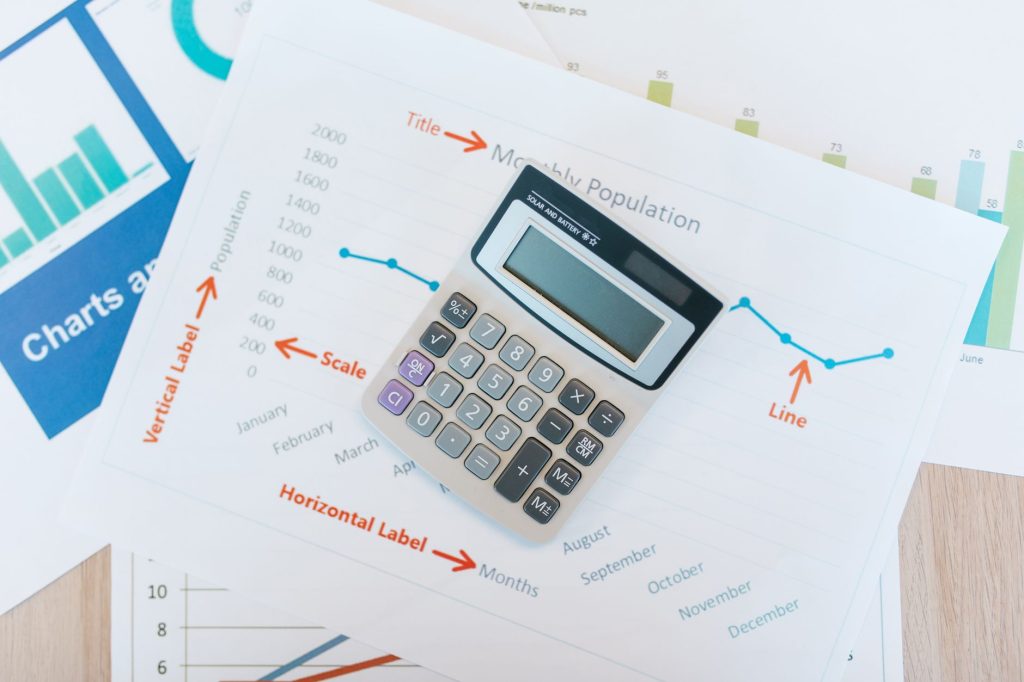
CPM = (total ad spend / total impressions) × 1,000
A low CPM means your ad reaches more people for less. A high CPM usually points to poor targeting, weak creative, or heavy competition. Narrowing to a high-intent audience can improve lead quality, but competing for a smaller pool of users drives CPM up. Low impressions at a given budget often mean targeting is too narrow. For benchmarks, see what is a good CPM for Meta ads.
Interpreting Delivery Performance and Ad Fatigue
Ad fatigue starts when your audience has seen your creative enough times to stop responding. No single metric proves it; read frequency, reach, CTR, and CPM together and compare the pattern over time:

- Frequency climbing: the same people see your ad more often.
- Reach flattening: you are finding fewer new people, so impressions keep building within the existing audience.
- CTR slipping and CPM rising: engagement drops while Meta charges more to keep showing an ad the audience is tiring of.
Compare that combination against your own prior periods rather than a fixed benchmark. Stable cost per conversion as impressions grow means delivery is scaling efficiently; rising impressions and frequency alongside falling conversion rates point to creative fatigue.
When the pattern points to fatigue, refresh the creative, expand the audience, or cap how often the ad is shown.
Strategies to Improve Impression Delivery
Start by reading reach, frequency, and cost together; if reach is limited, give ads more room to deliver with these tactics:
- Use more placements: run ads across every relevant placement, including Feeds, Stories, Reels, and Messenger. More inventory usually lowers CPM and increases delivery.
- Run a rate-limited reach campaign: create a separate reach campaign with a small budget and cap impressions per person, for example one impression every 30 days, delivered to a broad audience limited only by the gender, age range, and location of your market.
- Use real images: swap stock photos for striking, real images that stand out and earn more engagement per 1,000 impressions.
- Test video: video ads often earn stronger engagement, and Meta’s auction favors ads people respond to, which can bring more impressions at the same cost.
- Widen lookalikes: start with a 1% lookalike audience, the closest match to your source, then test larger sizes up to 5% or 10% to gain impressions while keeping targeting focused.
- Split-test on a small budget: create several ads, test them with Meta’s A/B testing feature, and move spend to the ones showing promising results.
- Reuse the Post ID: run the same Post ID across ad sets and campaigns instead of duplicating the ad. Engagement then accumulates on one post, which strengthens its social proof and auction performance.
Frequently Asked Questions
Is a high number of impressions good on Meta ads?
Only in context. High impressions mean your ad is being delivered often, but if reach stays flat and frequency climbs, the same people are seeing it repeatedly. Check impressions alongside reach, frequency, and conversions.
What is the difference between impressions and reach on Meta?
Reach counts unique people who saw your ad; impressions count every display, including repeats. Dividing impressions by reach gives frequency.
How many impressions does an ad need before it works?
There is no fixed number. Aim for effective frequency, the number of times a person needs to see your ad before acting, and raise impressions gradually; showing the same content too often leads to ad fatigue.
Conclusion
Impressions are a delivery baseline, not a measure of success on their own. Pair them with reach, frequency, and CPM to see whether your ad is finding new people or wearing out the same audience, and compare each report with your own prior periods before deciding what to adjust. Once you know what does impressions mean on Meta Ads, you can read every delivery report with more confidence.