If you’re responsible for social media marketing for sports, the challenge is deciding what to prioritize when matchday, athlete content, and commercial demands all compete for attention. A clip can win attention in the moment and still leave you with no clear way to show its value to a sponsor.
Reading on will help you choose an agency, make better calls about what to publish and when, and connect fan response to business results.
What core services does social media marketing for sports include?
Core services include content planning, rapid matchday production, fan community management, and sponsor reporting. A content calendar covers matchdays, milestones, sponsorship activations, and other core moments. Planning gives creative work structure while leaving room to respond to form, storylines, and breakout trends.
Keep your shared tools visible to marketing, design, production, and commercial teams. Agency teams providing professional social media management can use approval workflows to deliver faster without sacrificing quality.
Sports social teams have close access to on-the-pitch moments, which allows a unique, up-close, and more personal viewpoint. Because organic moments, and fans, do not wait, workflows need to let teams ideate, create, approve, and publish within minutes.
To prepare for real-time content, teams can:
- Pre-design visual templates for rapid deployment, including hype, milestones, and goals.
- Assign who captures, who edits, and who posts.
- Create on-the-fly captioning and localisation systems.
- Use cloud-based tools for cross-team access to approvals.
- Run drills before key events to pressure-test the process.

Fast publishing still needs brand voice and visual consistency. Pair creative guardrails (fonts, colour palettes, and tone) with editorial freedom so social channels can react quickly and stay on-brand.
Invite fans into the story, and they become more invested in telling it with the team.
AI-Assisted Replies can draft on-brand responses in seconds, while AI Priority Scoring moves comments that need a person to the top of the queue. When fan activity spikes into the thousands, these tools help teams keep up while ensuring fans still hear a human voice.
Data helps teams show brand partners what their social presence delivers. After each sponsored series, a one-page recap compares reach, engagement, and clicks with agreed targets, turning fan interest into a renewal conversation.
One team used to build weekly reports by hand for more than 350 sponsors, spending more than four hours a day on the work. Social analytics automated post labeling and report generation, cutting manual reporting by 90%. More than 500 hours were saved.
How to choose the right sports marketing agency
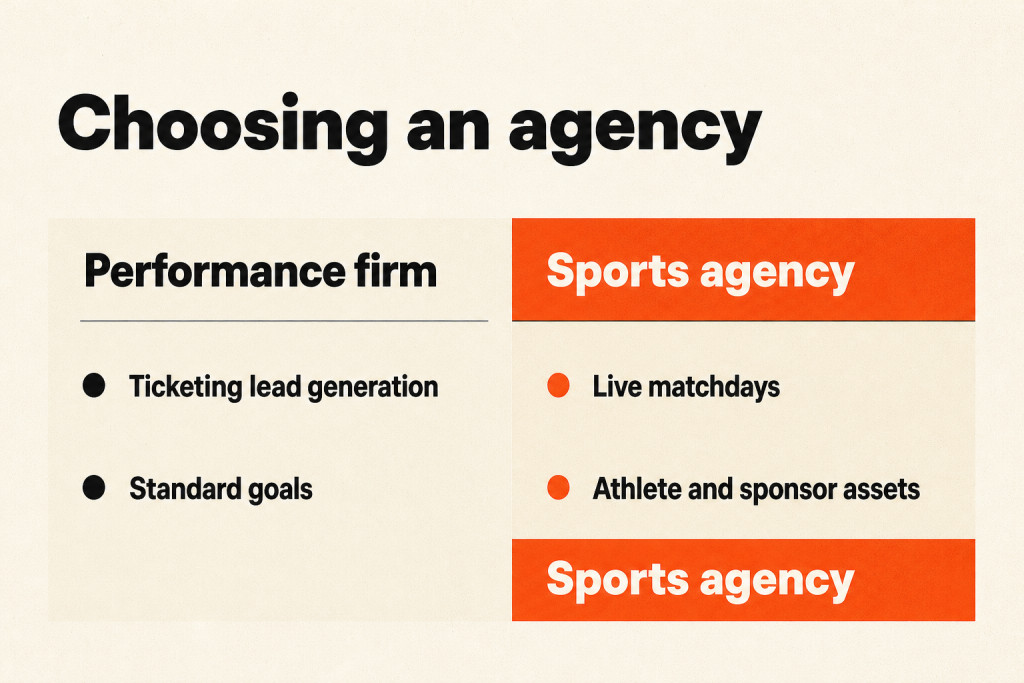
A general performance marketing agency can handle standard ticketing lead generation when that’s the main goal. But if priorities include managing volatile live matchdays, protecting athlete reputations, and delivering custom sponsor assets in real time, you’ll need a dedicated sports marketing agency. Before choosing one:
- Verify its live matchday workflow, athlete-reputation escalation process, and ability to produce custom sponsor assets in real time.
- Review relevant examples.
- Agree coverage, approval rights, and reporting.
During tournaments, choose an agency that can work alongside editorial and media staff on the ground and pitch side. An embedded team can turn standout goals, fan moments, or controversies into timely, platform-optimised content across channels. That embedded setup makes immediate coordination possible. For one team, social analytics have already cut manual reporting by 90%.
What goes into a sports social media strategy?
Setting channel goals and mapping fan segments
Teams set measurable channel goals and tailor content to distinct fan segments, from diehards to families and out-of-market followers. Set specific, measurable goals for each of your social channels:
- Growing the fan base at home or in a new market
- Selling more tickets and merchandise
- Improving sponsor visibility
- Lifting fan sentiment
Those goals shape what the team shares and its public presence, including where and when posts appear. When goals compete, pick one primary goal for each channel.
A fan base spans six segments: diehards, casuals, students, alumni, families, and out-of-market followers. Each responds to different content on different platforms, so the audience varies by channel.
Vocal supporters want raw access and tactical honesty; casual families may prefer gameday logistics or entertaining stories that show players as people.
How do you match content and fan engagement to each platform?
Plan a separate creative direction for each channel, tailoring content to TikTok, Instagram, and X. TikTok calls for quick cuts that tap into current trends; Instagram suits reels and carousel storytelling; X gives us a channel for immediate reactions and real-time reporting. Interactive content should follow the same channel-specific logic, giving fans ways to participate that feel native to each platform.
A balanced mix combines interactive user-generated content and event sign-ups with timely updates on breaking news, scores, and injury reports. Sports brands should aim for fan interaction as well as views. User-generated content and event sign-ups help fans feel like valued members of a much bigger community.
Covering matchdays in real time on official channels
When a game or story shifts, fans expect teams to post updates in real time, especially breaking news, scores, and injury reports.

Steady updates through official channels help sports brands keep fans happy and retain control of their communications and the story they tell. Oversee social media accounts during the on and off-season, especially on key breaking-news channels such as X, Reddit, and Instagram.
Athlete brands and creator partnerships: where guidance meets creative freedom
Athlete brand management pairs player guidance and creative freedom. Creator partnerships bring fan-focused campaigns to existing communities. Athlete-team partnerships can help both sides when players’ personal channels become part of the social plan. Teams can reach more people, deepen fans’ emotional ties, and tell stories in a more personal voice because players bring their own audiences. Players get support as they grow their personal brands and connect with those audiences.
Teams can give players room to speak freely while offering support and setting clear expectations.
- Provide social guidelines for tone, brand alignment, and content sensitivity.
- Offer templates, team photos and videos, and content calendars athletes can use.
- Set guardrails for risky or controversial content without micromanaging every post.
- Encourage athletes to work with social and communications teams to align messaging where appropriate.
Creators bring a fan-focused, community-driven element to campaigns. Working closely with them helps teams keep growing their own communities, especially when a creator’s already a fan.
The Chicago White Sox builds content planning into existing team touchpoints to make limited player time count. Brogdon says the team has “two major opportunities to educate our players on social media.” Newly acquired players attend a fall session in Glendale, while the full team gets a session during Spring Training.
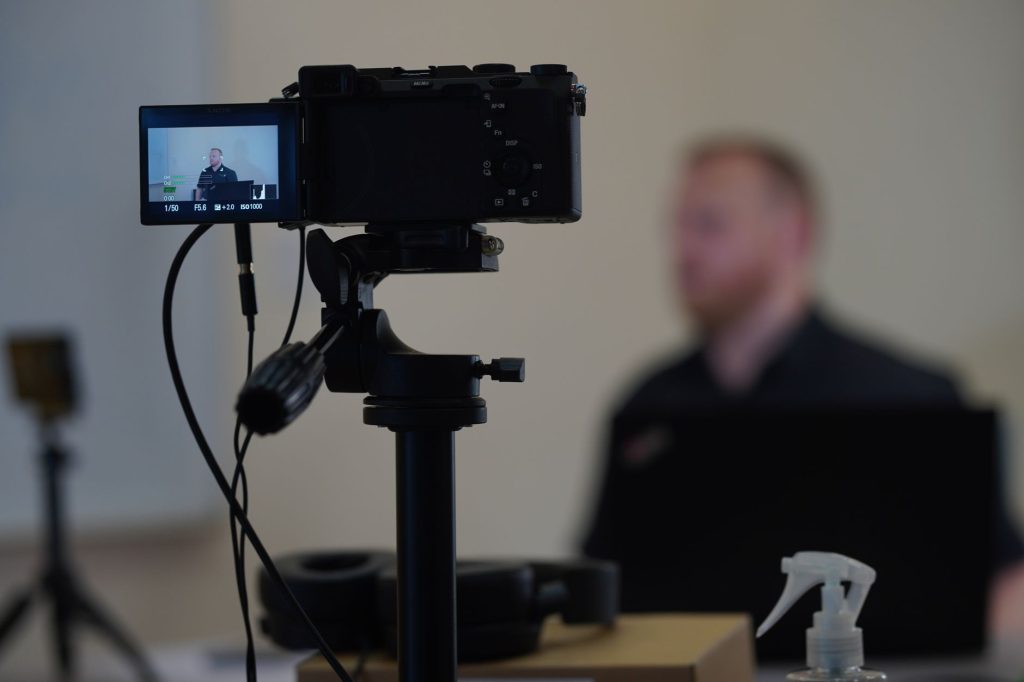
Players get an introduction to the White Sox digital brand and the team’s approach in those sessions. They also learn how the social and video teams will work with them during the season. Brogdon describes it as “symbiotic”: players back the social team’s efforts, and the team helps grow their personal brands.
Social media also carries risks for athletes:
- Loss of focus and distraction: Excessive use can pull athletes away from looking after their career and training, and make them waste energy. Social media can also be addictive, which harms their athletic performance.
- Added pressure from social media exposure: Users’ comments and criticism can cause anxiety and affect their career. Cyberbullying can also damage their mental health.
- Security and privacy risks: As public figures, athletes can put their security and privacy at risk if they expose overly personal details.
- Reputation damage: Posting inappropriate or controversial content can damage an athlete’s reputation and have serious repercussions for their career.
- Risks to self-esteem and confidence: Constantly comparing themselves with other people can put their self-esteem and their confidence in their athletic potential at risk.
Giving athletes creative control over personal channels can build genuine fan loyalty. Teams must accept the operational risk of unscripted moments they can’t preview or edit, and agree in advance how much of that content will remain untouched.
How to monetize fan engagement and prove sponsor ROI
Teams monetize fan engagement by weaving sponsors into recurring gameday rituals, then prove sponsor value by tracking reach, engagement, demographics, and conversions. Sponsors earn value from a natural, in-the-moment presence while fans watch. Fans spot forced ads quickly and scroll past; billboard-style digital activations and stiff commercial announcements can get ignored too. Put your partners inside recurring gameday rituals, and teams can preserve goodwill while giving fans a reason to remember the brand.
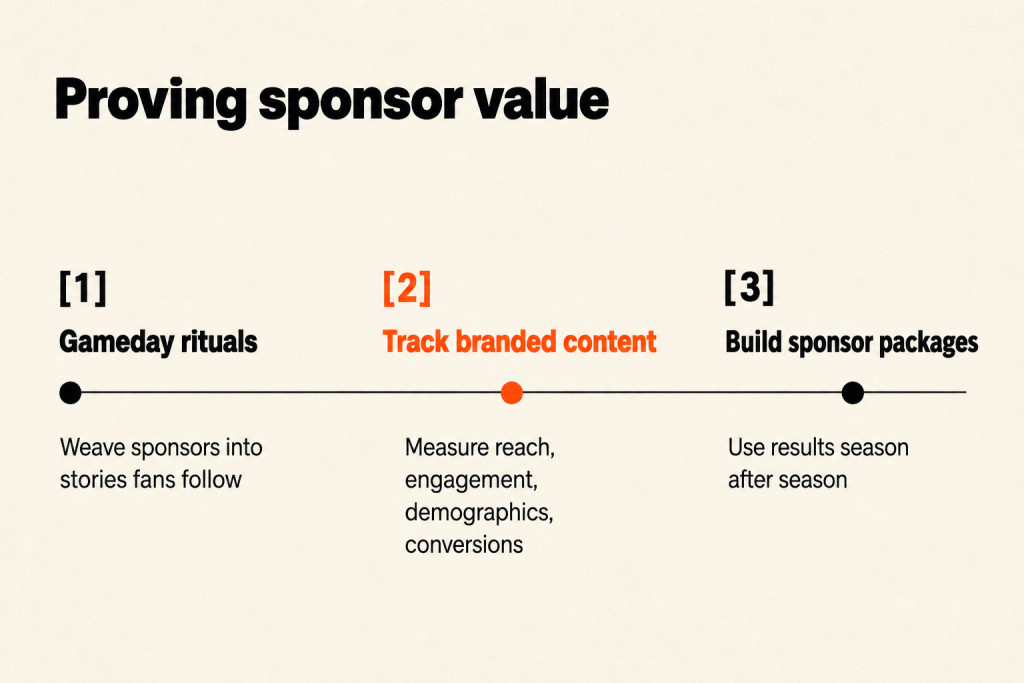
Recurring gameday rituals give sponsors a role in stories fans already follow. A player’s mic’d-up hydration break can become a sports drink partner’s sponsored highlight, while a streaming partner can present a buzzer-beater replay. The airline that brought the team to its destination can sponsor a behind-the-scenes travel video, with each brand woven into the story.
Track branded content on each channel with social analytics, measuring reach, engagement, demographics, and conversions. Those figures help prove ROI and give teams what they need to build stronger sponsor packages.
How do teams assess sports social media performance?
Teams assess sports social performance by tracking engagement by format, audience retention, platform-specific behaviours, timing and frequency, and resource efficiency. Measuring a post after it is published helps teams capture its insight and act on it. That feedback loop sharpens instincts and helps content shift with fan behaviour.
Check these measures to see how each post performs:
- Engagement rate by format: video, static, carousel, and poll
- Audience retention, especially for short-form video
- Platform-specific behaviours: TikTok completion rates versus Instagram saves
- The impact of timing and frequency
- Resource efficiency
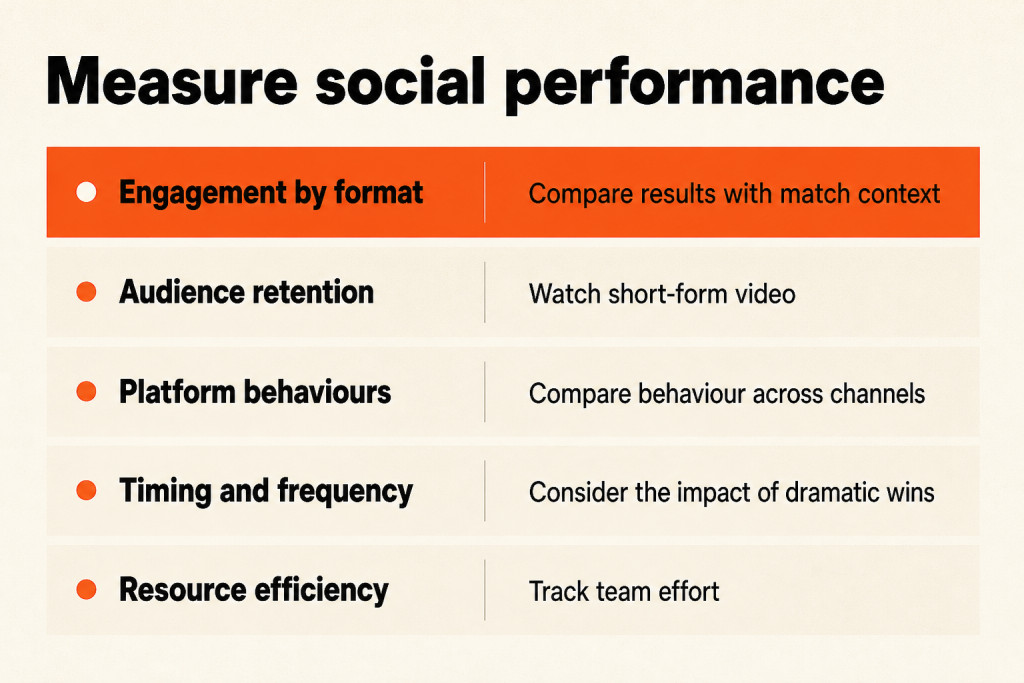
Channel analytics show teams only part of the story. Dashboards let them compare results across channels and connect content performance to business goals, including partner impressions or traffic sent to owned platforms.
A dramatic win can push engagement numbers well above the usual level. Keep that spike out of the day-to-day baseline, which should reflect audience interest during off-peak periods or losing streaks.
Frequently asked questions
How can sports teams turn social media engagement into actual revenue?
Social media gives sports teams direct routes to revenue, moving fans from awareness toward purchases and sponsor value for the team:
- Ticket sales
- Merchandise conversions
- Premium content subscriptions
- Sponsor value
Should athletes manage their own social media or should the team handle it?
Teams should let athletes express themselves while protecting a consistent brand identity. With a roster of creators and distinct personalities, athletes need room to speak in their own voices within that shared identity.
What metrics should sports teams focus on to measure social media success?
Engagement rate
During live events especially, Engagement rate helps teams judge whether content holds attention. High reach paired with little interaction means posts show up in feeds without striking a chord. The rate gives teams their clearest read on fan connection.
Fan sentiment
Fan sentiment captures whether people feel excited, frustrated, loyal, or skeptical. Watching changes around wins, losses, trades, and controversies can shape both messaging and response plans.
Follower growth and retention
Follower growth and retention show audience health over time; a jump after a major win is positive, but teams should check how many followers remain a month later. They should also check whether they’re reaching new demographics or global markets, too.
Conversions
Ticket purchases, merchandise sales, and exclusive-content sign-ups show where fan interest starts producing business results.
Of 854 US consumers asked, 66% said they wanted brands to reply right away on social; only 24% would wait an hour.
What types of content work best to engage sports fans on social media?
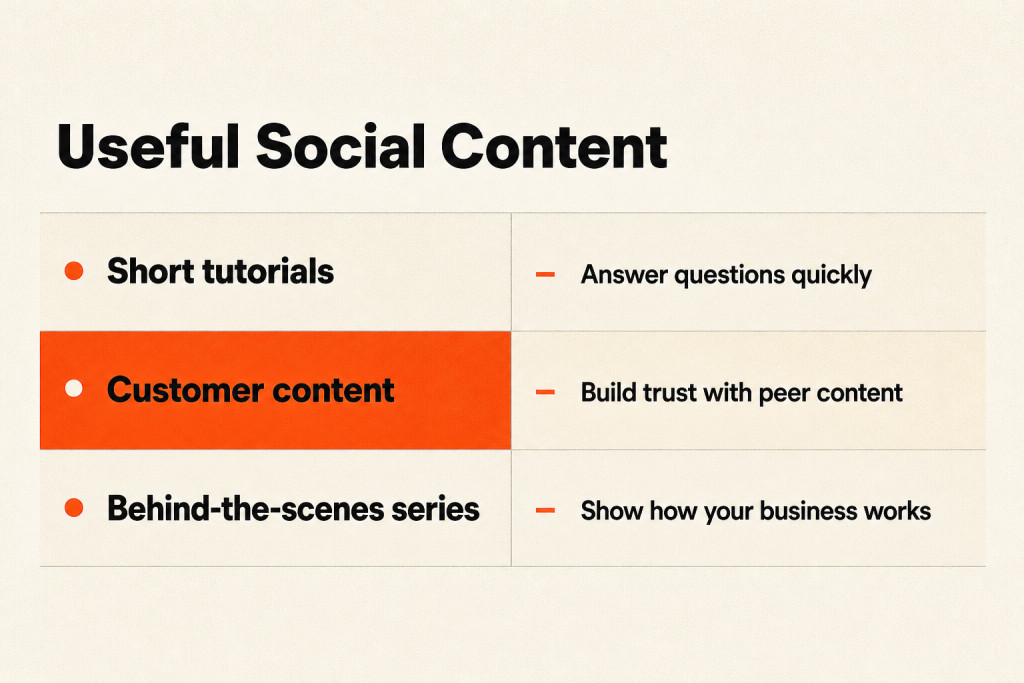
Fans respond steadily to content that pairs excitement with a human side.
- Behind-the-scenes access: Locker room moments, team travel, pregame rituals, and postgame emotion.
- Game-day energy: Short highlight reels, real-time reactions, buzzer-beaters, and big plays.
- Player spotlights: Birthdays, Q&As, hobbies, family moments, and milestones that show who players are off the field.
- Interactive content: Instagram polls, TikTok duets, “pick our warm-up song,” and other formats that invite fan input.
- Community connections: Charity work, school visits, youth clinics, and hometown shoutouts that reinforce local pride.
How can sports teams use AI in their social media marketing?
AI can help teams serve more personal content at scale. It can surface a fitting highlight for each fan, spot the next viral trend, or help teams join a conversation quickly while it’s happening.
In short, social media marketing for sports can turn fan interest into ticket sales, merchandise conversions, premium content subscriptions, and sponsor value. Athletes bring individual expression; teams maintain a shared brand identity. Engagement rate, fan sentiment, follower growth and retention, conversions, and response time help teams read audience reaction and business impact. Behind-the-scenes access, game-day energy, player spotlights, interactive content, and community connections bring fans closer. AI can surface relevant highlights and trends as conversations happen.