When you’re responsible for enrollment, it can be hard to tell whether social media marketing for schools is reaching prospective families or simply filling the feed. A large follower count can look like progress, even when it tells you little about open house visits or enrollment inquiries.
This guide covers how to set enrollment goals, choose channels for the audiences you need to reach, shape engagement and safety practices, and check whether social activity connects with open house visits and inquiries.
What are the goals of social media marketing for schools?
Schools can use social media to grow student numbers and strengthen family connections. Showing student life gives families a view of the school beyond administrative notices. Schools can also partner with an agency offering Social Media Marketing Services for structured recruitment campaigns.
Social media
Make social media a planned part of the school’s communications setup, alongside its other digital communications.
measurable and realistic
Set a measurable, realistic goal before you launch a social media campaign. If you want to grow student numbers, choose a reachable target that fits the approach you plan to use. Without goals, schools can struggle to figure out who they need to reach, choose a suitable content tactic, and track how the campaign performs.
a mission
Give the school’s social media program a mission of its own, tied to what the school wants to achieve. The mission should state the school’s vision for connecting with its community.

The communications team should usually take the lead, alongside the public relations director and, when applicable, outside PR or communications consultants. Together, they shape the social media mission, get approval for it, and promote it.
A school mission might read: “Share content and create meaningful dialogue with families, students, staff and the community to improve communications and support the educational goals of the school.”
A mission can spell out the school’s aims: growing student numbers, improving its online reputation and brand, or helping current students’ parents learn more about the services their children receive.
Public and private schools can use social media to grow enrollment, build stronger ties with people connected to the school, rally supporters, and strengthen community backing, a core aim of social media marketing for private schools.
How to choose channels for your target audience
For school social media, choose only channels that support enrollment goals. Facebook and Instagram can reach millennial parents; TikTok, Snapchat, and Instagram can help connect with current students.

At least 2 social media channels are advisable for school marketing. Reusing similar content across them can save time and money, while a dedicated social media manager can help maximize the benefits of the school’s social media presence.
Parents’ schedules
Since parents are typically more active on Facebook than Instagram, plan posts around their schedules and lifestyles.
Posting times
These time slots generally see the most engagement:
- Facebook: 3:00pm on Wednesday, Weekends from 1:00-4:00pm, or any day of the week from 12:00-1:00pm.
Images
Images lift Facebook post engagement 2.3x compared with posts that have no image.
Videos and pictures
Use videos and pictures, the formats Instagram is built around.
Mobile engagement
Instagram is used mostly on mobile devices, whereas Facebook sees substantial use on desktop as well as mobile.
Posting times
- Instagram: Mondays and Thursdays at any time, except for between 3:00-4:00pm.
TikTok
Giving student creators creative control can bring authentic reach with applicants, though the brand polish will be looser than in standard institutional communications.
A LinkedIn group can bring influential supporters together, giving the school a place to share achievement results, school levy info, alumni news, and fundraising news.
- LinkedIn: Midweek from 5:00-6:00pm, noon, or 7:30-8:30am.
What engagement rules should school social accounts follow?
Correct straightforward logistical mistakes in public, where everyone can see the fix. If a student issue or complaint is personal, acknowledge it briefly, then take the conversation to phone or email.
Treat school social accounts as places for conversation, since followers expect the school to engage. According to research, 42% of people who use online platforms expect a brand to respond within 60 minutes. Reply to comments and messages, share behind-the-scenes school content, run educational contests, and post polls.
Two additional practices help schools share authentic content and keep engagement focused:
- Like or share posts from coaches, teachers, students, and parents when the content feels authentic and fits your school’s efforts; that might mean photos, game scores, or a quote about an experience.
- Create a branded hashtag, then share or engage only with posts using that specific hashtag.

Make channel monitoring and replies a top priority, even when several staff members contribute content. One person should hold ultimate responsibility for managing the school’s social conversations. Name that person as the school builds its social media setup and assigns permissions.
When Negative Comments Surface:
Some parents and caregivers speak forcefully on social media. Posting online can embolden them, which makes a quick, appropriate response matter more. Address negative comments and discussions directly, as soon as possible.
- Set up authority workflows for different issues, so a negative comment about a teacher can go automatically to the principal’s attention.
- Flag certain words and subjects with “forbidden” alerts.
- Develop a contingency plan for addressing the spread of negative information, including strategies for direct comments or responses.
- Require approvals for any high-risk responses.
Protecting students with clear rules for posting photos
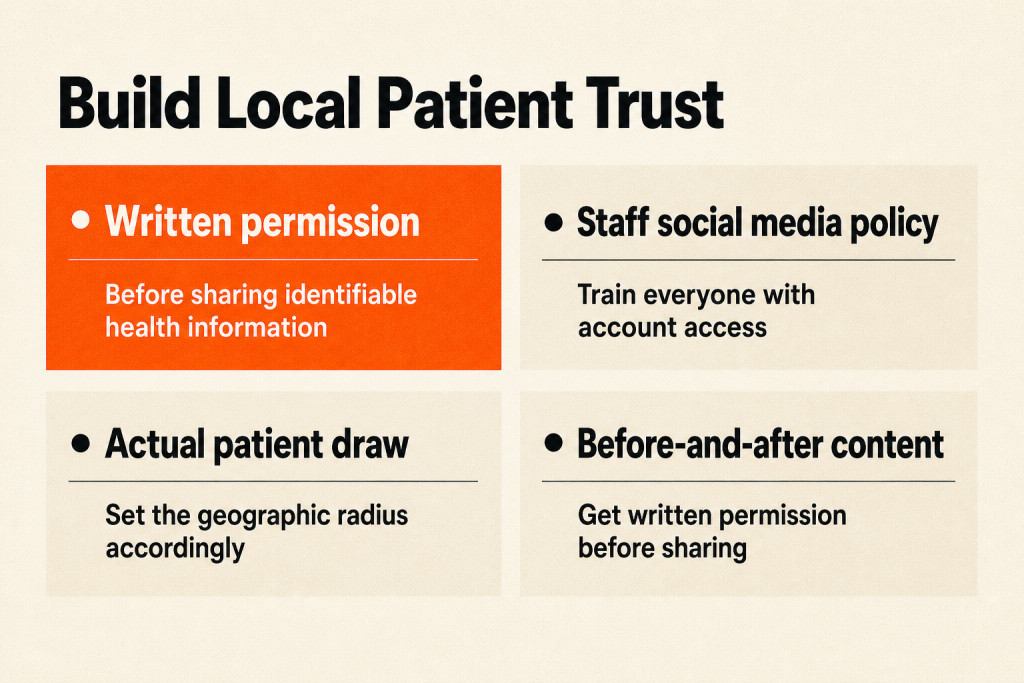
Schools protect students on social media with clear expectations and firm rules about who has permission to post photos.
- Provide guidelines face-to-face. Tell students, faculty, and parents what you expect on social media, and explain that the school will not share content from personal profiles if it does not represent your school.

Families and caregivers can also sign the media release form on the school’s website, giving the school permission to post photos on its social media.
How to track performance and adjust your social media strategy
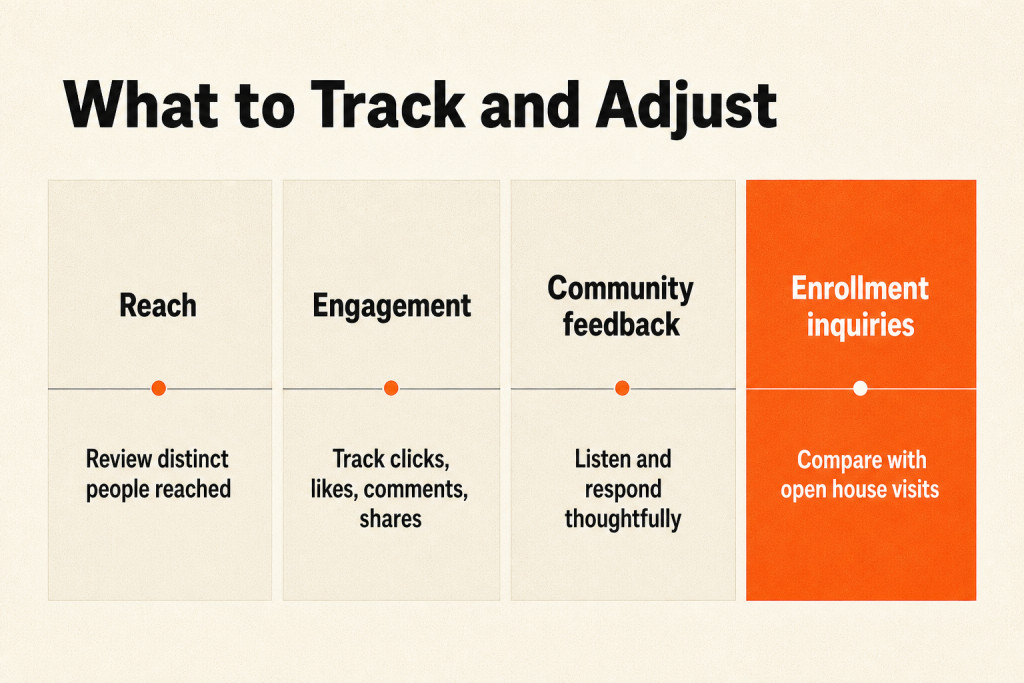
Schools should use performance data to adjust their social media strategy in line with enrollment goals. When you check built-in analytics, you can see how social media content performs, including reach and engagement, and which content resonates with your audience.
Reach
Reach tallies the distinct people who visit a page or post, or who have seen any content connected to your page.
Viral reach
If a friend shares a story, viral reach counts the distinct people who see your post through it.
Organic reach
Organic reach tracks people who see your post through unpaid distribution.
Paid reach
Paid reach measures the audience for paid posts.
Engagement
Engagement tallies the people who click on, like, comment on, or share your posts.
Online monitoring tools let you follow conversations about your school as they happen. Listen to people connected to the school, then respond to praise or concerns and use community feedback to shape the school’s message.
Online surveys are quick to create and give an immediate read on what your audience thinks about school issues.
Make a habit of reviewing the numbers from your school’s online platforms. Record your strongest posts, noting what each contains and how it is presented, as well as when it appeared, then use what you learn to shape and fine-tune your next communications plan. Keep repeating the elements that have proved effective at engaging your audience.
A large follower count or viral views may give the wrong impression if they don’t lead to open house visits or enrollment inquiries.
Conclusion
Enrollment goals should guide social media marketing for schools. Track reach and engagement to see how posts perform, while using social monitoring and surveys to hear community feedback and identify the formats and timing that connect with people. Then compare that activity with open house visits and enrollment inquiries.