
With the global SEO software market projected to surpass $105 billion by 2026, the pressure to choose the right tech stack has never been higher. Yet, because each tool surfaces different data, many companies end up running two or three tools at the same time.
This creates a common problem. Teams either overspend on tools they barely use, or they choose a platform that doesn’t actually support their SEO workflow.
This guide from Golden Owl Digital breaks down SEMrush vs Ahrefs vs Ubersuggest from a practical perspective. We’ll look at how SEO tools collect data, where each platform performs best, and how marketing teams actually use them in real projects.
Key Takeaways
|
Why Choosing the Right SEO Tool Matters More Than Ever
SEO tools used to be simple keyword research software. Today they are closer to full marketing intelligence platforms.
Subscription prices have increased steadily, with many teams paying $100 to $500 per month depending on usage limits and features. At the same time, search itself is becoming more complex.
AI-generated results, evolving SERP features, and changing search behavior mean that interpreting SEO data now requires more context than ever before.
Choosing the wrong platform can quietly drain time and budget. Teams spend hours collecting data that does not translate into real opportunities, or they rely on metrics that only tell part of the story.
This article focuses on three widely used platforms:
- SEMrush, a broad digital marketing intelligence suite
- Ahrefs, known for deep backlink and SEO data
- Ubersuggest, a simpler and more affordable SEO platform
Understanding where each tool fits can save both money and effort over the long term.
How SEO Tools Actually Work (And Why Data Is Different)
One of the most confusing things about SEO tools is that they often show different numbers for the same keyword or website. This happens because each platform collects data in its own way.
Most SEO tools rely on a mix of several data sources.
Keyword volume estimation
Search volume data typically comes from aggregated datasets built using clickstream data and search engine signals. These estimates are then modeled to approximate how often people search for a term each month.
Because each platform uses different modeling approaches, keyword volumes rarely match exactly.
Clickstream data
Some platforms supplement their data with anonymized browsing behavior from large user panels. This helps estimate which search results receive actual clicks.
Clickstream data can provide useful directional insight, but it still remains an estimate rather than a direct measurement.
Backlink crawlers
Tools like SEMrush and Ahrefs run their own web crawlers that scan billions of pages to discover backlinks. The scale and speed of these crawlers determine how quickly new links are detected.
Ahrefs, for example, is widely known for operating one of the largest commercial web crawlers outside of search engines.
SERP feature detection
Modern SEO tools also track features like:
- Featured snippets
- People Also Ask boxes
- Local packs
- Video results
Tracking these features helps marketers identify additional opportunities to appear on the results page.
Data freshness
Another important factor is update frequency. Some backlink discoveries appear in one tool several days before they appear in another because crawlers operate at different speeds.
The important takeaway is simple. No SEO tool has access to Google’s internal data. Every platform provides modeled insight, not exact numbers.
Understanding that limitation helps teams interpret data more realistically.
Read more: Which Social Media is Best for SEO? 6 Best Sites in 2026
SEMrush: A Full Marketing Intelligence Platform
SEMrush started as an SEO toolkit in 2008 and gradually evolved into a broader digital marketing platform. Today it includes tools for SEO, paid advertising research, competitive analysis, and content marketing.
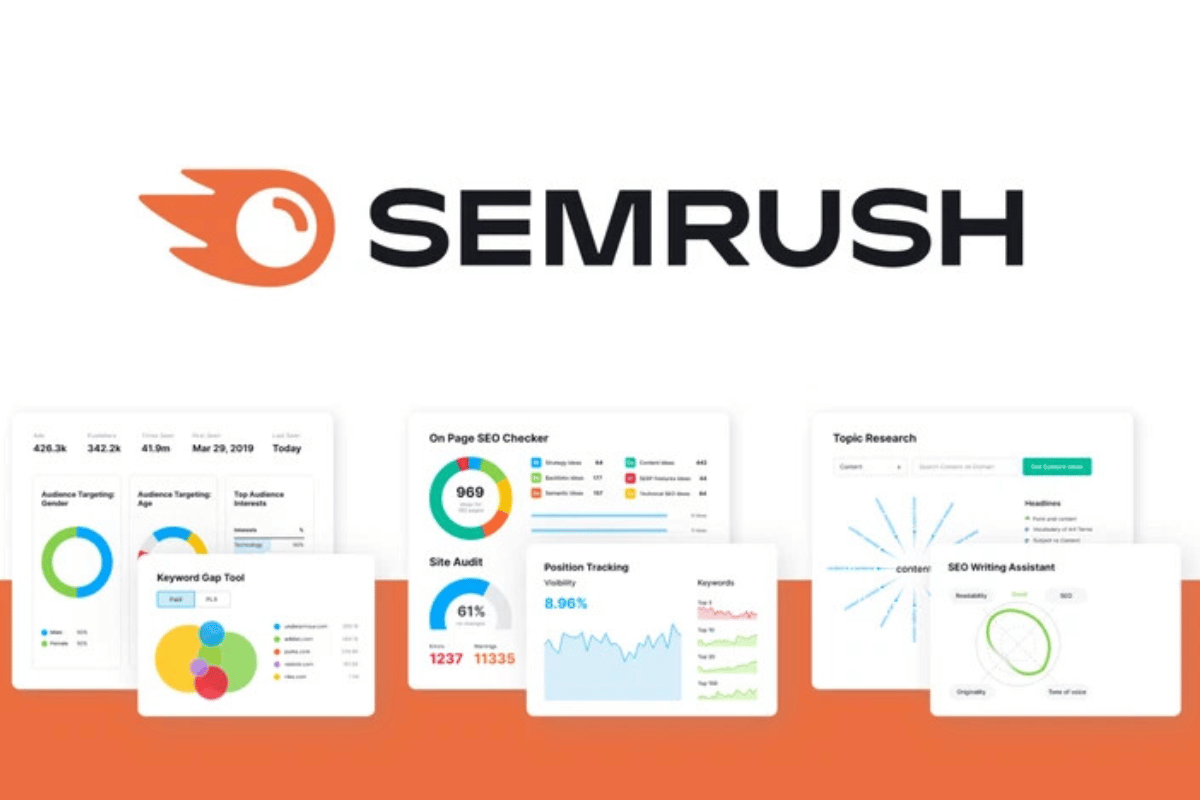
One of its biggest strengths is the scale of its keyword database, which spans billions of search queries across more than a hundred countries. This makes it particularly useful for companies working across multiple markets.
The platform also maintains a large backlink index and provides a tool for detailed technical SEO audit that can detect more than 140 types of SEO issues. These audits help identify problems related to crawlability, page speed, metadata, and internal linking.
Rank tracking is another strong area. Users can monitor keyword rankings daily across locations, devices, and search engines.
Where SEMrush stands out most is its integration of SEO and PPC data. Advertising research tools reveal which keywords competitors are bidding on and how much traffic paid campaigns may generate.
For marketing teams running both organic and paid search campaigns, this combined view of data can be extremely useful.
Many SEO engagements we see begin with keyword and market analysis like this. When teams understand where real demand exists, the rest of the strategy usually becomes clearer.
Ahrefs: Built for Backlink Intelligence and SEO Data Depth
Ahrefs is widely known as one of the strongest platforms for backlink analysis. The company originally focused on building a massive web crawler capable of mapping link relationships across the internet.
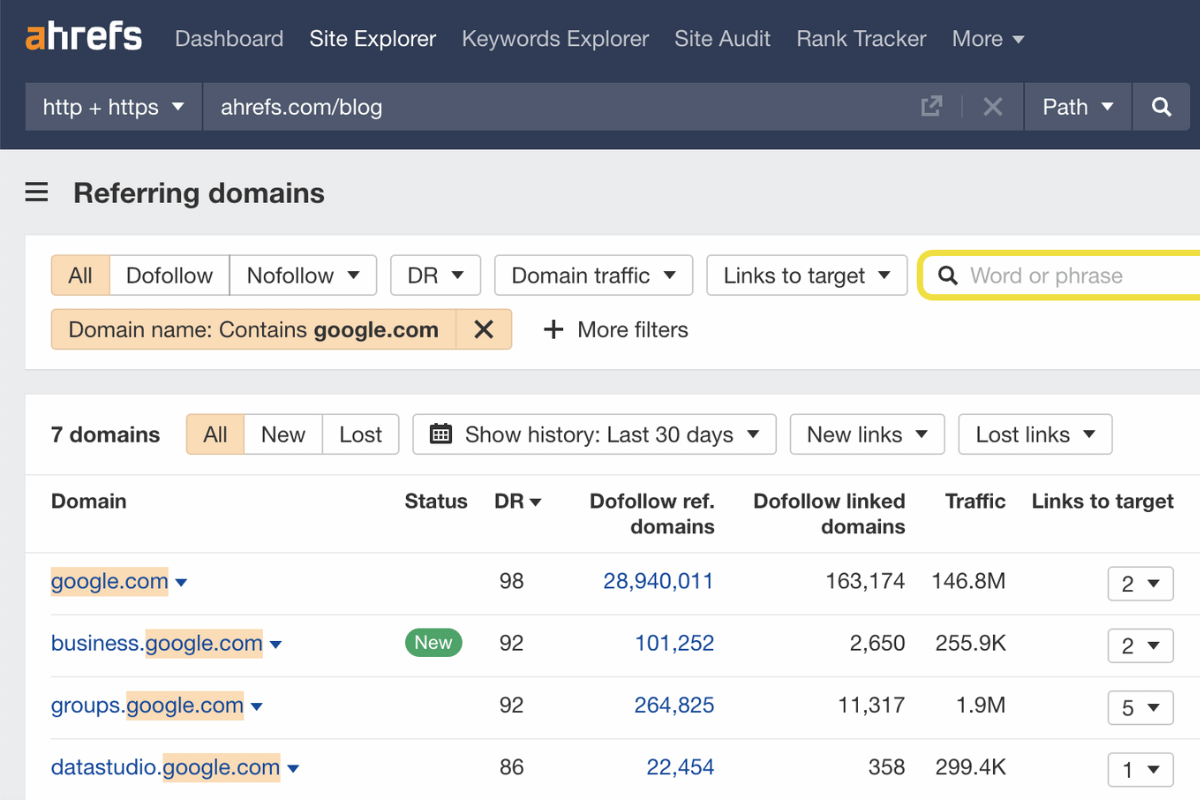
Today that crawler processes billions of pages, allowing Ahrefs to maintain one of the largest commercial backlink indexes available.
This makes the platform especially valuable for link-building campaigns and competitive research. SEO teams can analyze referring domains, anchor text distribution, and link growth over time.
Ahrefs also includes several core SEO tools, including:
- Keyword Explorer for search demand analysis
- Site Audit for technical SEO issues
- Content Explorer for identifying popular content topics
The keyword research capabilities are strong, and many professionals appreciate Ahrefs’ keyword difficulty metric for evaluating how competitive a search term may be.
Rank tracking and site audits are also included, although the platform focuses primarily on organic search intelligence rather than broader marketing analytics.
In highly competitive industries, the depth of backlink data often becomes a deciding factor when choosing an SEO platform.
Ubersuggest: A Simpler SEO Tool for Smaller Teams
Ubersuggest occupies a different position in the SEO tool ecosystem. The platform was redesigned and expanded after being acquired by digital marketer Neil Patel, with the goal of making SEO tools more accessible.
Compared with larger platforms, Ubersuggest focuses on simplicity and affordability.
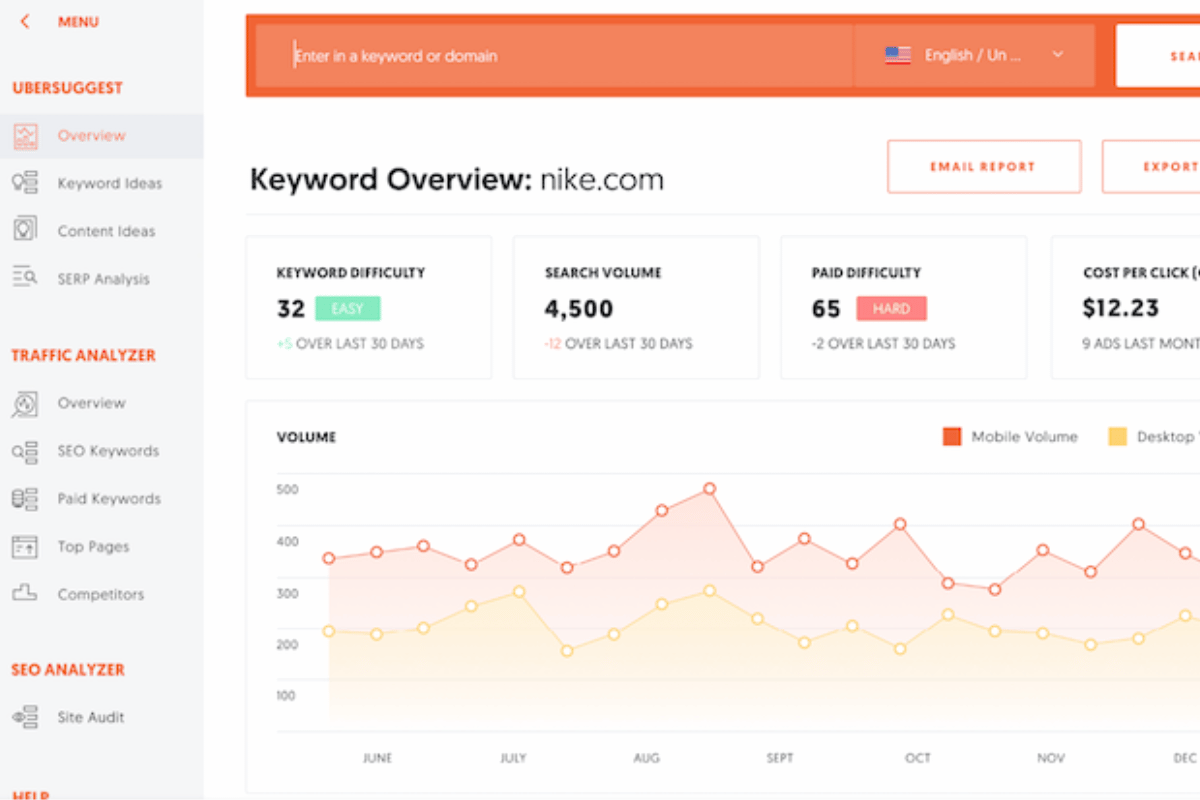
The interface highlights core tasks such as:
- Keyword research
- Content ideas
- Site audits
- Rank tracking
While its keyword database and backlink index are smaller than those of SEMrush or Ahrefs, the platform still provides useful insights for many smaller websites.
Technical audits focus on the most common SEO issues, including broken links, slow pages, and missing metadata.
Rank tracking is available as well, although keyword limits depend on the selected plan.
As websites grow and SEO campaigns become more competitive, some teams eventually move to larger platforms with deeper datasets.
Pricing and ROI: What You Are Really Paying For
SEO tools often look similar on the surface, but pricing structures can vary significantly.
| Tool | Starting Price | Typical Users |
| Ubersuggest | ~ $29 per month | Small businesses and beginners |
| Ahrefs | ~ $129 per month | SEO specialists |
| SEMrush | ~ $139 per month | Marketing teams and agencies |
The price difference often reflects data scale and feature depth rather than basic functionality.
Smaller platforms typically limit the number of:
- tracked keywords
- site audits
- competitor reports
Larger platforms expand these limits and provide additional datasets.
However, many companies end up paying for features they rarely use. We see this quite often. Teams subscribe to multiple SEO tools without defining a clear workflow for how each one will support their strategy.
Thinking in terms of return on insight rather than just cost can help avoid unnecessary expenses.
Read more: SEO Agency Pricing in 2026: Average Costs and Package Guide
SEMrush vs Ahrefs vs Ubersuggest: Which One Should You Choose?
After comparing features, datasets, and pricing, the decision between SEMrush vs Ahrefs vs Ubersuggest usually comes down to three factors: the depth of SEO data you need, the size of your marketing team, and your available budget.
Each platform is built around a slightly different philosophy.
SEMrush focuses on all-in-one marketing intelligence, combining SEO, paid advertising research, and competitive analysis in a single platform. Ahrefs is built primarily for deep SEO analysis, especially backlink intelligence and organic search research. Ubersuggest aims to make SEO tools simpler and more affordable, focusing on the most common tasks smaller teams need.
Looking at them side by side helps clarify which tool fits different situations.
| Criteria | SEMrush | Ahrefs | Ubersuggest |
| Keyword database | Very large global dataset | Large dataset with strong keyword difficulty analysis | Smaller keyword database |
| Backlink analysis | Strong backlink index | Industry-leading backlink crawler | Limited backlink coverage |
| Technical SEO audit | 140+ checks with detailed reporting | Comprehensive audit with 100+ checks | Basic site audit features |
| Rank tracking | Advanced tracking across devices and locations | Daily rank tracking | Basic tracking with smaller limits |
| PPC research | Strong advertising and competitor ad insights | Minimal PPC features | No PPC research |
| Ease of use | Powerful but feature-dense | Clean interface focused on SEO | Very beginner-friendly |
| Starting price | ~ $139/month | ~ $129/month | ~ $29/month |
| Best for | Agencies and marketing teams | SEO specialists and link builders | Small businesses and beginners |
From a pricing perspective, Ubersuggest is clearly the most affordable option. It provides basic keyword research, site audits, and rank tracking at a fraction of the cost of larger platforms.
However, its smaller datasets mean it may not provide the depth required for competitive industries or large-scale SEO campaigns.
Ahrefs sits in the middle. Its pricing is similar to SEMrush, but the platform is heavily focused on organic search intelligence, particularly backlink data and keyword competitiveness. For teams whose strategy revolves around content and link building, this depth can be extremely valuable.
SEMrush is often the most comprehensive platform. Because it combines SEO, PPC research, and competitive intelligence, it tends to work well for marketing teams running multi-channel campaigns.
Which Businesses Should Use Each Tool?
In practice, the choice often aligns with the size and goals of the organization.
Ubersuggest works best for:
- Small businesses starting their first SEO campaigns
- Bloggers and content creators
- Marketing teams with limited budgets
- Websites that mainly need keyword ideas and basic site audits
Ahrefs works best for:
- SEO specialists and in-house SEO teams
- Companies focusing heavily on content marketing
- Link-building campaigns and competitive backlink analysis
- Businesses in competitive search markets
SEMrush works best for:
- Digital marketing agencies managing multiple clients
- Companies running both SEO and paid search campaigns
- Marketing teams that need cross-channel competitive intelligence
- Organizations working across multiple countries or markets
In many real-world workflows, companies end up combining tools. For example, some teams use SEMrush for keyword research and PPC insights, while relying on Ahrefs for backlink intelligence.
Things to Look for When Choosing an SEO Tool
Before committing to any platform, it helps to evaluate how well it supports your specific workflow. A few criteria often make the biggest difference.
When choosing an SEO tool, consider:
- Keyword database size: Larger datasets provide better coverage for niche or international markets
- Backlink index depth: Critical for link-building and competitive analysis
- Technical SEO auditing: Useful for identifying site health issues and crawl problems
- Rank tracking capabilities: Location tracking, device tracking, and update frequency matter
- Data freshness: Faster crawler updates can reveal new backlinks earlier
- Team collaboration features: Important for agencies and larger marketing teams
- Pricing scalability: Some tools increase costs significantly as projects grow
- Integration with other platforms: Especially Google Search Console, GA4, or reporting tools
How SEO Teams Use These Tools in Practice
In reality, many SEO teams do not rely on a single platform. Each tool provides a slightly different perspective on search data.
A common workflow might look something like this:
- SEMrush for keyword research and market analysis
- Ahrefs for backlink intelligence and competitive link analysis
- Google Search Console for validating performance data directly from Google
This combination allows teams to cross-reference data and reduce blind spots.
The challenge is not usually the tools themselves. More often, the difficulty lies in turning raw data into a clear strategy.
Many companies purchase multiple platforms but still struggle to prioritize opportunities or define a consistent SEO workflow. This is often where structured SEO planning becomes valuable.
Conclusion
The SEMrush vs Ahrefs vs Ubersuggest comparison continues to come up because each platform solves a different problem.
SEMrush provides a broad marketing intelligence platform that combines SEO, paid search, and competitive analysis. Ahrefs remains one of the strongest tools for backlink research and organic search insights. Ubersuggest offers a simpler and more affordable option for teams that are just getting started with SEO.
Choosing between them depends less on which tool is “better” and more on how your team approaches search marketing.
Many organizations already have access to powerful data. The real challenge is knowing how to interpret that information and turn it into a growth strategy.
If you are evaluating SEMrush vs Ahrefs vs Ubersuggest and want help building a practical SEO roadmap around the data, the team at Golden Owl Digital often works with companies at exactly this stage. Turning insight into action is usually where the biggest gains appear.

Jaden is an SEO Specialist at Golden Owl Digital. He helps brands rank higher with technical SEO and content that resonates