
Choosing B2B automotive content marketing platforms isn’t easy.
Digital-first buying can carry a customer through hundreds of online touchpoints, while commercial automotive engineers need technical content to judge a product. Compare fitment details, technical content, distribution, and revenue measurement when choosing among B2B content marketing platforms automotive industry teams can evaluate.
Compatibility data and a professional network do different jobs. Keep the distinction clear while weighing your platform options.
Why Do B2B Automotive Content Marketing Platforms Need Fitment Data?
Customers can feel confident a product fits their vehicle when content includes accurate product and fitment data. ACES fitment data supports that confidence, with compatibility details for year, make, model, trim, or engine displacement helping build trust. Unlike generic content marketing platforms, fitment-ready automotive systems connect content to vehicle compatibility details.

Aftermarket Content Professionals Network (ACPN) within Auto Care Association
The Aftermarket Content Professionals Network brings together over 750 individual members from the aftermarket industry, with education, professional development, and networking for automotive content professionals as its focus.
Which Content Formats Convert B2B Automotive Buyers?
High-converting formats include detailed buyer’s guides, comparison checklists, technical blogs, how-to installation guides, metric-focused case studies, interactive demos, free trials, and ROI calculators, giving buyers the detail and proof they need to evaluate a solution. Commercial automotive engineers tend to value technical specifics and operational evidence over lifestyle media, even if that media is polished for retail buyers. These technical formats support an effective b2b content marketing strategy.
| Customer Journey Stage | Content Goal | Key Content Formats | Automotive SaaS Content Theme Examples |
|---|---|---|---|
| Awareness (Top-of-Funnel) | Establish thought leadership and define industry problems. | Industry Reports, Trend Analysis, Expert Webinars focusing on strategy. | “Future of Fixed Ops,” “Connected Car Data Monetization,” “Dealer AI Readiness”. |
| Consideration (Middle-Funnel) | Position solutions, educate on features, and build credibility. | Detailed Buyer’s Guides, Comparison Checklists, Technical Blogs, How-To Installation Guides. | “Best cloud DMS features,” “API integration repair shop software,” “DMS parts inventory module”. |
| Conversion (Bottom-of-Funnel) | Overcome skepticism and drive commitment to a demo/trial. | Case Studies (metric-focused), Interactive Demos, Free Trials. Use lead magnets like detailed ROI Calculators. | “Schedule live demo [Product Name],” “DMS software ROI calculator”. |
| Retention & Advocacy | Maximize feature adoption and ensure satisfaction (reduce churn). | Onboarding Checklists, Video Tutorials, Knowledge Base Articles, Certification Courses (using an LMS). | “How to use [Feature] in DMS,” “DMS compliance training”. |
Across the buying journey, content carries buyers from education to product proof, demos, onboarding, and training. For automotive SaaS, customers often engage in over 900 digital interactions before purchase, reflecting the length and complexity of the journey.
Pick assets such as “How to use [Feature] in DMS,” that let buyers see product details and evidence for themselves, rather than taking your word for it:
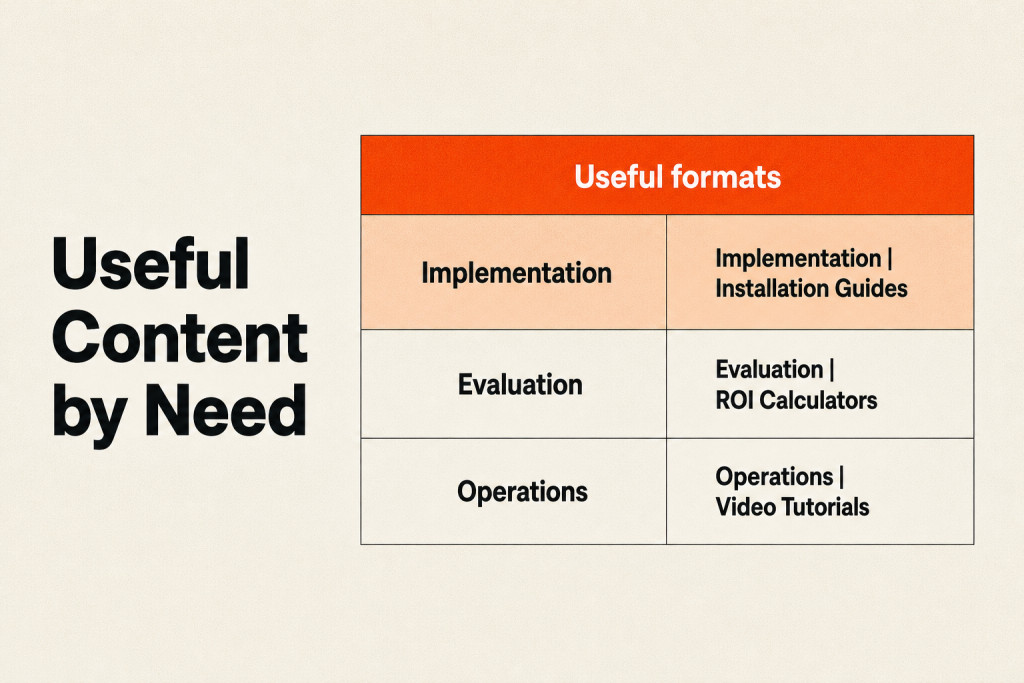
- An easy-to-understand Trust Center with uptime history, status pages, and SLAs
- Security and compliance overviews covering access controls, audit trails, and data handling details
- Integration maps, API docs, and sandbox walkthroughs that show interoperability
- Implementation timelines, training plans, and change management guides
- Metric-based case studies with quotes from IT and operations teams
- Clear pricing pages explaining what is included and how costs scale
- Printable PDFs of technical bulletins, how-to guides, or checklists
- In-depth blog posts, articles, and product descriptions on topics and trends
- Infographics, charts, graphs, and tables that clarify complex details and compare product features and benefits
- Case studies with before-and-after results, customer photos, and quotes that show product results in practice and build credibility and trust
Video lets buyers get a close look at commercial vehicles, systems, and business experiences. Include:
- Virtual tours of commercial vehicle inventory
- Demonstrations of fleet management software and systems
- Testimonials from current business clients
- Comparisons of commercial vehicle options
- Explanations of business financing and leasing structures
For business challenges, provide downloadable resources such as white papers, case studies, and How-To Installation Guides, positioning your dealership as a B2B automotive thought leader. Topics can include:
- Optimizing fleet operations for sustainability
- Managing vehicle maintenance across multiple locations
- Balancing upfront costs with long-term value in commercial vehicle acquisition
- Implementing telematics and fleet tracking for business efficiency
Put these resources behind information-request forms, where they can bring in leads and offer potential clients something useful.
Your content can tackle ongoing automotive operations problems, from paper-heavy workflows and long wait times to slow customer approvals and the emerging EV service training gap. Build topics around those pain points with how-to guides:
- Blogs explaining how to replace paper repair orders with digital workflows
- Guides to reducing cycle times from check-in through vehicle delivery
- Educational content on the EV Service Training Gap and high-voltage safety, including how your software supports training, documentation, and compliance
Where to Distribute Content and Reach Business Buyers
Use your website, social media, email, guest posts, and YouTube to distribute content across the channels business buyers use. Your website:
Publish content on your website first; customers can use it as their main source for product and service information. Publishing there also helps build domain authority (DA). See our guide to content marketing on social media for platform-by-platform tactics.
Social media:
Share new content on social media. For a very visual product, post plenty of images from your team or customers and link back to the site. Forecasts put B2B product brands at 14.7 percent of their marketing budget over the next 12 months.
Email marketing:
Email marketing brings customers back to your site through links to content, and gives you a way to stay in touch without selling-selling-selling.
Segment B2B email marketing by five buyer details:
- Industry vertical: construction, delivery, sales, service
- Fleet size: small, medium, large
- Purchase timeline: immediate, 3-6 months, 6-12 months
- Previous interactions with your dealership
- Specific vehicle interests: trucks, vans, electric vehicles
Business vehicle purchases can take time and involve several stakeholders. Automated email nurture sequences can share relevant information at each buying stage and keep potential business clients in contact over extended periods.
Those sequences can change the information buyers receive as they move through the stages:

- Awareness stage: Industry trends and general educational content
- Consideration stage: Specific vehicle comparisons and ROI calculations
- Decision stage: Financing options, testimonials, direct calls to schedule appointments
Guest posts:
Provide installation instructions and technical material to automotive websites outside your competitive space; offer diagnostic advice and troubleshooting tips, then request backlinks to your own website’s content. Both parties benefit from the collaboration.
YouTube video:
A smartphone can be enough to make authentic YouTube videos; expensive production is not necessary. Prioritize instructional videos and brief tips that solve customers’ immediate problems, then make a 60-second YouTube Short.
Account-based marketing (ABM) pinpoints high-value business accounts and builds engagement with them rather than casting broadly, reversing the traditional marketing funnel. You can use it to identify decision-makers in key accounts, including corporate fleet managers, logistics companies, and other businesses with substantial vehicle needs.
Because B2B automotive sales can involve long cycles and multiple stakeholders, ABM helps marketing and sales work together around key accounts. The two teams can align their efforts on those accounts.
With a unified strategy, marketing and sales teams can create personalized campaigns for the challenges potential business customers face. Their coordination creates a seamless experience and can raise the likelihood of successful fleet or commercial vehicle sales.
Measuring Content Performance and Revenue Impact
Measure content through traffic, engagement, conversions, and SEO performance, then use connected DMS data to trace authenticated offline sales tied to email campaigns. When enterprise automotive purchases involve offline committee reviews, attribution may point to pipeline direction rather than a clear digital path from click to close. Keep an eye on B2B content marketing trends as buyer behavior shifts.
That ROI data can guide future marketing investments.
Judge content marketing by the attention it earns, the response it gets, business results, and search performance.
- Traffic metrics: Page views, unique visitors, and time spent on pages show how well content attracts and holds audience attention.
- Engagement metrics: Bounce rate, social shares, and comments show how well content resonates with readers.
- Conversion metrics: Leads generated and sales directly attributed to specific content pieces show business value.
- SEO metrics: Keyword rankings and backlinks show search performance and domain authority growth; also track how often content appears in Google AI Overviews.

Email results deserve their own check. Track:
- Open rates by segment and message type
- Click-through rates on specific offers and content
- Conversion rates from email to appointment or test drive
- Sales attributed to email campaigns
Several tools show performance across channels:
- Google Analytics: Traffic analysis, page visits, and user behavior insights.
- YouTube Analytics: Video performance and audience engagement, including what percentage of a video gets watched before viewers leave.
- Social media platform insights: Which content types perform best on each channel.
- Other SEO Tools: Ahrefs tracks search results for Google AI Overviews.
Bottom Line: Start With Fitment Data
Choose a platform by checking whether its technical information matches the product, reaches buyers across channels, and ties back to sales records. Since enterprise automotive purchases often include offline committee reviews, early pipeline movement can point in a direction rather than settle the question. Read DMS and CRM records alongside campaign engagement and sales attributed to the content. Traffic, engagement, SEO visibility, and leads help put those sales records in context. Together, these measures show more clearly what B2B automotive content marketing platforms let you track. Before choosing, trace one product’s technical content from its fitment details through buyer channels to the DMS and CRM records you can review.