Choosing social media marketing content ideas can feel like every post has to teach, start a conversation, and promote your business at once. A poll can do more than collect votes, but deciding what job each post should do is where a useful feed starts.
You’ll find practical formats to draw on and a way to balance them around audience response, so you can build a feed that gives people a reason to keep paying attention. Below are social media marketing content ideas grouped by the job each post does.
Educational Social Media Marketing Content Ideas
Educational posts teach your audience something useful tied to your products or services, through step-by-step tutorials, short teaching videos, and myth-busting posts.

Step-by-step tutorials
Turn one tip into a short step-by-step guide that shows people how to use your product or handle a task related to your services. A financial advisor could explain three practical actions for managing business finances; a product store could show three ways to use a best-seller.
Any business can do this. Service providers can share tips drawn from their expertise, product businesses can show customers how to get more from what they bought, and workshops or courses can share pointers from what they teach. When photos start to feel repetitive, switch to short videos: they teach just as well and show more of your brand’s personality.
Industry myth-busting
Every industry has misunderstandings that customers repeat. Myth-busting posts name one, explain why it’s wrong, and offer a clear, workable alternative. Keep the tone friendly rather than preachy.
A nutrition coach focused on plant-based eating, for example, can go beyond recipes to address the objections she hears most often, the habits she wants to encourage, and the hurdles her clients face. You build authority by questioning common advice and offering something better, not by criticizing for its own sake.
Invite Participation With Polls and Customer Posts
Participation posts give followers an easy way to join in, and they show you what your audience thinks. Questions and local references tend to earn more replies, and asking for input leaves followers feeling heard.

Interactive polls
Use polls to involve people in decisions or to research what they want. Keep the two options tied to your business, such as two flavors, two designs, or two workshop dates. To gauge reaction to a new product, post a poll in Instagram Stories or on X and get answers within hours.
User-generated content
User-generated content is any unpaid post a customer creates about your brand, such as a photo, review, or video. It gets people talking about your company and extends your reach to their followers.
- Reshare customer posts with credit and a thank-you.
- Feature photos of customers using your products. Seeing real people happy with a product makes potential buyers more likely to choose it.
Build Trust With Customer Stories and Behind-the-Scenes Posts
Trust posts show the people, process, and proof behind your business, so followers feel they know who they’d be buying from.
Customer testimonials
Testimonials, reviews, short interviews, and customer stories are some of the most persuasive content you can share. Pair a customer’s words with a photo of your product or service in use, or tell the story of how one client applied what you taught. Let customers’ words show what you promise, but mix them with other content so your feed doesn’t read like a wall of praise.
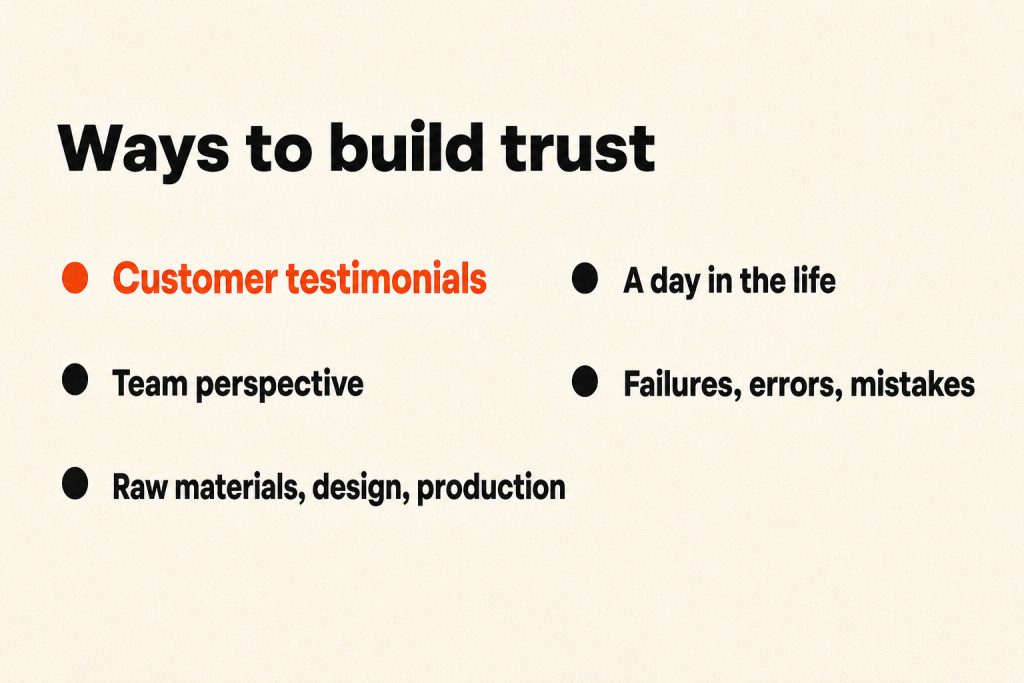
Show the people and work behind your business
- Team introductions: when employees want to take part, short introductions bring followers closer to the company and put faces to the brand.
- How it’s made: use photos, videos, or Stories to show how you choose materials, design products, and produce them before they go on sale.
- A day in the life: let employees film a day at work and share it in Instagram Stories or on TikTok.
- Lessons from mistakes: everyone makes mistakes, and a feed that looks too perfect becomes hard to believe. Share what went wrong and what you changed; followers appreciate the honesty.
Show Results and Products That Support Buying Decisions
Results and product posts help followers who are close to buying decide that you are the right choice.
Before-and-after results
Social feeds lean on images and emotion, so anchor results in concrete numbers:
- Share the figures alongside the milestone they relate to.
- Explain what each figure measures.
- Spell out what it means for your followers and customers.
Shape a results post like a compact case study: focus on the turning point of the project rather than walking through every step in order.
Product spotlights
Show customers how a product works in a short, clear video; it is easier to follow than written instructions. Three spotlight angles work especially well:
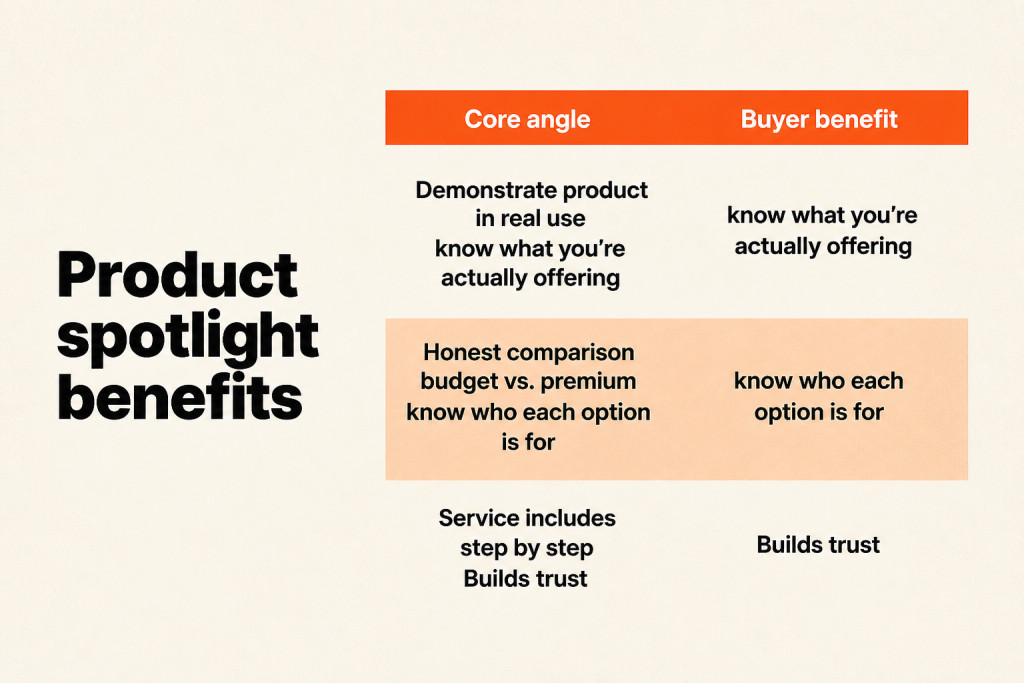
| Spotlight format | What to show | Buyer benefit |
|---|---|---|
| Real-use demo | The product in everyday use, not a studio photo | Buyers see exactly what they get |
| Honest comparison | A budget and a premium option from your own range, and who each suits | Buyers pick the right option |
| Service walkthrough | Exactly what your service includes, step by step | Builds trust before the first call |
Measure Results, Plan Your Mix, and Repurpose Content
Review your social results once a month and track the posts that led to messages, inquiries, and sales rather than likes, then make more of those. If interaction slips, add more educational posts and questions; if inquiries slow, add proof of results and direct offers.

To plan a starting month of 12 posts, a simple mix works well:
- 4 selling posts: product spotlights, offers, and results
- 3 trust posts: testimonials and behind-the-scenes content
- 3 educational posts: tutorials and myth-busting
- 2 community posts: polls and user-generated content
That keeps selling to about a third of your feed. The 50/30/20 rule is another way to split posts: 50% on your audience’s interests and needs, 30% on your brand, and no more than 20% on direct product promotion. Either way, give each post one clear action for readers to take.
Your blog and website archives are a ready source of material. Pick articles that didn’t get the attention they deserved and turn them into carousels, infographics, or Stories; do the same with podcast or YouTube content. Social media marketing tools such as Hootsuite let you schedule these posts in advance, each with a link back to your website.
Start with four or five formats, watch which ones your audience responds to, and use your monthly review to decide what to repeat or drop. If you’re deciding how social fits with your wider plan, see content marketing vs social media marketing.
Conclusion
The best social media marketing content ideas each do one clear job: teach, invite participation, build trust, or help people buy. Plan a balanced monthly mix, repurpose your best existing content, and judge each format by the inquiries and sales it brings, not by likes alone. Revisit your list of social media marketing content ideas each quarter, and keep the formats that turn followers into customers. If you want a team to plan and produce them, see our social media marketing services.