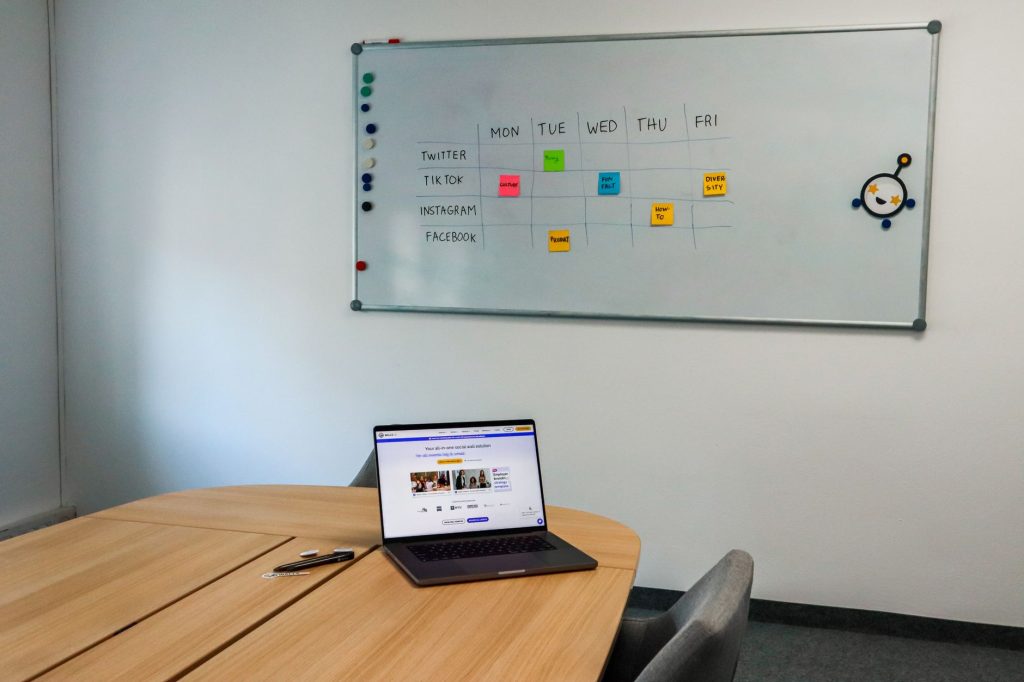
Because businesses reach different audiences, no one social media marketing platform suits them all.
Begin with the audience and the result the business wants. Next, assess each platform’s content formats and marketing tools before making a final selection. No single network serves every business equally well, so this comparison can narrow the field.
Start with the business’s audience when choosing a platform.
What the business wants to achieve matters alongside its audience. Before you choose, compare each platform’s content formats and marketing tools. No single network works equally well for every business. Every business therefore has its own platform choice to make.
Leading Social Media Marketing Platform Options
These platforms let businesses make, share, promote, and discuss content with their audiences. Customers can answer in real time.
Social media now belongs inside a broader digital strategy. People spend much of their time on Facebook, Instagram, X, and TikTok, giving those networks a large share of a brand’s attention.
The business case is fairly clear: 73% of marketers consider social media marketing either “somewhat effective” or “very effective.” Social media users account for 63.8% of the world’s population, alongside 5.52 billion internet users. More than 80% of marketers say it has a positive effect on revenue and pipeline.
A channel that once felt optional has become an essential strategic asset for organizations of every size.
Facebook counts 3.05 billion people using the platform each month and reaches about 37% of the global population. Instagram and TikTok are close competitors, but Facebook still gives businesses a huge place to build and maintain a presence.

That scale opens the door to several audiences for small businesses, while its targeting tools sort customers by demographics, interests, and behaviors. More than 200 million businesses use Facebook for marketing, with smaller businesses relying on it especially often.
Regular Facebook use reaches 71% of U.S. adults. Its potential audience stands at 2.249 billion users.
Businesses set their own ad budgets and pay when users engage with their ads (unlike traditional advertising). Comments, messages, and posts give customers direct ways to respond, which helps businesses build community and loyalty.
Facebook gives businesses several marketing features to work with:
- Pages: A Facebook business page gives a small business one place to share updates, speak with customers, and promote products or services.
- Groups: Businesses can create or join industry-related Facebook Groups, build community, and speak with potential customers more personally.
- Events: Events can promote workshops, product launches, offers, and discounts. Businesses can announce them and drive sign-ups through targeted ads and organic reach.
- Ads: 89% of marketing specialists use Facebook Ads to reach specific audiences. Their targeting uses demographics, interests, and behaviors.
AI tools can time posts for when audiences are most likely to engage using social media marketing tools, letting you keep publishing while you run the business. They can review customer interactions, measure positive or negative sentiment, and help you change your strategy.
Salesforce’s AI tools examine user data and earlier performance metrics before recommending the best audiences for ads.
Instagram leads the visual social space, with 2.04 billion people using it each month. Its U.S. audience includes 143.2 million users.
Instagram attracts many demographics, giving businesses a way to reach a chosen audience. Posts there get more interactions than posts on Facebook or Twitter, which puts Instagram among the platforms with the highest engagement rates.
It has grown past attractive photos and become a major marketing channel for small businesses.
Stories
Instagram Stories give businesses a way to share live updates and keep followers involved. After seeing a product or service featured in Stories, 50% of Instagram users have made a purchase.
Reels
Reels give businesses quick short-form videos for tips and product showcases. Some of those videos can go viral.

Instagram Ads
With Instagram Ads, businesses can show promotions to chosen demographics according to interests and behaviors. Available formats include photo, video, carousel, and collection ads.
Instagram Live
Instagram Live puts businesses in front of their audiences as events happen. Q&A sessions, product demonstrations, and live events can bring a community together around a brand.
After seeing products on Instagram, 72% of users agree to make purchases. Instagram Shopping carries that journey forward through shoppable posts connected to product pages, allowing customers to buy from their feeds.
AI can recommend hashtags connected to current topics and user interests. It can also review earlier results and forecast which content may get the most engagement.
YouTube
YouTube brings together a large video audience and strong search behavior. It has 2.5 billion people using it each month, who watch a billion hours of video each day, and it ranks as the second-most-visited website globally.
Next to Google, YouTube is the second largest search engine, with broad reach, detailed analytics, and SEO integration. It serves as both a social network and a search engine.
Google gives video content priority in search results. Use relevant keywords in your titles and descriptions to improve a video’s chance of appearing in search and sending organic traffic to your website.
Static content usually gets less engagement than video. That gives YouTube a useful role in nurturing leads and turning them into customers.
Tutorials, testimonials, and behind-the-scenes content can demonstrate products while earning trust. Tutorials, vlogs, and product reviews remain some of YouTube’s strongest formats, and analytics show marketers how audiences react.
A YouTube channel costs nothing to create, and videos require little equipment. Businesses can use these main YouTube features:
- Channels: A dedicated YouTube channel presents a brand identity and keeps its videos in one place.
- Playlists: Playlists group videos by category, helping viewers find related content.
- Live Streaming: YouTube Live supports Q&A sessions, product launches, and virtual events in real time.
- Ads: YouTube Ads target audiences by demographics, interests, and behaviors. Skippable and bumper ads promote products without overspending.
- Monetization: YouTube’s Partner Program lets users earn money from video ads. Channels need 4,000 watch hours and 1,000 subscribers within a year.
- YouTube Shorts: Like reels, Shorts are videos under 60 seconds that engage viewers quickly.

AI can examine viewer behavior to see which thumbnails win the most clicks. It can pull ideas from trends and viewer preferences, then create tags by analyzing the video itself.
LinkedIn remains the main social media marketing platform for professionals, with over 1 billion users around the world. Businesses can target audiences by job title, industry, company size, and other details.
Most LinkedIn users are looking for business opportunities. That makes it useful when evaluating the best social media platform for B2B marketing, recruitment, and professional content.
LinkedIn Ads and Sponsored InMail put messages in front of decision makers. In fact, LinkedIn is used for lead generation by 89% of marketers.
Helpful content and lively discussions can build a business’s reputation as a thought leader. LinkedIn also brings businesses closer to industry peers and potential customers, while mutual connections can reveal new leads.
Professional networking and corporate reputation are central to LinkedIn. Businesses use the platform to develop thought leadership and grow their networks.
LinkedIn offers several features for professional marketing:
Company page
A Company Page gives a business a home on LinkedIn. It can feature updates, job postings, and company news.
Articles
LinkedIn articles give businesses a place to publish detailed insights and reach a wider audience.
Groups
LinkedIn Groups gather professionals who share interests and want to discuss them. Businesses can join existing industry groups or create their own for networking and collaboration.
Jobs
Jobs lets businesses publish openings and attract talent. These posts can show company culture and values to candidates who fit the company’s mission.
LinkedIn Events
LinkedIn Events lets businesses set up and promote webinars, workshops, and meetups. Those events can engage an audience or support learning across an industry.
X
X, previously known as Twitter, has 550 million monthly active users and supports news, views, real-time engagement, customer service, and trend monitoring.

On X, businesses can enter conversations, share updates, and answer customer questions right away. Since 48% of U.S. X users turn to it for news, businesses can join trending discussions while events unfold.
More than 80% of social customer service requests are handled through X. Salesforce has called the platform “The New 1-800 Number for Customer Service.”
Customers often go there for support, giving businesses a chance to solve problems quickly and improve customer satisfaction. Its main features include:
- Tweets: Tweets are the core of conversation on X. They can contain text, images, videos, or links.
- Threads: Threads connect multiple Tweets so businesses can tell longer stories or explain products and services.
- Polls: Polls engage followers and collect feedback about their questions, preferences, and choices.
- Moments: Moments gather Tweets around events or themes. A business can show its participation in a festival or event and generate interest.
TikTok
TikTok has rapidly attracted younger audiences, reaching 1.22 billion people worldwide each month. Among U.S. users, 47.4% are between 10 and 29.
TikTok runs on algorithmic discovery and creative storytelling. Businesses can make short-form videos that may spread widely through its content discovery system.
Duets and stitches invite user-generated content and keep viral trends moving. Smaller companies can partner with influencers to reach younger audiences and build credibility. TikTok Ads and influencer partnerships can also raise brand visibility.
TikTok keeps a steady flow of current trends in front of its audience. A trending video can go viral and lead to millions of spin-off posts.
Doing TikTok well calls for a dedicated social media employee who can shoot, edit, and publish engaging video, or a Social Media Marketing Agency to handle execution.
Pinterest has 522 million active monthly users. It brings together product and service displays, visual search, purchase intent, and chances to drive traffic and sales.
People often open Pinterest already thinking about a purchase. Research says 87% of Pinners have bought a product because of Pinterest.

Users are seven times more likely to buy products they’ve pinned. A Pin can continue sending website traffic for months or even years after it’s published.
Pinterest tends to work best for fashion, home decor, food, and lifestyle.
Businesses can use Pinterest features in several different ways:
- Boards: Themed boards organize products or services into categories.
- Pins: Each pin presents a product through visuals and links to the business’ website.
- Promoted Pins: Promoted Pins increase visibility among targeted audiences.
Reddit has 430 million monthly active users and 1.7 billion visits in April 2023. Its specialized communities support targeted marketing and engagement, but brands must join discussions rather than treat Reddit like a broadcast ad channel.
Reddit calls itself the “front page of the internet,” and its subreddits bring together specialized communities with different levels of engagement.
Businesses should look for popular subreddits that fit their niche. Then they can take part in relevant discussions and build authority.
Useful insights can lead to genuine connections and credibility with niche audiences. Overt marketing usually fails because members want transparent, peer-to-peer dialogue and reject broadcast-style advertising.
How to Choose a Social Media Platform for Marketing
Choosing a B2B social media marketing strategy starts with your audience, moves to your objective, and ends with a check on your content and resources. Begin by learning where likely customers spend their time online. Treat the age comparisons as a quick guide.
| Social Network | Core Demographic Age | Key Demographic Traits |
|---|---|---|
| users under 25; users under 34 | Tends to attract more women and people under 25. | |
| 18-55+ | Reaches a broad age range. | |
| TikTok | 10-29 | Strongly associated with younger audiences. |
| 25-34 | Appeals primarily to professionals. |
When women show interest in DIY, fashion, home-decor, and recipes, Pinterest deserves particular attention. Start there, then use evidence from your audience to see whether those patterns fit.
Content should shape the shortlist, so I’d check that fit early. Put visual work on Instagram and Pinterest, long-form video on YouTube, and short video on TikTok. LinkedIn and Facebook can carry text or professional content, but your business must keep producing material suited to each platform’s strengths.
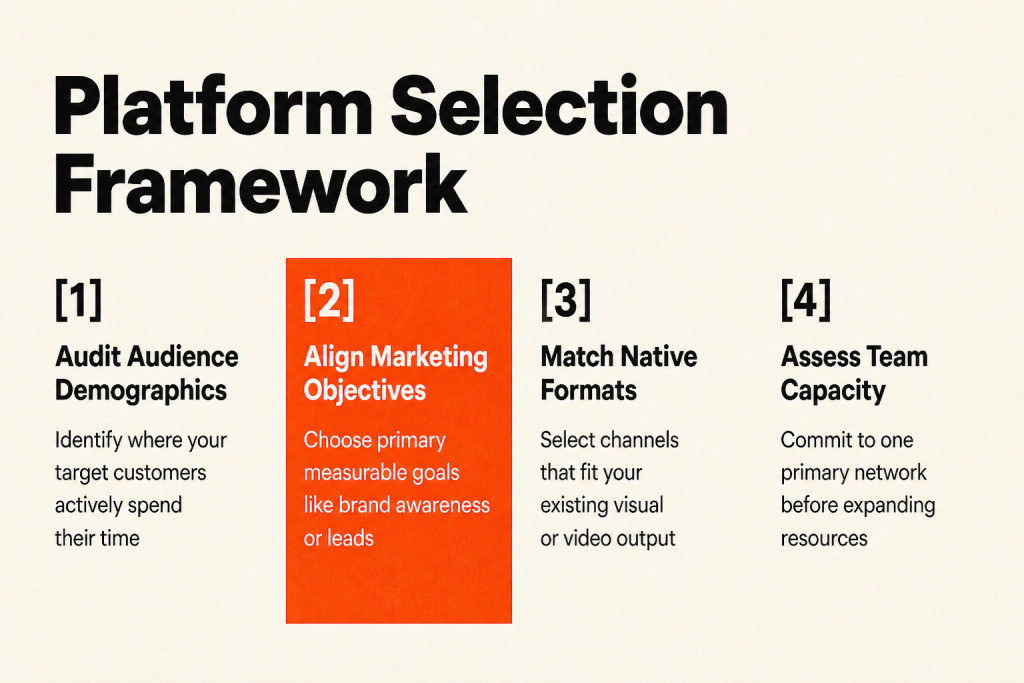
Your goal matters just as much in a social media platform marketing strategy. Pick a measurable result, such as awareness, leads, or traffic. Some campaigns may put engagement or sales first. LinkedIn is especially relevant for B2B because it brings professionals and brands together around professional relationships.
Your budget and available capacity draw the line. Start with one primary platform. Bring in secondary channels only if capacity permits, and include advertising costs, content creation, and management before you expand. Facebook and Instagram offer broad reach, while LinkedIn or Pinterest may bring targeted engagement from a niche audience.
Demographics give you a first pass, not the final answer. Check available evidence. Ask AI to study audience behavior, compare business goals with platform capabilities, locate where the target audience is most active, and show which content earns attention. Confirm your primary choice, then review performance data as the campaign develops.
Frequently Asked Questions
How does social media engagement affect customer spending?
A brand’s responsive, engaging social media presence can encourage customers to increase their spending with it by 40% or more. That access lets businesses reach their customer base and sort out problems fast, keeping customers happy while saving money. Handle problems fast. Social media also makes a brand feel human, and consumers support brands they can relate to.
Which Social Media Platform Is Best for Marketing?
Platform choice follows the audience, type of business, and social media marketing goal. The recommendation depends on the brand’s audience and objective. Those decisions point you toward the right platform.
Millennial women
Instagram won’t suit every brand, but it’s mainly a top choice when Millennial women are the audience. Women use it more than men, and it draws more people under 25 than other platforms. That’s the audience Instagram reaches.
B2B brand
A B2B brand may find better results on LinkedIn, which mainly draws professionals. Brands seeking professional connections use LinkedIn.
Ask yourself:
- Am I a B2B or B2C company?
- Who’s my ideal customer/target market?
- What’s my ultimate goal regarding social media marketing? Is it to sell, to connect, or to build brand awareness?
How many social media platforms should a business manage?
You can use these advanced techniques for your business without managing every social media platform.
Some companies set up social accounts only as placeholders and nothing more. As a brand grows, managing social media marketing campaigns can create a much heavier workload. Campaign management gets heavier.
Choose according to your audience, goal, content, and team capacity when selecting a social media marketing platform. Put your effort into a small core group of platforms rather than chasing every network. Use social media to reach the people you want, then answer customers when they need help. That work can support customer spending and keep the brand relatable.