Patients often encounter a healthcare provider online first, making healthcare social media marketing an important part of the patient journey.
Before booking an appointment, patients may use social media to get answers, understand services, build confidence, and stay familiar with the local physio clinics, specialist practices, and multi-location medical groups they may consider. That gives the channel several practical jobs.
Customer service keeps healthcare businesses running, so audience knowledge should shape the content plan. Give every post a clear purpose and tie it to broader business goals (the plan should spell out what that post is for).
Start with the content plan.
A sound B2B social media marketing strategy gives every post a job and connects that job to broader business goals (customer service still sets the terms). Those goals include attracting new patients, building awareness of a new service, and retaining loyal followers.
Tie every post to the goal it serves. Then use the editorial schedule to keep that connection visible across the organization’s wider priorities, including attracting new patients, building awareness of a new service, and retaining loyal followers.
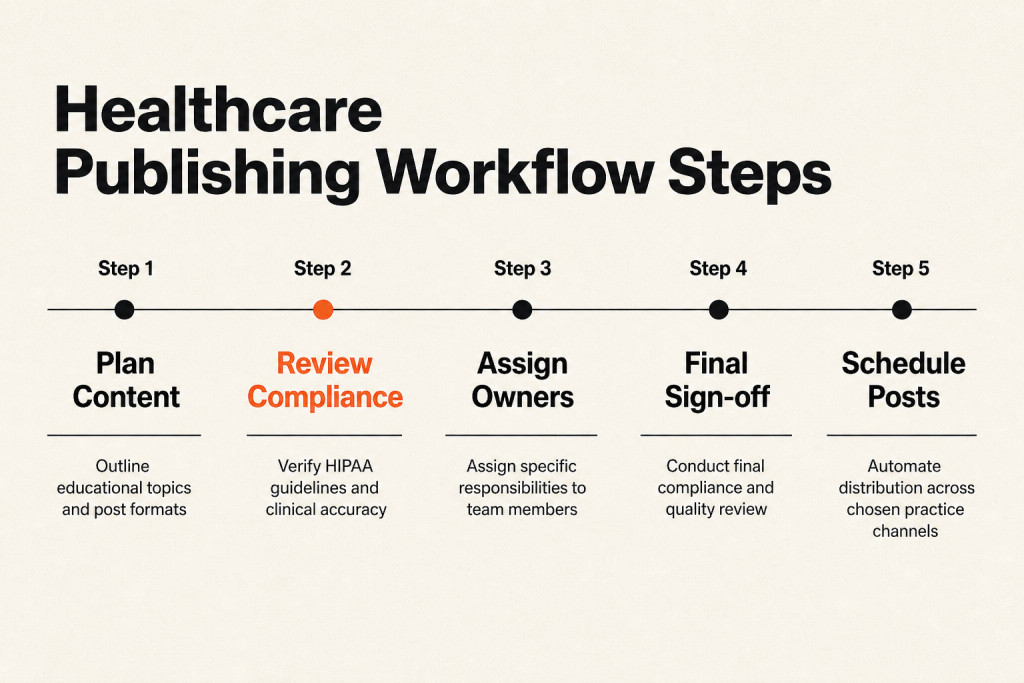
Healthcare Social Media Marketing Workflows
Without a clear plan, social media becomes reactive and uneven; a named workflow must cover the work from planning through compliant, steady publishing.
Content planning
Build the plan around healthcare topics, then turn those ideas into supporting assets such as posts and graphics. A repeatable workflow keeps the presence active.
Review checkpoints
Have designated reviewers examine every piece in multiple rounds, checking standards and adherence to HIPAA.
Assigned responsibilities
Block out time to create content. Then decide whether one team member owns the work or several teams share it, and assign every piece.
Final approval
Choose who has the final say before anything goes live, because someone must check the details. That person reviews every post for errors and healthcare compliance standards.
Scheduled publishing
For a healthcare practice, a publishing schedule can improve client engagement, keep work organized, raise visibility, and support decisions based on data.
Practice Social Media Audits
A proper healthcare social media compliance audit looks past follower totals and checks regulatory, ethical, performance, competitive, and brand concerns together.
- A compliance audit for healthcare social media goes beyond checking your follower count.
- PHI scan: Review published posts for content that could contain or imply protected health information.
- Ad compliance review: Verify promoted content meets FDA, FTC, and platform-specific advertising guidelines.
- Regulatory guideline check: Confirm content follows updated guidance from the relevant licensing or professional body.
- Content performance review: Identify top-performing content, audience demographics, and growth by platform.
- Competitor benchmarking: Assess what other health systems in your market are doing and where your organization can differentiate.
- Brand voice consistency: Check that tone and messaging remain consistent across accounts and align with the social media policy.
- Social media audits also uncover issues beyond regulatory and ethical compliance.
- PHI scan: Review published posts for content that could contain or imply protected health information.
- Ad compliance review: Verify promoted content meets FDA, FTC, and platform-specific advertising guidelines.
- Regulatory guideline check: Confirm content follows updated guidance from the relevant licensing or professional body.
- Content performance review: Identify top-performing content, audience demographics, and growth by platform.
- Competitor benchmarking: Assess what other health systems in your market are doing and where your organization can differentiate.
- Brand voice consistency: Check that tone and messaging remain consistent across accounts and align with the social media policy.
Revisit the findings on a regular basis and change the strategy when needed.
Audience Persona Development
Content gets clearer once you know who you’re trying to reach; the right message varies between patients, healthcare professionals, and the general public. Your audience sets the angle.
Audience groups
Different content may be needed for patients seeking information, caregivers seeking support, or healthcare professionals after industry insight.
Emily’s needs
Picture Emily, a 45-year-old mother searching online for health tips; family-friendly posts can match what she cares about.
Dr. Adams’s needs
At 36, Dr. Adams is a physician, so articles covering the latest medical advances may suit what he needs.
Audience targeting
Aim each post at the audience it’s meant for; social media analytics, surveys, and customer feedback can show what people prefer, though the data won’t sort itself.
Let the patient journey guide the plan: use awareness posts for education, explain services during consideration, and include booking CTAs at decision time.
Content Calendar Planning
Give each day a theme to bring order and variety to the schedule, then use the options below as a workable content calendar.
- Monday: Team Member Highlight or Health Tip
- Tuesday: Behind the Scenes, showing a day in the life at your practice
- Wednesday: Quote of the Day
- Thursday: Client Success Story, with consent
- Friday: Special Promotion or Q&A
- Facebook: 3 to 5 times per week is generally a good range.
- Instagram: Daily, or 3 to 7 times per week.
- Twitter: Daily, or even multiple times daily, because of its fast-paced nature.
- LinkedIn: 2 to 5 times per week is generally adequate.
Create content in batches once each month. Lay out the month’s themes and post types, then schedule them ahead of time to save hours. Daily, or 3 to 7 times per week
Keep an eye on trending discussions when choosing topics; flu season and allergy outbreaks can point to useful seasonal illness tips for your audience.
Choosing a Healthcare Social Media Marketing Agency
Keeping up with every platform can drain a team’s time, hurt engagement, and cause burnout, so put effort where it counts and avoid letting resources spread too thin. When internal capacity is limited, consider partnering with a dedicated Social Media Marketing Agency.
Healthcare administrators should build an internal team of social media managers. With proper training, staff who know the organization can handle the social media work, from writing and creating content to keeping accounts active and connecting with patients; they can also strengthen the online presence, attract and retain patients, and grow the practice.

Social media lets medical businesses connect with patients, strengthen their online presence, attract and retain patients, and grow their practice.
Publishing Automation Tools
Regular posting supports social media success, but many providers slip behind, often somewhere beside the empty Canva file at 9pm. Use tools to plan, schedule, analyse, and organize content.
The main tool options include:
- Scheduling: Meta Business Suite, Buffer, and Later. Meta Business Suite schedules Facebook and Instagram posts in advance, while Buffer and Hootsuite schedule posts across multiple platforms.
- Design: Canva and Adobe Express.
- Analytics: Iconosquare, Metricool, or native platform insights.
- Link in bio: Linktree or Beacons for Instagram.
- Collaboration: Trello, Notion, or Google Sheets for planning.
Artificial Intelligence Integration
Never input PHI into AI tools: Most AI platforms are not HIPAA-compliant, and any patient data entered could be stored or used in model training.
Healthcare organizations are using AI more often on social media, while trust remains a sticking point. The numbers show why: 62% report reduced willingness to engage with or place trust in AI-generated content, and responses differ widely by generation.
Always have a human review AI-generated content. AI can draft posts, suggest captions, and repurpose content, but a clinician or compliance officer should review anything that touches health claims or patient-facing messaging.
Across healthcare organizations, AI adoption keeps growing; some plan a 422% increase in AI for patient service compared to 2023.
Treat AI-drafted content like any other draft: run it through the existing approval workflow and get sign-off before it goes live, just as you would with a new team member.
Rules for Social Media and Healthcare Marketing
That approval check follows every post on social media. HIPAA’s Privacy Rule bars sharing protected health information, or PHI, unless the patient has provided clear written permission. A patient’s name or photo counts, as do details that could identify someone indirectly. HHS OCR has reached resolutions or assessed penalties in 152 cases totaling $144.9 million, and the U.S. Department of Health and Human Services can impose fines exceeding $2.1 million per violation category per year. Before publishing, check recovery updates, patient-photo tags, and other sensitive details. A post may violate HIPAA without explicit written patient consent. If anonymity isn’t certain, leave the detail out.
Health claims need evidence, and the FDA oversees promotion of pharmaceuticals, medical equipment, and health-related products. That means efficacy claims need support, while prescription-product posts must show fair balance by covering both benefits and risks. The FTC requires competent and reliable scientific evidence for health-related claims, and promotional content should be identified. “XYZ Product works for most people” needs proof. Don’t leave out common side effects when promoting a weight-loss medication or the study criteria behind a procedure’s success rate. Those omissions can mislead people.
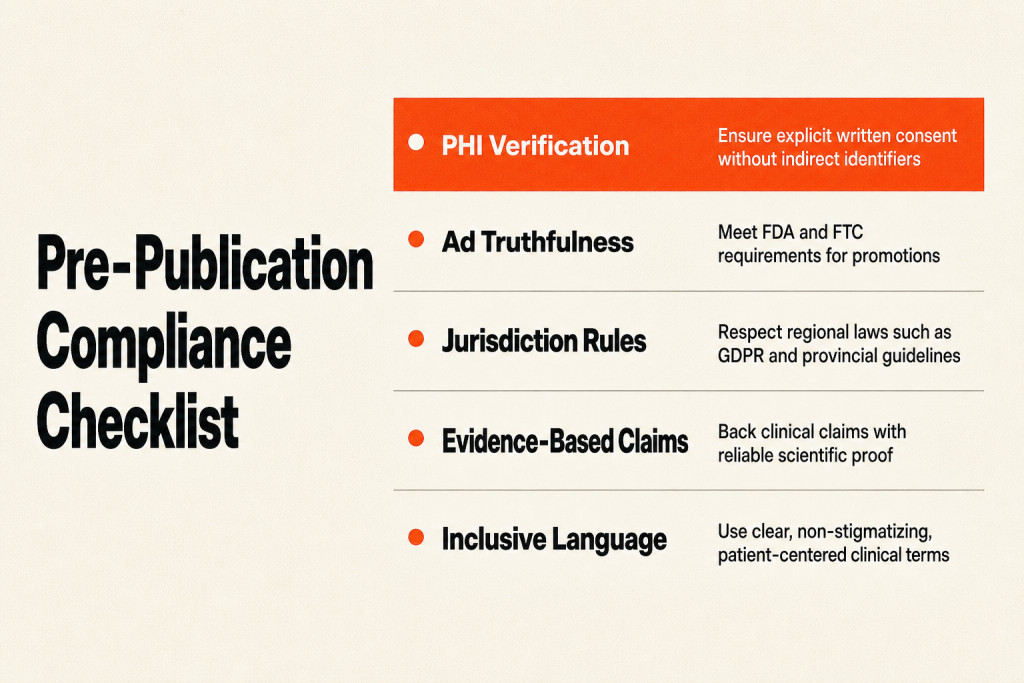
The rules change once your audience or organization crosses a border. In Canada, Health Canada restricts direct-to-consumer advertising for prescription drugs, and the Canadian Code of Advertising Standards covers health claims on social media. Within the EU, GDPR calls for explicit consent before patient data appears in social media content. The British Columbia College of Physicians and Surgeons also sets out what doctors can and can’t do when speaking to the public. Check each jurisdiction before publishing or targeting people there.
Choose clinical language that’s current, clear, and non-stigmatizing. Stigmatizing references to substance use disorder may push potential patients away. NIH provides science-based language guidance, and plain wording helps people understand health information without unnecessary medical jargon.
Your institutional social media policy should spell out authorization and the pre-publication compliance review. It should cover privacy and consent, define PHI, explain the response to a possible violation, and set crisis escalation steps. Require archiving and record-keeping, along with regular staff training and updates.
Paid Social Advertising
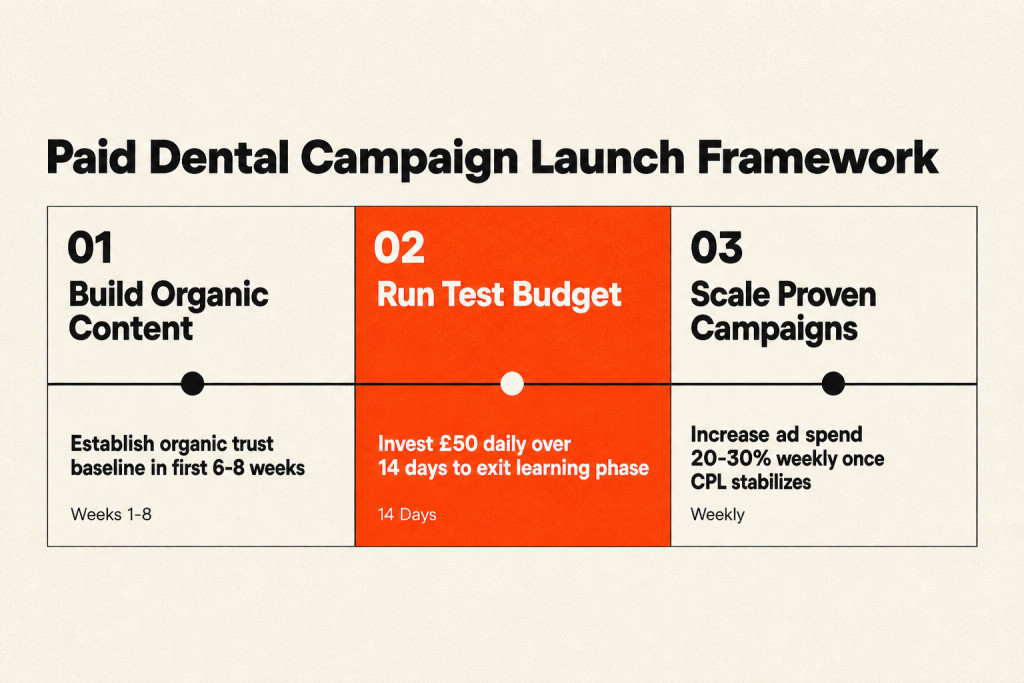
Choosing paid social campaigns lets you widen organic reach through awareness or traffic efforts, including lead magnets, though these won’t always lead straight to bookings. Define the goal and intended audience first, then use Meta Ads Manager for greater control instead of relying on boosted posts. Aim at age, location, and interests, while lookalike audiences can use past website visitors or leads. Use Geographic targeting for local patients. Keep copy clear of sensitive conditions and symptoms. Test video against image creative, check performance weekly, and compare heatmaps with A/B-test calls to action. Refine the campaign through metric analysis and ongoing data-led optimisation.

Measuring Social Media Marketing in Healthcare Industry
Healthcare organizations face a measurement challenge after collecting campaign numbers, and 69% of surveyed organizations said they’re concerned about it. They may be leaning on measures that miss outcomes: 64% call engagement their primary ROI metric, while 51% say follower count. Both can help, but neither gives the whole picture.
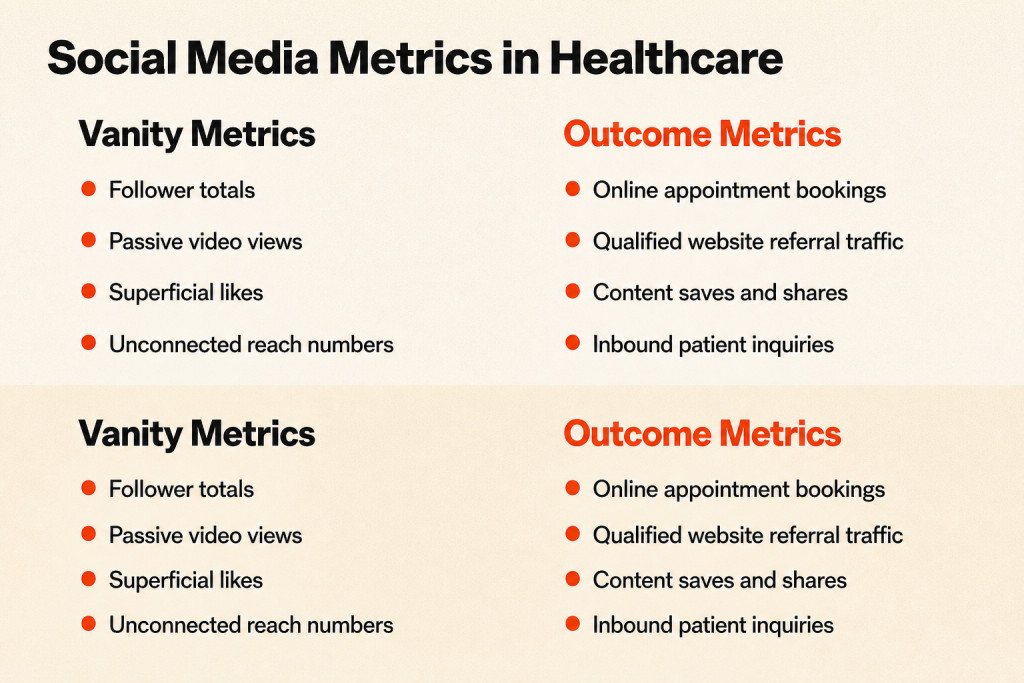
Start with website referral traffic and appointment bookings when judging outcomes. Lead generation can tie campaigns to results, and CTR shows whether social attention prompts a response. Quality counts, too: shares, saves, and retweets point to meaningful engagement. Comments offer another clue that people are taking part.
For context, stack up engagement, reach, and follower count against leading healthcare brands, then review results on a set schedule so trends don’t slip past you. Each review should guide data-driven changes to the content or channels used, helping the strategy improve over time.
Best Platforms for Social Media Healthcare Marketing
When you choose channels, tie each one to the clinic’s priority audience and immediate goal. Trying to show up everywhere only spreads the work thin. Facebook helps build community and local visibility. Instagram fits visual health content, with 68% of parents turning to social media for health information. YouTube handles long-form education and procedure explainers best. At least half of U.S. adults use these three channels.
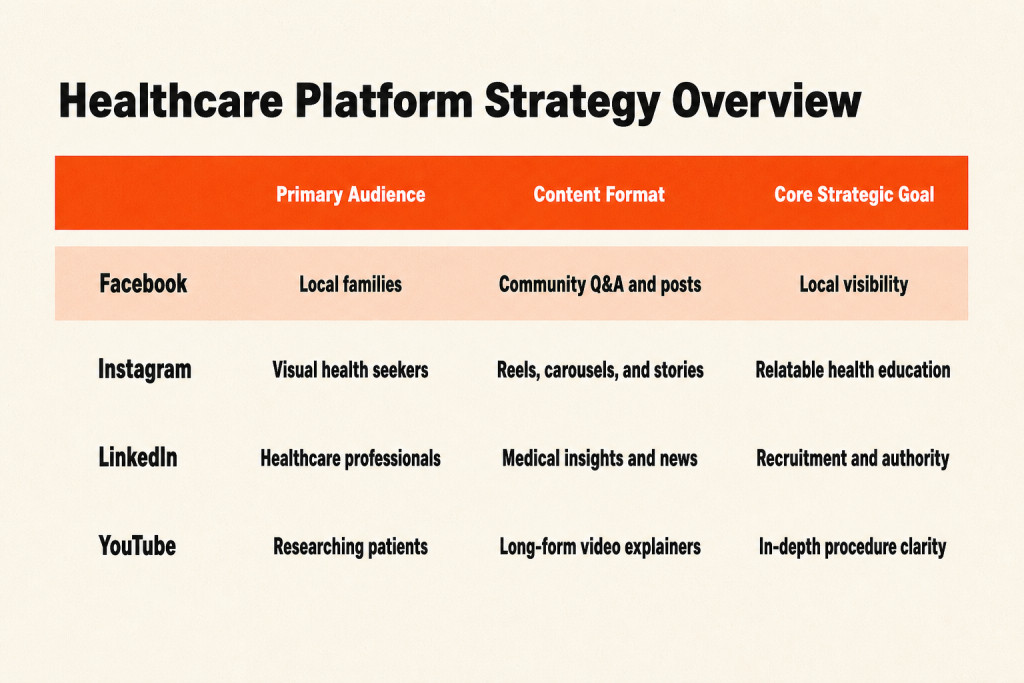
For recruitment and professional positioning, LinkedIn lets you target messages to people with specific job titles. Short-form video channels reach younger audiences aged 18-34 with brief lessons, myth-busting, and more human provider content.
Real-time microblogging channels work well with mature audiences and support crisis communication, preventive information, and live updates. A COVID-era analysis reviewed 902,138 tweets and found healthcare professionals using social media to share credible information and encourage preventive measures. WHO used social media to reassure people and share accurate information.
Healthcare Content Development
Build a credible healthcare social-media plan around useful education: answer common patient questions, correct myths, and raise awareness of early diagnosis and treatment. Consented testimonials can help patients make choices: 73% of patients rely on digital reviews before selecting a healthcare professional, while 57% of consumers say social media “strongly influences” their healthcare choices. Protect privacy by getting consent and anonymising identifiable information. Consent comes first.

Use video to make care feel more human and information easier to understand, then add captions because over 80% of social video is watched without sound. Behind-the-scenes and “day in the life” content from nurses or technicians can humanise the organisation. One idea can also become posts across channels. Balance edutainment with credibility: 53% would like brands to come across as more relatable, and Mayo Clinic Minute and Cleveland Clinic offer educational Reel examples.
Community Management Protocols
Through social media, two-way communication keeps each healthcare channel more useful and effective.
Patients use chatrooms, DMs, and groups to connect, compare experiences, and support one another. Anyone seeking information, advice, or emotional support can find the help they need there.
The Cancer Survivor Network puts the scale of one community in plain view: its breast cancer thread contains 28.5K topics and 312.5K comments. Cancer patients, survivors, caregivers, families, and friends trade information and experiences there, showing just how big the community is.

Patient satisfaction and loyalty can climb when questions get quick answers. Real-time replies sound easy, sure, but they call for a dedicated team or trained staff who can handle concerns quickly across different channels. Turn on instant notifications so no patient inquiry slips past the team.
Respond to negative comments promptly and professionally.
Beyond the clinic, social media gives healthcare organizations a direct way to reach patients. Use it for appointment reminders, post-care instructions, answers to common health questions, and news about new services or locations.
Instagram Stories work well for polls, quizzes, and quick Q&As. Each post needs a CTA, though the wording can change and it doesn’t have to say “book now.” Ask people to “save this tip,” “tag a friend,” or “tell us your experience.”
Frequently Asked Questions
What is social media marketing for healthcare?
There are several practical jobs for social media in healthcare: engaging patients, sharing WHO health and wellness tips, promoting medical services, and building a trusted brand that supports steady growth.
Ongoing engagement
Social media keeps engagement with current and potential patients going at low cost, unlike a campaign that vanishes after one placement.
Deeper connections
Healthcare professionals can use social media to create Deeper connections with their audiences, share disease prevention advice or revolutionary treatments, and give patients more usable health information.
Patient success stories
Healthcare providers increasingly share Patient success stories to stay top of mind with customers, but they need permission first.
What should a healthcare social media policy include?
A sound healthcare social media policy should identify publishers, mandate review of each item before publication, and address privacy, records, and crises.
- Authorization: Define who may post for the organization and identify the platforms where they may post.
- Approval workflows: Set a review and sign-off process for every piece of content before publication, including clinical accuracy and regulatory compliance reviews.
- HIPAA and privacy protocols: Explain PHI, patient consent for social content, and the steps to take when a potential violation is identified.
- Content standards: Set rules for tone, language, and claims that can and cannot appear on social media.
- Crisis communication procedures: Describe responses to negative press, misinformation, or a data breach, with designated spokespeople and escalation paths.
- Employee personal use guidelines: Clarify expectations for personal social media activity involving the organization, patient privacy, and professional conduct.
- Archiving and record-keeping: Define how social media content and interactions are archived for compliance and legal purposes.
Which social media platforms are best for healthcare organizations?
Pick the channel that fits your audience and purpose, then keep the list short enough for your team to manage well.
- Facebook: Supports community engagement, reviews, local visibility, and events.
- LinkedIn: Helps with B2B services, networking, and professional positioning.
- YouTube: Suits long-form educational content and procedure explainers.
Start by selecting one or two platforms, post consistently, and add more only after that presence is established.
Can healthcare organizations use AI to create social media content?
Yes, AI can help healthcare organizations create social media content, such as drafts, captions, and repurposed material, while human review makes the final call.
AI can draft posts, suggest captions, and repurpose content, but a clinician or compliance officer should review anything involving health claims or patient-facing messaging.
Set up an approval workflow so AI saves time without weakening trust, then fact-check content before publishing.
How do you measure social media ROI in healthcare?
Healthcare-specific KPIs can include share of voice and the link between patient satisfaction and social engagement.
- The plan should name designated spokespeople, provide pre-approved response templates, set clear escalation procedures for legal and compliance review, and explain when scheduled content should be paused.
- Include the crisis management plan in the workflow to minimize damage to the brand from negative feedback.
- Negative comments should receive prompt and professional responses.
- During the coronavirus outbreak, WHO used social platforms to reassure people, disseminate accurate information, and deliver real-time updates about the evolving situation.
- Healthcare organizations can use social media during emergencies to reduce misinformation, ease public anxiety, and keep communities informed with actionable advice.
Share of voice
Share of voice tells you how a healthcare organization’s social presence stacks up against other health systems in its market.
Patient satisfaction correlation
The correlation between patient experience and social engagement looks at whether positive social engagement increases alongside better patient experience scores.
What are examples of HIPAA violations on social media?
HIPAA violations can involve sharing patient information without written consent, exposing someone’s identity, confirming health information in a public exchange, or showing background computer monitors.
- Sharing patient information without written consent creates more than a reputational risk.
- Even a well-intentioned post celebrating a patient’s recovery can violate HIPAA when proper written authorization was not obtained first.
- Responding to patient comments with health information violates HIPAA’s Privacy Rule.
- Inadvertently tagging a patient’s photo in a social media post can reveal that person’s identity and constitute a HIPAA violation.
- Publishing unedited clinical photos with background computer monitors, or confirming patient appointments in comment threads, creates immediate legal liability.
What content should healthcare organizations avoid posting on social media?
Healthcare businesses must steer clear of identifiable patient data, unsupported medical claims, misleading content, stigmatizing language, and individual medical advice, including misrepresenting WHO guidance.
- Avoid testimonials in paid ads, and check whether they are allowed in your region at all.
- Do not use misleading phrases such as “guaranteed results” or “fastest cure.”
- Do not publish unedited clinical photos that contain background computer monitors or confirm patient appointments in comment threads, because either action creates immediate legal liability.
- Avoid referring to substance use disorder issues with unintentionally stigmatizing language that may alienate potential patients.
- Do not post protected health information, unsubstantiated medical claims, stigmatizing language, misleading advertising, or anything that could be perceived as individual medical advice.
- Avoid being too self-promotional, posting low-quality content, or failing to engage with followers, since people across industries dislike brands that behave this way.
How do you handle a social media crisis in healthcare?
A healthcare social media crisis calls for a plan that covers communication, escalation, public updates, and when scheduled posts must stop.
- The plan should name designated spokespeople, provide pre-approved response templates, set clear escalation procedures for legal and compliance review, and explain when scheduled content should be paused.
- Include the crisis management plan in the workflow to minimize damage to the brand from negative feedback.
- Negative comments should receive prompt and professional responses.
- During the coronavirus outbreak, WHO used social platforms to reassure people, disseminate accurate information, and deliver real-time updates about the evolving situation.
- Healthcare organizations can use social media during emergencies to reduce misinformation, ease public anxiety, and keep communities informed with actionable advice.
Keep channel choice, content review, privacy checks, and measurement in one healthcare social media marketing plan. Match platforms to patient goals, use AI for drafts, and keep clinicians or compliance officers in the review loop. Track share of voice and patient experience scores alongside daily activity. When a crisis hits, the response plan should already name the people, templates, and escalation paths. The practical pieces are clear owners, approved content, protected patient information, and records that remain available.