Marketing departments routinely get trapped trying to balance broad multichannel campaigns against b2b digital marketing software sprawl and mounting monthly running costs.
In this guide, we dig into the leading platforms across workflow automation, lead enrichment, analytics, and content generation. Reach for these practical evaluations so your team can construct a high-converting marketing tech stack.

The best B2B digital marketing softwares
Your choice between marketing platforms really comes down to whether your team needs one central customer database or separate point solutions across individual channels.
HubSpot
HubSpot runs as an all-in-one system. Growing and mid-market UK operators lean on it heavily because its visual builder lets marketers run email nurture tracks and sales handoffs without pulling in software engineers.
Contact records, customer relationships, and activity logs sit directly inside the native CRM rather than across fragmented tables. On top of that, HubSpot syncs cleanly with WordPress, Shopify, and Salesforce out of the box.
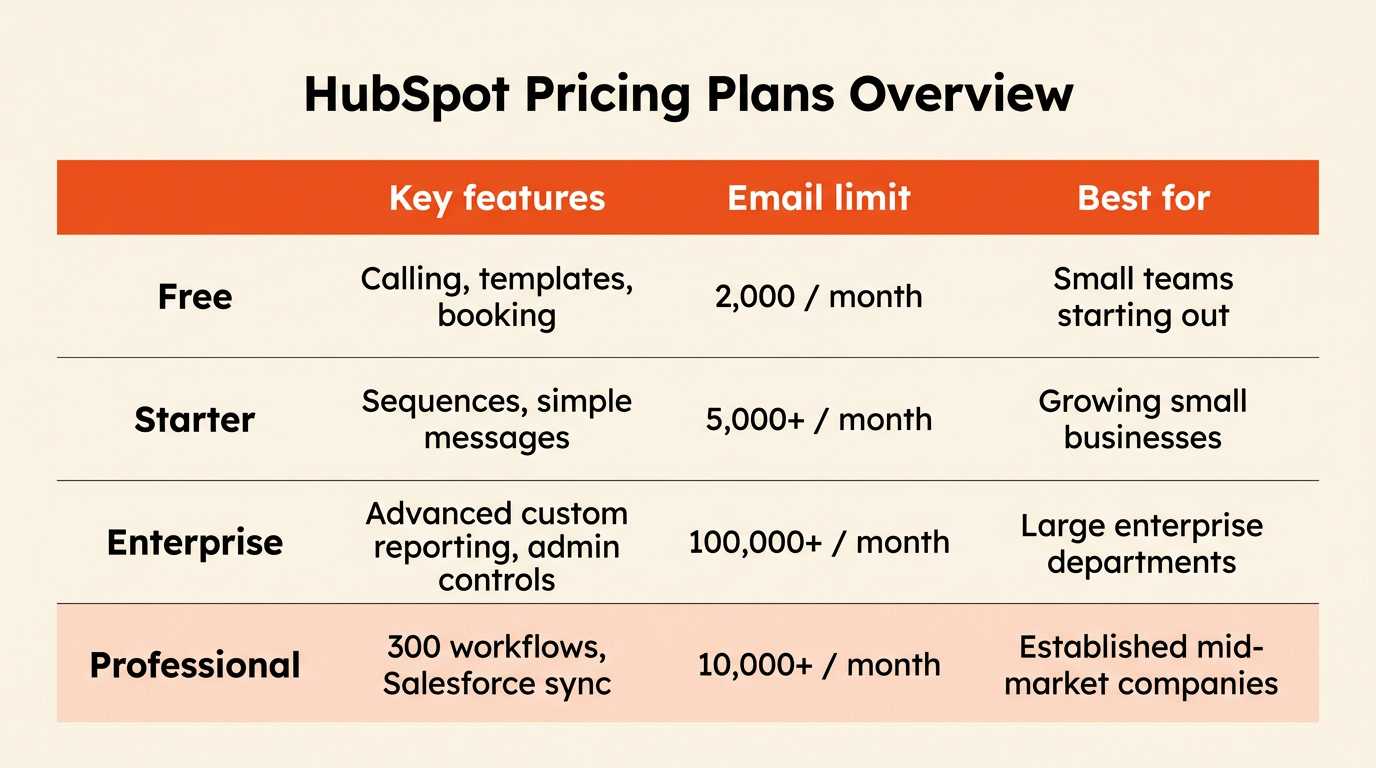
The software provides a Free tier alongside three distinct commercial packages: Starter, Professional, and Enterprise.
- The Free plan offers calling, templates, notifications, snippets, documents, and one booking page. It allows up to 2,000 emails per month.
- Sales Hub™ Starter plan includes everything in the Free plan with eight hours per month of calling and new features such as Prospect, Messages, and Sequences.
- Sales Hub™ Professional plan includes everything in Sales Hub™ Starter plan, along with up to 15 deal pipelines, up to ten teams, up to 300 automated workflows, customized report builder, smart send times, and Salesforce integration.
- Sales Hub™ Enterprise includes everything in the Professional package, plus a range of other features.
UK teams value the local support teams and built-in GDPR compliance tools. Thanks to its modular design, adding more capabilities to your setup as you expand is straightforward.
Twelve months into using HubSpot, Babbel For Business had acquired 800 commercial clients, generated 5,000 qualified leads, and expanded mean contract value by 300%.
Figuring out their pricing gets messy quickly because features are split across different Hubs and tiers (though you will feel the pinch as soon as your headcount grows).
Marketo
Marketo sits inside the Adobe Experience Cloud as a heavy-duty automation platform built for large B2B teams running sophisticated outbound programs. Its toolset lets marketing departments align large initiatives, automate background operations, deliver tailored prospect experiences, nurture incoming demand, and track overall campaign performance.
Large enterprise brands operating across multiple channels get the most out of Marketo’s underlying architecture.
Across the B2B landscape, Marketo stands out for lead management and revenue attribution, hitting its stride during intricate account-based marketing motions.
AI rules build targeted segments automatically from demographic criteria, firmographic data, and cross-channel user habits. Real-time content switches dynamically across web pages, standalone campaign destinations, SMS, emails, paid ads, and social feeds, supported by responsive custom forms.
Automated workflows fire from custom triggers like specific page views, completed form submissions, or shifts in a buyer’s lead score.
The platform splits into four commercial tiers: Growth, Select, Prime, and Ultimate. Adobe does not publish list pricing, so your team has to negotiate directly with their sales reps.
Marketo gives teams exceptional flexibility to design complex buyer journeys across enterprise pipelines, but that power requires substantial upfront setup and continuous administrative overhead to maintain.
The user interface feels dated and quickly overwhelms day-to-day campaign operators.
Pardot
Platform Foundation
Pardot operates within the Salesforce portfolio, giving sales and marketing teams a way to synchronize daily operations without manually reconciling records. Its native database sync makes it a natural fit for teams that require airtight pipeline coordination between both departments.
Reporting and Compliance
Teams can optimize campaign results through split testing, lead source attribution, and revenue dashboards, complete with configurable reporting for UK privacy regulations.
Lead Management and Tracking
Predictive AI models help reps anticipate prospect behaviors and tailor outbound touches across long sales cycles. Marketers can track interactions across company web pages, outbound emails, and social channels, deploying targeted nurture plays that convert pipeline prospects into closed deals.
Oracle Eloqua
Anchored inside the Oracle Marketing Cloud, Eloqua has powered enterprise teams since its launch in 1999, way before marketing automation turned into an industry buzzword. Over twenty years of development have shaped it into a reliable enterprise workhorse.
The core capability set includes:
- Contact database, lead management, email marketing, and social media management.
- Workflow builder that coordinates messaging across multiple channels, driving qualified pipeline growth.
- Extensive design and usability features that benefit enterprises connecting to partners and B2B customers.
You can license the platform across three main pricing tiers, with Basic starting at $2,000 per month and Standard at $4,000 per month alongside custom Enterprise quotes:
- Basic starting at $2,000 per month
- Standard at $4,000 per month
- Enterprise: price is upon request

Advanced platform features unlock in the Standard and Enterprise plans, with custom implementation scopes mapped out by an Oracle sales rep.
Act-On
Act-On runs as a cloud-based marketing automation system built specifically for B2B teams. Its core purpose is to attract, engage, and convert inbound prospects into paying accounts using targeted, rule-based sequences.
Subscription levels bill strictly according to engaged subscribers instead of overall contact volume, giving growing businesses a predictable billing curve.
ActiveCampaign
Market Positioning
Mid-market teams often turn to ActiveCampaign when they want serious automation logic and CRM capabilities without committing to five-figure enterprise contracts.
Sequence Automation
If you need capable automation without a steep learning curve, the system pairs trigger-based email sequences with straightforward lead scoring tools.
Behavioral Nurturing
Much like Pardot, ActiveCampaign lets you construct multi-step drip paths that move prospects toward sales opportunities, combining accessible pricing with flexible automation logic.
Salesforce
Centralized Architecture
Central CRM systems like Salesforce consolidate prospect touchpoints into a unified database, laying the groundwork for targeted outreach. Detailed segmentation filters let you slice records by pipeline stage, company firmographics, or historical digital activity across your accounts.
Pipeline Visibility
Its configurable architecture supports complex account hierarchies, granular list segmentation, and live deal tracking. By connecting fragmented tools and automating administrative chores, Salesforce frees your team to reallocate marketing spend toward programs that directly move pipeline.
Implementation Impact
After rolling out Salesforce CRM, one B2B software company saw lead conversion rates jump 40% while cutting its sales cycle length by 50%.
Omnichannel Unification
Salesforce Marketing Cloud pulls web, advertising, social, mobile, and email touchpoints into one shared account record. By mapping prospect journeys across long evaluation cycles, an emerging pharmaceutical business boosted email opens by 30% and lifted click-through rates by 20%.
Mailchimp
Mailchimp provides a simple marketing hub where teams can build, trigger, and track outbound campaigns from a single dashboard. Bringing email, SMS, paid ads, and social posting under one roof makes it an easy entry point for lean marketing squads.
You can build clean email templates without writing a line of code using its drag-and-drop builder, modular content blocks, and pre-designed layouts.
Automated sequences trigger follow-ups based on prospect actions or set schedules, while native audience tagging keeps lists tidy. The platform also links directly with over 300 platforms, including Google Ads, Facebook, Zapier, WooCommerce, and Shopify.
Under the free tier, your team can send 1,000 emails each month with a cap of 500 emails/day across 500 contacts, though footers display Mailchimp branding. Paid tiers start at $13/month for 500 contacts and 5,000 sends, with upgraded tiers starting at $20/month as list sizes grow.
Pricing includes duplicate, unsubscribed, and inactive contacts, increasing costs.
As your contact list expands, subscription bills jump quickly, and its sequencing logic lacks the power found in dedicated B2B engines.
Constant Contact
Email and Event Management
Constant Contact is built to help small businesses and B2B operators communicate with their customer lists. You can assemble branded newsletters through a visual editor, schedule social posts, and organize contact databases alongside native event marketing tools.
Feedback Collection
Companies hosting events or collecting audience feedback benefit from integrated sign-up pages, surveys, and polling tools, all connected to an everyday social scheduling console.
Pricing and Terms
Pricing starts at $12/month for 500 contacts and 5,000 monthly sends, backed by a 14-day free trial rather than a permanent free plan. Paying annually up front knocks up to 15% off the bill, and registered charities qualify for discounts up to 30%.
Functional Limitations
Workflow automations feel basic compared to modern rivals, and segmentation filters offer limited granularity. Analytics dashboards show deliverability figures without deeper revenue attribution, while A/B testing is confined strictly to subject lines rather than full template designs.
Hootsuite
Hootsuite gives marketing teams a centralized dashboard to draft, schedule, and track organic social posts across multiple networks.
Its functional footprint covers:
- Social media scheduling across Facebook, Twitter, Instagram, LinkedIn, and YouTube
- Content library and team collaboration
- Social media listening
- Ad management and influencer management
- Customizable dashboards and mobile app
Sprout Social
Sprout Social delivers social management software that helps companies run brand profiles, schedule upcoming posts, monitor relevant online discussions, and gauge cross-network campaign returns.
ZoomInfo
ZoomInfo serves B2B sales and marketing teams as a commercial intelligence database, supplying verified firmographic data and direct contact details to support outbound scale.
Sales reps can track down target buyers through an extensive directory filtered by verified direct dials, email addresses, job titles, industry verticals, and company revenue brackets.
Automated enrichment syncs fresh firmographic fields directly into your CRM, strengthening outbound prospecting lists and powering background sales routing rules.
LinkedIn Sales Navigator
Sales reps reach for LinkedIn Sales Navigator to identify, track, and engage target decision-makers right inside the professional network.
Detailed search filters let reps isolate buyers by location, head count, industry sector, and job function, making it easier to run a sales process on cold enterprise accounts. Beyond automated lead suggestions, reps can bypass connection gatekeepers by sending direct InMail messages to key stakeholders.
Account alerts notify reps about executive hiring changes, funding rounds, and content engagement, giving your outreach team natural timing triggers.
Website visitor deanonymization software
Deanonymization tools identify the specific companies browsing your site, turning untracked web traffic into actionable sales opportunities.
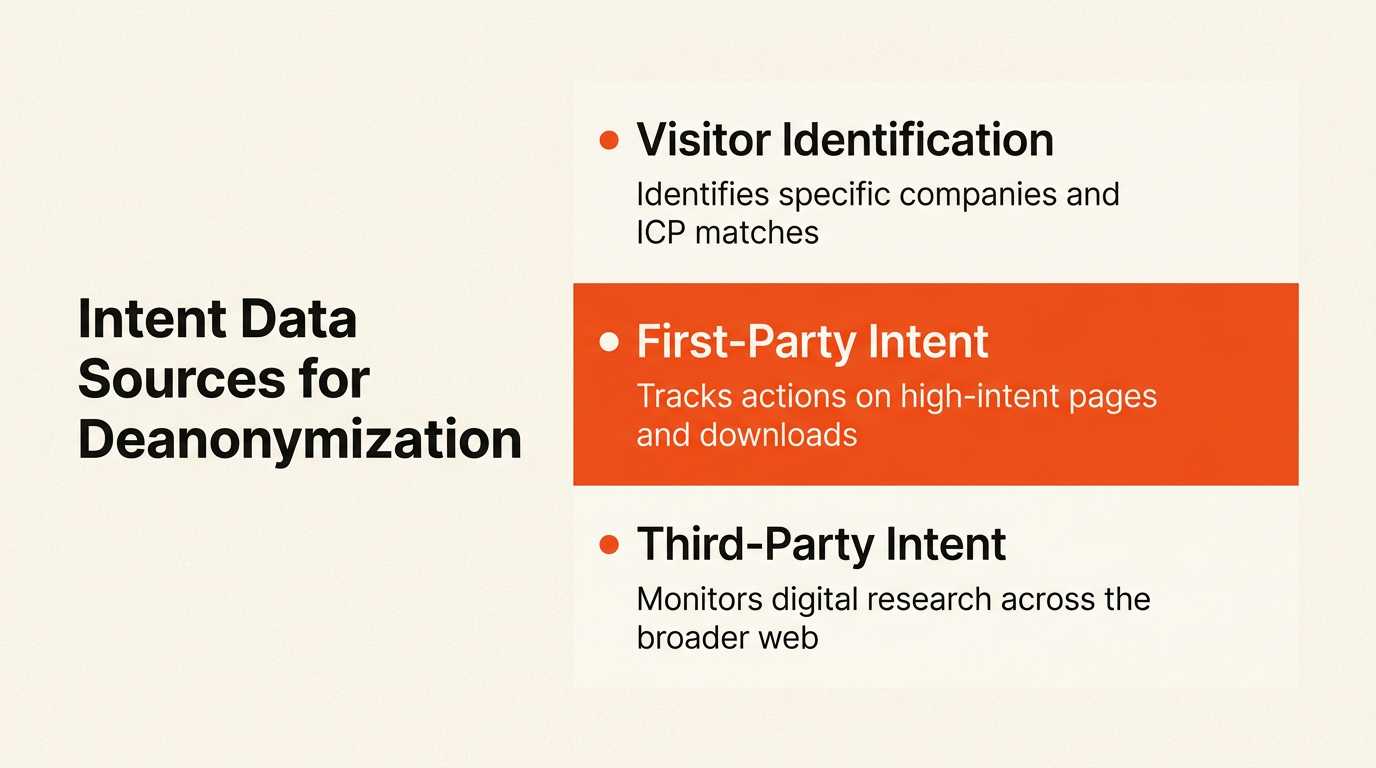
These identification platforms generally depend on three distinct data sources:
- Website visitor identification that identifies companies and individuals visiting your website, detecting leads that best match your ICP and revealing actual stakeholders surfing your website.
- First-party intent data consisting of insights into website sessions, such as high-intent pages visited (pricing, specific features, comparison with competitors), time spent on each page, and content downloads.
- Third-party intent data that provides insights into your lead’s entire digital buyer journey, like recently researched topics on the web, interactions with ads and social media posts, and visits to competitors’ websites.
Built squarely for B2B teams, Leadfeeder identifies which corporate domains visit your web pages without filling out forms, giving your outbound team immediate target accounts.
Warmly provides a permanent free plan tracking up to 500 monthly visitors and firms. The Startup tier runs $700/mo for 3 seats and 10,000 visits, the Business edition costs $1,440 to $1,740 per month across 10 seats, and Enterprise plans handle over 100,000 monthly visits across 20 seats. Upgraded tiers pull in buyer intent signals from 6Sense, Bombora, and Clearbit.
Using its Orchestrator module, high-fit visitors route directly into automated workflows, triggering tailored emails, connection invitations, or personalized LinkedIn direct messages.
Datanyze
Datanyze acts as an accessible prospecting and enrichment tool with a Chrome extension that pulls contact details right off web pages. Tracking software vendor installations and technographic shifts helps reps evaluate competitor footprints across accounts.
Key features include:
- Chrome extension for revealing basic contact details anywhere on the web.
- Enriches relevant prospects with “icebreaker” data, such as information from their social media profiles, local news publications, and company news.
- Market Share Reports provide actionable insights into industry trends, rising technologies, and key market competitors across marketing automation, email hosting, and e-commerce.
A 90-day trial gives users 10 contact credits each month. Commercial tiers include Nyze Pro 1 at $29/mo for 80 lookups ($0.363 per additional credit) and Nyze Pro 2 at $55/mo for 160 credits ($0.344 per extra lookup).
Users sometimes run into outdated contact records, and the software offers neither buyer intent signals nor automated follow-up sequences.
Ahrefs
Core Toolset
Ahrefs provides thorough organic search analytics and competitor research through an integrated SEO dashboard. Site Explorer lets your team inspect organic keyword rankings, backlink profiles, paid ad experiments, and site structures, while Keywords Explorer surfaces monthly search volume, keyword difficulty, and ranking potential.
Backlink and Competitive Intelligence
Backlink research remains its core strength, helping operators audit link quality, uncover fresh outreach targets, evaluate competitor content, and monitor structural website health over time.
Subscription Structure
Subscriptions to Ahrefs are organized across five pricing tiers:
- Starter: $29 per month, limited access to Site Explorer, Keywords Explorer, and Site Audit.
- Lite: Starts at $129 per month, 1 user included, $40 per additional user, up to 3 users in total.
- Standard: Starts at $249/mo, 1 user, $60 per additional user, up to 6 users in total.
- Advanced: Starts at $449/mo, 1 user, $80 per additional user, up to 11 users in total.
- Enterprise: Annual only, starts at $14,990 per year, 3 users, $1,000 per additional user, you can add unlimited users.

Platform Considerations
Pricing scales up quickly, and practitioners occasionally flag discrepancies in underlying crawl numbers.
Semrush
Semrush packages a comprehensive suite for competitive search intelligence, SEO auditing, paid search research, and ongoing keyword tracking to boost digital visibility.
Teams can inspect competitor ad spending, organic search footprints, and overall site visits to uncover overlooked market angles. Its keyword database helps marketers track daily ranking fluctuations and historical search demand.
Site audit utilities and technical crawl tools help developers resolve crawl errors and boost search rankings, while content optimization templates give writers direct guidance to outrank rival pages.
Frase
Frase accelerates organic content workflows by walking writers through keyword discovery, automated brief generation, and on-page text optimization built for search engines.
The platform delivers several content generation tools:
- Runs SERP research for you, analyzing best-ranked articles and delivering actionable insights, such as word count, domain rating, and heading count.
- Lets you quickly create outlines by using headings from top SERP results or letting AI generate one based on those results.
- Helps optimize content by providing a list of topics best-performing competitors covered, keywords you should use, and more.
A trial account lets you optimize a single document against one target query. Paid options start at Solo for $15/mo (1 user, 10 SEO documents), Basic at $45/mo (1 user, 30 documents), and Team at $115/mo for 3 seats ($25 per additional user) with unlimited document analysis.
AI-generated drafts can sound generic or repetitive, and the SERP scraper sometimes pulls irrelevant ranking pages into your research briefs.
Drip
Drip provides email automation focused on reducing bounce rates while increasing subscriber opens and clicks. Its visual workflow canvas lets marketers build branching communication paths powered by custom triggers, supported by dynamic customer segments drawn directly from connected ecommerce stores.
Intuitive email builder lets you add store products directly into emails, promote top-sellers to newcomers, and send dynamic content like cart URLs.
A 14-day trial gives buyers time to evaluate the platform. Cost brackets scale on list size and dispatch volume, beginning at $39 per month for 1 to 2,500 subscribers and reaching $1,899 for 165,001 to 170,000 contacts, with custom pricing beyond that point.
Monthly costs climb sharply on large databases, and the system offers less utility for teams outside pure ecommerce models.
Descript
Text-Based Multimedia Editing
Descript streamlines podcast and video editing for B2B teams by combining automated speech transcription, captions, and language translations into a text-based editing interface.
Production Enhancements
The software automatically removes filler words, adjusts on-screen eye contact toward the lens, and identifies engaging short clips suited for organic social sharing.
Pricing Structure
A free tier offers basic recording and editing features. Paid plans include Hobbyist at $19/mo, Creator at $35/mo, and Business at $50/mo, with custom pricing for Enterprise tiers.
Operational Challenges
First-time users face a slight learning curve and occasional performance hitches during audio rendering.
Copy.ai
Copy.ai acts as a versatile content generator for sales and marketing teams, drafting everything from product feature sheets and LinkedIn posts to social captions and blog posts.
Marketing departments can automate content creation from initial briefs to rough drafts, turn interview transcripts into promotional social assets, and translate localized web pages for international campaigns.
Can’t create original content, human editing and proofreading are required.
A Free Forever tier covers 1 seat with a 2,000-word chat limit. Starter runs $49/mo for 1 seat with unlimited chat words, the Advanced tier costs $249/mo for 5 users and automated workflows, and Enterprise requires custom sales pricing.
The underlying language models tend to produce superficial copy when assigned technical B2B topics.
RollWorks
Account-Based Strategy
RollWorks offers an account-based marketing platform popular with UK teams running ABM programs to discover, prioritize, and engage key target accounts.
Campaign Orchestration
Marketers can build dynamic account lists using custom criteria, serving tailored multi-channel display ads based on observed buyer intent and account recommendations.
Enterprise Packaging
RollWorks splits its media and ABM software into distinct tiers, leaving rates unlisted and accessible only through custom sales proposals.
Adoption Hurdles
New teams often encounter a steep learning curve during onboarding alongside opaque contract pricing.
Metadata
Multivariate Campaign Experimentation
Metadata automates paid advertising experimentation across major ad networks, running multivariate tests across audiences, offers, and creative assets to spot high-converting combinations.
Customer Interaction Tracking
Bids and campaign budgets reallocate automatically based on pipeline targets, backed by journey reporting that traces prospect clicks across digital ads and conversion assets.
Base software pricing opens at these levels:
- MetaMatch: From $295/mo
- Spotlight: From $1,200/mo
- DemandHub: From $4,200/mo
- Agency: From $12,000/mo
DemandHub requires an upfront $5,000 onboarding fee, while optional modules like Google Search tracking cost $495/mo and Spotlight starts at $500/mo. Platform licensing is expensive and demands seasoned technical talent to run properly.
Sender
Sender provides an affordable email marketing system featuring mobile-friendly templates and an intuitive drag-and-drop newsletter builder.
Users can trigger automated sequences for welcome emails, abandoned carts, and follow-ups, capture visitors through web popups, and review subscriber engagement with click heatmaps.
The Free Forever plan offers all email automation features without any hidden costs.
Its Free Forever plan includes full sequence automation for up to 2,500 contacts and 15,000 monthly sends. Upgrading to the Standard plan starts at $8/month, unlocking SMS campaigns and removing vendor branding.
The unpaid tier includes company logos, leaves out split testing, and lacks landing page tools.
Moosend
Visual Automation Logic
Moosend offers an intuitive workflow builder based on trigger-condition-action steps, allowing marketers of any background to design responsive nurture journeys.
Design and Copywriting
You can customize newsletter templates through a visual editor without writing HTML, tapping an embedded AI Writer to polish subject lines and body copy.
Subscription Details
A 30-day trial unlocks the platform’s primary tools. Paid accounts start at $9/month (or $7/month billed yearly) for 500 subscribers with unlimited sends, charging exclusively for unique contacts across your lists.
Channel Restrictions
The company discontinued its free plan, lacks integrated SMS sending, and connects with relatively few third-party business tools.
GetResponse
GetResponse brings webinar hosting, landing page generation, and marketing automation together for multi-stage inbound campaigns.
Its core capabilities include:
- Behavior-based automation campaigns that adapt to customer actions using advanced and customizable workflows.
- Dynamic segmentation that lets you tailor messages for different audiences within a single campaign.
- Integrated lead generation toolkits combining email marketing, webinars, and landing pages.
The free plan allows up to 2,500 monthly emails across 500 contacts. Upgraded tiers begin at $19 for 1,000 subscribers, with discounts for annual billing and charitable organizations.
Subscription rates climb steadily as your database grows, phone support requires their top-tier Max plan, and advanced reporting features remain restricted to premium packages.
Mailsoftly
Mailsoftly delivers email marketing and deliverability software aimed at service businesses, agencies, B2B companies, and non-profits that need reliable inbox placement.
The software provides hands-on deliverability support:
- Account configuration, domain authentication, and first campaign preparation guided by deliverability technicians.
- Full SPF, DKIM, and DMARC support with active assistance to configure DNS records correctly.
- Platform migration assistance to ensure clean contact list and deliverability transitions from prior providers.
The unpaid plan covers 500 records and 2,000 emails per month. Paid packages start at $49/month for Basic (5,000 contacts and 40,000 sends), climbing to $99/month for Business (including priority support, custom SMTP, and detailed analytics). Their $199/month Premium tier adds behavioral segments, API controls, and dedicated IP addresses.
The tool lacks the broad scope of legacy enterprise suites, keeping advanced automation and deliverability monitoring locked behind its higher tiers.
Mailercloud
Mailercloud pairs an easy drag-and-drop email builder with workflow automation, letting non-technical marketers publish campaigns without developer support.
Pre-built sequences handle welcome series, lead nurturing, and abandoned carts. Marketing teams can design capture forms and promotional splash sites, track engagement via visual heatmaps, and embed dynamic survey widgets inside emails using interactive AMP components.
Its Free Forever plan includes 12,000 monthly sends across 1,000 contacts. Paid plans start at $10/month for 5,000 emails, reaching $70/month for 20,000 contacts and $161/month for 50,000 subscribers.
Out-of-the-box integrations remain limited compared to older systems, and the tool does not support native SMS messaging.
Flodesk
Font Rendering and Design
Flodesk focuses heavily on visual aesthetics, making sure custom typography renders cleanly across Apple Mail, Gmail, and Outlook. Its builder connects with Canva and includes countdown timers, interactive polls, and custom branding elements.
Workflow and Checkout Capabilities
The platform delivers multi-trigger workflows with branching paths and purchase triggers. High-converting opt-in widgets feature video and spin-to-win forms, while zero-fee native checkout works without a hosted website, all backed by an estimated 99% deliverability rate that outpaces industry averages by nearly 10 points.
Subscriber Pricing
A free plan lets users build contact lists via standalone lead pages and forms without broadcast sending. Paid packages provide unlimited email volume, starting at $25/month for Lite, $35/month for Pro, and $54/month for Everything, backed by a 30-day free trial.
Feature Limitations
There is no dedicated A/B testing module outside branching workflow steps, mobile messaging via SMS or WhatsApp is unavailable, and customer support runs solely via email.
Brevo
Brevo bundles on-site chat, WhatsApp, SMS, and email marketing into one interface, letting businesses orchestrate multi-channel outreach from a single hub.
Platform highlights include:
- Unlimited contact storage across all tiers, including the free plan.
- Multi-channel outreach supporting email, SMS, and WhatsApp messaging from a centralized console.
- Automated follow-ups, abandoned cart reminders, and lead nurturing workflows.
The free plan allows up to 300 emails each day, while paid packages start at $9/month for 5,000 messages.
Starter accounts limit automated sequences to 2,000 concurrent contacts. Landing page creation and in-depth campaign reporting require premium upgrades, and customer support queues can be slow during peak hours.
Maileroo
Newsletter Focus
Maileroo provides a no-code email tool built specifically for branded newsletters and basic automations without unnecessary CRM complexity.
Multi-Brand Control
Agencies and multi-brand operators can run distinct client accounts from one console with granular team permissions, list filtering, and sequential automated drip paths.
Account Packaging
The free account permits sending 1,000 monthly emails to 100 contacts. Paid plans start at $8 per month for 500 subscribers and 10,000 sends.
Structural Constraints
Free accounts hit a hard limit at 100 contacts, sequencing capabilities remain basic, and the platform provides no CRM functionality.
Customer.io
Customer.io provides a flexible automation engine that lets B2B marketers trigger personalized messages across push notifications, SMS, and email based on real-time user behavior.
Technical teams use its sequence designer to build complex customer journeys driven by dynamic data segments, evaluating experiment performance through built-in split testing and analytics.
Intercom
Conversational Engagement
Intercom centers on proactive customer communication and support. Its live chat widget lets your reps hold real-time conversations with site visitors, answering questions on the spot.
Automated Support and Qualification
Automated chatbots provide round-the-clock replies and lead qualification. Behavioral triggers launch chat prompts when prospects hit high-intent URLs like your pricing page, letting sales teams connect right when interest peaks.
Targeted Messaging Architecture
Reps can trigger targeted in-app messages based on logged user behavior, using an integrated CRM to record customer interactions and personalize every touchpoint.
Clearscope
Clearscope helps content teams increase search visibility by analyzing top-ranking search engine results to guide organic article production.
The platform highlights recommended keyword densities, search intent categories, and outline structures, giving writers a live content grade to evaluate draft depth before publishing.
Ruler Analytics
Ruler Analytics delivers multi-touch attribution software that tracks buyer journeys across inbound phone calls, web forms, and digital ads through to closed revenue.
By mapping early marketing touches directly to closed sales, the system gives finance and marketing clear channel ROI metrics.
Think of closed-loop attribution like matching signed sales agreements back to the original business card handed over months earlier, connecting early touchpoints to real pipeline outcomes.
How to evaluate b2b digital marketing tools
Choosing the right software starts with understanding your B2B digital marketing strategy, including your target audience, channels, customer journey, and goals. The tools should support that strategy rather than determine it.
User interface usability
Team Usability Digital marketing tools for b2b shouldn’t feel so complex that non-technical teammates can’t operate them daily without calling in IT specialists.
Operational Onboarding Reliable platforms offer guided setup flows, interactive tutorials, searchable documentation, and live chat so your staff can ship campaigns without getting lost in confusing menus.
Workflow automation capabilities
Effective B2B campaigns must shift away from static email blasts toward dynamic, event-driven automation rules.
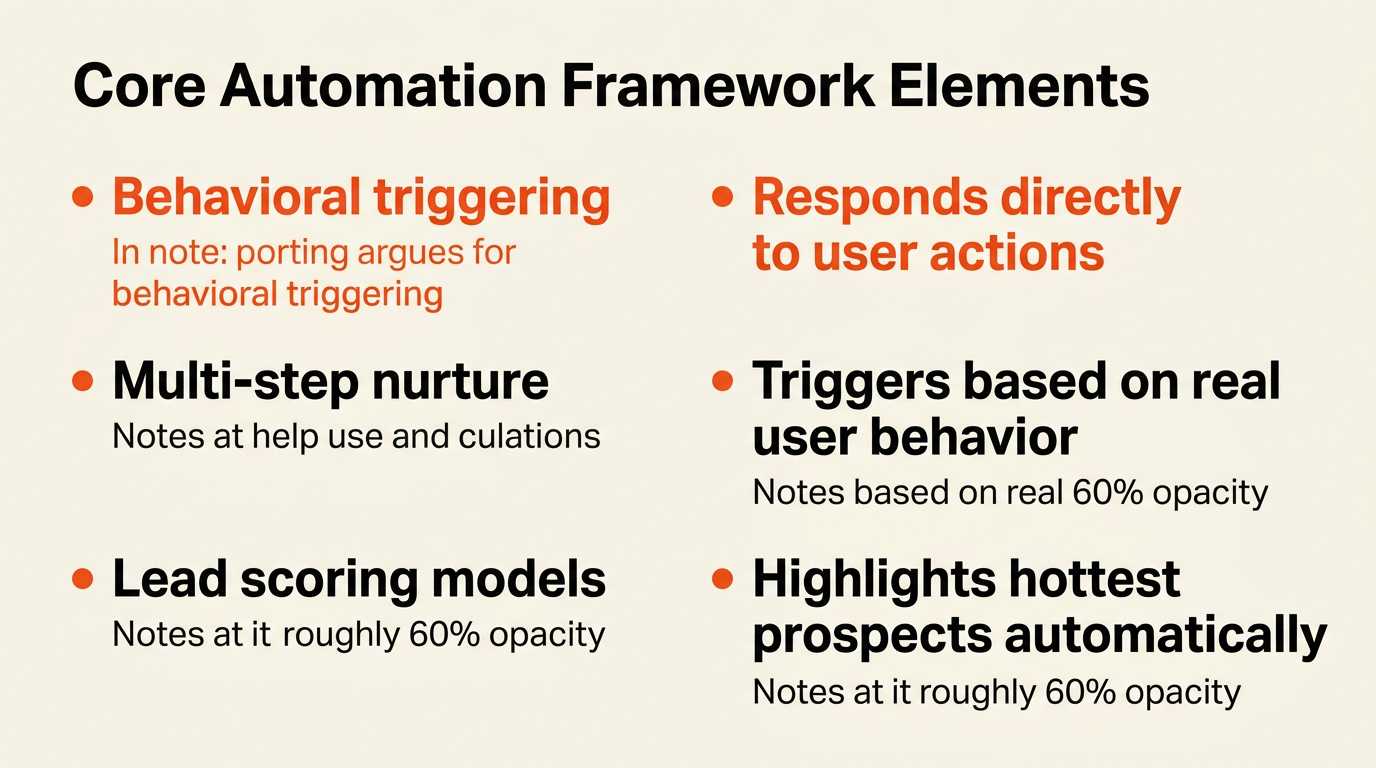
Core automation frameworks should incorporate:
- Behavioral triggering that responds to specific actions users take, such as visiting high-intent web pages or submitting lead forms.
- Multi-step nurture tracks that trigger based on real user behavior rather than arbitrary time delays.
- Lead scoring models that automatically score leads based on behavior and fit to highlight the hottest prospects for prioritized sales follow-up.
Complex drip journeys have to trigger off clear prospect signals like pricing page visits or webinar signups pulled straight from CRM or product databases. The system routes records through branched nurture cadences informed by CRM and product data.
CRM and tech stack integration
Data Synchronization A direct hook between your marketing engine and sales platforms via native integrations or open APIs eliminates silos without costly custom development.
Pipeline Integrity Marketing Automation Software (MAS) coordinates with Customer Relationship Management (CRM) systems to capture lead profiles, track prospect activity, and maintain shared data hygiene across databases.
Personalization flexibility
Marketers rely on dynamic audience segments to adapt messaging around firmographic traits, active deal stages, or actual digital behavior.
Dynamic personalization only works well when your underlying account data is clean, because running automated customization on incomplete or outdated fields risks delivering awkward, misaligned messaging to your target buyers.
Infrastructure deliverability and regulatory compliance
Strong sender reputation depends on rigorous consent handling alongside technical setup guidance supporting SPF, DKIM, and DMARC protocols.
Essential infrastructure requirements include:
- Authentication protocols supporting SPF, DKIM, and DMARC setup guidance to protect your domain reputation.
- Consent management mechanisms including simple sign-up forms, opt-in, double opt-in, and reliable automatic unsubscribe links.
- Data access, deletion tools, and audit logs tracking suspicious activity to maintain strict compliance with GDPR, CAN-SPAM, CASL, and regional data residency rules.

Compliant platforms enforce regional privacy laws including CASL in Canada, CAN-SPAM across the USA, GDPR within the EU, LGPD in Brazil, and PDPA throughout Asia using role permissions, encryption, and secure hosting.
Total cost of ownership at scale
Remember to factor team seat expansion, add-on features, and expanding contact list costs into every software contract evaluation.
A common misstep is budgeting strictly for base subscription tiers while overlooking sudden step increases as your contact database grows or when additional team seats are added.
Frequently asked questions
What is the best b2b digital marketing software?
How you pick your stack comes down to day-to-day workflow demands, hard budget ceilings, and what your team can execute.
Visitor Identification and Inbound Orchestration Go with Warmly if you want to identify accounts hitting your site and trigger immediate inbound outreach.
Enterprise Marketing Automation HubSpot bundles your email sequences, lead nurturing, automated handoffs, and analytics under one roof, whereas Marketo tackles enterprise lead management and complex account-based revenue attribution across larger commercial teams.
How do I choose a b2b marketing tool?
- Map out your business needs by listing your core marketing and sales goals first.
- Check integration requirements for pre-built connectors or APIs that sync with your CRM.
- Review software features against your team’s capacity, technical skills, and support needs.
- Test free trials when available and prioritize tools that integrate with your existing tech stack.
How do I choose a b2b marketing tool?
- Map out your business needs by listing your core marketing and sales goals first.
- Check integration requirements for pre-built connectors or APIs that sync with your CRM.
- Review software features against your team’s capacity, technical skills, and support needs.
- Test free trials when available and prioritize tools that integrate with your existing tech stack.
Evaluate every platform against your pricing boundaries, required integrations, data quality, feature depth, and daily ease of use.
Use this straightforward sequence to guide your choice:
- Map out your business needs by listing your core marketing and sales goals first.
- Check your integration requirements for pre-built connectors or APIs that sync directly with your CRM.
- Review software features against your team’s capacity, your technical skills, and your long-term support needs.
- Test free trials when you can and prioritize tools that integrate cleanly with your existing tech stack.
What should I look for in b2b marketing software?
- Intuitive interface that is easy to learn and navigate for
- Cost-effectiveness at scale ensuring expenses do not
- Automation capabilities including automated workflows,
- Solid integration range ensuring platforms communicate
- Personalization flexibility supported by clean account data
What should I look for in b2b marketing software?
- Intuitive interface that is easy to learn and navigate for
- Cost-effectiveness at scale ensuring expenses do not
- Automation capabilities including automated workflows,
- Solid integration range ensuring platforms communicate
- Personalization flexibility supported by clean account data
Look for software matching your specific use case, featuring transparent pricing tiers, responsive customer support, and a proven track record.
Every platform you consider must cover these foundational operational requirements:
- Intuitive interface that is easy to learn and navigate for both your managers and contributors.
- Cost-effectiveness at scale ensuring expenses do not escalate disproportionately as your contact databases grow.
- Automation capabilities including automated workflows, triggered actions, and AI-powered features that support your campaigns.
- Solid integration range ensuring platforms communicate cleanly across your existing tech stack.
- Personalization flexibility supported by clean account data so you can run hyper-personalized campaigns.
Is there a free b2b marketing tool?
- Warmly has a free forever plan that lets you reveal up to
- Sender’s Free Forever plan allows you to send up to 15,000
- Mailtrap’s free plan lets you send up to 1,500 emails per
- HubSpot offers a free plan that lets you send up to 2,000
- Brevo offers a free plan that includes up to 300 emails per
Is there a free b2b marketing tool?
- Warmly has a free forever plan that lets you reveal up to
- Sender’s Free Forever plan allows you to send up to 15,000
- Mailtrap’s free plan lets you send up to 1,500 emails per
- HubSpot offers a free plan that lets you send up to 2,000
- Brevo offers a free plan that includes up to 300 emails per
They exist, but aggressive volume caps on free plans, like 300 emails per day, 1,500 emails per month, 2,000 emails per month, or 15,000 emails/month, will quickly stall your daily pipeline operations.
You can test these unpaid tiers during early proof-of-concept stages:
- Warmly has a free forever plan that lets you reveal up to 500 people and companies visiting your website.
- Sender’s Free Forever plan allows you to send up to 15,000 emails/month to 2,500 subscribers with all email automation features included.
- Mailtrap’s free plan lets you send up to 1,500 emails per month and manage up to 500 contacts.
- HubSpot offers a free plan that lets you send up to 2,000 emails per month alongside basic contact forms and one booking page.
- Brevo offers a free plan that includes up to 300 emails per day and unlimited contact storage for your lists.
Which b2b marketing tool has the best ROI?
Tools like Warmly that identify website visitors and automate engagement often show you strong ROI by converting your existing traffic.
Software returns come down to how tightly your staff runs the system across your revenue funnel. For instance, directly linking marketing and sales databases enabled one software firm to compress its closing timeline by 50% while boosting prospect conversion rates by 40%.
What is the best email marketing software for B2B companies?
Your email engine needs to tie marketing and sales together with industry segmentation, company size filters, deal stage tagging, and sustained multi-month nurture tracks.
Integrated CRM Automation HubSpot bundles marketing, sales, and service tools into one CRM-powered automation engine, letting your team sync outbound email cadences directly with lead qualification and deal speed.
Product Companies and Delivery Infrastructure Mailtrap Email Marketing focuses on engineering-led teams and software firms, doubling down on sending infrastructure, deliverability telemetry, and solid inbox placement.
Which B2B email marketing platforms offer the best deliverability?
For B2B, deliverability is especially critical for your pipeline because corporate mail servers are often more aggressive with spam filtering than consumer inboxes.
Independent tests give Mailtrap Email Marketing a 78.8% inbox placement rate with automated warmups on dedicated IPs via its Pro plan. Meanwhile, Flodesk reaches about 99% deliverability across its user base, beating typical industry averages by nearly 10 percentage points.
Pick software that backs up its sales talk with genuine seed-list testing, dedicated IP addresses, and straightforward setup for SPF, DKIM, and DMARC protocols.
What is the best B2B email marketing tool for lead nurturing automation?
Great lead nurturing relies on branched flows reacting to buyer actions, like viewing pricing charts, attending webinars, downloading whitepapers, or requesting demos, instead of arbitrary calendar cadences.
Trigger-Based Sequence Engines ActiveCampaign and Pardot give your reps behavior-triggered sequence tracks and tailored paths designed to turn colder prospects into qualified sales opportunities.
Behavioral Journey Mapping Customer.io gives you a visual journey builder to sketch complex prospect workflows triggered by real-time product actions, custom attributes, and list filters. Before you sign any contract, make sure the platform accepts raw webhook payloads or live CRM events instead of simple day delays.
How does B2B email marketing software differ from general email marketing tools?
Basic newsletter services lean heavily on batch-and-blast mailings: you write an update, fire it off to an entire list, and monitor open metrics.
Dedicated B2B platforms introduce account hierarchies, deep sequence logic, bi-directional CRM syncing, and multi-touch pipeline attribution. You will hit a hard ceiling with standard consumer tools the minute you need to segment contacts by company domain, fire automations off CRM pipeline updates, or trace closed deals back to specific campaigns.
What B2B email marketing features matter most?
- Segmentation is the foundation, as personalization is
- Automation multiplies reach by automating welcome sequences
- Outreach (cold email prospecting) is a different category
What B2B email marketing features matter most?
- Segmentation is the foundation, as personalization is
- Automation multiplies reach by automating welcome sequences
- Outreach (cold email prospecting) is a different category
Audience segmentation, drip automation, and outbound features all matter, but their actual importance rests on sales cycle length and database scale.
Concentrate your internal resources on three core areas:
- Segmentation is the foundation, as personalization is impossible without filtering by industry, company size, or funnel stage.
- Automation multiplies reach by automating welcome sequences and re-engagement flows based on real user actions.
- Outreach (cold email prospecting) is a different category that typically lives in a dedicated tool rather than a campaign-focused email marketing platform.
Should I use a B2B email marketing agency or self-serve software?
Self-serve software is the right default for your team across most B2B operations.
Hiring b2b digital marketing services or bringing in an agency makes sense if internal technical resources or readiness are lacking, your team cannot spare the hours for weekly cadence work, or when you expand into brand-new verticals that demand outside positioning chops. The real danger with outsourcing lies in forfeiting your operational learnings and historical campaign data once that contract wraps up. If you pull the trigger on an agency partner, make them work inside your own accounts so your business keeps every workflow and contact record.
Sustained pipeline growth comes from aligning tool sophistication with what your staff can realistically handle, spotting holes across buyer touchpoints, and testing integrations thoroughly before going live. Getting the right stack in place turns early prospect curiosity into consistent enterprise pipeline.
Fitting platform architecture to what your team can execute decides whether your stack drives revenue or creates expensive internal drag. Predictable pipeline requires dependable CRM data handoffs, airtight deliverability, and automated messaging that fires on actual buyer behaviors. Focusing on daily execution rather than giant feature checklists keeps customer acquisition tight. When your team runs b2b digital marketing software they actually understand every morning, you turn raw traffic intent into closed pipeline and preserve execution speed.