When social media marketing for fitness isn’t turning posts into local client inquiries, it’s hard to know whether to change platforms, content, or how you reach nearby prospects.
You’ll get practical ways to weigh outside support, focus your platform and ad choices, and connect useful content to sign-ups. A post can attract likes from distant strangers without opening a conversation with a nearby prospect.
When Does It Make Sense to Outsource Social Media Marketing for Fitness?
Fitness businesses should outsource when inbound leads are predictable and they lack time for creative assets, but manage campaigns in-house when cash is tight and the offer is unproven. If you’re weighing outside help, base the call on lead flow, available time, cash flow, and whether your core offer has proven itself. An agency is one outside option to compare. Managing in-house first lets you learn what converts before bringing in outside help.
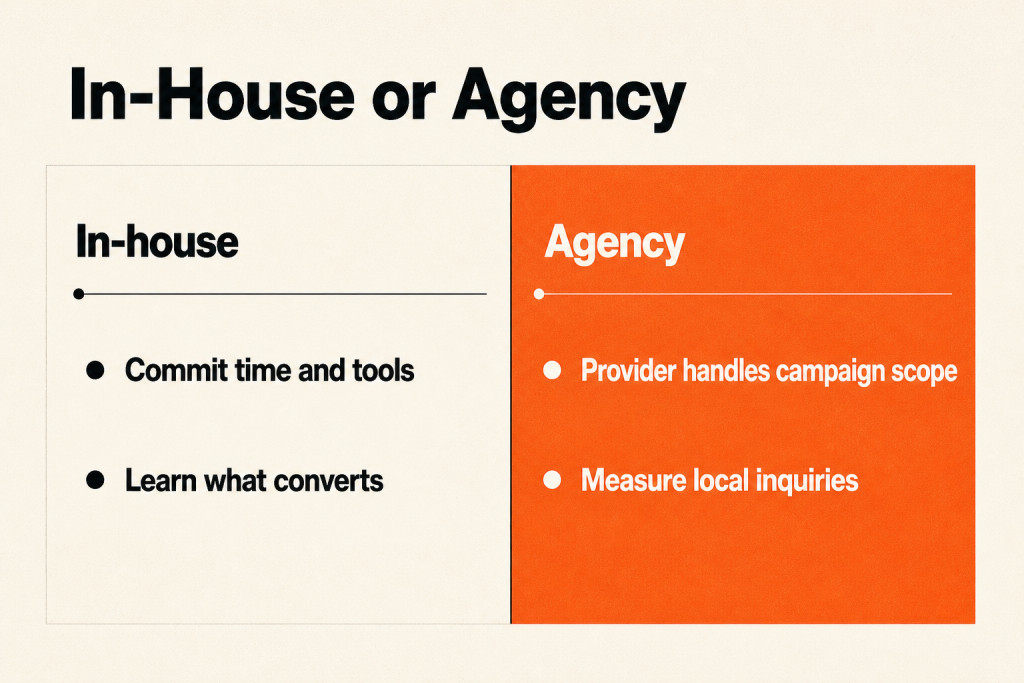
Compare self-management with an agency retainer by checking exactly what the provider handles (strategy, content creation, publishing, community replies, and inquiry tracking) and how often it reports results. Ask how it will measure progress toward local inquiries and what assumptions sit behind its expected outcomes. Then weigh what it would handle against the time and tools you can commit in-house.
What Does Each Social Media Platform Do for Fitness Clients?
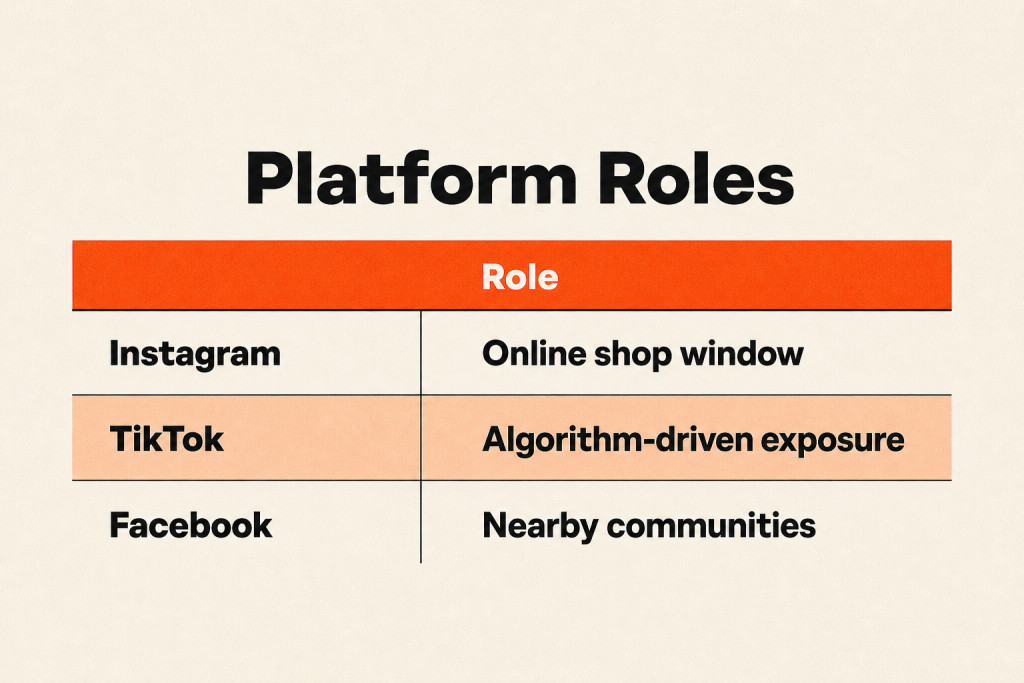
For attracting fitness clients, Instagram can work as a visual showcase for your gym, TikTok can provide algorithm-driven exposure, and Facebook can help acquire clients through nearby communities.
How to Target Local Gym Members With Ads
Gym ads reach nearby members through a Drop Pin radius, modest budgets, and retargeting.
- Set hyper-local boundaries: In Meta Ads Manager, pick Traffic or Leads, then set the audience location with Drop Pin. Choose a radius such as 5 miles from the gym, and narrow by age, gender, or interests like fitness or group training. A wide radius can waste ad spend on people too far away; tight geographic boundaries focus on people who can commute to classes.
- Set a realistic budget: Start with a small daily budget of <$20, then run A/B tests to find the best ads. Raise spend when an ad resonates to reach more potential members, and test creatives first.
- Boost conversions with retargeting: Install Meta Pixel on your website to track visitor behavior, including bookings and visits to membership pages. Assemble a retargeting audience for subsequent ads. Free trials can lower the barrier to joining and bring in more sign-ups.

Which Content Formats Turn Viewers Into Gym Sign-Ups?
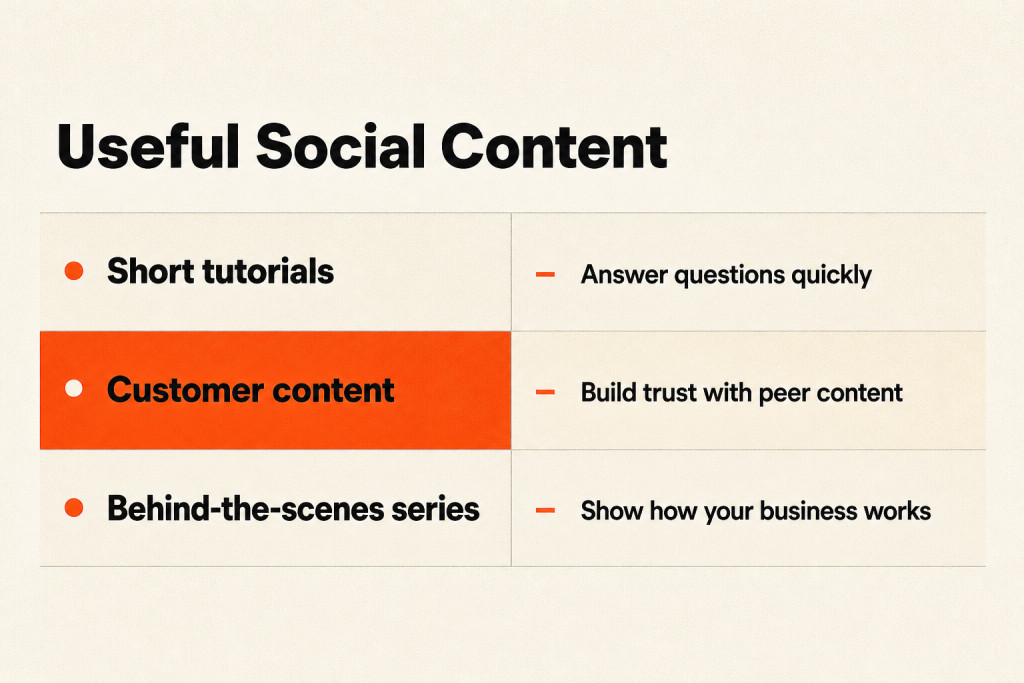
The useful formats for gym sign-ups include Member testimonials, trainer tips, user-generated content, fitness challenges, and myth-busting posts. Pair them with a balanced mix and clear CTAs, so every post points people toward a next step.
Share Member Testimonials
Member testimonials show what your gym’s programs and services can do through members’ success stories. Keep each video under 60 seconds, and edit in clips that highlight the member working out.
Trainer tips and tutorials
Have a PT show the right way to squat or use a foam roller, then add subtitles for viewers watching without sound. Finish with a CTA like, “Keep this for your next workout!”
User-generated content (UGC)
Get members to tag your gym when they post, then share their selfies, check-ins, or progress pics on your gym’s channels. Small rewards can nudge members to post UGC.
Follow the 80/20 content rule
The 80/20 content rule calls for 80% of posts to offer audience value, with the other 20% promoting your gym. Set a content calendar and post at least 3-4 times a week, ideally more.

Common mistakes to avoid
Promotion without useful posts can push followers away; keep the 80/20 split in view as you plan.
Fitness challenges
Create a branded hashtag and Facebook Group, then ask followers to post progress updates and tag your gym.
Myth-busting posts
A myth-busting post can give viewers a useful takeaway to share; use carousels or Shorts to tackle one misconception at a time, like “Sweating ≠ fat loss.” Start with a curiosity hook, then offer a quick takeaway viewers can try today.
A second way to plan your mix is by post type:
- 70% Video: Keep videos under 60 seconds.
- 20% Community: Use user-generated content.
- 10% Sales: Include direct calls to action.
Posts without a clear call to action (CTA) may struggle to turn viewers into members.
Building a Fitness Social Media Marketing Strategy in Four Steps
Build your strategy around member data, clear business goals, other gyms’ social media, and results you can measure.
Step 1: Know your audience
Use short surveys, gym sign-up data, social media insights, and website analytics to learn about members and followers. Check age, gender, location, occupation, and fitness goals (your current members and followers may show different patterns). If few members are in the gym during work hours, consider retirees, students, or shift workers as groups to target and fill those lulls.
Step 2: Identify your business goals
Decide which business goals you want social media to support. Choose brand awareness, member sign-ups and retention, or a larger online following, then define SMART goals that are specific, measurable, achievable, relevant, and time-bound for those efforts.
3. Analyze your competitors
A competitive analysis of other gyms’ social media can reveal untapped opportunities, show what works for them, and give you ideas based on how people respond to different content. Reviewing their content can offer useful clues, especially when your own social media data is limited. For a new gym, that outside view gives you something to base your strategy on.
Step 4: Measure and optimize
Track the measures that fit your goals:
- Engagement rate: How people interact with your social media content through likes, comments, shares, and saves.
- Follower growth: How quickly your audience expands on each social media platform.
- Click-through rate (CTR): How often someone clicks a link in your post or ad.
- Conversion rate: How many people take a desired action, such as downloading a guide or signing up for a trial.
- Reach: The number of people who saw your social media content.
- Impressions: The total number of times your content appeared on someone’s screen.
- Views/watch time: Measures for tracking Reels, Stories, and YouTube videos.
- Story completion rate: How engaging your Instagram or Facebook stories are.
- Direct messages and inquiries: A way to see how well your content drives interest and leads.

Vanity metrics
A high follower count is a vanity metric: it can look impressive even when some followers could have been purchased. Purchased followers won’t show you which strategies work.
Keep the focus on local prospects and direct inquiries; that’s what effective social media marketing for fitness should deliver.