Social media marketing for architects is not just a matter of showing strong work; firms also need a path from attention to qualified inquiries.
You’ll get practical ways to assess agency support, choose channels, plan content, and judge whether attention is turning into the right conversations. A project image may fade quickly on one platform yet keep sending visitors to your website from another. This guide covers social media marketing for architects step by step, from choosing channels to measuring inquiries.
Hiring an Agency for Social Media Marketing for Architects
A firm’s size and the maturity of its outreach should guide whether it hires a social media agency. Keeping the work in-house gives the firm direct brand control, quicker decisions, and knowledge from inside the practice. A specialized social media marketing agency brings strategy expertise and content production skills to resolve production bottlenecks, along with time savings and a fresh point of view. When evaluating a provider, ask what its scope includes, what experience it has with architecture firms, and how it will measure success, including qualified inquiries. A hybrid setup can work too: the agency provides strategy and training, while the in-house team handles day-to-day tasks and community management. Many firms benefit from setting aside 10-15 hours per week for social media, and that time belongs in the budget.

Platform Selection
A firm’s platform mix should align with how prospective clients discover and assess its services. A focused presence in one channel beats a thin showing across five. Instagram and Pinterest are discovery platforms; LinkedIn and Houzz are trust-building platforms, each serving a different step. Start by deciding whether you need discovery or trust.
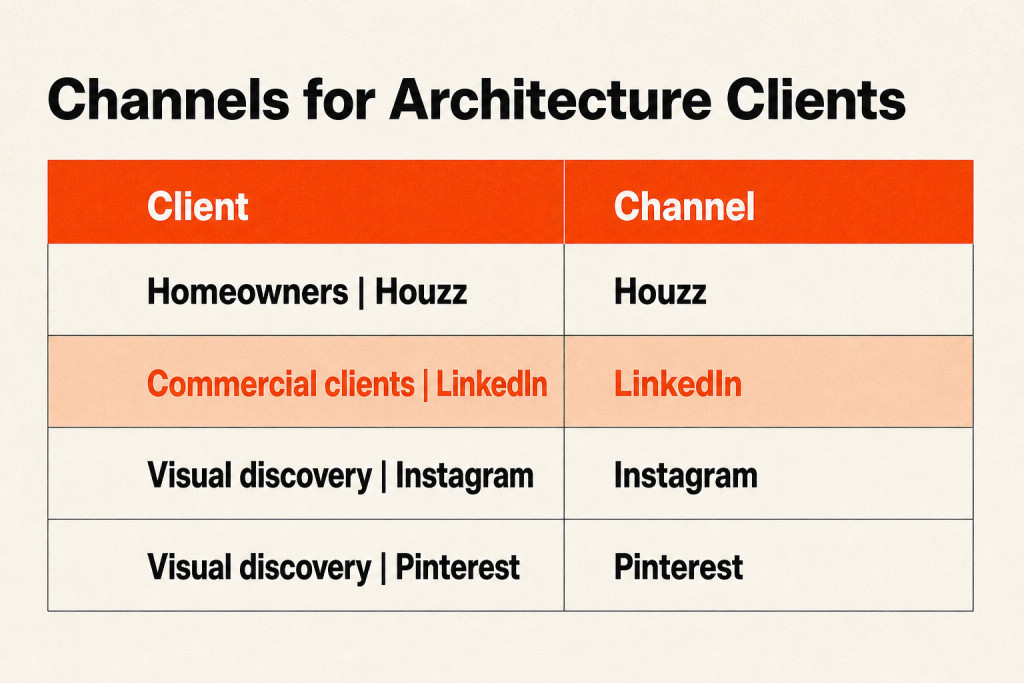
- Discovery platforms (Instagram, Pinterest): Architects use these channels to show visual work and teach audiences about design trends. They build awareness and help position a firm as a thought leader, with images and ideas giving people a first look at the practice’s work.
- Trust-building platforms (LinkedIn, Houzz): Reviews, credentials, and past projects build credibility on these channels, helping turn an interested prospect into a qualified lead. The details people check depend on the project and the client.
Architecture depends on images and relationships, so the right channel comes down to the firm and the clients it wants. A residential designer’s Instagram approach should differ from a commercial firm’s LinkedIn presence because those clients seek different things. Start with the channel your ideal client uses.
Have a strategy.
Set a clear purpose for every social channel and decide what the firm wants from it. Pick topics, a posting schedule, and engagement measures before handing off social media management. A clear plan makes delegation easier.
Instagram leads for architecture visuals, with 2.5 billion monthly active users and an algorithm that favours video. If reach is the goal, Instagram Reels are a must.
Instagram Reels deliver 2.5x the reach of static carousel posts. For architecture firms, strong subjects include:
- Before-and-after transformations (renovation projects, space redesigns)
- Process documentation (design presentation walkthroughs, material selections)
- Design trends and insights (colour palettes, spatial planning tips)
- Quick interior design hacks (lighting solutions, space-maximisation tricks)
- Site to completion timelapses (construction sequences, fit-out progression)
For firms with strong visual work, Instagram can be a useful starting point: people visit for ideas, and a portfolio can nurture future clients. Give Reels, carousels, and Stories distinct roles, and show the thinking behind completed projects.
LinkedIn gives architects a way to build professional credibility and bring in qualified B2B leads. Posts from individual team members get more algorithmic reach than company-page posts, a distinction many firms overlook.
Ask architects, principals, and directors to share original insights. These content types tend to perform well:
- Design methodology and philosophy pieces
- Industry trend analysis and predictions
- Project case studies with lessons learned
- Thought pieces on sustainability, the future of work, and urbanism
- Team milestones and employee spotlights
Keep company pages for formal announcements, award wins, and news roundups. On average, individual thought leadership receives 40% more engagement than posts on company pages. The LinkedIn feed tends to reward:
- Posts that generate comments and shares, particularly in the first hour
- Native content, such as text and images posted directly rather than external links
- A conversational, authentic voice instead of corporate messaging
- Posts from company employees rather than the company page itself
Houzz
Some homeowners use Houzz to review and recommend architects and designers, or to search for those services. Residential clients there are actively looking to hire, which makes it a strong source of leads for residential firms.
- Complete profile: Include high-resolution project photos, a firm description, services, credentials, and license information.
- Ideabooks: Group curated project collections by style, room type, or service. Ideabooks drive engagement and show the range of your design work.
- Reviews: Ask completed clients for reviews. Response time and quality matter because Houzz prioritises responsive firms in rankings.
Instagram earns attention through visual appeal and inspiration; Houzz serves homeowners ready to hire. Make your credentials, testimonials, project case studies, and service areas easy to find on your profile.
Pinterest serves a different role from Instagram: users treat it as a visual search engine, saving design ideas for projects ahead. Content there lasts 3-6 months, much longer than Instagram’s 3-5 day peak.
Interior architects and residential designers can get steady, long-tail traffic from Pinterest. Pins can include:
- Style guides and mood boards
- Room-specific design ideas (bedroom layouts, kitchen configurations, office setups)
- Colour palette inspiration
- Sustainability and eco-friendly design trends
- Space-saving solutions for small homes
Send every pin to your website or blog. Instagram Reels chase viral reach, while Pinterest sends steady, qualified referral traffic to service pages and portfolio pieces. Pins can keep bringing visitors to your website long after an Instagram post has peaked, so set up an account even if you don’t post there every week.
Measure Social Media’s Business Impact
Attribute social results by adding UTM parameters to every social link and tracing each inquiry back to its source, noting which platform’s visitors become clients. Focus on figures tied to revenue, since follower totals alone reveal little about what social brings in.

- Instagram: Measure website click-through rate, content saves as an indication of high relevance, and inquiries that come through direct messages.
- LinkedIn: Track profile views, connection requests from target clients, qualified inquiry volume, and thought leadership reach.
- Houzz: Watch Ideabook saves, review volume and rating, direct inquiries through Houzz messaging, and qualified lead conversion rate.
- Pinterest: Monitor outbound click traffic to your website, conversion rate from Pinterest referrals, and pin saves and repins as an indicator of content lifespan.
- YouTube: Check average watch time (% of video watched), click-through to your website, and subscriber retention and growth from an architecture audience.
A campaign tag on an Instagram Reel link could look like this: ?utm_source=instagram&utm_medium=reels&utm_campaign=project_showcase
Tracing each inquiry to its source shows true ROI and guides budget choices. Many firms get higher-quality leads through Houzz and LinkedIn than through Instagram, despite Instagram’s larger following.
Client Journey
Treating social media as a trust-building route usually serves architecture firms better than treating it as a pure lead-generation channel, so track inquiry sources alongside it. Instagram gives firms a visual place to share their perspective and working methods; a portfolio shows completed work but leaves much of the process out. With consistent updates, social posts keep your work visible to prospective clients and help them become familiar with your approach before they enquire.
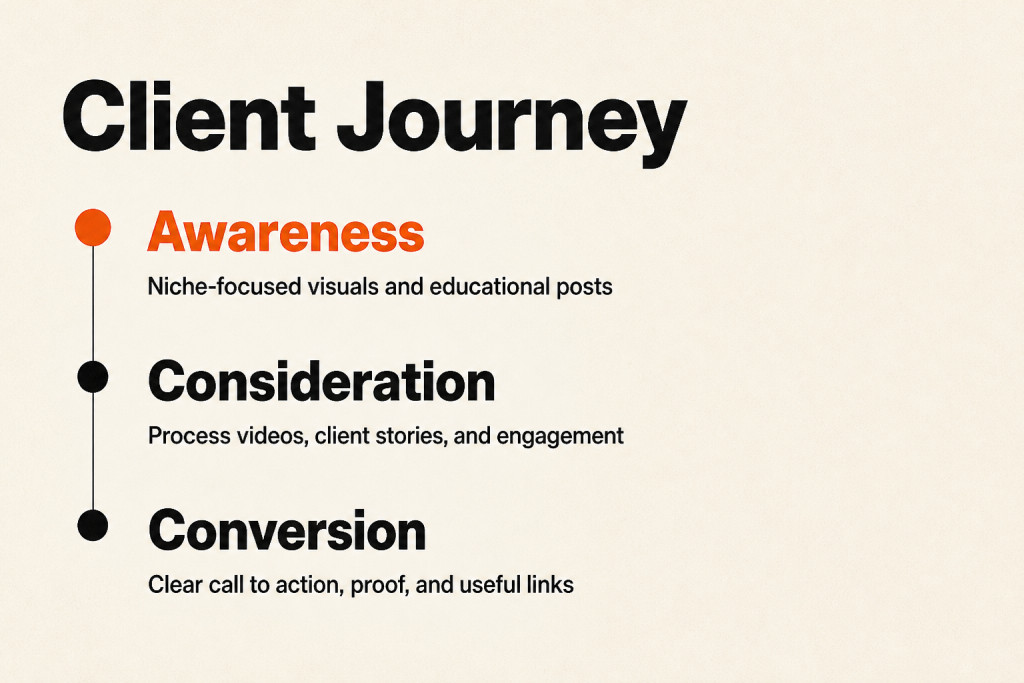
Awareness, consideration, and conversion are the three stages of the client journey. Each calls for its own content and mindset.
Awareness
The awareness stage focuses on getting noticed by people who may need your services later, rather than turning them into clients today. Make your niche clear from the start through a consistent bio and captions, supported by a distinctive visual style. Speak to everyone, and you’ll reach no one.
Strong project images and educational posts tied to your niche can earn a pause in the feed, as can tips and trends your ideal client cares about. Give the right person a reason to think, “This is exactly what I’ve been looking for.”
You can look at a photo and see the design decisions behind it; many people outside the field can’t, and some of them will be the ones hiring you. Explain the work in plain, respectful language so potential clients can see what shaped the design. A striking image may get their attention, while the project details help them understand your approach and feel sure you’ll involve them in the process.
Consideration
At the consideration stage, use behind-the-scenes posts, process videos, client stories, and candid explanations of how you work to help prospective clients understand your approach and build a connection. People follow accounts that feel human, so show your thinking alongside the finished work.
Keep followers engaged.
After someone follows your firm, give them reasons to stay interested and trust you when they’re ready to hire. Live Q&A sessions let you talk with your audience in real time and give tailored answers to the questions viewers ask. They also help your firm come across as approachable and knowledgeable.
Use the questions.
Questions raised in Live Q&A sessions show what prospective clients want answered and provide material for blog posts or YouTube videos.
Conversion
At the conversion stage, make it easy for prospective clients to take the next step with one clear call to action that leads to useful portfolio pieces and client testimonials.
Use your bio link to direct people to strong portfolio pieces and client testimonials describing what it’s like to work with you, not only the finished project. Send people somewhere useful instead of stopping at “link in bio.”
Share what clients say.
A client testimonial gives a first-person view of what it’s like to work with your firm; the completed project is only one part of that experience. Testimonials also give people proof that your firm can be relied on. 9 out of 10 people say a client’s account of a business earns their trust more than the business’s own claims.
Show the work behind the results.
Case studies take a close look at individual projects and use real examples to demonstrate your firm’s expertise in problem-solving and creative work.
- Create short video testimonials or written posts using client quotes.
- Highlight the specific challenges faced and how your firm addressed them.
- Share these posts on your social media platforms and link them to detailed case studies on your website.
Let social support your proposals.
When you send a proposal or pursue a new commission, expect decision-makers to check your social media channels. Use those channels to show work that fits the commission you want. For a hospital commission, feature images from previous healthcare projects alongside your thoughts on current challenges in healthcare design.
Plan a Balanced Social Media Content Mix
Four content pillars give your social content a balanced mix: hero imagery, process documentation, educational content, and community and culture. Consistency matters more than perfection; a content calendar keeps you from scrambling and gives each platform its share. Plan 2-4 weeks ahead, leaving room for timely opportunities.
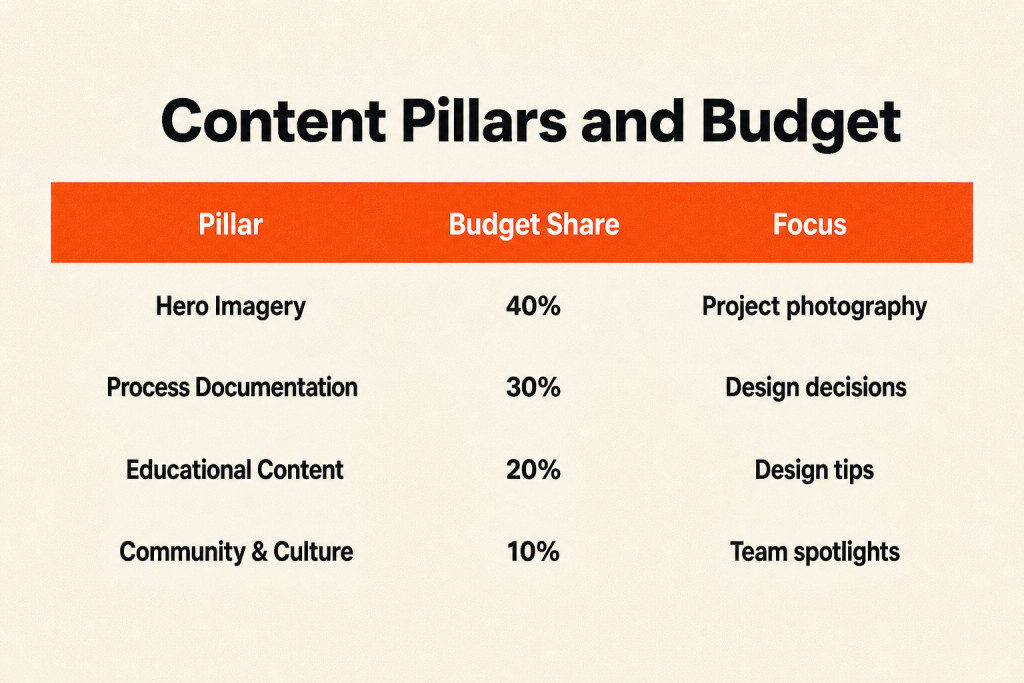
The table lays out each pillar’s share of your posts and its focus.
| Pillar | Share of Posts | Focus Area |
|---|---|---|
| Hero Imagery | 40% | Project photography, architectural photography, design aesthetics |
| Process Documentation | 30% | Behind-the-scenes, design decisions, client walkthroughs, before-and-afters |
| Educational Content | 20% | Design tips, trend analysis, sustainability, spatial planning advice |
| Community & Culture | 10% | Team spotlights, awards, milestones, thought leadership |
Direct promotion should account for only a quarter to a third of an architecture firm’s posts.
For sourcing, use an 80/20 split: 80% should be material you create yourself, including videos that share insights from your projects, while 20% can come from curated or user-generated material. The authored 80% builds your unique voice and portfolio; reposts add variety and show your engagement with the wider design community. That 20% can include client testimonials, articles that mention your firm, and design inspiration from other sources. Always get attribution and permission before you post someone else’s content.
Video Strategy
Architecture firms can build a practical video strategy around project showcases, process videos, short Reels and Stories, and testimonials. Video earns far more engagement than static imagery across Instagram Reels, YouTube walkthroughs, and LinkedIn. These formats cover most needs:

- Hero videos (2-4 minutes): Cinematic project showcases, architectural transitions, and design narratives.
- Process videos (1-3 minutes): Before-and-afters, space transformations, and design selections.
- Reels (15-60 seconds): Design tips, quick transformations, trend insights, and aesthetic inspiration.
- Stories (5-15 seconds): Daily updates, team moments, project progress, and announcements.
- Testimonials (30-90 seconds): Client interviews, project outcomes, and transformation stories.
For production, a few habits matter most:
- Keep your shots smooth with a gimbal or tripod.
- Use natural lighting whenever possible; add affordable LED panels when needed.
- Add captions: 80% of social media videos are watched without sound.
- Hook viewers in the first 2 seconds, the critical attention window.
- Repurpose one long-form video into 4-6 short-form Reels or Stories.
You don’t need Hollywood-level production: smartphone videos with clean audio, steady lighting, and compelling stories often outperform expensive productions. Long-form video gives you more room to explain a project’s constraints, decisions, and outcomes, which helps viewers trust your expertise. A good video has a shelf life measured in years, not days.
Frequently Asked Questions
Which social media platform generates the most qualified architecture clients?
Houzz and LinkedIn often deliver better-qualified leads than Instagram, despite Instagram’s larger audience. The advantage comes from intent and engagement: a smaller audience that is actively looking for an architect converts better than a large following that only scrolls.
How long does social media marketing take to produce architectural leads?
Social media usually takes 3-6 months to gain momentum. Instagram and Pinterest may bring traffic in 4-8 weeks, while LinkedIn and Houzz inquiries often need 2-3 months to rise meaningfully because those platforms rely more on trust. Plan for the longer cycle.
Should an architecture firm manage social media internally or hire an agency?
It depends on the firm’s size and how mature its outreach is. In-house teams keep brand control and inside knowledge, while an agency adds strategy and production capacity. Many firms use a hybrid: the agency sets strategy and trains staff, and the team handles daily posting and community management.
What content ratio should architecture practices follow?
Architecture practices can use an 80/20 mix: 80% original material and 20% curated or user-generated content. Within that, keep direct promotion to roughly a quarter to a third of posts.
Conclusion
Social media marketing for architects works best as a staged, trust-building route to qualified inquiries. Pick the channels your ideal clients use, give each one a clear role, and judge them by lead quality rather than follower totals. Instagram and Pinterest may bring traffic sooner, while LinkedIn and Houzz take longer as trust builds, so allow 3-6 months for momentum before deciding what to refine next. Approached this way, social media marketing for architects becomes a steady source of qualified project inquiries.