Ten years ago, you could simply stuff keywords 20 times into an article and comfortably wait for it to rank at the top. But times have changed! If you still hold that old mindset in 2026, you’re single-handedly sending your website to Google’s graveyard.
The truth is: Google doesn’t read every word anymore; it’s sensing your content like a human being. It’s looking for connection, context, and genuine value behind each sentence. Don’t just write for the machine to read; write to solve problems.
My sincere advice: It’s time to abandon keyword-driven writing and shift to building a knowledge-based “territory” (topics). If you don’t change now, your competitors will leave you far behind in just a few algorithm updates.

Key Takeaways
|
Keywords vs. Topics: Core Differences
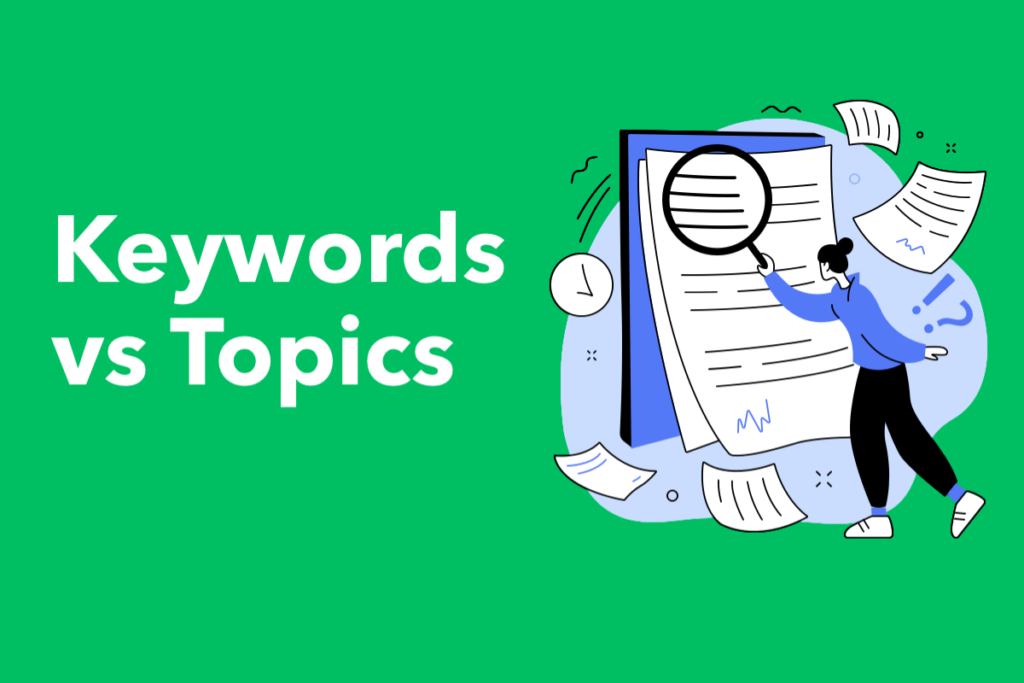
A magnifying glass focusing on a network of connected ideas rather than a single word
Many people still ask me: “Hey, aren’t keywords and topics the same thing?” The answer is No. Imagine you’re preparing for a mountain climbing trip:
- Keywords: Shoes, walking stick, water bottle. Individual items.
- Topics: This is the entire “Guide to Survival and Conquering Fansipan Peak”.
If you only sell shoes (Keyword), customers will buy them and move on. But if you provide a complete, safe mountain climbing route (Topic), you’ll not only sell shoes but also gain their absolute trust. Google is the same; it loves websites that offer a “complete experience” rather than fragmented pieces of information.
Here is a simple comparison to help you see the difference:
| Feature | Keywords | Topics |
| Definition | A specific word or phrase used in a search query. | A broad subject or complete area of knowledge. |
| Focus | Solving one specific search intent or query. | Covering the entire user journey and all related questions. |
| SEO Role | Helps a single page rank for that exact phrase. | Establishes site-wide authority on a core subject. |
| Measurement | Ranking position and organic traffic for that phrase. | Internal links, time on site across pages, and site-wide traffic. |
| Example | “best hiking boots for men” | “Hiking Gear and Safety” |
Why Semantic SEO Matters More Than Ever
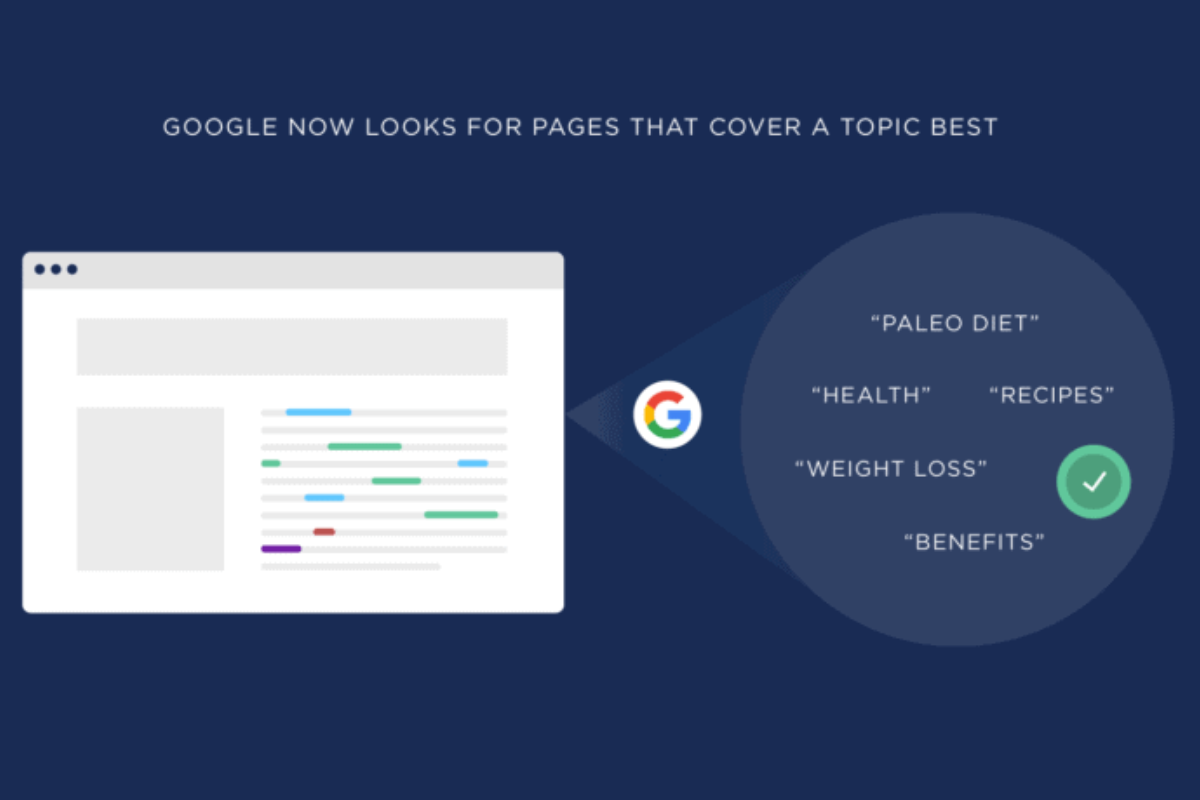
Google reads content like the human brain by connecting related ideas and context
Have you ever wondered why, when you search for “Apple,” Google knows you’re looking to buy an iPhone and not a recipe for apple pie? That’s thanks to Semantic SEO .
Google now plays the role of a brilliant detective. When you mention “Tesla,” it will look around the article:
- If you see “engine”, “battery”, “Elon Musk” -> Ah, this is an electric car.
- If you see “invention”, “alternating current”, “19th century” -> Oh, this is the physicist Nikola Tesla.
What’s the lesson for us? Don’t try to optimize for a single keyword. Cover the entire “ecosystem” surrounding it. When you write in enough depth and breadth, Google will automatically label you as an “Expert” without needing any tricks.
- Entities, Context, and Meaning: Google uses entities (real-world people, places, things) to understand the true context of your content.
- Optimise for Topic Clusters, Not One-Off Long-Tails: Instead of writing hundreds of separate articles on individual long-tail keywords, you create a connected system. This topic cluster model shows Google the depth of your expertise.
- Use Semantic Keywords, PAA, and Related Searches: Do not just use your main keyword. Use related terms, questions from the “People Also Ask” (PAA) section, and searches suggested by Google.
- Structured Data & Internal Links as “Glue”: Structured data (like Schema markup) helps Google clearly define your entities and relationships. Internal links act as the “glue” that shows Google exactly how your Pillar page and Cluster pages connect to form a complete topic map.
Step-by-Step: From Keyword List to Topic Hub
Shifting to a topic-based strategy requires a structured process. This change will make your content creation more efficient and your SEO results stronger.
Step 1 – Start with Keyword Research (Seed, Variants, Questions)
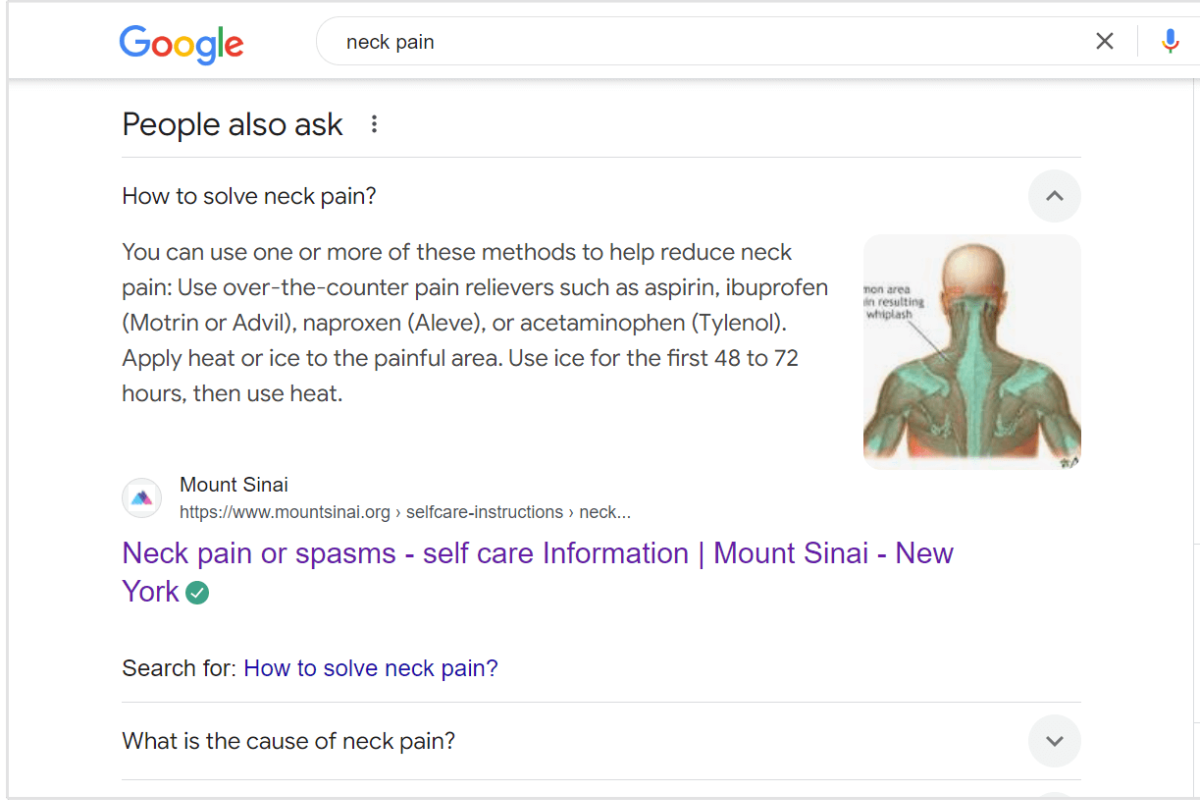
Use tools or Google’s PAA to find the long questions people ask
The process still begins with keywords, but the goal is different.
- Seed Keywords: Identify your main, broad terms (e.g., “Content Marketing Strategy”).
- Variants: Find related keywords (e.g., “B2B content marketing,” “content strategy template”).
- Questions: Use tools or Google’s PAA to find questions people are asking (e.g., “how to start a content marketing plan”). Collect these for a complete view of the user’s needs.
Step 2 – Map Keywords to Topics and Intents
Group the keywords you found into larger buckets or topics.
- Identify the Topic: A group of 10-20 related keywords likely belongs to a single core topic (e.g., all questions about “link building” become the topic “Advanced Link Building”).
- Match Intent: For each keyword, decide the user’s goal: Are they looking for information (Informational), a specific tool (Navigational), or ready to buy (Transactional)? This helps you choose the right content format.
Step 3 – Create Deep Pillar Content for Each Topic
Think of the pillar page as the “Table of Contents” for your website section
The Pillar is the most complete, authoritative piece on the main topic.
- Comprehensive Coverage: This page should be a long, detailed guide (e.g., 5,000+ words).
- Broad Overview: It provides answers to all the core questions within the topic, but it does not go into extreme detail on every sub-point.
- Central Hub: The Pillar page will be the central point that links out to all the supporting Cluster content.
Step 4 – Support with Cluster Content Around Subtopics
Clusters are shorter, detailed articles that support the Pillar.
- In-Depth Focus: Each cluster article takes one small section of the Pillar and explores it fully (e.g., “The Complete Guide to Broken Link Building”).
- Specific Keywords: Cluster pages target the more specific, long-tail keywords you found in Step 1.
- Interlink: The Cluster pages should link back to the main Pillar page.
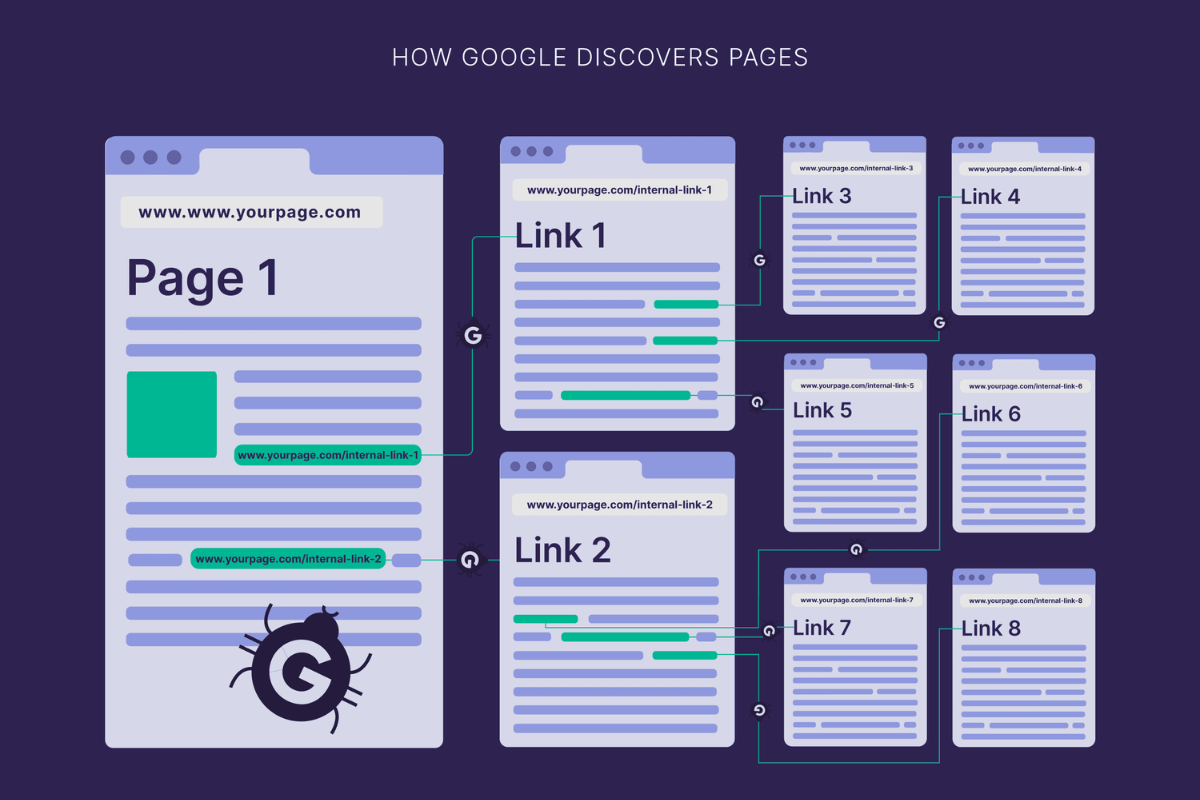
Step 5 – Use Internal Linking to Show Relationships
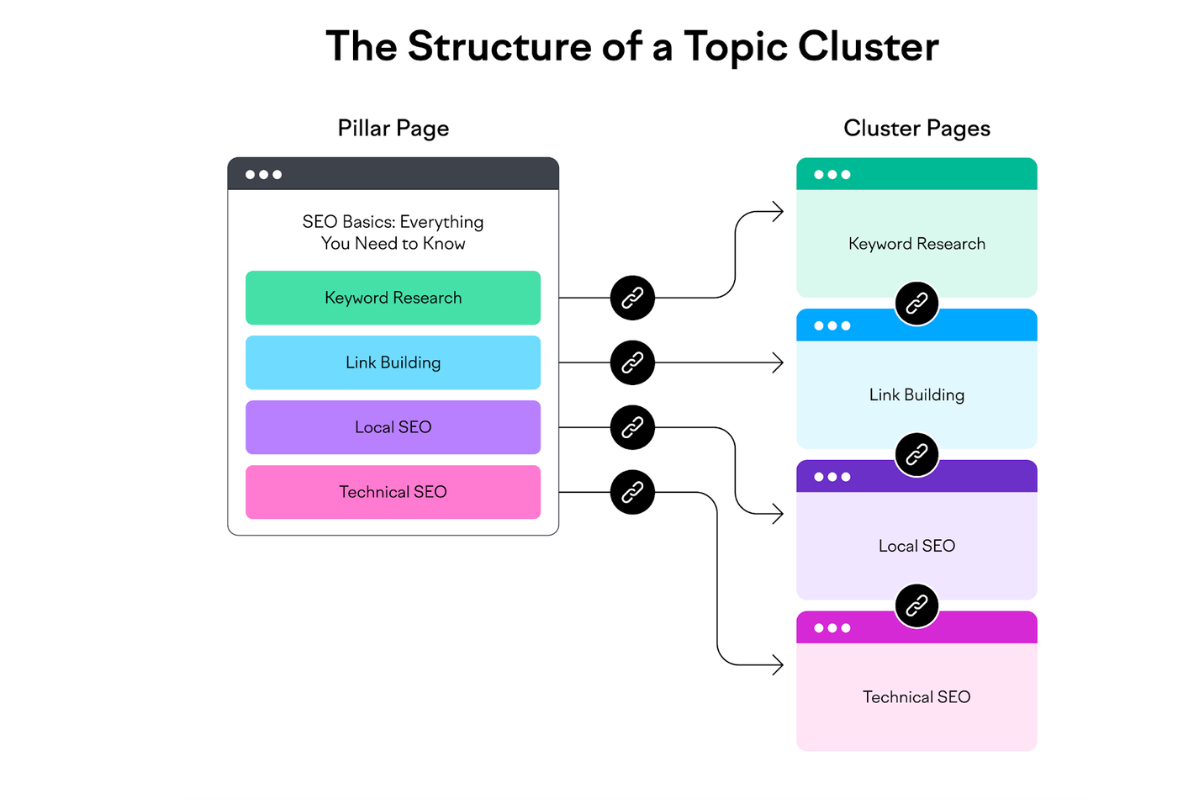
The Pillar Page links to all the Cluster Pages
This step is critical. Internal linking connects the whole system.
- Pillar to Cluster: The Pillar links out to every Cluster page for detail.
- Cluster to Pillar: Every Cluster page links back to the Pillar page.
- Use Specific Anchor Text: The link text should be very specific, helping Google understand the exact subtopic being linked. This structure clearly shows Google that the Pillar is the main authority on the topic.
Step 6 – Update Regularly and Consolidate Overlapping Pages
Topic hubs are not set-and-forget projects. They need care.
- Regular Updates: Keep your Pillar content fresh with new data and examples. This shows Google that your expertise is current.
- Consolidate: If you have two old articles that cover the same subtopic, combine them into one stronger Cluster page. Delete the weaker one and set up a 301 redirect. This prevents pages from competing against each other (keyword cannibalisation).
Real-World Results: SEO Topic in Action
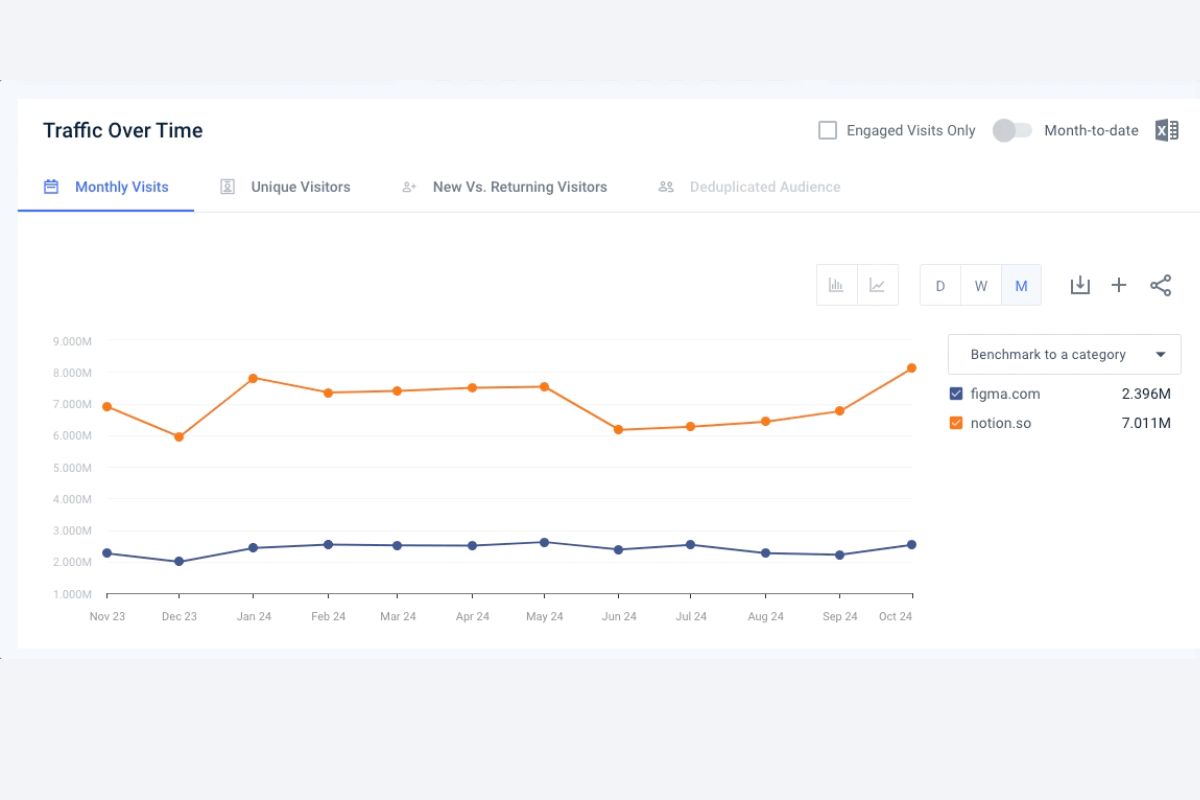
An upward trend in website traffic and user engagement metrics
The shift to topic-based content is not just theory. Companies that adopt this strategy see measurable wins:
Case A: Snippet Lift After Rewriting a Guide
A company rewrote a long-standing article, focusing on covering the entire topic instead of just hitting keywords. They organised it with clear H2s and H3s.
The Result: Google awarded them the “Featured Snippet” (position zero). They appeared at the very top of the search results because they answered the topic directly.
Case B: Lower Bounce, Higher Engagement
Another site shifted to topic clusters. They linked their articles together logically.
The Result: By linking related content (Pillar and Cluster), one site saw a significantly lower bounce rate and higher time on site. Readers were engaged and stayed longer, proving the topic hub model works for users.
Case C: AI Mentions Without Paid Placement
New search tools like ChatGPT and Google’s AI Overview use topic authority. They recommend brands that appear to be experts.
The Result: By covering a topic completely, a brand begins appearing in AI-generated answers. They did not pay for ads. The AI simply recognised them as the best source of truth for that topic.
Common Mistakes (and How to Avoid Them)
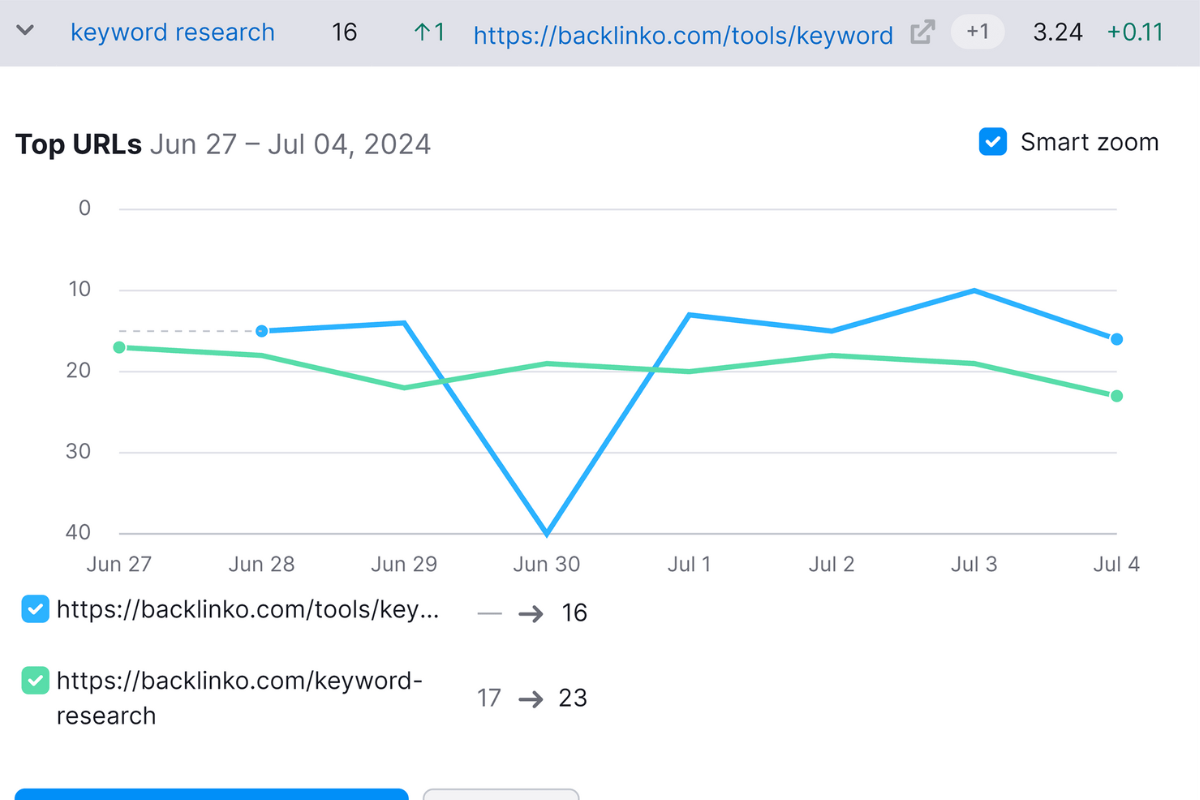
Keyword cannibalization can negatively impact your website’s organic search performance
Switching strategies can lead to new mistakes. Here are the traps to watch out for:
Mistake 1: Not Linking Enough
Creating the Pillar and Cluster pages but forgetting to link them.
How to fix: Every Cluster page must link back to the Pillar. Use strong, relevant anchor text to show the hierarchy.
Mistake 2: Making Clusters Too Broad
Writing a Cluster page that covers too many subtopics, making it compete with the Pillar.
How to fix: Ensure the Cluster article targets a single, highly specific question that the Pillar only touches on briefly.
Mistake 3: Starting Too Big
Trying to build a dozen Topic Hubs all at once.
How to fix: Start with one or two core topics that are most important to your business. Build them completely before moving to the next.
Mistake 4: Keyword Cannibalization
You write three different pages about the same thing. Google gets confused. It does not know which page to rank.
How to fix: Merge similar pages into one ultimate resource.
Conclusion
The era of tricking search engines with keyword stuffing is over. To grow in 2026, you need to write for topics, not just keywords. This approach not only boosts your rankings by satisfying Google’s modern algorithms but also builds a loyal audience that truly values your depth of knowledge.
If you need a partner to help you build a robust digital presence or develop the tech to support your SEO strategy, Golden Owl Digital is ready to assist. We understand how to build platforms that support high-quality content and user engagement. Start your topic-based strategy today.

Jaden is an SEO Specialist at Golden Owl Digital. He helps brands rank higher with technical SEO and content that resonates