Social media has become one of the most influential channels in modern digital marketing. 5.44 billion people use Social platforms such as Facebook, Instagram, LinkedIn, TikTok, and X every day to consume content, interact with brands, and discover new products.
This environment creates strong opportunities for businesses to reach potential customers through social advertising. Instead of relying only on organic posts, companies can promote their products and services through paid campaigns that appear directly in social media feeds.
This guide by Golden Owl Digital explains what social advertising is, how it works, why it matters for businesses, and how companies can run effective social advertising campaigns.
What Is Social Advertising?
Social advertising refers to paid advertisements that appear on social media platforms and target specific audiences.
These ads appear inside feeds, stories, video content, and other placements within the platform. Advertisers define who should see the ads based on factors such as age, interests, location, and online behavior.
Businesses use social advertising to support different marketing goals, including:
- Increasing brand awareness
- Driving website traffic
- Generating leads
- Boosting product sales
For example, an e-commerce brand may run Instagram ads to promote a new product launch. The company targets users who recently searched for similar products or follow related brands.
This ability to reach relevant audiences makes social advertising a powerful tool in digital marketing.
Read more: Which Social Media is Best for SEO? 6 Best Sites in 2026
How Social Advertising Works
Social advertising platforms rely on automated systems that connect advertisers with relevant audiences. These systems analyze user behavior and campaign settings to determine which ads should appear in each user’s feed.
Several key components shape how social advertising campaigns operate and deliver results.
Ad auctions and bidding systems
Most social media platforms run advertising through an auction system. Every time a user opens a social feed or watches content, the platform evaluates multiple ads that compete for the same placement.
The system considers several factors when selecting the winning ad, including the advertiser’s bid, the predicted engagement rate, and the overall quality of the ad. The advertisement that provides the highest total value appears in the user’s feed.
For example, two brands may target the same audience on Instagram. The platform evaluates both ads and selects the one that shows stronger predicted engagement and relevance for the user.
Audience targeting capabilities
Audience targeting represents one of the most powerful features of social advertising. Social media platforms collect large amounts of user data, which helps advertisers create highly specific audience segments.
Common targeting options include:
- Age
- Gender
- Location
- Interests
- Online behavior
Platforms also offer advanced tools such as custom audiences and lookalike audiences. This allows marketers to reach people who show strong interest in their products or services.
For instance, a fitness brand may run ads targeting users who frequently watch workout videos or follow health-related pages. By focusing on relevant audiences, businesses improve engagement and increase the likelihood of conversions.
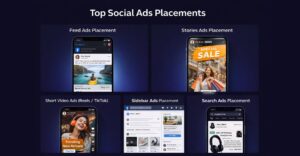
Ad formats and placements
Social media platforms support several ad formats that match how users consume content. Common ad formats include:
- Image ads
- Video ads
- Carousel ads
- Story ads
- Lead generation ads
These ads appear across several placements within the platform, including feeds, stories, explore pages, and video streams. Each format provides different opportunities for brands to present their message in engaging ways.
For example, a travel company may run short video ads in Instagram Stories to showcase a destination package. This format integrates naturally with user behavior and often generates higher engagement.
Campaign objectives and optimization
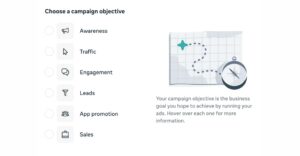
Every social advertising campaign begins with a defined marketing objective. Platforms provide different campaign goals, such as:
- Brand awareness
- Traffic
- Lead generation
- Conversions
- Sales
Once the objective is selected, the platform algorithm optimizes ad delivery to users who show strong potential to complete the desired action.
For example, a company running a lead generation campaign will see ads delivered to users who frequently fill out forms or download resources.
Conversion tracking and attribution
Conversion tracking helps businesses measure the results of their social advertising campaigns. Tracking tools capture actions that occur after a user interacts with an ad. These actions often include:
- Website purchases
- Form submissions
- App installs
- Newsletter registrations
For example, an e-commerce brand may install a tracking pixel on its website. When a user clicks a Facebook ad and completes a purchase, the platform records the conversion and attributes it to the campaign.
These insights help marketers understand which ads perform best and where to allocate advertising budgets.
Read more: How can SEO and social media work together?
Why Social Advertising Matters for Businesses
Social advertising helps businesses reach targeted audiences efficiently while providing clear performance insights. This combination of reach and measurability makes it one of the most valuable digital marketing channels today
Massive Audience Reach
Social media platforms host billions of active users worldwide, which allows businesses to reach large audiences quickly. Companies can introduce products to new markets and expand brand visibility across different regions.
For example, a local restaurant can promote a special offer to nearby users through location-based targeting. Within a short period of time, the promotion can reach thousands of potential customers.
Advanced Audience Targeting
One of the biggest advantages of social advertising is its detailed targeting capability. Advertisers can define audience segments based on demographics, interests, and online behavior.
This precision allows businesses to deliver relevant messages to people who are more likely to respond to the ads. For example, a skincare brand may target users who follow beauty influencers or regularly engage with skincare content.
As a result, campaigns achieve higher engagement and better marketing efficiency.
Attain Measurable Business Outcomes
Social advertising platforms provide detailed analytics that help businesses measure campaign performance. Marketing teams can track metrics such as impressions, click through rate, conversion rate, and return on ad spend.
For example, a software company running LinkedIn ads may track how many professionals download a whitepaper or register for a webinar after seeing the ad.
These insights help businesses evaluate marketing effectiveness and optimize campaigns.
Cost-Effective Advertising Compared to Traditional Channels
Social advertising offers flexible budgets that support companies of all sizes. Businesses can start with a small campaign budget and gradually increase spending once the campaign delivers strong results.
For example, a startup may begin with a small TikTok campaign to test audience response before expanding the campaign to a larger audience.
This flexibility makes social advertising an accessible marketing channel for both small businesses and global brands.
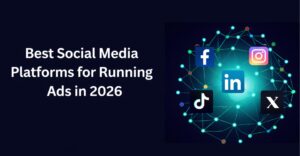
Best Social Media Platforms for Running Ads in 2026
Several social media platforms provide powerful advertising ecosystems. Businesses choose platforms based on audience demographics and marketing goals.
As of 2025, Facebook has around 2.8 billion users worldwide, an increase from 2.6 billion users in the previous year. This massive user base continues to make Facebook one of the most powerful platforms for social advertising.
Facebook supports a wide range of ad formats, including image ads, video ads, carousel ads, and lead generation ads. These formats allow businesses to present products and services in different ways depending on their marketing goals.
Many companies use Facebook ads to reach broad consumer audiences and promote products or services at scale. For example, a retail brand may run carousel ads that showcase multiple products within a single campaign and encourage users to explore the full product range.
In January 2025, Instagram ads reached approximately 1.74 billion users globally, which highlights the platform’s strong advertising reach.
Instagram focuses heavily on visual storytelling and creative content. Brands in industries such as fashion, beauty, and travel often achieve high engagement because the platform emphasizes images and short form videos.
For example, a skincare brand may run short Reels ads that demonstrate how a product works through quick tutorials or simple before and after results. This format allows brands to present products in an engaging and easy to understand way.
LinkedIn serves as a leading platform for B2B advertising. Companies frequently use LinkedIn ads to generate leads, promote industry content, and reach professional audiences.
For example, a software company may run sponsored content that promotes an industry report to professionals in specific job roles or industries.
TikTok
TikTok is estimated to have nearly 2 billion users worldwide while being one of the fastest growing social advertising platforms.
TikTok focuses on short form video content that encourages creativity and user engagement. The platform’s content style allows brands to communicate messages in a more dynamic and entertaining way.
Many businesses use TikTok ads to showcase products through engaging demonstrations or storytelling videos. For example, a mobile app company may run short video ads that demonstrate how the app works and highlight key features in a simple and engaging format.
X
X supports real time conversations and trending discussions. Businesses often use X ads to promote events, announcements, or industry updates.
For example, a technology brand may promote a product launch announcement during a major industry event to reach audiences following the conversation.
Best Practices for Social Advertising
Effective social advertising campaigns rely on clear strategy and continuous optimization.
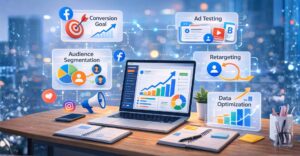
Define a clear conversion goal
A clear conversion goal provides direction for the entire campaign. Businesses often focus on actions such as lead generation, product purchases, or app downloads.
For example, an online education platform may run ads with the goal of collecting registrations for an upcoming webinar.
Continuously Test Ad Creatives
Creative assets play a major role in campaign performance. Marketing teams test different combinations of images, videos, headlines, and calls to action to identify the most effective version.
For instance, a brand may test two versions of a video ad that highlight different product benefits to determine which message resonates more with the audience.
Segment Your Audience for Better Targeting
Audience segmentation allows marketers to deliver more relevant advertising messages. Different groups of users often respond to different types of content.
For example, a clothing brand may run separate campaigns for new customers and returning buyers, each with messaging tailored to their interests.
Use Retargeting to Re-engage Interested Users
Retargeting campaigns focus on users who previously interacted with a brand. These users may visit a website, view a product page, or engage with social media content.
For example, an e-commerce company may run ads that remind users about products they recently viewed but did not purchase.
Leverage Data-Driven Optimization
Social advertising platforms provide detailed performance data that helps marketers improve campaigns over time. Teams analyze metrics such as engagement rates, conversion rates, and cost per result.
These insights allow businesses to refine targeting, adjust creative assets, and allocate budgets more effectively.
Track Social Advertising Performance
Performance tracking helps businesses understand how their campaigns contribute to marketing goals. Tools such as analytics dashboards, tracking pixels, and CRM integrations provide visibility into campaign outcomes.
For example, a company may track how many leads originate from each advertising platform and identify the channels that generate the highest return on investment.
Read more: What Is Ad Group Targeting: How To Optimize for Better ROI
Common Mistakes in Social Advertising
Even experienced marketers may encounter challenges when running social advertising campaigns. Understanding common mistakes helps businesses build stronger strategies.
Not Defining Clear Campaign Objectives
Clear campaign objectives guide targeting, creative development, and optimization. Marketing teams achieve stronger results when campaigns focus on specific goals.
Poor Audience Targeting
Audience targeting plays a central role in campaign success. Businesses benefit from conducting audience research and defining segments that align with their ideal customers.
Weak or Irrelevant Ad Creatives
Creative quality strongly influences engagement. Ads that use strong visuals and clear messaging capture attention more effectively within crowded social media feeds.
Improper Conversion Tracking and Analytics Setup
Accurate tracking systems allow marketers to measure campaign performance. Businesses that implement proper tracking gain valuable insights that support better optimization decisions.
Inefficient Budget Allocation Across Campaigns
Strategic budget allocation helps businesses focus resources on campaigns that generate strong results. Marketing teams review performance data and allocate budgets accordingly.

FAQs About Social Advertising
What is the difference between social advertising and social media marketing?
Social media marketing includes all marketing activities that take place on social media platforms. These activities include organic content, community engagement, and paid campaigns.
Social advertising refers specifically to paid ads that promote content to targeted audiences on social media platforms.
Is social advertising the same as paid social?
Many marketers use the terms paid social and social advertising interchangeably. Both terms refer to paid campaigns that run on social media platforms.
Which social media platform is best for advertising?
The most suitable platform depends on business goals and target audiences. Facebook and Instagram often work well for consumer brands, while LinkedIn supports B2B marketing campaigns.
How much does social media advertising cost?
Social advertising costs vary depending on factors such as audience targeting, competition, and campaign objectives. Most platforms use auction systems where advertisers compete for ad placements.
What types of ads can businesses run on social media?
Businesses can run several ad formats, including image ads, video ads, carousel ads, story ads, and lead generation ads.
Is social advertising effective for small businesses?
Social advertising helps small businesses reach targeted audiences with flexible budgets and measurable campaign performance.
Conclusion
Social advertising plays a critical role in modern digital marketing. Businesses use social media platforms to reach targeted audiences, promote products, and generate measurable business results. With advanced targeting tools, flexible campaign budgets, and detailed performance analytics, companies can build advertising strategies that scale with their growth.
Successful campaigns often combine strong creative content, clear conversion goals, and consistent performance optimization. These elements allow brands to reach the right audience and turn engagement into meaningful business outcomes.
If your business is exploring how to improve campaign performance and achieve more predictable results from social media advertising, an experienced digital marketing partner such as Golden Owl Digital can provide valuable guidance.
We help businesses build effective social advertising campaigns through our social advertising service, which include data driven strategy, campaign optimization, and creative performance testing.

Jaden is an SEO Specialist at Golden Owl Digital. He helps brands rank higher with technical SEO and content that resonates