Healthcare has become one of the most competitive local search markets. Studies show that over 75% of patients search online before choosing a doctor or clinic, and most of those journeys begin on Google. That makes search visibility a major factor in how new patients discover and evaluate medical practices.
A clear Google Ads for doctors SEO outline helps clinics balance short-term visibility from ads with the long-term growth that organic search provides. When paid search and SEO share keyword insights, the overall marketing effort becomes more cost-efficient.
In this guide by Golden Owl Digital, we’ll break down 7 key practices, along with the common mistakes, benefits of combining SEO and Google Ads, and the actual cost that help medical practices generate more visits.
What Is a Google Ads for Doctors SEO Outline?
A Google Ads for doctors SEO outline is a framework that combines paid search and SEO to help clinics attract patients through Google more effectively.
Google Ads brings immediate visibility for high-intent searches, while SEO builds long-term organic traffic and trust. This approach helps doctors generate more consistent patient visits and improve marketing efficiency over time.
In practice, a Google Ads for doctors SEO outline usually includes keyword research, service-specific landing pages, targeted advertising campaigns, conversion tracking, and SEO content that builds medical authority over time. All of these are explained later in this article.
How Patients Actually Search for Doctors Online
Before diving deeper, we have to understand how patients actually search for doctors online.
Patients don’t simply search for a doctor in a single step. Their journey usually moves through several stages as they try to understand their symptoms and find the right treatment.
A typical search path looks like this:
- Symptom search
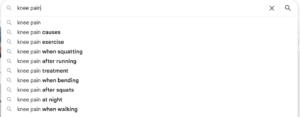
Example: “persistent knee pain when walking” - Treatment search
Example: “knee pain treatment options” - Doctor or clinic search
Example: “orthopedic doctor near me” - Booking intent search
Example: “sports injury clinic singapore”
Each stage creates different opportunities for visibility.
- Google Ads performs well when patients are ready to book or actively looking for a clinic.
- SEO helps clinics appear earlier in the journey when patients are researching symptoms or treatments.
Because of this, clinics that rely on only one channel often miss part of the patient discovery process.
Keep this in mind: Many patients visit several websites before deciding where to book a consultation.
Read more: How to Optimise for Search Intent and Actually Reach Your Readers
Why Google Ads Matter for Doctors
Capture High-Intent Patients Who Need Immediate Care
In healthcare, timing matters. Many patients search when they are ready to act, not to read.
Searches like:
- “dentist near me open now”
- “dermatologist acne treatment [area name]”
- “emergency clinic near me”
These are high-intent queries. The patient wants to book immediately.
Google Ads helps doctors:
- appear at the top instantly
- show call buttons, directions, booking actions
- capture patients at the exact moment they need care
SEO can take months to rank, and even then, ads often appear above organic results.
Compete in Highly Competitive Local Search
Local competition makes this even harder. Many clinics target the same keywords, and Google prioritizes:
- ads placements
- map results
- Google Business Profile listings
That means newer or smaller clinics may struggle to appear organically.
With Ads, clinics can:
- show up in top search results and map packs
- display reviews, phone numbers, and location
- build trust quickly without waiting

Win Faster with Visibility and Trust Signals
In practice, patients rarely compare ten options. They often choose from the first few visible clinics that look credible and easy to contact.
Google Ads allows clinics to:
- highlight reviews and ratings
- show clear CTAs like call or directions
- appear consistently across key searches
That visibility is where Google Ads makes the biggest difference.
In our past ad campaigns at Golden Owl Digital, we often see clinics discover new treatment demand simply by analyzing search queries from their ads. Sometimes the services patients search for most are not even highlighted clearly on the website.
If you want to find out more about Google Ads, check out this article: How Google Display Ads Grow Marketing Results in 2026
Why SEO Matters in Long-Term Patient Acquisition
Capture Patients Earlier in The Decision Journey
Google Ads captures demand when patients are ready. SEO builds demand before that moment happens.
Many patients start much earlier in the journey with searches like:
- “what causes hormonal acne”
- “does braces hurt”
- “cost of dental implants”
These are research-stage queries. Patients are learning, comparing, and forming trust.
SEO helps clinics:
- appear during this early research phase
- educate patients before competitors do
- stay visible across multiple searches
Build Trust Before Conversion
In healthcare, trust builds over time. Patients often:
- read multiple sources
- compare clinics and doctors
- return to the same websites more than once
When a clinic consistently appears in search results with helpful content, it becomes familiar. That familiarity often turns into trust when the patient is ready to book.
Create A Compounding Traffic Asset
SEO also creates a long-term asset.
- Ads stop → traffic stops
- SEO ranks → traffic continues
Over time, well-ranked pages can bring steady patient inquiries without increasing spend.
This matters even more for high-value treatments like:
- dental implants
- orthodontics
- cosmetic dermatology
- fertility or surgical procedures
These decisions take longer. Patients research deeply and compare options carefully.
In these cases, SEO plays a major role in influencing the final decision, long before any ad click happens.
During SEO audits at Golden Owl Digital, we often see many clinic websites lack dedicated pages for specific treatments that patients actually search for. When those pages are created and optimized, organic visibility often improves quickly.
This is also why an SEO audit is such an important step for websites in general.
How Google Ads and SEO Work Together for Doctors
Keyword Intelligence Sharing
Google Ads shows which searches actually lead to bookings.
For example, clinics can quickly see whether patients convert more from:
- “ACL surgery recovery time”
- “orthopedic surgeon near me”
These insights help prioritize SEO content around keywords that already prove revenue value.
Dominating Search Visibility
When a clinic appears in both paid ads and organic results, it takes up more space on the screen.
This “double presence”:
- increases click-through rates
- reinforces credibility
- makes the clinic look like a top choice
Patients tend to trust what they see repeatedly.
Lowering Your Cost Per Click
Google Ads performance depends heavily on landing page quality.
SEO improvements such as:
- better content relevance
- clear structure
can improve Quality Score and reduce cost per click.
Better SEO often makes ads cheaper (and more efficient).
Mitigating Algorithm Risk
SEO rankings can fluctuate due to Google updates.
When that happens, traffic can drop without warning.
Running Google Ads alongside SEO helps:
- Maintain consistent patient flow
- Reduce reliance on rankings alone
This balance creates a more stable acquisition system for clinics.
One thing we always tell healthcare clients early in projects: Marketing works better when channels share data.
Typical Cost of Google Ads and SEO for Doctors
Healthcare marketing tends to be more expensive than many other industries because patient searches are highly competitive. At the same time, SEO for healthcare requires deeper content, trust signals, and compliance considerations, which increases the effort involved.
Below is a simplified overview of typical cost ranges clinics often see in the market.
| Channel | Typical Cost Range | What Influences the Cost |
| Google Ads | $3 – $15+ per click for many healthcare keywords | Location competition, specialty, keyword intent |
| Monthly Google Ads management | $1,000 – $5,000+ | Campaign size, number of services, optimization effort |
| SEO services for medical websites | $1,500 – $6,000+ per month | Website size, content production, local SEO competition |
| Landing page development | $300 – $1,500 per page | Service complexity, design, CRO optimization |
A few practical takeaways for clinic owners:
- Highly specialized treatments often have higher ad costs. Cosmetic or dental procedures usually attract the most bidding competition.
- Local SEO competition matters. Clinics in large cities often need stronger SEO investment than those in smaller markets.
- Landing pages strongly affect ad efficiency. A well-structured page can lower advertising costs by improving conversion rates.
Budget isn’t the biggest issue here. In our experience, the biggest improvements come from aligning ads, landing pages, and SEO content around the treatments patients actually search for.
Google Ads for Doctors SEO Outline: A Full, Practical Guide
Clinics that want to combine SEO and paid search usually start with a structured process.
The framework below outlines how many healthcare businesses implement the strategy.
Step 1: Identify High-Intent Medical Keywords
The first step is understanding which keywords to choose or target for SEO vs Google Ads, based on where the patient is in their decision journey.
A simple way to approach this is through the marketing funnel.
Medical Keywords for Top & Middle Funnel (SEO focus)
These are informational searches where patients are researching symptoms, treatments, or costs.
Examples:
- “what causes knee pain”
- “does physiotherapy help sports injury”
- “cost of dental implants”
SEO works best here because it helps clinics:
- appear early in the research phase
- educate patients
- build trust before they are ready to book
Keyword research tools (such as Ahrefs, Semrush or Ubbersuggest), search trend analysis, and Google Ads data reveal which keywords patients search for most frequently.
Medical Keywords for Bottom Funnel (Google Ads focus)
These are high-intent searches where patients are ready to take action.
Examples:
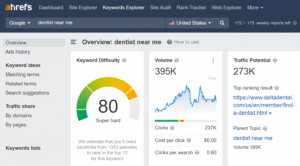
- “dentist near me” (a high-intent local keyword for dentist SEO)
- “dermatology clinic singapore”
- “book physiotherapy appointment”
- “emergency clinic near me”
These keywords usually include:
- location modifiers (near me, city, district)
- action terms (book, contact, appointment)
- service-specific queries (treatment, specialist, clinic)
Google Ads performs best here because:
- patients want immediate solutions
- ads appear at the top with call and booking options
- conversion rates are significantly higher
In short, high-performing strategies:
- Use SEO to capture early research traffic
- Use Ads to convert high-intent searches into bookings
Step 2: Build Service-Specific Landing Pages
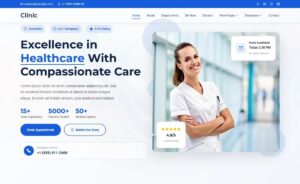
Each treatment should have a dedicated landing page.
These pages help both SEO and advertising campaigns because they align closely with patient search intent.
Well-structured pages typically include:
- treatment explanation
- doctor expertise or credentials
- patient testimonials
- clear appointment booking options
When landing pages match the search query closely, both ad performance and SEO rankings improve.
This is also why many clinics invest in improving their landing page structure early in marketing campaigns.
Step 3: Launch Targeted Google Ads Campaigns
Once landing pages are ready, launch Google Ads to reach patients immediately instead of waiting for SEO to take effect.
Focus on a few key principles:
- Geo-targeting (5–10km radius)
Run ads within a limited radius around the clinic to attract patients who are likely to visit. - High-intent keywords only
Prioritize searches like:- “best dermatologist near me”
- “where to treat acne”
- “orthopedic doctor [city]”
- Use essential ad assets
Enable call and location extensions so patients can contact or get directions directly from search results. - Filter negative keywords
Exclude terms like “jobs,” “salary,” or “free” to avoid wasting budget.
This setup helps clinics capture real patient demand quickly and improve conversion rates from the start.
Step 4: Track Real Patient Conversions
In healthcare, a click doesn’t mean success. What matters is whether that click turns into a real patient.
Set up tracking beyond basic clicks:
- Track all contact actions
Measure:- phone number clicks (call-to-click)
- messaging apps (WhatsApp, Messenger, Zalo)
- form submissions for appointments
- Track calls from ads
Use Google Ads call tracking to see:- which keyword drove the call
- time of the call
- call duration (calls over ~60 seconds often indicate real patient intent)
- Connect to real patient data (CRM)
Match ad leads with actual clinic visits to calculate cost per patient, not just cost per click. - Use GA4 to understand the full journey
Track how patients move from ads to SEO content, then to booking. This helps you see how both channels support each other.
Without proper tracking, clinics often optimize for clicks instead of patients. That’s where most budget gets wasted.
Step 5: Use Ads Data to Improve SEO Strategy
Google Ads gives fast feedback. In a few weeks, you can see which keywords actually bring in patients.
Use that data to guide SEO instead of guessing:
- Identify high-converting keywords
Check the Search Terms report to find queries that lead to real bookings. Prioritize these for SEO because they already prove ROI. - Improve SEO click-through rates (CTR)
Look at which ad headlines get the most clicks. Use those insights to write stronger Meta Titles for SEO pages. - Fill content gaps
If patients frequently search for specific concerns like:- “side effects of dental implants”
- “payment plan for braces”
create SEO content around those topics to capture organic traffic.
- Replicate high-performing landing pages
Pages with strong conversion rates in Ads often have the right structure. Use those as a model for SEO service pages.
This approach helps clinics build SEO around what already works.
Step 6: Build Medical Authority Through SEO Content
Once high-performing services are identified, SEO content expands around them.
Effective healthcare content may include:
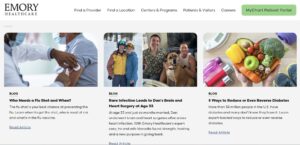
- treatment guides
- symptom explanations
- doctor expertise pages
- patient FAQs
These pages help clinics appear in earlier search stages when patients are researching symptoms.
Over time, they strengthen the website’s topic authority for medical content it covers.
Common Mistakes When Running Ads and SEO for Doctors
Healthcare marketing has unique challenges, and several common mistakes appear frequently.
Some of the most common issues include:
- Sending advertising traffic to a generic homepage
- Targeting overly broad keywords such as “doctor services”
- Not tracking phone call conversions
- Running ads without understanding patient search intent
- Ignoring local SEO signals like reviews and Google Business Profile
- creating treatment pages that lack clear booking options
In many engagements, our first role is simply helping clinics identify what should stop before deciding what to scale.
Key Metrics Clinics Should Track When Running Ads and SEO for Doctors
Successful healthcare marketing relies on measurable performance indicators.
Some of the most important metrics include:
| Metric | Why it matters |
| Cost per patient acquisition | Measures marketing efficiency |
| Appointment conversion rate | Indicates landing page effectiveness |
| Keyword conversion rate | Shows which treatments generate bookings |
| Local search visibility | Reflects long-term discoverability |
| Website engagement | Reveals patient interest and trust |
These metrics provide a clearer picture of marketing performance than traffic numbers alone.
In many cases, improving conversion rates has a greater impact on growth than increasing traffic.
Conclusion
A structured Google Ads for doctors SEO outline helps clinics approach marketing with a clearer strategy.
Google Ads brings immediate visibility for patients actively searching for treatment. SEO builds long-term trust and discoverability that reduces acquisition costs over time. When the two channels share keyword insights, landing pages, and conversion data, clinics often see more consistent patient growth.
Healthcare businesses that succeed online rarely rely on a single marketing tactic. They build systems that combine short-term visibility with long-term authority.
If you’re exploring how to build that foundation, our digital marketing solution at Golden Owl Digital focuses on helping businesses create sustainable organic growth strategies through SEO that work alongside paid search.
FAQs about Google Ads For Doctors SEO Outline
Do doctors really need both Google Ads and SEO?
Most clinics benefit from using both. Google Ads helps attract patients immediately, while SEO builds long-term visibility and trust that continues generating traffic without ongoing ad spend.
How long does SEO take to bring patients to a clinic?
SEO usually takes several months to show meaningful results. Many clinics begin seeing early improvements in 3–6 months, while stronger rankings and steady patient traffic often develop over a longer period.
Is Google Ads expensive for healthcare services?
Healthcare keywords tend to have higher advertising costs because many clinics compete for the same patient searches. Costs vary depending on location, specialty, and the competitiveness of specific treatments.
What keywords should doctors target first?
Clinics should prioritize high-intent local searches, such as treatment-based or location-based queries. Examples include “dentist near me,” “skin clinic singapore,” or “physiotherapy for sports injury.”
Why are landing pages important for medical advertising?
Dedicated landing pages match patient search intent more closely. When a page focuses on a specific treatment, it usually improves both Google Ads performance and SEO rankings.
How can clinics reduce patient acquisition costs?
A common approach is using Google Ads data to identify keywords that generate real bookings, then building SEO pages around those topics to capture long-term organic traffic.

Jaden is an SEO Specialist at Golden Owl Digital. He helps brands rank higher with technical SEO and content that resonates