AI is quietly changing how buyers research products. According to McKinsey & Company, about 50% of buyers use AI-powered answers while searching. Instead of opening multiple tabs and comparing options themselves, they now ask tools like ChatGPT or Perplexity AI and get a single, synthesized answer.
That shift creates a new problem, especially for SMEs (Small and Medium Enterprises): It’s no longer enough to rank on Google. If your brand isn’t included in the AI-generated answer, you’re effectively invisible, no matter how strong your SEO is.
This is why generative engine optimization tools, or GEO tools, are emerging fast. This guide by Golden Owl Digital will help you understand what GEO really is, why it matters now, and how to choose a tool that actually fits your business and budget.
What Is Generative Engine Optimization (GEO) and Why It Matters in 2026
Generative Engine Optimization (GEO) is the process of structuring and optimizing online content so it can be accurately understood, trusted, and cited by AI-driven search systems such as ChatGPT, Gemini, and AI-generated search overviews.
Unlike traditional SEO, which focuses on ranking web pages in search results, GEO focuses on earning inclusion inside AI-generated answers, through brand mentions, citations, and source attribution. The goal is not just visibility in search engines, but visibility within the answers themselves, where users are increasingly making decisions.
GEO vs SEO
Traditional SEO tools like Ahrefs, Semrush or Ubbersuggest were built for a link-based web, where users click through results to find information.
GEO operates in a different environment. AI systems summarize multiple sources into one response, often without requiring a click. That means visibility is no longer tied to ranking position, but to whether your content is selected and trusted as a source.
Think of it like this: SEO helps you appear in search results. GEO determines whether you are part of the final answer.
Why GEO Matters in 2026
AI is quickly becoming the primary interface for search. Users are no longer browsing, they are asking and receiving direct answers. This shifts where attention happens, and more importantly, where trust is built.
Zero-Click Searches: Users may never visit your website, but they still see your brand if it is cited or mentioned in the response. GEO ensures you are part of that conversation, rather than being left out entirely.
From Traffic to Authority: Instead of optimizing purely for clicks, GEO helps position your brand as a reliable source that AI systems repeatedly reference. When done well, this can significantly increase overall search visibility and influence, even if raw traffic does not grow at the same rate.
AI Summaries: Traditional organic traffic is becoming less predictable as AI Overviews reduce the need to click. GEO acts as a counterbalance. It ensures that your content still shapes the answer, even when users stay within the AI interface.
For B2B companies and service-based businesses, this is especially important. Buyers are using AI to evaluate options faster, and the brands that appear early in those answers often shape the entire decision process.
Read more: Can GEO Replace Traditional SEO? A Complete Guide for 2026
10 Best Generative Engine Optimization Tools for SMEs in 2026
Not all GEO tools are built the same. Some are better for tracking, others for optimization, and a few try to do both. The key is not finding the “best” tool overall, but the one that fits your stage and budget.
Here’s a breakdown of the most relevant options right now.
| Tool | Key Features | Pros | Cons | Best For |
| Semrush AI Visibility Toolkit | Multi-LLM tracking, sentiment analysis, prompt insights | Seamless SEO integration, reliable data, strong historical tracking | Requires existing subscription, GEO features still maturing | B2B companies already using Semrush |
| Geoptie | 10+ AI engine tracking, GEO audits, conversational keyword discovery | Affordable, easy to use, combines tracking + optimization | Limited historical data, lower-tier tracking limits | SMBs needing a full GEO tool on a budget |
| Profound | Prompt tracking, conversation explorer, multi-LLM coverage | Deep analytics, scalable, strong reporting | Expensive, complex for small teams | Enterprise B2B teams with advanced needs |
| Otterly.ai | Citation tracking, prompt discovery, sentiment trends | Simple setup, intuitive, focused on real citations | Limited scalability, small prompt limits | Early-stage teams testing GEO |
| Rankscale | Snapshot tracking, credit-based audits, competitor gap analysis | Very affordable, proof-based reporting | Credit system management, learning curve | Freelancers and boutique agencies |
| Writesonic GEO Platform | Content optimization, sentiment tracking, AI editor | Combines creation + optimization, fast workflow | Weaker tracking depth, content-heavy focus | Content-driven B2B teams |
| AthenaHQ | Full visibility tracking, optimization playbooks, journey insights | Highly actionable, GEO-focused, expert-built | High price, no traditional SEO features | Growing B2B companies with budget |
| Ahrefs Brand Radar | AI + social mention tracking, backlink integration, competitor gaps | Strong data foundation, multi-channel insights | Expensive at scale, not GEO-native | B2B teams already using Ahrefs |
| Mangools AI Search Grader | AI visibility score, multi-model testing, basic comparisons | Free, very easy to use, fast insights | No deep tracking, limited features | Beginners exploring GEO |
| Goodie AI | Multi-platform tracking, content insights, global support | All-in-one, actionable insights, scalable | Higher cost, may be overkill for small teams | Mid-to-large B2B companies scaling GEO |
1. Semrush AI Visibility Toolkit
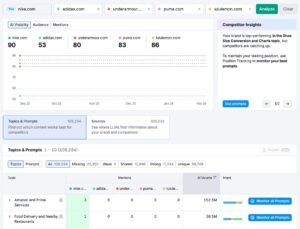
Semrush has started layering GEO capabilities into its existing platform, making it a natural extension if you’re already using it for SEO. Instead of adding another tool, you can track AI visibility alongside your existing keyword and traffic data.
Key features:
Multi-LLM share of voice tracking across tools like ChatGPT and Claude. It also includes brand sentiment analysis within AI-generated answers and prompt-level insights to understand how conversational queries surface your brand.
Pricing:
Starts at $99/month per domain as an add-on to existing plans.
Pros:
It fits seamlessly into workflows you likely already have. The data is reliable, and the historical tracking gives useful context for trends over time.
Cons:
You need an existing subscription, which increases total cost. GEO features are still rolling out and may be limited outside major markets.
Best for:
B2B companies already investing in SEO and using Semrush. Use this if you want to extend your existing workflow to include AI visibility without adding a new tool.
2. Geoptie
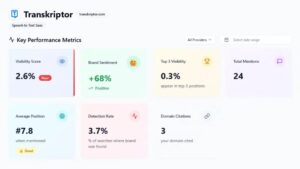
Geoptie is one of the few tools built specifically for GEO from the ground up, with a focus on affordability and ease of use for smaller teams.
Key features:
It tracks visibility across more than 10 AI engines, including Gemini and Perplexity AI. It also runs automated GEO audits and suggests structural improvements to increase your chances of being cited.
Pricing:
Starts at $49/month.
Pros:
It’s one of the most accessible full-service GEO tools available. The interface is clean, and it combines tracking with actionable recommendations, which is rare at this price point.
Cons:
It doesn’t have the depth of historical data that older SEO platforms offer. Lower-tier plans also limit how many prompts you can track at scale.
Best for:
Small to mid-sized B2B companies with limited budgets. Use this if you want an all-in-one GEO tool that balances affordability with actionable insights.
3. Profound
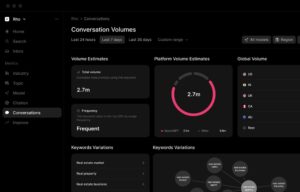
Profound is built for deep analysis. It focuses heavily on prompt-level tracking and understanding how conversations evolve across AI systems.
Key features:
It includes prompt tracking, AI-generated prompt suggestions, and a Conversation Explorer that reveals hidden search patterns. It supports multiple engines, including ChatGPT and Google AI Overviews.
Pricing:
Starts around $499/month, with custom enterprise tiers.
Pros:
Extremely powerful for large-scale analysis. It tracks real conversational pathways rather than just isolated queries, and reporting is strong enough for stakeholder presentations.
Cons:
The interface can feel overwhelming for smaller teams. The price point is also a barrier for most SMBs.
Best for:
Enterprise B2B companies or large-scale marketing teams. Use this if you need deep, multi-market analysis and advanced reporting for stakeholders.
4. Otterly.ai
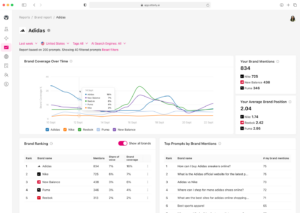
Otterly is designed to simplify GEO. It focuses on helping you understand which real-world queries trigger mentions of your brand.
Key features:
It tracks citations and verifies links inside AI responses, surfaces real user prompts, and provides sentiment trends over time.
Pricing:
Starts at $29/month for a limited number of prompts.
Pros:
Very easy to use with minimal setup. It focuses on actual citations rather than abstract scores, which makes insights easier to act on.
Cons:
Limited scalability. You’ll quickly hit limits if you try to track large volumes of prompts.
Best for:
Early-stage B2B teams or small businesses testing GEO. Use this if you want a simple, low-cost way to track AI mentions and citations.
5. Rankscale
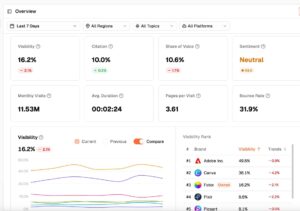
Rankscale uses a credit-based system, allowing you to control how much you spend while still tracking key GEO metrics.
Key features:
It captures snapshots of AI responses as proof, tracks citation frequency, and highlights competitor gaps in AI visibility.
Pricing:
Starts at around €20/month.
Pros:
Very affordable and flexible. The snapshot feature is especially useful for reporting to clients or internal teams.
Cons:
The credit system requires manual management. The interface may take some time to get used to.
Best for:
Freelancers, consultants, and boutique B2B agencies. Use this if you need affordable, proof-based tracking to show clients how your brand appears in AI answers.
6. Writesonic GEO Platform
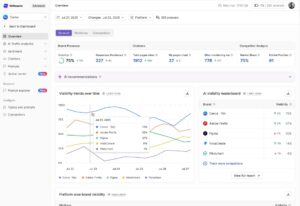
Writesonic combines content creation with GEO tracking, making it appealing for teams that produce a high volume of content.
Key features:
It includes content optimization suggestions, sentiment tracking, and an integrated editor that helps you structure content for AI readability.
Pricing:
Starts around $39/month.
Pros:
You can create and optimize content in the same workflow. It’s fast, intuitive, and geared toward “answer-first” content formats.
Cons:
Tracking capabilities are not as deep as dedicated GEO analytics tools. The platform leans heavily toward content production.
Best for:
Content-driven B2B teams and inbound-focused companies. Use this if you want to create and optimize AI-friendly content within the same platform.
7. AthenaHQ
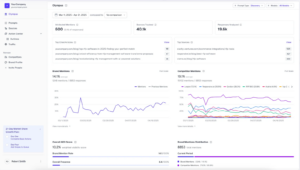
AthenaHQ is a premium GEO platform focused entirely on AI visibility and optimization, with a strong emphasis on actionable insights.
Key features:
It offers full visibility tracking, an Action Center with optimization playbooks, and a complete view of how users discover brands through AI.
Pricing:
Starts around $900/month.
Pros:
Highly specialized and deeply actionable. The recommendations are structured in a way that teams can immediately execute.
Cons:
Expensive for most small businesses. It doesn’t include traditional SEO features.
Best for:
Fast-growing B2B companies with dedicated GEO budgets. Use this if you want a specialized platform with clear, execution-ready optimization playbooks.
8. Ahrefs Brand Radar
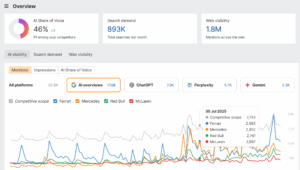
Ahrefs extends its strong SEO foundation into GEO with Brand Radar, allowing you to track mentions across AI, search, and even social platforms.
Key features:
It combines AI mention tracking with backlink data and competitor gap analysis. It also includes cross-platform insights beyond just AI engines.
Pricing:
Included or added onto existing Ahrefs plans.
Pros:
Backed by one of the strongest data infrastructures in SEO. It’s especially useful for understanding authority across multiple channels.
Cons:
Can become expensive depending on usage. GEO features are still evolving and not fully standalone.
Best for:
B2B companies already using Ahrefs for SEO. Use this if you want to track brand visibility across AI, search, and content channels in one ecosystem.
9. Mangools AI Search Grader
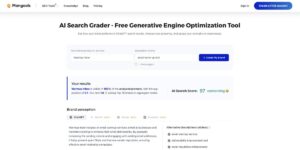
Mangools offers a lightweight tool that gives you a quick snapshot of how your brand appears across different AI models.
Key features:
It provides an AI search score, runs tests across multiple engines, and gives basic competitive comparisons.
Pricing:
Free tier available.
Pros:
Extremely easy to use. No setup required, and it’s perfect for quick checks.
Cons:
Limited depth. No long-term tracking or detailed optimization insights.
Best for:
Small B2B businesses or founders exploring GEO for the first time. Use this if you want a quick, free snapshot of your AI visibility.
10. Goodie AI
Overview
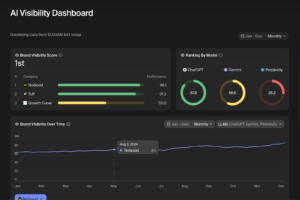
Goodie AI positions itself as an all-in-one GEO platform, combining tracking, content insights, and optimization in a single dashboard.
Key features:
It covers a wide range of AI platforms, offers content gap recommendations, and supports multiple languages and regions.
Pricing:
Starts around $495/month.
Pros:
Comprehensive and well-integrated. You don’t need multiple tools to manage your GEO strategy.
Cons:
Higher cost compared to SMB-focused tools. May be excessive if you only operate in a single market.
Best for:
Mid-sized to large B2B companies operating across multiple markets. Use this if you want an all-in-one GEO platform to manage tracking and optimization at scale.
Read more: What Is the Best SEO Tool for Small Businesses? Top 11 tools of 2026
How to Choose the Right GEO Tool for Small Businesses
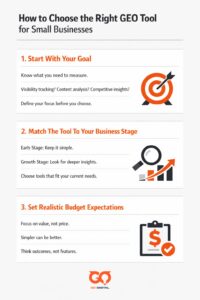
Start With Your Goal
The biggest mistake is choosing a tool before knowing what you need it to do. GEO tools may look similar, but they solve different problems.
Do you want tools for visibility tracking (to know whether your brand appears in AI answers at all)? Do you want tools that analyze how your content is structured and interpreted by AI? Or do you want to know about competitive insights (why other brands are being mentioned instead of you)?
If you don’t define your goal upfront, you’ll end up with data that doesn’t lead to clear action.
Match The Tool To Your Business Stage
The right tool depends heavily on where you are.
If you’re just exploring GEO, your priority is clarity. You need to see whether your brand is showing up and where the gaps are. At this stage, simpler tools tend to be more useful because they help you understand what’s happening without adding complexity.
As your content efforts mature, your needs shift. You’ll start looking for patterns, optimization opportunities, and ways to improve inclusion in AI answers. More advanced platforms only make sense once you have consistent content output and a clear process in place.
Set Realistic Budget Expectations
Pricing in the GEO space is still evolving, and there’s no clear standard yet. More expensive doesn’t automatically mean more effective.
For most small businesses, the goal isn’t to find the most powerful platform. It’s to find one that gives you clear direction on what to fix and what to prioritize. A simpler tool that drives decisions will almost always outperform a complex one that just gives you more dashboards.
Think in terms of outcomes, not features. If the tool helps you get cited more often, it’s doing its job.
Key Features To Evaluate
- AI visibility tracking across multiple engines
- Citation and brand mention reporting
- Content optimization recommendations
- Competitor benchmarking in AI answers
- Prompt or query simulation capabilities
- Data freshness and update frequency
- Ease of use and clarity of insights
- Pricing relative to your stage and usage
GEO Tools vs SEO Tools: Do You Need Both?
What SEO Tools Still Do Better
Tools like Ahrefs and Semrush are still essential for building the foundation. They help you get indexed, identify keywords, and drive organic traffic.
Without that base, GEO has nothing to work with. If your content isn’t crawlable or authoritative, AI systems are unlikely to use it in the first place.
Where GEO Tools Step In
GEO tools answer a different question: Are you actually showing up in AI-generated answers?
They track brand mentions, citations, and visibility across tools like ChatGPT and Gemini, something traditional SEO tools were not designed to do.
So, Do You Need Both?
In most cases: Yes, but not at the same time.
GEO tools are worth it once you already have a solid SEO and content foundation, especially if you rely on inbound, sell high-ticket B2B services, or want to stay visible as buyers shift to AI-driven research. That’s when tracking and improving AI mentions actually translates into business impact.
They’re not worth it if your site has little content, weak SEO basics, or if your growth is driven mainly by paid ads or outbound. In those cases, GEO won’t make much difference.
Common Mistakes Small Businesses Make with GEO Tools
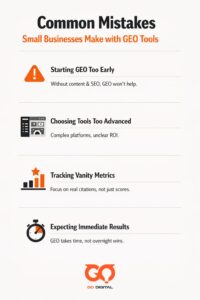
Starting GEO Too Early
The biggest mistake is treating GEO as a shortcut. If your site lacks content, authority, or basic SEO structure, GEO tools won’t fix that. They amplify existing signals; they don’t create them.
Choosing Tools That Are Too Advanced
Many small businesses jump into expensive, feature-heavy platforms too soon. This usually leads to confusion, underutilization, and unclear ROI. At an early stage, simplicity and clarity matter more than depth.
Tracking Vanity Metrics
It’s easy to get distracted by high-level “AI visibility scores.” What actually matters is whether your brand is being cited in real, high-intent queries that influence buying decisions.
Expecting Immediate Results
GEO doesn’t work overnight. AI systems take time to discover, interpret, and reuse your content. Expecting quick wins often leads to abandoning the strategy too early.
FAQs: Generative Engine Optimization Tools for Small Businesses
Do GEO tools replace SEO tools?
No. GEO builds on top of SEO, not instead of it. Tools like Ahrefs and Semrush help you get discovered, while GEO tools help you get cited inside AI answers. You need both—but in the right order.
How long does GEO take to show results?
Most businesses start seeing meaningful changes in 4 to 12 weeks. It depends on how often you publish, how strong your existing content is, and whether your topics are already being queried in AI tools.
What KPI should I track?
The most important metrics are brand mentions, citation rate, and presence in high-intent prompts. Traffic becomes a secondary signal, not the primary one.
Are GEO tools expensive?
They can be, but not always. There are entry-level tools under $50/month that are enough to validate whether GEO works for your business. More expensive platforms only make sense once you scale.
Can small businesses realistically compete in GEO?
Yes—and in some cases, more easily than in traditional SEO. AI systems don’t always favor the biggest site; they favor the clearest and most useful content. That creates an opportunity for smaller, more focused players.
Which GEO tool should I start with?
If you’re just starting, choose something simple that gives you visibility into AI mentions. As you grow, you can layer in more advanced tools for optimization and competitive insights.
Is GEO just a trend?
No. As tools like ChatGPT and Gemini become standard research tools, GEO is becoming a core part of how visibility works online.
How do I measure ROI from GEO?
Direct ROI can be hard to isolate at first. Instead, look at increased brand mentions, improved presence in buying-related queries, and assisted conversions over time. GEO influences decisions earlier in the funnel.
Conclusion
Choosing the right GEO tools for small businesses is about understanding how visibility is shifting, and making focused investments that align with your stage. For some, that means starting with a simple tracking tool. For others, it means integrating GEO into an existing SEO workflow.
At Golden Owl Digital, our focus isn’t just on tools, it’s on helping B2B teams understand how to actually win visibility in AI-driven search. That means identifying which queries matter, structuring content for inclusion, and building systems that consistently get cited.
If you’re looking to move beyond tools and build a system that actually drives AI visibility, explore our GEO-integrated SEO Service to see how it fits your growth strategy.