What is the difference between marketing and advertising? You’ve probably heard the terms “marketing” and “advertising” used interchangeably, even by people who should know better. But here’s the truth: they are not the same thing. Many people confuse marketing vs advertising because advertising is actually part of marketing, but they serve very different purposes.
Understanding this fundamental difference is crucial because mistaking one for the other can completely derail your business strategy.
Key takeaways:
|
What Is Marketing? (And Why It Drives Long-Term Growth)
Marketing is the entire strategy behind how your brand attracts, educates, and retains customers. It covers every touchpoint, from the moment someone discovers your brand all the way to when they become loyal fans.
Think of marketing as the “big picture” that helps people trust you — even before you ask them to buy.
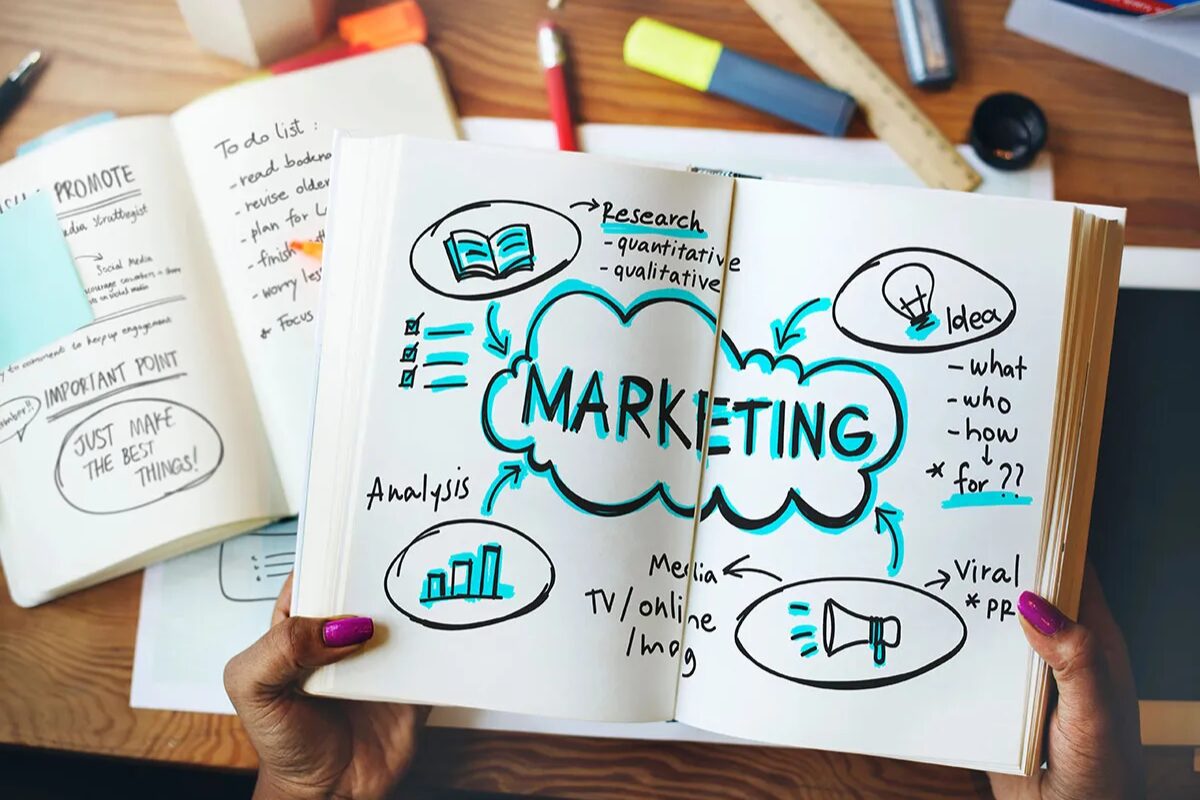
How marketing builds long-term brand trust and sustainable growth
Key Areas of Marketing
For decades, we’ve used the classic 4 P’s of Marketing as the framework for this vast discipline:
- Product: What you sell (is it solving a real problem?). This involves market research, product development, branding, and packaging.
- Price: How much you charge (is it competitive yet profitable?). This includes setting the pricing strategy, discounts, and payment terms.
- Place (Distribution): Where and how customers can buy it (e.g., online, retail store, franchise).
- Promotion: The activities used to communicate the product’s value to the customer. This is where advertising lives.
Marketing typically includes:
- Research
- Branding
- Content creation
- SEO
- Email marketing
- Social media (organic)
- Customer nurturing
- Analytics and growth planning
Why marketing matters for long-term growth
Marketing helps your brand:
- Build trust through consistent messaging
- Reduce advertising costs over time
- Improve customer loyalty and retention
And since retaining customers is up to 7x cheaper than acquiring new ones, great marketing becomes your biggest money-saver.
What Is Advertising? (The Paid Push for Quick Wins)
Advertising is a smaller piece of marketing — but it’s the loudest one. It’s the paid promotion you use when you want fast visibility, quick clicks, and immediate conversions.
If marketing is the strategy, advertising is the megaphone. In other words, advertising is part of marketing, not a replacement for it.
| Advertising = Paid messages designed to trigger quick action |
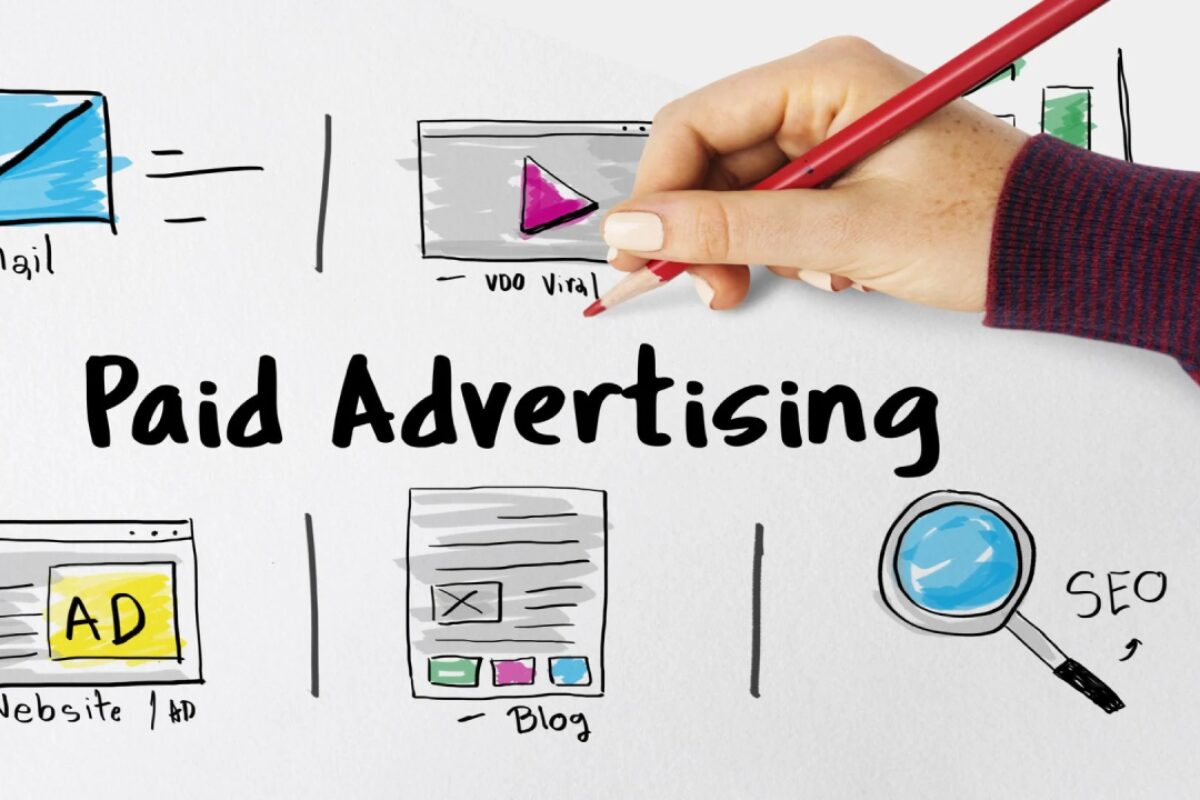
How paid ads help brands gain quick visibility and conversions
Advertising includes:
- Google Ads
- Meta (Facebook/Instagram) ads
- TikTok ads
- YouTube ads
- Display banners
- Sponsored posts
- TV, radio, and billboards
While marketing builds the relationship, advertising accelerates attention.
For example: If you want to get 5,000 new website visitors next week, you’d run targeted ads. Maybe you promote a special discount, a free sample, or a limited-time bundle. When you pay, you get instant attention — but only as long as your budget keeps flowing.
Why advertising delivers quick wins
Because it gives you:
- Immediate reach
- Precise targeting
- Faster sales
- Measurable performance (CTR, CPA, ROAS)
Advertising is perfect for launches and promotions, but its impact usually fades once the campaign ends.
Marketing vs Advertising: 8 Key Differences (Table Breakdown)

Differences between marketing and advertising strategies
This marketing and advertising difference becomes clearer when you compare them side by side. The table below briefly compares them across purpose, cost, scope, and success metrics.
| Key Area | Marketing | Advertising |
| Purpose | Build long-term customer relationships | Drive fast visibility & conversions |
| Responsibilities | Research, branding, content, customer experience | Creating and running paid promotions |
| Technique | Segmentation, content creation, SEO, nurturing | Targeting, bidding, creative testing |
| Objectives | Brand trust, awareness, loyalty | Clicks, sales, engagement |
| Success Metrics | CLV, organic traffic, retention rate | CTR, CPA, ROAS |
| Scope & Timeframe | Continuous, long-term | Short-term, campaign-based |
| Cost | Can be low-cost (SEO, content) | Always includes ad spend |
| Impact | Sustainable growth | Quick boosts but often temporary |
Now let’s break each of these down in detail.
1. Purpose
Marketing aims to help customers understand your brand, your values, and your solutions. It builds familiarity — the kind that leads to natural trust over time.
Advertising aims to push a specific offer or message in front of people so they act quickly.
For example:
- Marketing: Telling your brand’s story on your blog or TikTok.
- Advertising: Running ads for your holiday sale.
Both matter — but they move at different speeds.
2. Responsibilities
A Marketing Manager has a wider, more strategic set of responsibilities. They are responsible for things like:
- Determining the target audience’s pain points (market research).
- Deciding on the product features and packaging.
- Managing the entire customer journey.
An Advertising Specialist has a more focused, tactical role, including:
- Writing compelling ad copy and designing engaging visuals.
- Bidding on keywords (for search ads) or choosing placements (for display ads).
- A/B testing ad creatives to maximize performance.
3. Technique

The techniques used in marketing and paid advertising
Marketing employs a huge range of techniques that fall into three categories:
- Paid Media: Advertising (the topic of this article).
- Owned Media: Content you control (your website, blog, social media posts, email list).
- Earned Media: Visibility you gain through others (PR, media mentions, word-of-mouth).
Advertising is primarily focused on Paid Media. It is the technique of securing external space or airtime to present a promotional message.
- CPC bidding
- Retargeting
- Lookalike audiences
- Frequency management
- Split-testing variations
Both techniques complement each other, but they serve different goals.
4. Objectives
Marketing’s objectives are high-level and strategic, often focused on long-term relationships:
- Visibility over time
- Strong brand identity
- Customer loyalty
- Organic growth
- Reducing customer acquisition cost (CAC)
For example: “Increase customer lifetime value (CLV) by 15% in the next two years.”
Advertising’s objectives are tactical and centered on immediate action or awareness:
- Immediate conversions
- Higher click-through rates
- Lower cost per acquisition
- Reaching new audiences fast
For example: “Generate 500 qualified leads from this Facebook ad campaign in the next 30 days.”
5. How Success Is Measured
Marketing success is measured using big-picture metrics that reflect overall business health and customer sentiment:
- Net Promoter Score (NPS): Measures customer loyalty.
- Customer Lifetime Value (CLV): The total revenue a business expects to earn from a single customer account.
- Brand Recall: How easily customers remember your brand.
Advertising success is measured using campaign-specific metrics that track promotional efficiency:
- Return on Ad Spend (ROAS): The revenue generated for every dollar spent on ads.
- Conversion Rate: The percentage of people who saw the ad and took the desired action (e.g., signed up, bought).
- Cost Per Lead (CPL): The dollar amount it costs to acquire one lead from the ad.
For example:
- A marketing goal might be to increase your company’s Market Share from 10% to 12%.
- An advertising goal supporting this might be to achieve a ROAS of 4:1 (meaning you make $4 for every $1 spent) on your new Google Shopping campaign.
Marketing tells you if your brand is healthy. Advertising tells you if your campaigns are effective.
Both matter, but for different reasons.
6. Scope and Timeframe

Long-term marketing scope versus short-term ad campaigns
The scope of marketing is vast, touching on every part of the business from R&D to Customer Service. Its timeframe is perpetual; you never stop marketing.
The scope of advertising is limited to the promotion of the product or service. Its timeframe is limited to the duration of the campaign; once the budget runs out, the ad stops.
For example:
SEO content may take 3–6 months to rank, but once it ranks, it brings free traffic for years. A Google ad brings traffic today – and stops tomorrow when you pause it.
7. Cost
Marketing costs are varied and often strategic. Investing in a robust SEO strategy, for example, is a marketing cost that compounds over time, potentially leading to free organic traffic.
Advertising costs are direct and tactical – the cost to buy the ad space. While the overall budget may be large, the cost of an individual placement or click is typically very easy to define and control.
For examples:
- SEO blog post: $100–$500
- Email marketing tools: $15–$80/month
- Social media (organic): free
- Brand messaging: one-time cost
Advertising always requires spending, such as:
- Google Ads: average CPC $1.50–$4, depending on industry
- Facebook Ads: CPM around $12–$18
- TikTok Ads: CPM around $10
Many startups underestimate this difference.
Which Is More Valuable: Marketing or Advertising?

An analysis discussing when marketing or advertising delivers better results
You need both, but marketing is the foundation.
Think of it like building a house:
- Marketing is the architect. They design the blueprint, choose the materials, and ensure the house is structurally sound (the product is right, the pricing is correct, and the brand is appealing).
- Advertising is the contractor who puts up a sign in the yard saying, “Come see this beautiful new house!”
If your product is poor (bad marketing), no amount of brilliant advertising can save it. You might get a surge of initial sales, but customers will quickly churn, leaving you with negative reviews and a destroyed brand reputation.
This is why advertising without solid marketing is often referred to as “pouring water into a leaky bucket.”
Conversely, great marketing (a great product, fair price, unique brand) can still struggle if no one knows about it. That’s where advertising steps in to provide the necessary boost in visibility and immediate traffic.
The smartest approach? Use both.
Marketing is the engine. Advertising is the fuel.
An engine can move without fuel — slowly. Fuel without an engine? Useless.
Conclusions
So, what’s the difference between marketing and advertising?
Marketing is your strategic roadmap, encompassing everything from product design to customer relationships. It’s the long-term vision to build an influential, profitable brand. Advertising is the tactical, paid megaphone – a powerful component of your promotion strategy used for short-term awareness and action. When you pair both correctly, you get a growth system that’s predictable, sustainable, and scalable.
Once you understand the difference between marketing and advertising, it becomes easier to decide when to invest in long-term brand building versus short-term paid campaigns.
And if you want a team that can help you do both – from strategy to execution – Golden Owl Digital is here to support you.
We help businesses grow with practical, data-driven solutions that actually work.
Reach out to us anytime, and let’s build something great together.

Jaden is an SEO Specialist at Golden Owl Digital. He helps brands rank higher with technical SEO and content that resonates