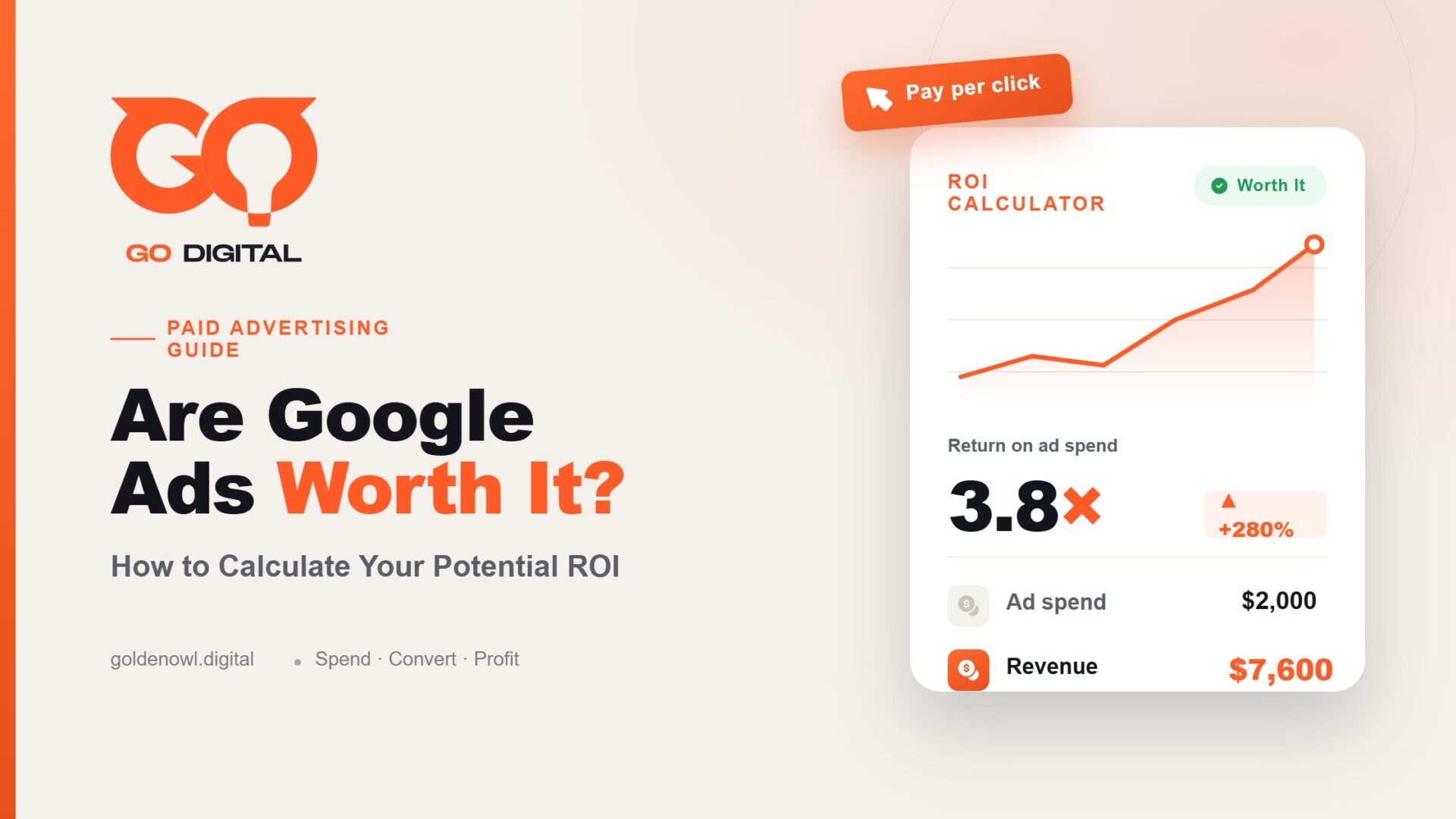
If scaling is your ultimate destination, you must face reality upfront and ask: are Google ads worth it for your current business model? A website that fails to convert, paired with thin margins, will bleed your traffic budget dry.
Google charges you for clicks regardless of what happens next, putting the entire burden of success on your landing page. Before loading a credit card into the system, write down your exact margins to see if your business can even stomach the acquisition cost.
Evaluating whether they can generate a profit means you need to dig into your core metrics. Capturing pure search intent gives you a massive advantage. But does that edge hold up against premium click prices?
You have to map your lifetime customer revenue directly against average industry click costs to test the strict limits of your math. If you lack the unit economics to absorb those premium costs, you just enter a cash-burning death spiral without anything to show for it.
What Are Google Ads and How Do They Work?

At a high level, Google Ads operates on a strict model where they charge you for clicks rather than final transactions. Historically known as Google AdWords, this platform bills your account every single time a user clicks your link, completely independent of whether they actually buy anything from you. That means you pay for intent, not results.
This reality shifts the operational burden of success entirely onto the specific destination page you build and maintain. If your landing page fails to convert, you eat the cost anyway. If you want to run a campaign based on broad brand awareness, you will fundamentally miss the point of this network.
The search engine relies on active commercial intent by demanding your campaign perfectly match the exact queries your prospective buyers type into the search bar. You use this system to buy clicks from users actively hunting for immediate solutions.
A structural grasp of this pay-per-click market player protects your initial ad budget from suffering a total loss during the first week.
The Pay-Per-Click (PPC) Model
Final ad placement relies on a mathematical auction rather than just handing the top spot to the business with the most raw spending power. Throwing unlimited capital at a campaign would easily guarantee top placement if the search engine only cared about maximizing immediate revenue.
Instead, the primary algorithm actively tests every single bid against an advertiser’s relevance scores before it awards any meaningful public visibility on the page. It actually takes the maximum per-click cost bid you establish and forces that dollar amount against a proprietary metric called the Quality Score. Auction mechanics explicitly dictate the final ad placement.
A great Quality Score relies heavily on your specific ad copy alignment and the projected click-through rate, in addition to the overall quality of the landing page itself. By blending these behavioral user signals together at the exact moment of the search, the platform calculates your final, real cost per click.
Core Components of the Platform
They deliver multiple distinct ad formats built specifically to intercept various stages of buyer intent across entirely different properties. If you want to capture immediate commercial demand, deploy standard text placements on Google Search and push at least 2 to 3 product image assets with clear price points directly into Google Shopping.
Secondary formats distribute visual banner image units across millions of third-party portals via the Google Adsense network for retargeting, while embedding motion video content into YouTube to convey stories alongside email placements in Gmail.
The default user interface actively obscures the precise relevance metrics necessary for fixing a failing campaign. In a purely automated tech product, expecting the main dashboard to automatically surface your most critical performance data would be completely logical (as any recent user of Google Ads can tell you).
Because you must expose these hidden variables manually to manage your margins, you have to dig into the settings.
People can view these quality measurements by heading to the ‘Keywords’ option, hitting the ‘Columns’ symbol, picking ‘Modify columns’, expanding the ‘Quality Score’ category, and checking ‘Quality Score’, ‘Expected CTR’, ‘Ad Relevance’, and ‘Landing Page Exp.’.
Selecting those boxes and hitting apply instantly populates these essential metrics into your daily view.
Still, the platform increasingly forces advertisers to tap into automated bidding structures to govern their total ad spend rather than setting manual limits. You basically hand over raw control so machine learning can adjust individual bids at the exact moment of the search.
Automated bidding setups include Target ROAS and Target CPA, alongside Maximize Conversions.
The Pros and Cons of Google Ads
Paid search hands you a massive opportunity right out of the gate. But it comes with a major catch. You have to balance that immediate access to high-intent buyers against a relentless automated auction system designed to spend your maximum daily budget.
Ignoring the compounding financial risk of constantly rising bids basically guarantees rapid cash flow losses. The platform ruthlessly punishes passive spending habits by draining your budget fast.
Why Google Ads Can Be a Powerful Tool
Search platforms give you a huge built-in advantage because they let you intercept people actively looking for exact products. Within this intent-driven framework, potential buyers volunteer their purchase timeline and specific needs right in the search bar.
You just list your specific inventory, structure clear promotions around those exact terms, and position your listings strategically. Do this right, and you can grab a piece of the more than $318 billion+ in projected promotional sales.
They capture this wild volume because estimates from Strataigize show Google will command roughly 90% of the global search market share going into 2026.
Paid social targeting relies strictly on broad interest groups or high-level demographics. That means those users entirely lack immediate buying motivation. The typical social media format inherently disrupts active content consumption. Search promotions do the exact opposite.
They put targeted listings directly in front of motivated buyers at the precise moment they actually want to purchase.
Potential Downsides and Risks to Consider
This remains a tough marketing channel that demands active daily oversight. You can’t just set it up and walk away. Without consistent maintenance, you will inevitably end up financing an expensive volume of completely irrelevant clicks.
Handing the platform total control of your bidding parameters would only make sense if the ad network actually prioritized your profitability over its own quarterly revenue. The only profitable defense involves running continuous performance checks, making targeted search term adjustments, and testing copy variations non-stop.
So why are so many accounts bleeding cash? The current auction environment is wildly competitive. Statistically, 8 out of 10 marketers are currently experiencing heavy net losses on their paid search campaigns. If you want to survive these exact conditions, you have to map out your precise profit margins.
Prepare your budget to absorb digital advertising rates that regularly display a 10, 15% annual jump in cost per click.
Securing a profitable position requires tracking historical CPC metrics so you don’t overpay in shifting regional markets. You can figure out targeted search terms inside Google’s free Keyword Planner by activating the historical metrics view.
That tool lets you check current rates against the past 12-24 months. For your final viability calculation, you should also pull annual benchmarking data compiled by third-party agencies (think WordStream, LocaliQ, or AdEspresso).
Are Google Ads Worth It for Your Business?
Financial realities must be figured out long before configuring a single setting in the dashboard. If you run a low-margin business, the current auction environment will chew you up. Low-margin offers simply cannot survive these auctions without generating heavy losses.
Google gets paid for the click whether that person buys anything or bounces. Before pulling the trigger on launching a campaign, you have to ask: are google ads worth it for your specific margins? Calculating customer lifetime value against the going rate for clicks is essential to find out.
When someone searches for an emergency local roofer, a silent bidding war happens in milliseconds. That split-second auction tests the underlying math of every single business trying to show up.
Is There Search Demand for Your Offer?
Where is the absolute proof that people are actively typing queries into Google to find exactly what you sell? General awareness campaigns completely fail on this network if nobody is already searching for your category. By the end of this validation phase, you need a highly specific audience profile written down.
Then, take 15 to 20 actual search queries and map them directly to the products or services sitting in your active inventory database.
Next, map out the exact benchmarks you plan to hit. Are you trying to drive raw site traffic, or do you need hard sales inquiries? Lock those numbers in early. The absolute maximum capacity you establish for your advertising spend has to integrate perfectly into your broader commercial budget.
How Competitive Is Your Industry?
Intense competition for specific search terms is exactly what drives up prices in lucrative spaces. If every shopper brought the exact same cash value to the table, traffic budgets would be completely uniform across the board.
But a lifetime client in personal injury law or life insurance is massively valuable, which pushes companies to allocate huge funds to win those top spots.
To put this in perspective, grabbing a visitor might run you £2-£3 per click in quiet, low-competition corners of the internet, whereas the baseline minimum to even enter the conversation in legal or insurance fields frequently hits £40 per click. That £40 floor is mandatory just to show up.
A mom-and-pop shop is going to get crushed trying to outbid retail giants on broad search terms. Independent businesses simply do not have the vast operating margins necessary to dominate those broad category auctions.
For instance, a local hardware shop attempting to battle massive retail chains like Ikea or Bunnings will burn through a daily ad budget in just ten minutes.
Is Your Customer Lifetime Value High Enough?
The maximum sustainable acquisition cost ties directly to lifetime customer value and the target profit margin. To survive in this arena, you absolutely have to quantify what a single buyer is worth to you and work backward to find your budget allowance.
Applying the standard formula of Max CPC = (Customer Lifetime Value x Target Profit Margin) x Website Conversion Rate shows that a customer worth $1,000 to your business at a 30% profit margin gives you a $300 budget to acquire them; assuming a 2% conversion rate, your absolute limit becomes $6.00 per click.
That arithmetic gets very dark, very fast for cheap products. Forking over £50, £100 to acquire a new client makes total sense if a typical purchaser yields £500 or more throughout your working relationship, but you simply cannot afford to run ads for a one-off £50 transaction unless your landing pages convert at an A+ clip.
Is Your Website Ready to Convert Visitors?
Once someone actually clicks your ad, a terrible landing page will instantly burn the money you just spent. The ultimate choke point in your sales funnel is the user experience in the crucial 8 seconds immediately after a visitor arrives on your site.
Attention spans online are wildly short. People do not have the patience to wait for heavy images to load or hunt for a buried contact form. Any friction your visitor encounters in that tiny window will determine whether you capture an expensive lead or lose them completely.
Do You Have Time or Budget for Management?
Figure out your hard cap on click costs before you ever fund the account. Getting real results from this platform requires manually overriding the default spending behaviors and constantly fighting back against Google’s broad matching algorithms.
The formula I mentioned earlier (Max CPC = (Customer Lifetime Value x Target Profit Margin) x Website Conversion Rate) draws a strict upper boundary for your business. Lock in that ceiling limit on paper before launching anything.
You will need to block at least 80% of the platform’s automated bid suggestions if they push past your boundary.
How Can Google Ads Help You Advance Your Business Goals?
Defining exactly what this platform must achieve is the first crucial step. Running campaigns without a clear endpoint is basically just buying expensive visibility and crossing your fingers. But if you assign a specific, measurable target to every single dollar you spend, you actually get a reliable metric for success.
The search engine is great at a handful of very specific operational jobs (think putting your inventory front and center, intercepting people who search for your competitors, driving foot traffic to your physical store, and connecting with prospective buyers through carefully filtered campaigns).
It can also route clicks to highly specialized landing pages, re-engage previous visitors through retargeting, surface tons of valuable behavioral data to improve your overall marketing strategy, and elevate the online presence of your brand name, merchandise, service catalog, and overall business profile.
Your only real job here is isolating the single goal that mathematically justifies pulling money out of your pocket every month.
How Much Do Google Ads Cost?
The reality of search advertising is that your initial bankroll dictates the answer to a crucial question: how much do google ads cost and do they work for your business model? Setting up a highly filtered sales funnel takes real upfront cash, and there are basic financial floors you have to hit regardless of what a hungry agency promises you.
The algorithms running these auctions need enough data to learn what works. If you starve your campaigns of daily budget, they will stall out completely before the system figures out who your buyers are.
You either need to bring enough capital to push through this brutal early learning phase, or you should fully expect to torch your entire early investment. Choking the budget guarantees failure straight out of the gate.
Understanding Cost Per Click and What Influences It
The price tag for bringing a single user to your site depends heavily on how relevant your ads are to their search. Before throwing money at a campaign, map out exactly what your buyers are looking for and write highly specific text ads that match that intent perfectly. Put in the time to dial in your ad copy because Google rewards relevance.
Reaching a Quality Score of 7 or greater has the potential to decrease your standard cost per click by up to 50%. That’s a massive operational advantage you can’t afford to ignore.
Your industry also dictates the baseline floor for auction prices. One of the best ways to set your financial expectations is to look closely at the underlying competitiveness of your specific market sector. Assuming all clicks cost the same is a quick way to burn cash.
If you operate in a high-stakes arena (think corporate law, commercial insurance, specialized medical services etc), you can easily see bids eclipse $50/click. Compare that to standard digital retail, where merchants usually see their costs sit between $1 and $3/click.
Ultimately, your competition decides if you end up paying a single dollar or fifty times that amount just to get someone in the door.
Average Costs and Recommended Starting Budgets
Standard costs across the platform swing wildly based on the size of your business and what you sell.
- Average search cost-per-click usually hovers around $2 to $4, though brutal competition can drive that from as low as $0.50 to well over $50+.
- Typical monthly allocations for a small business require a solid financial foundation. You can technically switch a campaign on with just $100 a month, but that rarely moves the needle.
- Baseline acquisition costs for a lead generally range from $40 to $80, shifting heavily depending on your specific sector.
To get statistically viable results, you’ve got to lock in a dedicated baseline spend each month. Before you pull the trigger on any new ad groups, decide on a firm testing budget and get your finance team to secure that cash. The official guidance from Google points to committing at least $1,500 a month to give the system enough data.
Most veteran media buyers will echo that sentiment, advising clients to bring a minimum of $2,000/month just to gather enough statistics to make intelligent decisions.
Managing Your Budget and Bidding Strategy
To handle auction pricing without losing your mind, you can hand the reins over to automated bidding tools. The underlying software relies on pattern recognition through Smart Bidding to adjust your bids on the fly based on dynamic financial goals.
Manually tweaking bids constantly is a relic of the past unless you have absolutely nothing else to do. Today, you can tap into algorithmic options such as Target CPA to maximize conversions at a fixed acquisition cost, or Target ROAS to dynamically manage pricing based on your desired return on ad spend.
When properly configured, Target ROAS automatically shifts bids up or down to capture the highest purchase volume for that specific return target.
You also need to set a daily financial ceiling that gives the platform enough room to actually do its job. The algorithm requires a baseline floor of interaction so it can test different ad positions without instantly draining your funds by 9 AM.
To make sure the software has sufficient information to recognize patterns, you want to guarantee at least 10 clicks per day. There is a simple mathematical rule of thumb here where you need to set a daily cap that equals at least 10 times your primary keyword cost.
If you’re looking at a $3 average per click, you have to build in a $30 daily limit just to secure those early baseline interactions and keep your campaigns alive.
How to Start Your First Campaign
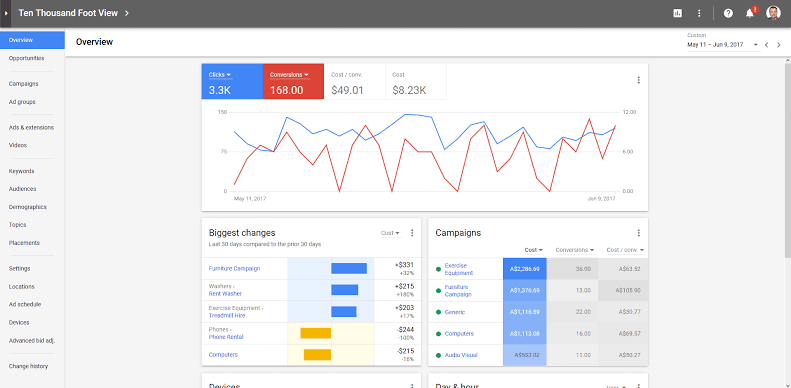
When you kickstart a new campaign, you need strict boundaries to block automated waste. Step in and manually override the search engine’s default appetite for showing your ads across loosely related queries. Otherwise, that loose matching will quickly drain your early capital.
Step 1: Conduct Keyword Research
The first step in this path is to stop unrelated searches from burning through your daily budget right out of the gate. When you launch, you have to stay far away from Broad Match, since it acts as a highly aggressive default that triggers your ads on totally random queries.
As a marketer, you can’t afford Broad Match because it matches those unrelated searches so easily. Reach for Phrase Match for terms like ‘plumbing repair’ or Exact Match for a query like [plumbing repair] instead. Doing this guarantees your incoming traffic stays highly regulated while you pick up early performance data.
Step 2: Write Compelling Ad Copy
Promotional text is actually a filter that screens user intent before anyone even clicks. Put your minimum service price right in the headline to actively repel unqualified visitors. Scare them away before their idle curiosity drains your account balance.
Step 3: Optimize Your Landing Pages
Irrelevant landing pages force people to hunt around for specific details, which frustrates them and instantly hurts your core platform metrics. Within a few days of launching, a terrible relevance score will massively multiply your baseline cost per click.
Step 4: Implement Location Targeting
By default, the platform will show your ads to users who show interest in your region, even if they’re physically sitting hundreds of miles outside your actual service area. If you only serve local customers, you need to shrink those geographic rules down to physical presence only (think specific zip codes, city limits, or tight radiuses) to instantly stop distant searchers from seeing your ads.
Step 5: Set Up Accurate Conversion Tracking
Ok so what does blind bidding actually look like? It happens when you don’t know how to set up conversion tracking in google ads to track exactly where your leads are coming from and tie them back to specific terms. Feeding accurate purchase numbers back into the algorithm lays down the required foundation to scale your profitability once that early learning phase wraps up.
Best Practices for Long-Term Profitability

Profitability on this platform demands a ruthless, systematic defense. Treat every new search campaign like a leaky bucket that actively drains your operating margin until you patch the holes. Setting things up and walking away is a terrible idea.
A passive approach completely ignores how fast expensive, useless traffic piles up in an active account. If you leave the default settings unchecked, you guarantee massive wasted spend spread across thousands of irrelevant clicks. That silent drain destroys your return on investment long before you even bother to log back in.
Continual Optimization and A/B Testing
Fiddling with live campaigns constantly interrupts the platform’s automated machine-learning phase before it finishes a cycle. Tweaking elements every single day makes perfect sense if you handle all your bids manually, but it wrecks an automated setup.
You need to wait exactly 7 to 14 days between major edits like changing your budget or rewriting ad copy. The underlying algorithm requires that continuous window of uninterrupted stability to establish a reliable baseline.
You’ve got to stop yourself from modifying campaign elements daily and resetting the algorithm’s progress. To do this while still blocking bad traffic, restrict how often you comb through the data. You should be digging into the search terms report to add negative keywords exactly 2 to 3 times a week, and no more.
Leveraging Your Data and Google’s Automation
The machine relies completely on the raw quality of your historical business inputs. Import your existing purchaser records from your CRM database, along with your past website visitors and direct brand interactions, to build highly focused target groups.
The algorithm grabs these precise historical signals, figures out the behavioral patterns, and aggressively hunts for similar buyers in the wild.
When your goal is hitting a raw conversion count or a target ROAS, tap into Smart Bidding algorithms to manage your bids dynamically across the entire account. Because the automated bidding logic needs a lot of information to learn and self-correct, you have to supply the system with adequate data volume.
Aim for at least 30 conversions or more per month to properly feed the machine.
General Tips to Maximize Your Ad Spend
Figure out your core business objectives before you configure any campaign elements. Your audience filters and ad layouts should be coordinated to hit realistic milestones. Casting a wide net with broad targets makes perfect sense if your primary goal is general brand awareness.
In this case, though, stick to exact or phrase match keyword types to ensure you only bid on relevant searches. Pair that with constantly updating negative terms so you stop throwing money away on empty clicks. Accurate conversion tracking then proves exactly which specific ad groups generate actual business value over time.
During routine evaluations based on actual performance trends, go deep on extensive keyword research to spot high-value search terms. Get ready to spend a lot of fucking time upfront analyzing this data. Use that insight to refine your written ad text and tweak your landing page layouts to boost user engagement.
Build out incredibly detailed negative keyword lists (think competitor names, along with cheap informational queries and irrelevant products) to prevent your ads from triggering on off-topic searches. Rather than adjusting your ad settings every single day, restrict your reviews of the search query data to precisely 2 to 3 times a week.
Let the campaigns breathe and wait exactly 7 to 14 days between huge edits so the automated machine-learning phase can actually gather stable data.
Why the Post-Click Experience Determines Success

We spend so much time agonizing over ad configurations that we forget what happens next. You can buy the most perfectly targeted traffic in the world, but if your website drops the ball, it is just a financial liability. Believing a great click guarantees a profitable transaction is a massive misunderstanding of digital acquisition.
When I talk to business owners upset about unprofitable campaigns, they almost always point the finger at the ad platform algorithms. But the actual break in the chain happens completely off the search engine. Complaints about ad networks usually hide internal infrastructure failures.
During a recent audit of a client account, flawless search targeting sent highly qualified traffic to an outdated, painful mobile landing page that wasted thousands of dollars daily. The client spent weeks tweaking match types to grab exact demand, only to watch every prospect bounce away.
It proved the narrative that their ads were failing was entirely wrong; it was actually a catastrophic website failure.
The Real Problem: What Happens After the Click
As a reminder, widespread failure to secure the post-click transaction generates a huge chunk of search platform wealth. This reality is an absolute rule across every digital campaign. Your complaints about the ad network would hold weight if Google actually controlled your checkout cart. But they don’t.
Over the past year, Google generated $260 billion in revenue, with a huge portion coming from companies that fail to achieve profitable campaigns. The platform makes a killing simply by delivering traffic to broken sites. Once that happens, the wealth transfer is a permanent loss.
Without a functioning destination, the vast majority of your ad budget is wasted the moment your page fails to load properly. You need to audit your landing pages immediately. Redesign the hero section to capture user attention, because the true failure happens in the brief 8 seconds right after a new visitor lands on your site.
The quality of the on-site user journey heavily dictates your final conversion rates, independently of your ad settings. A standard destination page hovers around a 2.3% conversion rate. That means paying $5 a click pushes your customer acquisition cost up to $217.00, ensuring 97.7% of the budget is wasted on visitors who leave immediately. Stop accepting those baseline losses.
Overhaul your page architecture, write down a structured offer, and test variations until you start seeing specific landing environments push performance to 8 percent, 12%, and sometimes up to 15% with the exact same audience targeting and promotional materials.
Conversion Factors of Profitable Marketers
The marketers who actually make money use staged checkouts and email sequences to nurture their leads. Roughly 59.9% build complete multi-step sales funnels to push order values up via value anchoring. Meanwhile, a solid 42.5% use multi-step checkouts to prompt commitment escalation rather than leaning on long single forms.
Draft your own automated follow-ups and deploy email sequences for non-buyers to provide touchpoints two through five. This is vital, since 47.9% of top advertisers rely on them to recover lost traffic.
The remaining 33.4% use cart abandonment remarketing for targeted incentives, sending automated recovery messages directly to the user’s inbox (think discount codes, free shipping reminders, personalized nudges, etc).
Across the industry, structured conversion funnels dramatically elevate page conversion rates over standard pages. So why do they work so well? Standard layouts waste the click, whereas a structured funnel retains the user. Rolling out a targeted setup like this typically boosts a page from a poor 2% up to the 8-12% range.
Integrating alternative payment options removes friction and rapidly increases your conversion rate. This specific choice architecture minimizes transactional obstacles, letting you naturally capture more sales. There’s undeniable evidence driving this shift, as around 58.2% of high-performing advertisers integrate multiple payment options into their carts.
Your own checkout records will mirror our own testing. During our experiments, adding PayPal next to standard credit methods caused a fast 18% increase in conversions, and turning on Apple Pay and Google Pay soon after resulted in additional gains.
How to Measure Success and Analyze Performance
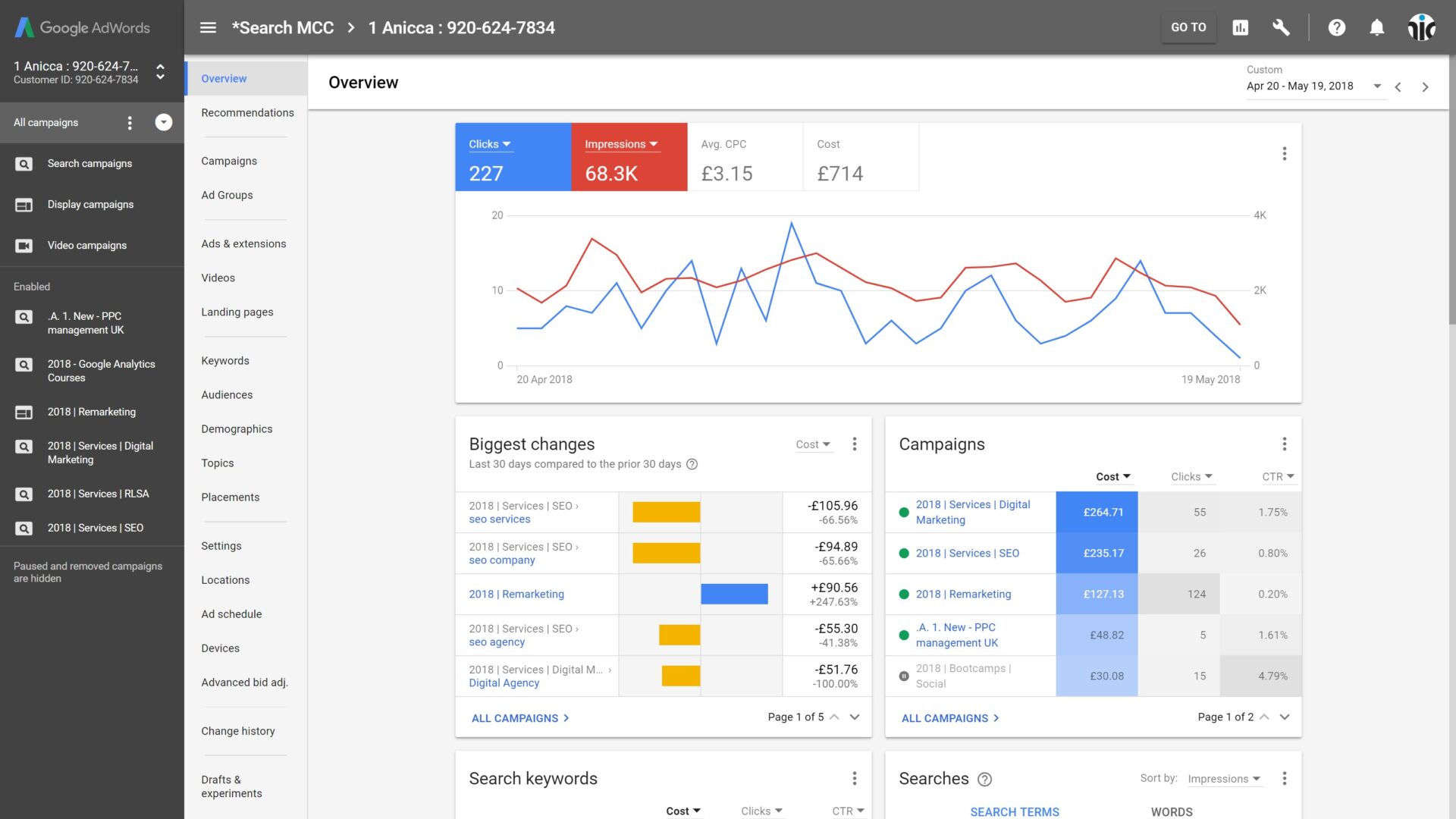
A frustrating checkout process will kill your sales instantly, but judging your campaigns strictly by the final click creates a blind spot that is far more dangerous. It acts as an invisible drain on your business, quietly tricking you into shutting off your most valuable top-of-funnel marketing assets.
If you believe your ads only work when someone clicks a link and buys a product that exact same afternoon, you are going to push your entire budget to the absolute bottom of the funnel. But that completely misrepresents how buyers actually navigate the internet.
Brand awareness and organic search volume usually rely on dark social pathways where your paid ads are quietly generating interest behind the scenes. Accurate measurement is not about immediate gratification; it requires you to track messy, complex buyer paths over weeks or months to see what actually drives sustainable margin growth.
Understanding the Full Customer Journey
Consumer pathways are messy, and the reality is that it typically takes between 6 and 20 interactions to turn a skeptical prospect into a paying client. Standard tracking tools like to treat traffic sources as isolated silos rather than interconnected steps in an ongoing sequence.
Giving all the victory to the final step feels nice and clean, but it completely distorts reality. A prospect might click an ad, browse your inventory, fill up a shopping cart, and then bounce. Basic tracking systems log that initial click as a total waste of money.
But then that same user searches your brand directly three days later to buy, places a second order two weeks after that, and recommends you to a colleague a month later who turns into a massive account. Default analytics platforms called that original paid interaction a direct financial loss, even though it kicked off that entire chain of revenue.
When the marketing team judges campaign returns solely by that final conversion event, the situation compares to awarding the entire 100% sales commission to the individual who merely signed the paperwork at the end. Opening up platform data and digging into top assisted conversions reveals what the pipeline actually looks like.
If your model allocates 100% of the credit to the final search click, you are guaranteeing that you will mistakenly kill off the top-of-funnel campaigns that are secretly feeding your business.
Measuring Success Beyond ROAS
Standard reporting models usually grade your results on a 30-day window, which creates a huge problem if you have a business with recurring revenue or high lifetime value. Missing out on the long game happens frequently. Broaden that default tracking window and build out a basic spreadsheet to watch what happens after the initial sale.
This is especially pronounced in businesses with high repeat purchase rates, where the customers you just converted will casually place more orders in month 2, month 3, or month 6.
Look a bit closer to the metal, and you will see that raw return on ad spend often overstates how profitable your campaigns really are because it ignores shipping rates and product margins. As an illustration, investing $100 in a campaign to earn $200 seems to result in a 2X raw ROAS initially, yet deducting $80.00 for the cost of goods sold leaves a contribution margin of $120.00, yielding a true adjusted ROAS of 1.2X.
In highly competitive markets, the smartest operators map the entire journey from that first ad click all the way down to the signed contract. Once you figure out the complete lifetime value tied to that original click, you can calculate your maximum allowable acquisition cost and adjust your bids to match reality.
Treating customer acquisition like a long-term investment rather than a sprint is exactly how wildly profitable companies can easily justify keyword bids of $50, $100, or even $500 per click.
Using Google Analytics for Deeper Insights
Mapping exactly what users do on the site post-click works best by linking a Google Ads account directly to Google Analytics to pull in deep behavioral metrics. This closes the attribution loop by letting you assign real monetary values to leads and sales all the way through your marketing funnel (think webinar signups, whitepaper downloads, demo requests etc) to make sure your budget aligns with cross-channel reality.
Get GA4 and Google Ads synchronized before you spend another dime on paid search. Advertisers must monitor metrics that represent the true financial condition of their enterprise. If fielding phone calls requires tying offline conversations back to specific search queries, avoid guessing by setting up a Google Forwarding Number or leveraging outside applications such as CallRail or Ruler Analytics.
Relying on broken performance metrics will just convince you to turn off your best campaigns early. Instead of looking at return on ad spend in a vacuum, start tracking your contribution margin and use segment-level ROI to figure out which demographics actually fill your pipeline.
Ignoring the true financial metrics of your business creates a massive risk of throwing money down the drain. Getting full value out of the platform happens only when tracking the whole customer lifecycle.
Common Mistakes and Myths to Avoid

Paid search run like it is on an automatic pilot will absolutely tank your marketing budget. Too many people build out campaigns, launch them, and just walk away without tracking the daily spend.
Falling for the misconception that paid search is a set-and-forget tool inevitably leads to financing thousands of useless clicks that mask your true acquisition costs. The result is a flatline in actual sales while your overhead quietly doubles in the background. Structural mistakes like this burn through cash much faster than any aggressive rival ever could.
To get real scale, you need a human logging in regularly to spot the leaks and make hard adjustments. Spending merely a couple of hours a month on an account shows a lack of true priority. Active management isn’t optional; you’ve got to commit real time every single week to monitoring what people are searching and adjusting your bids accordingly.
Costly Mistakes That Waste Your Budget
The default broad match settings are a great way to buy wildly expensive brand awareness, but terrible for generating profit. Relying on overly broad keyword match types allows unrelated searchers to exhaust the budget.
Neglecting negative keyword lists: If you fail to specify terms to exclude, your promotions appear during off-topic search queries, which consumes your budget on visits that cannot result in sales. Step in manually and block the junk traffic yourself.
Open up Campaigns, click straight into Insights and reports, and hit Search terms. This view shows exactly what real humans typed before clicking an ad. A bakery selling high-end wedding cakes might suddenly figure out they are paying for clicks from people searching for ‘free recipes’ or ‘cake decorating jobs’.
Sort the data by Cost. Click the ‘Conversions’ section header to identify phrases yielding the worst conversion metrics. Select specific queries consuming large portions of the budget without producing leads and configure them to ‘Add as negative keyword’.
Skipping this routine sends cash straight toward window shoppers who will never convert.
Funneling clicks to the main index page instead of specialized landing environments with an explicit call-to-action is another massive mistake. Each campaign needs its own dedicated landing page with an incredibly clear call to action.
Keeping the connection tight between the ad and the destination page protects click-through rates and keeps the algorithm happy. Dropping under a benchmark Quality Score of 5 triggers an immediate penalty. The system will spike per-click pricing and bury ads at the bottom of the page.
A passive approach makes it physically impossible to gauge financial returns over the life of an investment. Permitting automatic implementation of Google’s account suggestions is a costly mistake. Although certain tips hold value, greenlighting every automated system proposal can inflate your platform billing without delivering any real performance gains.
Evaluate every alert individually. Protect margins by reviewing every system alert manually rather than letting the platform automatically apply its own suggestions. Test out at least 3 long-tail targets to avoid chasing high-volume search terms exclusively, which captures generic traffic with minimal conversion potential.
Disregarding the smartphone user experience and failing to confirm landing environments function properly on smaller screens is dangerous.
Tying a broad match targeting strategy to a terrible mobile user experience (think horrible load times and broken checkout forms) guarantees that random phone users will chew up a daily budget without landing a single sale.
Debunking the Myth That Google Ads Don’t Work
A lot of people think paid search is only for giant corporations, but the math proves that smaller operations routinely crush it on Google Ads with heavily restricted budgets. The trick is brutally limiting who sees your ads. By tapping into granular demographic controls, independent shops can grow fast without needing to raise capital.
Go deep on your internal profit margins first, then isolate 4 distinct local territories to target. Roughly 65% of smaller-scale commercial businesses run campaigns on just a few hundred dollars a month. Because they restrict their targeting so intensely, they consistently generate $2, $4 in returns for each dollar they invest.
An initial tiny budget lets advertisers test the waters and scale up only when the conversions justify the cost. This totally destroys the myth that entry costs are always out of reach. Geographic filters and long-tail targeting give local companies the power to steal market share from massive national brands.
Companies also don’t need to bloat their payroll with an internal department to run this complex machinery. Rather than forcing current staff to get their hands dirty in areas they don’t have experience in, they can easily hire external partners.
They will help lay down the initial account structure and guide the process through the learning curve while revenue climbs.
The Future of Google Ads and Key Trends

Google is hiding the manual dials we relied on to guide budgets. Since the platform forces advertisers into black-box automated campaigns, strict control over conversion tracking is your only defense against uncontrollable algorithmic spend.
Audit your data tags before giving software permission to run wild with cash. Automation can work if monitored properly. For instance, I figured this out the hard way at a past company in 2019. I left a partially automated setup alone over a long holiday weekend, wasting thousands of dollars on useless clicks from people not actually buying.
The Rise of AI and Automation
Performance Max handles ad placements across different networks on its own, removing your ability to make manual tweaks. Operating a traditional search configuration ensures absolute command over spending limits and manually picking exact phrases.
You should not start this format until your account hits a minimum threshold of 30 to 50 conversions per month. This foundational data is necessary so the artificial intelligence can train properly and prevent budget drain.
Google Ads for Specific Business Models
Paid search math looks completely different depending on your margins. A high-ticket service company can easily stomach a lot of wasted clicks because just one signed contract covers the entire campaign. On the flip side, if you sell low-margin retail products, you need near-perfect website efficiency to survive.
At the end of the day, your margins dictate whether you can outlast the natural waste built into Google’s automated bidding algorithms. It turns technical SEO into a strict compliance approval process rather than an optional growth lever.
Considerations for Small Businesses
Building a real strategy is impossible without acknowledging that click costs are all over the map. Digital auctions will crush thin margins if you aren’t disciplined. Pulling historical sales data, figuring out the absolute maximum acquisition cost, and locking in the exact conversion rate is necessary to stay alive.
How much will you actually pay for traffic? It entirely depends on your specific market. Advertisers might see clicks costing around $1 in obscure, low-competition niches, while highly competitive sectors regularly demand upwards of $50 or $100 just to get a single targeted visitor to the site.
Over the long run, having massive operational margins lets a business comfortably swallow expensive customer acquisition costs at break-even without taking an immediate hit to their bottom line (though you obviously want to see actual profit eventually).
If you’re operating on razor-thin margins, however, you’ll face severe financial strain. The only way to survive that squeeze is if your buyers bring enough lifetime value to turn an initially break-even transaction into a profitable victory down the road.
Considerations for Service-Based Businesses
Local service campaigns make total sense when your average contract completely dwarfs what you spend to get that lead. Look at your service menu and separate the big-ticket jobs from the small, one-off gigs. Stop bidding on the cheap stuff and put all your money behind the premium work.
Spending £50, £100 to pick up a new customer makes perfect sense if their signed agreement brings in £500. Conversely, you should block ads completely for a modest £50 one-time service. That kind of low-tier job will almost never generate a profit, unless your landing page converts at a wildly high rate.
When your business is boxed into specific geographic boundaries, you need to lock down your settings to target people physically in that area. To fix this, go to the ‘Location options’ tab right below your selected region or radius settings.
Change the default from ‘Presence or interest’ directly to ‘Presence: People in or regularly in your targeted locations’. It is a quick adjustment, but it stops the engine from showing your localized ads to distant users who are just researching the area before you can deploy complementary marketing strategies.
Alternatives and Complementary Marketing Strategies

Relying entirely on paid search clicks is a massively expensive way to run a business. When you leave your marketing budget exposed to wild weekly auction swings, you take on huge financial risk.
Balancing that premium requires building out other traffic pipelines (think organic social, referral loops, content marketing etc) to establish a sustainable, blended customer acquisition cost.
How Google Ads Compares to SEO and Social Media
Keyword campaigns are A+ at intercepting buyers exactly when they are ready to spend money. That would be a complete playbook if auction prices stayed flat forever. Since they don’t, you have to split up the work across platforms.
Let paid search capture the people already hunting for solutions while your social media presence slowly builds up brand awareness.
Integrating SEO, Content, and Social Media Ads
Mixing organic traffic with paid clicks across your funnel naturally stabilizes the cash you spend to land a customer. Go look at your content calendar right now.
Allocating just three hours a week to answer the technical queries your paid campaigns currently fund makes one question if this is truly a main priority. Redirect 80% of your internal production time to cover those exact topics.
Exploring Local Service Ads (LSA)
Another tactic you should be looking for is a dedicated pay-per-lead system that completely avoids the regular keyword auction. Local Services Ads (LSAs) offer exactly this for participating service providers.
To secure a ‘Google Guaranteed’ or ‘Google Screened’ badge, the search engine puts your business through a strict manual compliance review. Going to ads.google.com/local-services-ads is required to pass mandatory police screenings, file official corporate permits, and provide documentation of liability insurance.
Two Scenarios: Profit vs. Loss
Now that you have the necessary context to pass Google’s strict reviews, we can dive into what happens after the click. Post-click setups decide whether your digital ad budget actually buys market share or just burns through your cash.
We ran a test with two very different search campaigns using the exact same daily budget to figure out what would happen. One setup did incredibly well by grabbing visitor email addresses right away and nurturing those leads through a steady drip sequence.
The other setup burned cash fast, dumping incoming traffic straight onto a clunky checkout page with zero intermediate steps. A bad landing experience wastes tons of your client acquisition budget, even if your keyword targeting is perfect.
It proves that when you compare two identical budgets, your ability to scale rather than fail comes entirely down to whether your website actually converts people.
Scenario 1: A Profitable Local Service Business
It comes down to basic math that a carefully built marketing funnel massively outperforms a boring inventory page. Structured paths that collect emails and feature a solid follow-up drip sequence are needed to slowly win over the folks who don’t buy right away. Building these funnels ensures A+ output from them.
The standard approach falls flat, so you have to try and steer shoppers toward strategic upgrades while making sure your site can process payments from just about anywhere (think PayPal, Stripe, Apple Pay etc). Business A sends traffic straight to a product catalog and achieves a 2% conversion rate, while Business B relies on a measured system converting over 80% of their site visitors.
At this level of performance, Business B turns browsers into buyers by leaning on a highly engineered setup. They isolate the sticking points in their checkout flows to smooth out the buying process, meaning a much bigger slice of their paid clicks actually finishes the transaction.
By paying $5 per click and converting 8% of visitors at their shop, Business B secures a customer acquisition cost of $62.50, allowing them to land clients while spending 75% less than their rivals. They capture maximum transaction volume on a standard five-dollar click.
Scenario 2: A Small Business Breaking Even
Reaching a break-even threshold yields no immediate net gains. The financials prove that breaking even on your front-end marketing quickly turns into compounding long-term profit when your client lifetime value is high enough. In a basic retail setup, breaking even on that first sale brings exactly zero immediate net gains to your bottom line.
However, when the initial expense to acquire a buyer sits at $50 yet their complete lifetime value (CLV) hits $500, hitting breakeven on that first transaction acts as an entrance to significant long-term profitability. A company can safely absorb a heavy upfront cost just to win a committed buyer. The hard acquisition cost acts purely as a profitable starting line.
Things look incredibly bleak over at Business A. By dumping visitors straight onto a basic inventory page, they force expensive traffic into a clunky funnel that loses potential buyers at every single step. Since Business A spends 5 dollars per visitor click alongside a poor 2% checkout rate, they have to invest $250 just to secure one client.
Risking your entire runway to figure out what works is unnecessary. Setting a $20 daily spend cap (which totals $600 monthly) delivers sufficient transactional feedback within 2, 4 weeks to test out a tight cluster of search phrases with strong buying intent.
Before kickstarting a wider rollout, marketers have to gauge their true client acquisition cost by dividing total Google Ads spend by the actual number of customers picked up. This mission is simple here.
Over the next 2, 4 weeks, deploy a $20 daily spending limit and track exactly how a $1,500 budget covering click media and expert management fees secures 10 new buyers for a true $150 expense per new client.
FAQ
How long does it take for Google Ads to work?
A disciplined data collection phase stretching across two to three straight months of continuous spending is necessary before you expect profitability. The first thirty days are simply there to test your variables (think match types, ad copy, and negative keywords).
Month two is all about filtering and making adjustments. By the time you hit the third month, you finally get a clear, honest look at your actual return on investment.
Do google ads work for small business campaigns with a low budget?
They require massive patience and strict limits on exact keyword settings when your working capital is tight. Let’s say you operate with a strict $10 daily ceiling, which creates a $300 monthly limit. Campaigns need to lock in keywords that cost an average of $1 to $3 per click and wait four to six weeks just to pick up your baseline performance indicators.
Is Google Ads better than SEO?
Think of search engines as sorting mechanisms that route inbound traffic based on immediate buyer intent instead of grading the lead’s true quality. Paid search grabs commercial demand right now at a heavy financial premium. Organic search rankings, on the other hand, build up long-term authority over a handful of quarters.
Can I run Google Ads myself or do I need an agency?
Managing campaigns in-house demands a bare minimum of 5 to 10 hours of focused analytical work every single week to watch search terms and tweak bids. Dedicating barely 2 hours to weekly account optimizations means the channel is severely neglected. Without that steady time commitment, the system defaults to broad automated settings and quickly bleeds cash on entirely irrelevant clicks.
Setting up a profitable paid acquisition engine requires pure mathematical discipline. Managers understand how to map out your break-even cost per click and make the automated systems obey your actual conversion data.
Look at your daily budget as a strict experiment, cut out the broad match types that drain your capital, and gauge success purely on closed revenue. If your margins are fat enough to swallow the acquisition cost and your website consistently turns traffic into buyers, you have a highly scalable channel.
But if those figures don’t match up, you’ll quickly realize that the answer to are google ads worth it is a resounding no. Stop spending right away, as unprofitable accounts exist for one reason only: to fund a search monopoly.