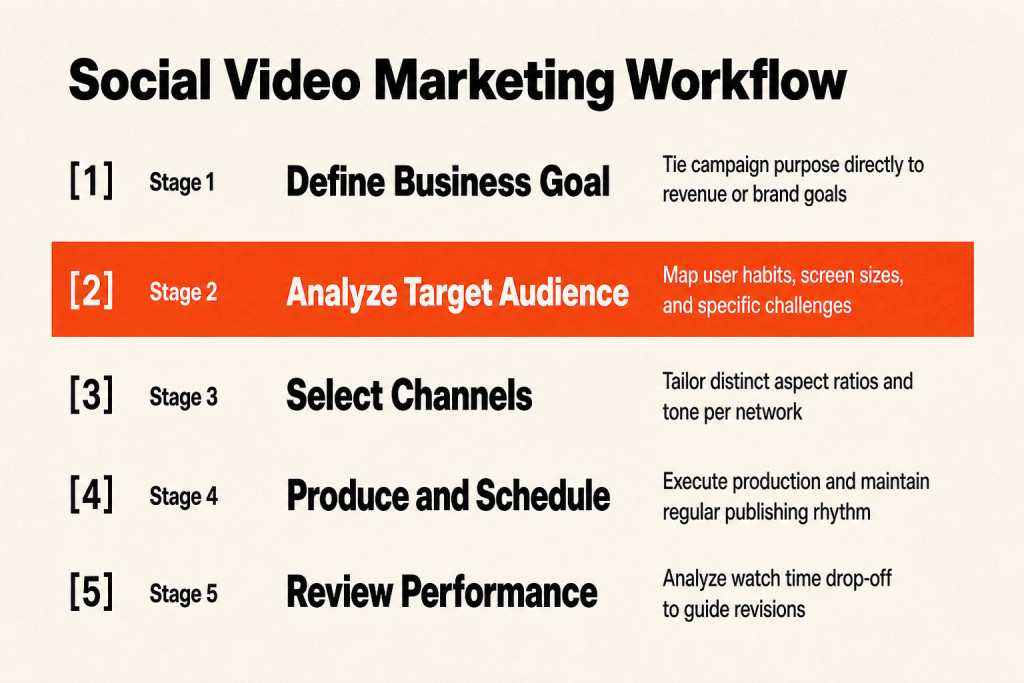
A strong social media marketing strategy for hotels can help travelers choose where to stay before they visit the hotel’s website.
Many independent hotels still miss this, while travelers use online platforms to find properties, weigh choices, and pick where to stay.
For independent hotels, social media can link platform selection and content creation to direct bookings. This guide shows you how to use it effectively.
Planning Your Social Media Marketing Strategy for Hotels
From the start, build your marketing strategy using social media for hotels slowly through regular posting, testing, and optimization. Start with the platforms your target demographics use most, then increase posting frequency and active channels over time (consistency takes time).
Target Audience Segmentation
Audience targeting becomes clearer when every group’s defining traits connect to its place in hotel marketing.
| Audience Tier | Targeting Parameters | Hospitality Application |
|---|---|---|
| Demographic target groups | Location, age, travel behavior, interests, and social connections | Reach travelers according to the traits that shape how they choose a hotel |
| Custom audiences | Past guests, website visitors, or newsletter subscribers who have already shown interest in the hotel | Reconnect with warm leads who are more likely to convert |
| Lookalike audiences | People whose behavior and preferences resemble those of existing customers | Expand reach to likely future guests |
Photos of hotels and trips shared on social media influence booking decisions for about half of 25-35-year-olds.
Guest Persona Mapping
Different audiences have different needs, and those needs should guide how the hotel presents itself, from the situations shown to the language used.
Digital nomads
Digital nomads may be looking for a home-away-from-home. Build a “Day in the Life of” series that moves from the downstairs coffee kiosk in the morning to coworking beside reception. Show where guests can meet like-minded people.
Family travelers
Convenience and kid-friendly services may carry the most weight for Family travelers.
Luxury travelers
For Luxury travelers, exclusivity, wellness, and personalized experiences may matter more.
Match the visuals, captions, offers, and tone to the hotel’s target markets.
Goal Alignment
Awareness puts the hotel in front of new audiences, Engagement sparks dialogue, and Conversion prompts bookings.
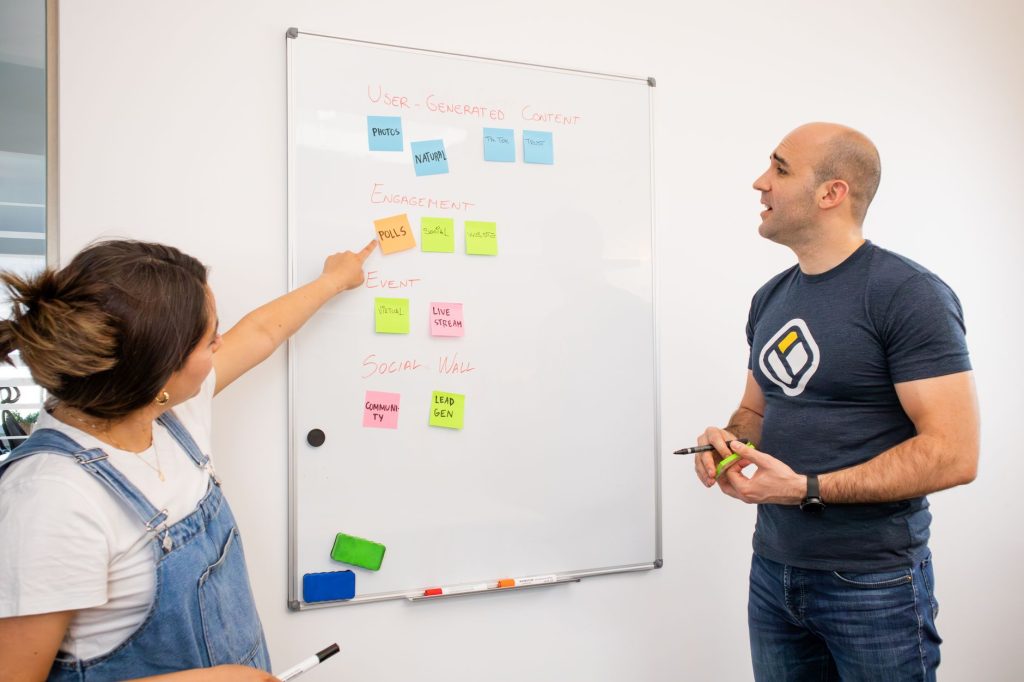
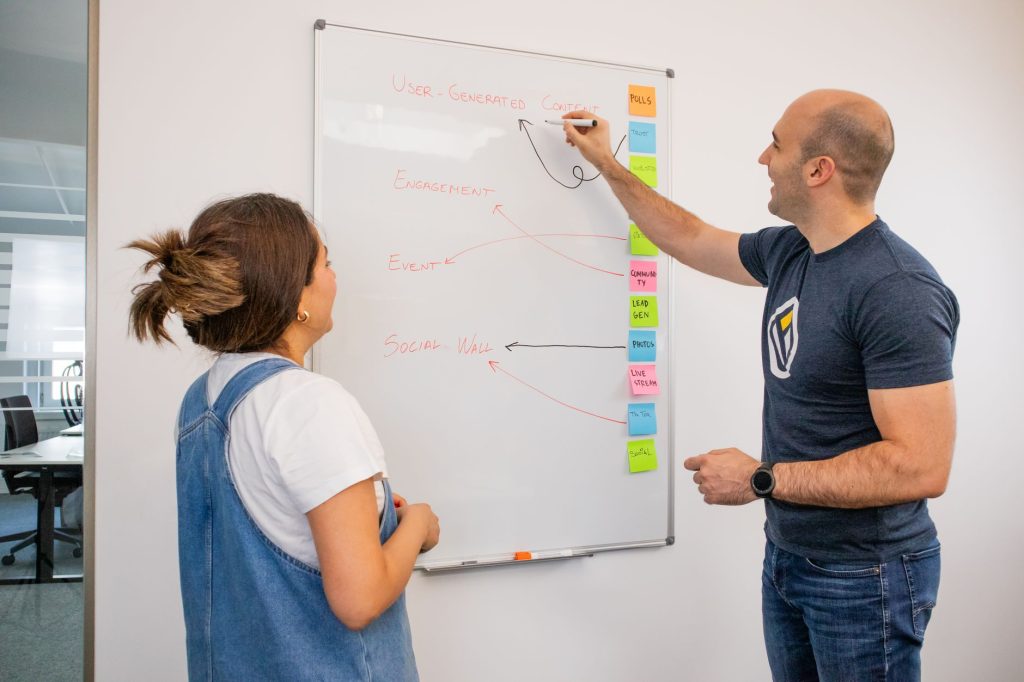
- Awareness: Introduce the brand to new audiences through unique selling points, local partnerships, or behind-the-scenes looks.
- Engagement: Start conversations with interactive content such as guest polls, comment prompts, or user-generated content.
- Conversion: Encourage bookings with limited-time offers, package deals, or direct links to the hotel website or booking engine.
Keeping these three goals active supports growth over the long term.
Brand Voice Guidelines
The way you communicate on social media
Your social media communication should carry the hotel’s personality, whether it’s luxurious and refined, cozy and friendly, or adventurous and playful. Keep that tone steady.
Guests should instantly know your hotel is speaking
Guests may see a post on several platforms, but they should recognize the hotel’s voice and values each time.
Many properties use social channels to build a name in the travel industry, while B2B social media marketing applies a different approach for hotels targeting business clients and corporate buyers. A clear brand voice draws travelers who share the hotel’s character.
Content Pillar Framework
A rotating content plan keeps the feed fresh by moving between property features, local sights, and guest moments. You don’t need to turn every post into the same sales pitch. DiMaio’s 80/20 rule calls for 80% of content to cover the destination, travel tips, or encourage Engagement, with Posts about your staff and Posts about your surroundings included, and 20% kept self-promotional.
- Posts about your hotel: Highlight rooms, amenities, or packages.
- Posts about your staff: Introduce team members, share behind-the-scenes moments, or show internal events.
- Posts about your surroundings: Feature local hotspots, seasonal attractions, or nearby activities and events.
The 80/20 rule keeps destination content present while making room for hotel offers.
Channel Selection
Running a few channels well keeps the hotel visible and consistent. Spread yourself across every platform, and the weak spots will show.
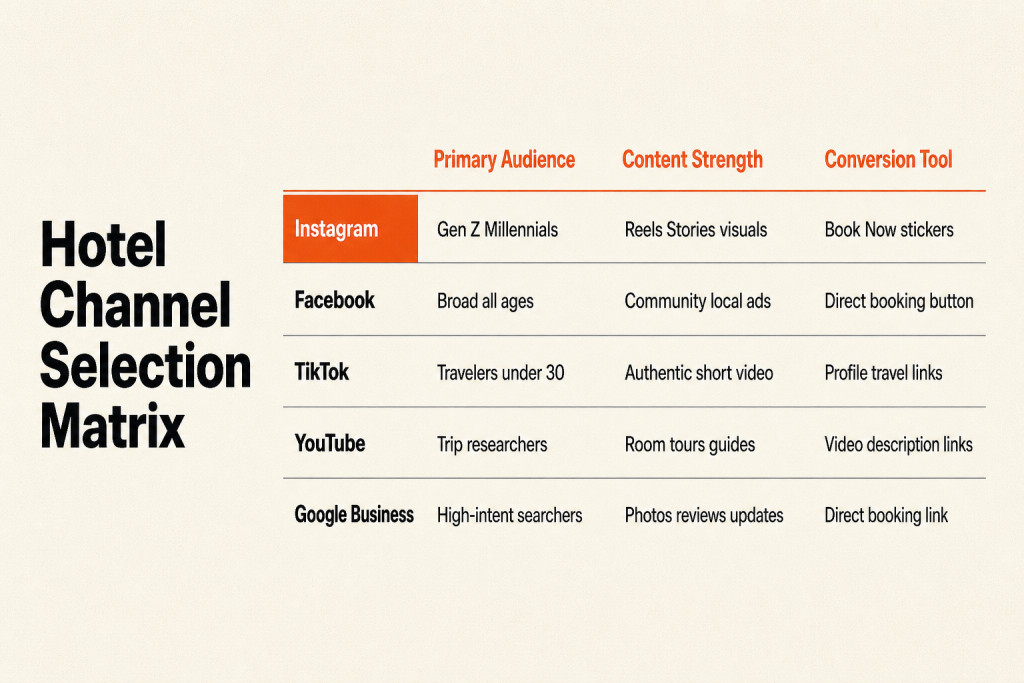
Choose a social media marketing platform based on guest behavior, then build your presence around the channels travelers actually use. Start with age, trip purpose, and research habits. Two or three well-run channels beat six neglected ones.
Interactive polls and behind-the-scenes moments give guests reasons to keep checking Instagram. Reposts help the hotel stay in their feed.
Gen Z and millennials turn to Instagram for travel ideas and trip research. The platform has 2 billion monthly active users.
Put a branded hashtag in front of guests while they’re researching, then guide them toward booking with “book now” stickers in Stories and call-to-action buttons on posts.
Facebook continues to serve travelers across a broad range of types and ages, and as of Q3 2023, its more than 3.03 billion monthly active users make it the world’s largest social media network, offering hotels access to broad audiences.
Hotels can build a community on Facebook and run ads at the same time. Set audiences by age, interests, location, recently visited places, income, and more across Facebook and Instagram.
Branded hashtags and Stories, along with call-to-action buttons, help Instagram move travelers from discovery toward booking. More than 1 million travel-related hashtags are searched there every week.
Send Facebook visitors directly to the booking engine with a call-to-action button. Booking integration and Messenger bots can also answer service questions and booking inquiries.
Social media video marketing needs a steady on-camera presence and relaxed editing, so hotels should choose a format they can maintain consistently. If you can’t keep up with that pace, consider a Social Media Marketing Agency or put those creative hours into Google Business Profile and Instagram.
For younger travelers researching hotels and destinations, TikTok has become a major discovery channel. It has more than 1.2 billion monthly active users, while users spend 22.9 hours per month on the app.
TikTok’s fastest-growing audience is users 30 and under. Make 15-60 seconds videos that take viewers through the rooms and local experiences, introduce staff personalities, or follow trending challenges.
A small video budget won’t keep a hotel off TikTok. Viewers prefer authentic content over high production value, and the algorithm weighs engagement more than follower counts, giving smaller properties a shot at viral reach.
TikTok’s 2024 trends report points to three major trends:
- Curiosity peaked: Users want hyper-relevant, useful content that piques curiosity and helps them discover new ideas.
- Storytelling unhinged: Giving everyone a voice has unleashed creativity, while diverse voices and collaborative formats are changing traditional storytelling.
- Bridging the trust gap: A growing trust gap gives properties a chance to share, listen, and learn through every campaign and post, building loyalty on and off the platform.
YouTube deserves a place in a hotel marketing plan because travelers use it as one of the world’s largest search engines. It’s also the second largest social media platform, with 2.49 billion monthly active users.
The 2023 Culture and Trends report finds that 68% of surveyed people watch videos about subjects they enjoy in a range of formats, from short form and long form to live stream. Use property tours and guest testimonials, along with destination guides, to show what a stay includes before booking.
Google Business Profile
Think of Google Business Profile as the hotel’s mini-website. Add photos, share its unique profile link for reviews, and publish offers and updates, including news, so potential customers can find the profile. Keep adding new photos regularly.
That work can improve Google 3-Pack ranking, organic searches, and direct inquiries quickly. The GMB listing also gives guests directions, phone calls, and uploaded photos.
TripAdvisor reaches a wide audience and hosts an active community, helping hotels build organic word-of-mouth and reinforce their online reputation. More bookings can lead to more reviews, creating a self-reinforcing cycle.
Google Reviews shapes first impressions and booking decisions. Ask happy guests for reviews, and respond promptly to both positive and negative Google Reviews. Share a strong TripAdvisor review with followers, and the guest’s own words become hotel marketing.
High-Converting Content Formats
A vacant pool could belong to almost any hotel. Add children splashing in, with parents laughing from poolside cabanas, and guests can picture the stay. Hotel social media often misses when properties focus on what they want to say. Travelers want to see what staying there looks like.
Experience-Led Visuals
Choose high-quality images of kids jumping into the pool that capture the full guest experience; an empty pool is a generic alternative. Travelers want to know what staying there feels like.
Slice-of-Life Moments
A hotel can show guests why it deserves a visit, but the push to fill rooms can make properties oversell themselves. Show daily life at the property through its own account, almost every day. It can become its own influencer. Since hotels depend on experiences, keep this content personal and easy to relate to.
Behind-the-Scenes Tours
People are curious about hotel operations, so there’s plenty to share: a chef making breakfast or housekeeping changing a room in minutes. Staff can point guests toward the best local coffee, too. Those details let people see the work.
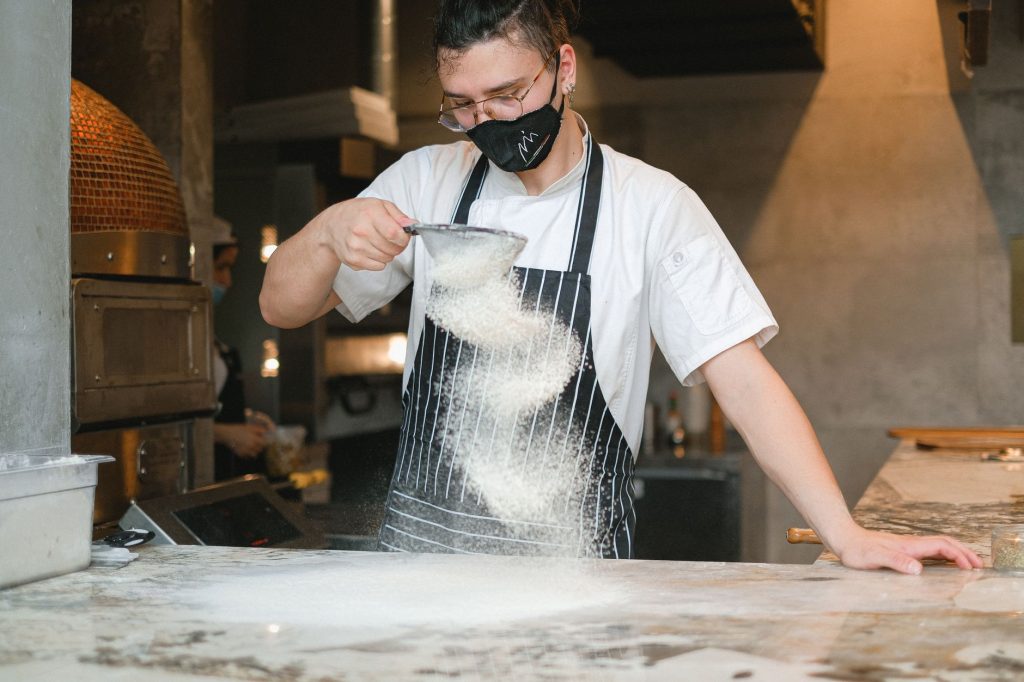
These glimpses build a connection that goes beyond a transaction because they put real people behind the property. Hotels can keep the staff and processes that make them special out of sight. Show staff introductions, kitchen tours, housekeeping excellence, and management insights to potential guests. That content makes the brand human and builds an emotional connection.
Virtual Room Tours
Virtual tours let guests look through rooms, common areas, and amenities. They need a clear sense of what their stay may be like. Pair tours with guest testimonials and amenity highlights so potential guests know what to expect before booking.
Local Destination Guides
City guides, leading local tours, and language tips give guests useful material to read, engage with, and share. We can reach beyond the hotel’s current followers through this content. I’d pair each guide with room photos, nearby destinations, restaurant suggestions, and local anecdotes. A hotel should open the door to local attractions, not stop at providing a place to sleep.
Social Search Optimization
Make social media content easy for search engines to find by using suitable hashtags and every post feature available. Share it when your audience is most likely to pay attention, including the right times and dates.
Social Proof and Collaborative Marketing
Search brings travelers in, but guest experiences give hotel social media its credibility. They feel honest and easy to relate to. User-generated content adds a more natural, community-minded tone, and the strongest collaborations rely on real stories instead of direct promotion.
Branded Hashtag Initiatives
Ask guests to tag your hotel or use a branded hashtag, then share those posts across the property’s social media channels.
Guest Content Incentive Programs
Give travelers a reason to promote the brand online, and hotels can increase engagement while reaching a wider audience. Offer free drinks or discount vouchers for following the hotel’s page. Exceptional user-generated content can earn amenity upgrades. It can also bring dining credits or free night stays.
A growing social following can lead more followers to visit the property. Reward guests who produce outstanding guest-created material with amenity upgrades. Dining credits and free night stays can also be offered.
Guest Video Testimonials
Static images still have a place. Across all social media platforms, bookings convert 67% better when driven by video content. Videos from real guests add social proof and can shape potential customers’ booking decisions.

Hotels should set up a clear way to collect guest testimonials, either at checkout or through post-visit communication channels. A structured testimonial method can keep responses consistent. Automated post-stay emails can ask for photos and reviews. Tours work particularly well on YouTube, and hotels can cut them into shorter clips for Instagram Reels and TikTok.
Micro-Influencer Collaborations
Micro-influencers
Micro-influencers are often the best bet. On Instagram, creators with 1,000-5,000 followers typically show strong audience loyalty and engagement rates above average. This pattern also holds on TikTok and YouTube.
Influencers
According to Expedia Group’s 2025 Traveler Value Index, influencer recommendations have directly shaped a booking decision for 73% of travelers. Hotel bookings occur more often than bookings for any other travel type after an influencer’s recommendation, making hotels the top category.
Influencer partners
A travel blogger can deliver better ROI with 10,000 engaged followers in your target demographic than a celebrity with 500,000 disengaged followers. Pick an influencer whose brand and voice fit your hotel.
Community Management and Guest Service
When someone reaches out on social media, treat the exchange as guest care, not a task to clear. Answer direct questions quickly, and use booking history and past interactions to tailor replies for returning guests. Ask first-time guests what they prefer and what matters during their stay. Set the pace at within hours, not days. Very, very few guests want silence. Respond within hours, not days, wherever guests engage on social media, so they can tell that real humans run the property and care about it. Invite comments and thank those who participate, helping turn one-time participants into loyal advocates.
Manage the hotel’s reputation professionally on Facebook and Google, as well as TripAdvisor. Reply to both positive and negative reviews, don’t argue in public, and use feedback to improve the hotel. A thoughtful reply can influence a booking, build loyalty, protect the hotel’s reputation, and reveal what guests need. Compare social feedback with guest responses to see where the experience can improve and where it excels.
Guest Lifecycle Integration
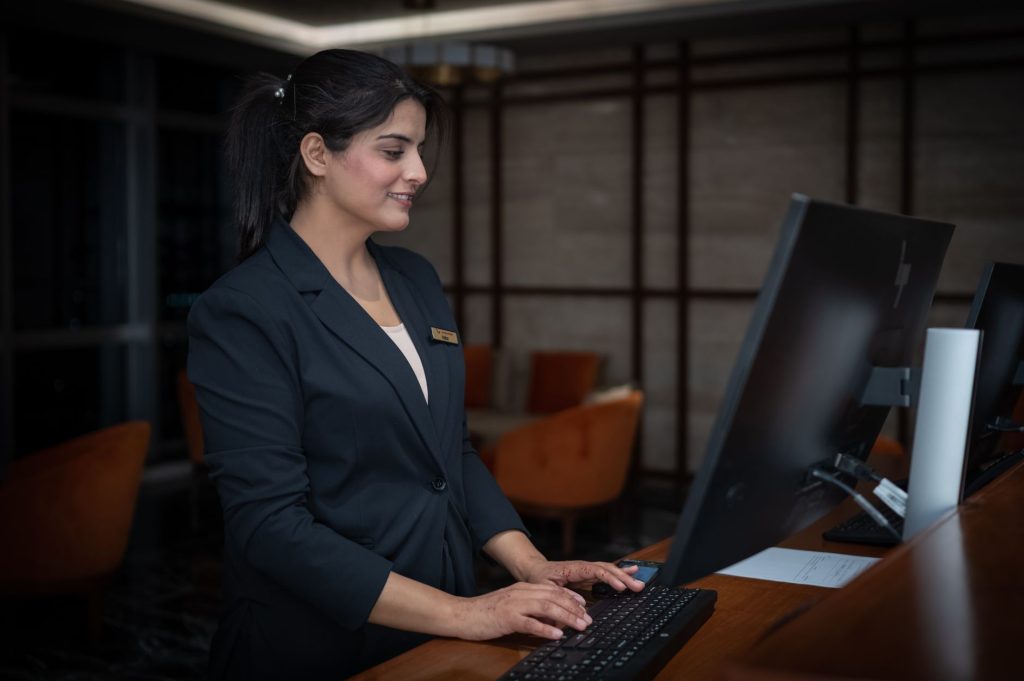
Guest profiles centralize information so communication can be personalized. Before arrival, give guests portal access and use pre-stay messages to remind them to tag your property.
On-property use of the guest portal and two-way messaging creates service touchpoints and social content opportunities. Guests can message to request recommendations, creating positive experiences worth sharing.
After departure, automation can request photos, collect feedback, and prompt social sharing. Personalized offers can then give returning guests reasons to come back.
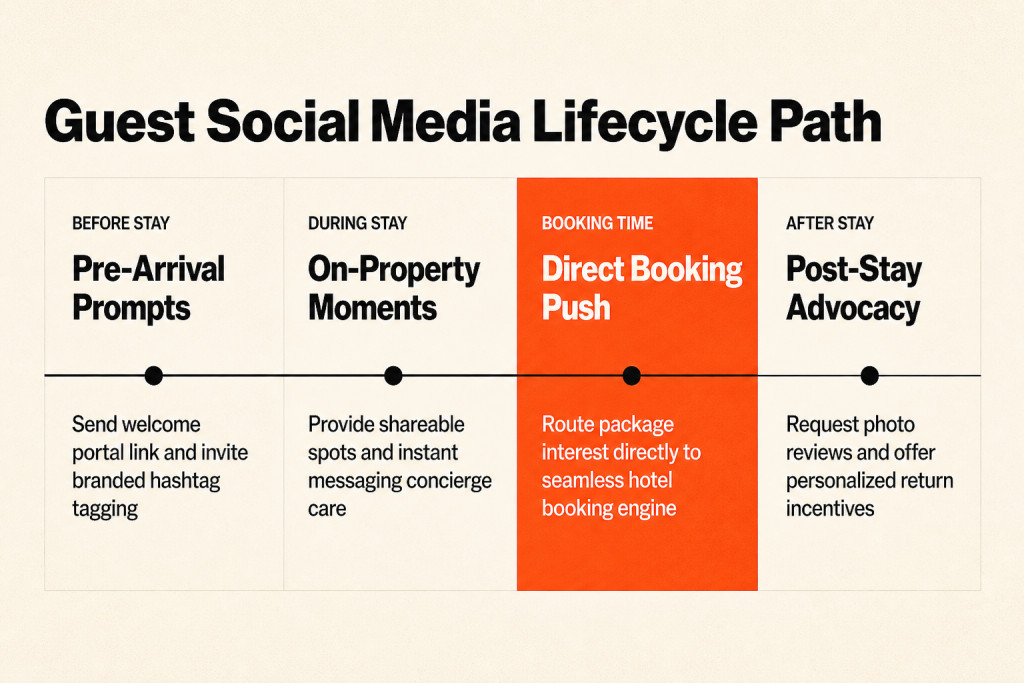
OTAs can seem like the easy choice. Still, hotel social media marketing can support direct bookings: route traffic for packages or seasonal offers to your booking engine, and point out best-rate options or flexible policies. Every extra click or slow-loading page creates another opportunity for a traveler to reserve through an OTA instead.
Performance Tracking and Return on Investment
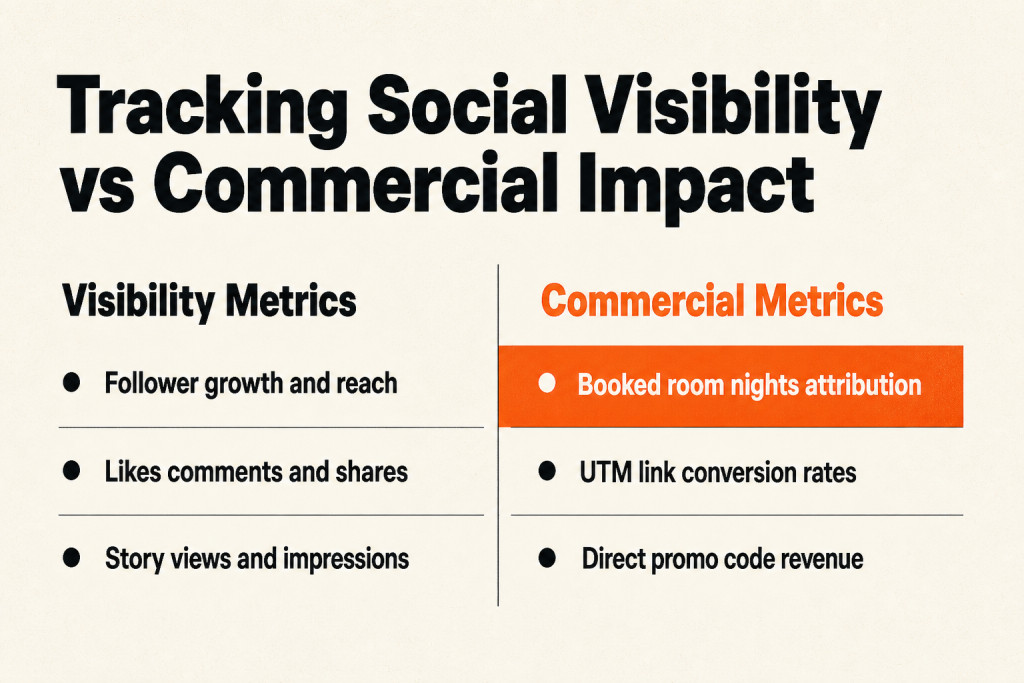
Still, evaluating a social media marketing strategy for hotels means separating visibility, reach, and engagement from the number that ties directly to business: booked room nights. I used to watch the wrong numbers. Let booked room nights guide budget decisions. Give every social link unique UTM parameters, and create a dedicated promo code for bookings driven by social. Follow the full path closely, from each social platform to your website. Track page views, on-site duration, and conversion percentages. Conversion rate and booking attribution are the main measures for evaluating results and assigning budget.
Common Hotel Social Media Pitfalls
Inadequate hotel oversight can squander effort and send the journey from posts and engagement toward trust and bookings backward. Give each mistake a practical safeguard.
Posting that comes and goes will drain momentum. Pick a cadence you can keep every week, and favor quality over quantity rather than letting a demanding schedule fade after four weeks. It must last.
When community replies sit unanswered, guests may form negative impressions and booking chances can disappear. Respond to availability questions within hours, and stay present in comments, direct messages, and reviews to protect relationships and booking opportunities. Silence keeps questions open.

Blurry images and poor lighting can chip away at traveler trust and the hotel’s credibility. Use professional short-form video because it grabs attention, encourages interaction, and is more likely to be shared, helping the content earn trust and attention.
A split brand presentation leaves audiences confused and weakens brand identity. Keep the property’s voice, visual identity, and messaging aligned across platforms, so guests can identify the property and understand its distinctive selling points. Too much promotion tires audiences and cuts engagement, so mix sales messages with useful value; promotional content cannot stand in for useful communication.
Frequently Asked Questions
Which social media platforms work best for hotel marketing?
There are clear platform choices: Instagram and Facebook work best for most hotels through visual storytelling and direct booking features. LinkedIn suits business hotels. TikTok reaches younger travelers. Those are the main choices.
Compare social media platforms by their audiences and booking tools.
- Instagram and Facebook: Support visual storytelling and direct booking features for most hotels.
- LinkedIn: Works well for business hotels.
- TikTok: Reaches younger travelers.
How often should hotels post on social media?
Let your posting pace follow the platform, content quality, and resources you have. Consistency beats volume.
Can social media increase direct hotel bookings?
Yes, social media can bring more direct hotel bookings. It builds brand loyalty, moves traffic to the booking engine, and lets paid social media campaigns reach new audiences and drive bookings, reducing reliance on third-party platforms.
What content drives the most hotel engagement?
Hotel engagement is strongest with Behind-the-scenes videos and User-generated content, along with Local area guides. Authentic staff stories and guest experiences consistently outperform promotional content because guests respond to real hotel details.
Each of these content types builds engagement in its own way.
- Behind-the-scenes videos: Show how the hotel works and offer a closer view of the property.
- User-generated content: Presents guest experiences authentically.
- Local area guides: Give travelers useful information about the surrounding area.
- Authentic staff stories and guest experiences: Consistently outperform promotional content.
How do hotels measure social media ROI?
To measure social media ROI, hotels should connect bookings with campaign-specific tracking that combines booking URLs and UTM parameters with offer codes.
Booking tracking
Trace social bookings by campaign: distinct booking URLs and UTM parameters, together with promo codes, show which activity produced them.
Budget distribution
That record lets organizations calculate specific ROI measurements and decide how to distribute budgets across social media channels.
Visibility and commercial metrics
Use two groups of metrics, since they answer different questions: visibility-focused and commercial metrics. Follower growth, Engagement rate, Reach, and Impressions show how content connects with audiences, so track them. Conversion rate, Click-through rate, Revenue generated from social channels, and Engagement-to-booking ratio tie engagement to direct bookings, website traffic, and revenue.
Give every channel a traveler and a job. Pick Instagram and Facebook for visual storytelling and direct booking features, LinkedIn for business hotels, and TikTok for younger travelers. Keep your posting pace sustainable as part of a social media marketing strategy for hotels. Share real hotel stories and local area guides. Then link social activity to bookings through distinct URLs and UTM parameters, using campaign codes as an additional check. Put the numbers beside the bookings.