You must realize that your initial digital advertising campaign won’t magically make money overnight. Treat it like a calculated information-gathering mission, not a lottery ticket. You’re just paying for raw user data to build a highly profitable system months later. Hard numbers always do the heavy lifting.
I will tell you how to gather this exact baseline intel without burning through your entire budget. Before you spend a single dollar, you need to lock down your variables.
What is Digital Advertising and Why Should You Use It?
Consider how a platform logs every single click and swipe a user makes online. It’s a simple fact that forces absolute accountability onto every penny you spend. Marketers leave behind the blind hope of a one-way broadcasting megaphone and replace it with measurable feedback.
A highway billboard might get you general awareness, but digital campaigns tie your costs strictly to concrete business outcomes. This turns the hope of finding a customer into pure math.

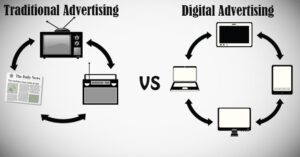
Digital Ads vs. Traditional Ads
Do you want to skip the endless preparation phase that physical media demands? I bought a run of printed circulars years ago … (well, before Twitter) … and the second that ink dried, my choices were locked in.
Internet campaigns aren’t like that because they adapt incredibly fast. Live data allows swapping out wording and graphics on the fly. By plugging your assets into predefined design templates, your new ad goes live in just a few minutes.
Compare that to a television broadcast. TV blasts your message indiscriminately to anyone watching, leaving you to guess your success based on general revenue bumps. Legacy campaign efficacy is restricted to tracking general fluctuations in company revenue.
Web channels give you specific filtering options and live analytical tracking for the user’s entire journey, from the exact moment an ad loads all the way to the final conversion.
The Main Business Benefits of Paid Ads
By avoiding massive flat fees upfront, digital advertising campaigns protect the bank account. You’re tying your spending directly to specific user actions instead.
To understand what is pay per click advertising in digital marketing, consider that with this setup, a prospect has to actually fulfill a target action, like watching your video, before you pay anything. Strict spending ceilings keep things safe when first kicking off.
By adjusting bid levels, a tiny local shop can actually compete without needing a giant pile of cash.
Complete trackability reveals exact return on investment. Every single tap and transaction gets recorded. That rapid adaptability lets you halt or change your promotions immediately if your live metrics drop.
Operating without long contracts is incredibly liberating. A budget of $5 daily is enough to start, scaling up when demand spikes and pausing during quiet weeks. If a browser just scrolls past your post, you pay zero. Running two contrasting ad versions simultaneously gives immediate analysis on what works.
Focused reach finds high-interest prospects, filtering the audience by exact geographic coordinates, hobbies, age brackets, and gender parameters.
The Shift to Digital Dominance
Today, the vast majority of global advertising capital flows directly into internet placements.
Online networks have steadily drained budgets away from offline media. The digital market portion expanded from under 50% in 2018 to 54.3% in 2019, before climbing to its modern level of 72.7% by regularly siphoning share away from classic offline networks. Back in 2018, the digital market sat at under 50 percent.
That grew to 54.3 percent in 2019. But by 2024, internet placements commanded 72.7 percent of the entire market, as web spending surpassed $790 billion.
Setting Goals and Budget for Your Paid Advertising Campaign
Advertisers probably want to throw serious cash at paid advertising right out of the gate. Given how much business happens online today, that urge makes total sense. However, committing a massive upfront budget is a fantastic way to burn your bank account to the ground on the wrong assumptions.
A very first ad run is just a calculated test to buy baseline data. Deploying a small, tightly capped budget protects your cash while you figure out what actually gets people to respond. The discipline is simple. Marketers buy the metrics, watch the numbers, and if a placement fails, they kill it fast.

Defining Your Primary Advertising Goal
Every digital ad you run has to align perfectly with where a person sits on the buyer’s path to hit your actual business goals. We call this route the Customer Value Journey. Awareness sits at the top of the funnel, where you introduce your company to fresh prospects and show them you can solve their problems.
Evaluation happens in the middle, where shoppers actively weigh their options to see if your product is the best fit. Conversion lives at the very bottom, where people finally take action and make a purchase.
The temperature of your traffic dictates your immediate goal. Cold traffic is just an initial introduction to get unfamiliar people to notice you and eventually return. Warm traffic is where you try to turn a casual reader into a qualified lead.
Hot traffic is where you ask your most dedicated patrons to close transactions for your expensive, premium items.
Identifying Your Target Audience
Realizing that trying to sell to everybody ruins your focus is essential. I used to write up a dozen different customer profiles because I assumed a wider net meant more sales. The problem is that expanding this number drastically increases the coordination work needed to map out your promotional runs.
For the sake of your own sanity, keep it tight and target exactly 2-4 distinct buyer representations per campaign. Anything more just creates operational bloat.
Setting a Realistic Ad Budget
It’s tempting to test the waters everywhere at once, but spreading a tiny daily allowance across too many initiatives starves the platform’s algorithm. I learned the hard way about strict limits after blowing my whole Q1 marketing budget in three days on a campaign that lacked hard daily caps. To buy data safely, you have to lock in your spend.
A common trap happens when your average CPCs exceed $10+, yet you divide your daily funds across 5-10 different campaigns. Since each one gets only $5/day, Google Ads lacks sufficient daily funds to display advertisements often enough to collect the statistics needed for placement optimization.
The platform dynamically alters where your ads show up based on live interaction statistics, so starving it of cash means your dashboard just freezes up.
Calculating a starting test budget requires estimating the volume you need to gather decent initial statistics. You just multiply your predicted cost-per-click by 100 to 200 clicks for every search phrase. So if your industry average CPC is $2, you need to allocate $200 to $400 for that run.
That gives you enough baseline data to clearly judge if your message and destination page are actually driving conversions.
Choosing the Right Ad Platforms and Formats
Splitting a small budget across four different networks, or even just two, ruins the whole experiment. Brands simply won’t have enough money in any one place to buy the baseline data needed to figure out what actually works.
So my advice to anyone trying to build a profitable digital advertising system is to pick exactly one platform. Being ruthless about where you spend your money is the only way to avoid a diluted mess that teaches you absolutely nothing. Choose the single channel whose unique targeting matches your specific buyer’s intent.
Search Ads for Capturing Active Demand
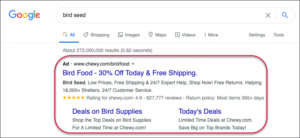
These channels grab people who already want what you sell, matching your text ads to the exact words they type into the search bar. Sure, organic traffic is free, but sitting around and hoping people find you will leave you broke.
Businesses need to use search engine marketing (SEM) to get their names on providers like Bing or Google ads. Data shows that an online search initiates 89% of buyer explorations, while sponsored advertisements attract 65% of total clicks for searches showing purchase intent.
Bidding on exact phrases guarantees your promotions appear above or right next to the regular results when people are actively hunting for a solution. This is where shopper intent hits its absolute peak. Special placements like the Shopping tab on Google build product showcases based purely on the specific terms someone types.
They capture demand the exact moment it happens.
Social Media Ads for Precise Audience Targeting
The real advantage of social media hubs like Instagram is that you can use systems like Meta ads to push your message right into a person’s daily feed based on their highly detailed personal profile. During my own early days, I threw money at anyone with a pulse, which was a very, very fast way to burn through cash.
Defining your actual goals stops the guessing game and ensures you only show up where your future customers actually hang out. A B2B software company will probably thrive on LinkedIn but look completely lost on TikTok.
Display and Video Ads for Building Brand Awareness
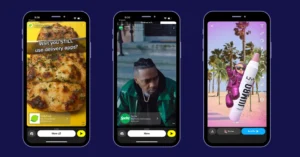
Visual formats spread your message across external websites and apps when you want broad awareness. Just make sure you set strict boundaries so your ads don’t show up on junk sites. Advertisers can run campaigns on the Google Display Network to put HTML5 graphics strictly on the pages and tools ideal buyers use every day.
Online video takes that visual strategy and puts it into motion. Marketers can push out-stream videos across the web just like standard graphics to get more reach. Or, if you want a captive audience, you can slide your commercial in before or during shows broadcast through Connected TV (CTV) and Over-the-Top (OTT) portals.

Understanding Retargeting and Remarketing
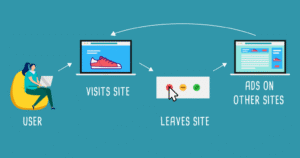
Retargeting campaigns serve up friendly reminders to bring back visitors who leave your site without buying. Watching perfectly good traffic bounce used to make my team panic until we started running follow-up banners. Statistics indicate a 0.7% click-through rate for retargeting display ads, which translates to retargeted site visitors being 70% more likely to convert.
Picture a shopper who visits your store, looks at a specific pair of sneakers, and then closes the browser. A soft reminder keeps your brand at the front of their mind when they finally decide to pull out their wallet, multiplying their engagement to a level 10 times greater than what you get from standard display promotions.
Other Formats like Native, Audio, and Email Ads
Email advertising is still an absolute powerhouse for direct engagement, serving as a highly effective and cheap digital option. I used to completely ignore my own inbox, which led me to write off newsletters altogether back when I was still figuring things out.
By writing and sending emails tailored to your specific goals, you completely bypass the noisy social media feeds. When creating the email, consider elements like the subject line and the message, along with the call-to-action. This secures a direct line to your buyers on your own terms.

Building and Launching Your First Digital Advertising Campaign
Realize that your initial digital advertising campaign won’t magically make you rich on day one. Baseline data is just bought to build a profitable system later. Write highly focused placements that speak directly to your buyers, even if the layouts look completely bare. Once the stats roll in, they will map out exactly what drives actual clicks. Trust those very, very real numbers.
Writing Ad Copy and Designing Your Creative
Spending hours over-engineering your early graphics is just a waste of time before actual behavioral data arrives. Needless to say this is the road to disaster. Back in my early digital ads agency days, I pushed a launch back three weeks just to mess with a background image. Tinkering with art feels like productive work, but the market ultimately decides.
Keep your text short. An authoritative style that targets real-world obstacles instead of just listing product features is ideal. End it with a distinct prompt that tells someone exactly what to do next.
Understanding Programmatic vs. Direct Ad Buys
This operates as an automated marketplace, which is a big shift from static direct ad purchases. Renting a physical signpost on a crowded interstate for weeks at a time is inefficient, so drop the manual buys. When you deal with programmatic ad purchasing, buyers organize their inventory using a demand-side platform (DSP). Meanwhile, web publishers offer up their space through a supply-side platform or sell-side platform (SSP). Just let the network match you up.
Automatic bidding functions like a high-speed electronic exchange. It shoots your banners across thousands of different websites in mere milliseconds.
Measuring Performance and Improving Your Ad Campaign
Touching a live digital advertising campaign in a blind panic ruins the exact baseline data you just paid good money to gather. The second those early engagement stats look grim, human nature kicks in hard. You rush the dashboard and tweak the audience settings all at the exact same time.
The resulting mess leaves you with zero clarity on what actually went wrong. Panic makes you ask what you should fix right this second. The honest answer is that you shouldn’t change anything yet.

Key Engagement Metrics to Watch
To figure out if people are actually seeing and acting on your stuff, we look at the raw volume of ad views and interactions. Start by checking Impressions, which just means the raw volume of times your layout renders on user screens.
Then log Clicks to see the total count of times users select your promotion. If you want to know the exact count of unique individuals exposed to your marketing materials, that is your Reach. And if you need the mathematical proportion of displays that lead to a user selection, figure out your Click-through rate (CTR) by using the formula Clicks/Impressions*100. If you ignore these four numbers, your dashboard is totally useless.
Platforms have different expectations based on why someone is clicking around. For social timelines like Meta Ads, getting a baseline of 1% to 2% means you are doing fine because people are just scrolling to be entertained. On the flip side, intent-driven spots like Google Search naturally command higher engagement, so those ad positions target a CTR of 3% to 5% or higher since the user is actively hunting for answers.
Measuring Return on Ad Spend (ROAS)
You must realize that true profitability tracking relies on watching the exact revenue generated per dollar spent. We track your Return on ad spend (ROAS) to compare total incoming cash directly against the funds you invested. The math is a firm rule: ROAS = Revenue from ads/cost of ads.
In a solid setup, smart companies usually shoot for a ratio sitting between 4:1 and 10:1. That means they are generating $4 to $10 in gross income for each invested dollar.
While ROAS shows you the pure revenue side of things, the Cost Per Acquisition of Customer (CPA) handles the expense of actually landing the buyer. This calculation evaluates your overall marketing expenses divided by the total amount of fresh purchasers acquired. Keep a close eye on both numbers to keep your feet on the ground. Together, they stop your business from bleeding out cash.
A/B Testing and Optimizing Your Campaigns
Changing a bunch of moving parts at the exact same time makes it impossible to figure out what moved the needle. Giving in to the urge to overhaul your headline and swap the background picture all at once breaks your controlled testing environment.
If you want real facts, you have to separate and evaluate just one specific variable per test. Change everything, and identifying the precise tweak that triggered the performance shift becomes entirely impossible.
Watching cash just vanish makes people act very, very irrationally. It is incredibly stressful to see a fresh campaign eat through your daily budget with nothing to show for it. When my own early ads bombed on the second day, I freaked out and completely overhauled the headline and audience targeting in one messy swoop.
Because I did that, the $500 I had just burned gave me zero clues about what actually caused the failure.
Best Practices
First, realize that giving algorithms total control over your ad placements will bleed you dry. When you watch your daily spend vanish, the urge to tweak everything is strong. Instead, you need to set hard limits right away to block junk traffic.
If you just accept the platform’s default settings, you are casting way too wide a net. Restricting where your ads actually show up is the only way to survive. Advertisers can even draw a sharp boundary by targeting the trademarked search terms of their direct competitors, since they are probably doing it to you anyway.

General Best Practices
I used to dump every keyword into one giant bucket, which was incredibly sloppy. However, linking every single ad group to exactly one destination URL is required. Grouping them closely keeps your search terms and landing pages locked together perfectly. Google leans on a Quality Score to push superior promotions to the front, giving them the highest placement while actually lowering your CPCs.
Strict frequency caps are also needed so you don’t drive your audience crazy. We all know video clips interrupt media that people actively chose to watch. If you bombard someone with the exact same message too often, they will either ignore you or start to hate your brand.
Displaying the same clip or sequential series to an individual too many times causes them to ignore your messages or form a negative opinion. Setting a firm baseline limit of five views per week on your recurring impressions is mandatory, otherwise viewers will form a negative opinion of you.
Channel-Specific Tips
When it comes to mobile, random screen taps inside apps will eat your cash fast. Before you launch, exclude mobile games completely and block smartphone software placements. If you see accidental clicks suddenly spike, just shut off the partner networks entirely.
On social, cramming everything into a single ad set feels easier, but it rarely works. Building out separate audience segments inside Facebook ads lets you map your promotions to different funnel depths, which naturally improves your transaction rates.
Finally, for your video spots, do not bury the lead. Presenting your company identity and hitting the viewer with a clear prompt within the initial five seconds is necessary.
Any later, and they are already gone.
Examples and Case Studies
You must first realize that lazy, set-and-forget digital advertising strategies will never beat tightly constrained targeting. You are buying narrow, highly specific behavioral data first to figure out exactly what prompts a particular group of people to take decisive action.
Blueair
Look at the air purifier brand Blueair and their marketing agency Tinuiti.
When they pushed the Blue Pure 211i Max, they used the Amazon Ads Audio generator to grab attention inside homes. They ran interactive smart-home ads testing different masculine and feminine voices alongside a highly direct prompt for Alexa.
The ads told listeners to literally say “Alexa, add-to-cart” out loud in their living rooms. Response metrics immediately shot up 3x higher than standard voice interaction baselines. This caused a massive shift in how shoppers bought the product. Cart additions skyrocketed, driving a 94% increase over the 2024 baseline and generating 45.3% new-to-brand detail page views at the same time.
Experience Abu Dhabi
You see the exact same logic playing out in video campaigns across different platforms. Experience Abu Dhabi completely reframed their city as a year-round destination by ruthlessly restricting their viewing placements. The tourism board teamed up with Amazon Ads for the 101 Abu Dhabi Do’s project.
However, broad internet reach was never the primary objective for this specific media buy. They refused to purchase generic inventory and instead deployed the campaign securely on Prime Video, connected television, and Twitch. A family living room guarantees a captured audience rather than a distracted person scrolling on a mobile phone.
This highly targeted approach helped them reach over 18 million unique people. They steadily accumulated more than 39 million impressions strictly across those high-attention environments, landing a 91% video completion rate.
You should restrict your placements to known, vetted spots and demand total attention from your target audience right from the launch. If your selected viewers start dropping off early, kill the underperforming channel immediately. Leaving it running just wastes cash.
Lancôme
Lancôme followed a very, very similar restricted path for the regional launch of La Vie est Belle Rose Extraordinaire. To ensure appropriate visibility, the cosmetics company teamed up with Prime Video in Spain to back the film The Idea of You, specifically reaching out to women aged 35 and older.
That severe focus paid off. The specific campaign wound up delivering impressions at 5 times the initially planned volume. Because they locked down the core audience so tightly, a massive 40% of those views happened in the first four days.
Throughout the promotion, they also maintained a 1.2 times average exposure rate. The early impression surge completely validates their disciplined strategy. Once you get that baseline data, you only adjust one single setting moving forward.
If you start changing more than one variable because you are in a panic to improve delivery, your entire statistical test fails. Changing multiple creative elements destroys the precious baseline data you just paid to get. A broad campaign feels safe, but it actually buys you nothing useful. Run tight, deeply methodical experiments to generate undeniably necessary facts.
Ogilvy
Over in the car market, Ogilvy forged a distinctive identity for Volkswagen just by selling peace of mind. While competing campaigns aggressively listed technical specs, this specific approach constrained the messaging entirely to isolate the exact consumer response the brand needed to track.
Droga5
Droga5 embraced the same severe limit in the High Stakes Beer Ad for Molson Coors in 2023. There is absolutely zero room for error when buying this foundational data. You have to protect your hard-won metrics from regulatory missteps that will trigger instant platform penalties.
Understanding Digital Ad Privacy and Compliance Rules

The basic rules around data protection decide if your ads stay online or get pulled. I will tell you how they work before you waste a single dollar on a dead campaign.
Treating user privacy rules as a lazy afterthought just hands the platforms an excuse to ban your account instantly. But here’s the thing: playing loose with compliance also destroys the foundational trust you need to actually convert a random click into a real sale. Once you burn that audience confidence, getting it back is almost impossible.
Since third-party cookies are fading out, you have to build your own first-party data systems. Setting up your website correctly from a technical standpoint makes getting past these legal hoops much faster.
Key Privacy Laws You Need to Know
And now we’re in territory that matters to a lot of people. Blowing off regional privacy laws will drain your ad budget fast. I completely ignored these legal frameworks on my early campaigns, mostly out of pure laziness.
Today, any brand running ads has to respect the DAA Principles at a baseline, while simultaneously following regional laws like GDPR in Europe and CCPA in California.
Mobile platforms now drop the hammer on bad data collection by cutting off your analytics feeds. If someone on iOS 14+ tells their device to block tracking, Facebook doesn’t just look the other way.
Under those tight restrictions, the social network will only pass back data for up to eight chosen priority metrics you set up beforehand. Anything outside that short list simply doesn’t exist to the algorithm.
The Role of Self-Regulation and AdChoices
The DAA manages consumer preference sharing by relying on specific tools and tokens. Internet shoppers want a clear way to opt out, so you have to give them one. You set up WebChoices to cover data collection across desktop browsers and mobile sites.
Sure, doing this takes extra time, but skipping it means risking your entire account. For native phone programs, you configure AppChoices to handle user settings right inside the mobile ecosystem. If you happen to track people across different channels, you run the YourAdChoices token utility to handle preferences in diverse environments where users get identified via tokens.
Adding a simple visual opt-out badge is step one for building trust with your audience. I constantly see rookies skip this setup completely. You have to include the specific AdChoices Icon because studies show 88% of Americans fully expect to see targeted ads. Giving them that familiar badge reassures them, especially since a massive 85% of buyers actively recognize it.
FAQ
Take the example of a beginner who trips up and burns a lot of cash by confusing two totally different games. They mix up the patient, relationship-building grind of organic marketing with the ruthless, fast-paced economics of paid ads. Trust builds slowly with one, but instant data is bought with the other. Since they run on completely different timelines, getting these early choices right is critical. Let’s clear up some common questions.
What’s the difference between digital advertising and digital marketing?
Marketing is your long-term play for organic value, while ads guarantee immediate visibility because you pay for it. I used to waste weeks staring at zero-traffic blogs hoping for a miracle instead of just swiping a card to force eyes onto the page. The smart players don’t sit around waiting for organic traffic to show up. They just buy it.
If you stick purely to marketing, you are laboring away in obscurity, grinding out content and focusing on SEO to slowly win people over. Ads skip the line by using CPC or CPM pricing so you can grab attention right this second.
How much should I spend on digital ads when I’m just starting?
Realize that a really small budget is all that is needed to get baseline performance numbers. I used to blow huge budgets on completely unproven concepts, but these days our team always starts super conservative. You can run early tests on Google Ads (where you might pay $1 to $2 per click) and buy the exact data you need to figure out what works. A baseline campaign literally requires only $5 a day.
Which digital advertising platform is best for B2B?
Selling to businesses requires putting the message where exact buyers actually hang out. I once threw cash in the trash trying to reach executives on casual apps, totally ignoring audience context. Stop guessing about your audience’s habits. Testing the waters across Facebook, Google, YouTube, Pinterest, and Twitter makes sense, but enterprise leads live on LinkedIn. Conversely, TikTok will probably give you absolutely zero results.
Do I need to hire an agency for digital advertising?
Do upfront costs sting when agencies give you specialized skills and serious speed? I used to try designing my own creatives out of pure stubbornness, and I failed every single time.
That kind of ego just delays your market entry. Speed increases drastically by handing off creative strategy to shops like Wieden+Kennedy or Droga5, letting Ogilvy run your integrated campaigns, or having Outbrain Brand Studio lock down native placements on Outbrain-owned networks.
What are common digital advertising services?
Specific technical work from entirely different disciplines across various platforms makes digital campaigns complex. By the end of week one, you should hire a traffic manager to build the actual campaigns and get graphic professionals to handle your landing pages. From there, your product teams can create attractive buyer incentives, while your content writers turn out engaging articles to reel in a cold audience.
What types of companies offer digital advertising?
When you hit the enterprise level, agencies get deeply specialized in entirely unique strategies. I once hired a brand studio to solve a direct-response problem, and it drained my budget very, very quickly. The invoices always arrive on time regardless.
Your first digital advertising campaign was a calculated purchase of baseline data, nothing more. You bought narrow behavioral facts to figure out what actually prompts your specific buyers to act, and now those hard numbers do the heavy lifting. Pick one platform, cap your spend tight, and refuse to touch a single variable in a blind panic. The discipline is simple: buy the metrics, watch the numbers, and kill what fails fast.
From here, you scale what the data already proved works. Trust those very real numbers over your gut, respect the privacy rules that keep your account alive, and change just one setting at a time so your test never breaks. Do that, and digital advertising becomes the profitable, measurable system you were building toward all along.