Let’s look at the sheer scale of this: Google processes 3.4 million searches for a “dentist” every single month, plus another 1 million queries specifically targeting local “dental clinics”.
If you want to grow a dental practice today, you have to get in front of local patients right when they need you. One of the best ways to build a defensible business is to treat your search presence like a high-value asset.
A solid search strategy is the most reliable way to bring in steady, high-value patients without burning cash on rising ad costs. Patients trust natural rankings way more than those paid banner ads that look like desperate sales pitches.
Done right, this positioning sends highly qualified traffic straight to your high-margin treatment pages (think cosmetic cases, dental implants, or Invisalign etc). It takes some time to build, but the payoff is massive.
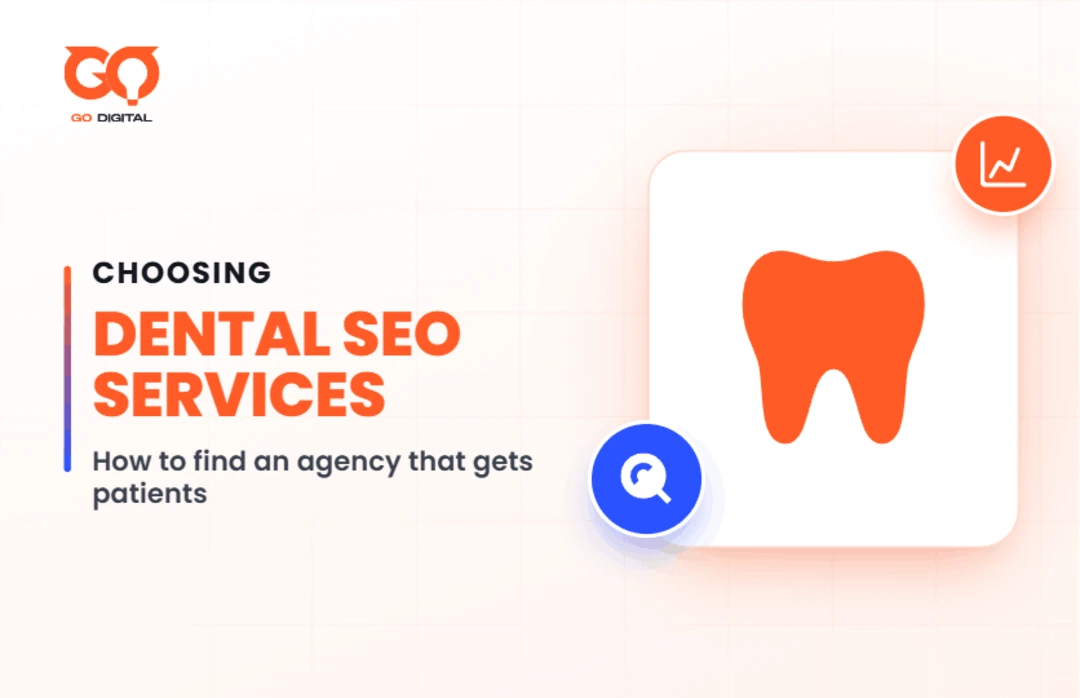
The hard part is finding a Dental SEO Services agency that actually knows what they’re doing. Most busy practice owners get burned by empty promises because they treat marketing as a simple expense. But if you want to expect A+ output from them, you have to change how you look at the numbers.
Setting Your SEO Budget and Calculating ROI for Dental SEO Services
When you treat search marketing like a basic bill to pay instead of a key member of your team, you naturally default to picking the cheapest option on the table. That is a massive trap. Cheap packages hide huge liabilities that will destroy your visibility.
The reality is that your budget has to fit your actual market and what your patients are actually worth over the long run.
Typical Pricing for Dental Practice SEO Services
If we look at the industry data compiled by Titan Web Agency, the numbers break down into a few clear tiers.
Basic local setups run anywhere from $500 to $1,200 a month, while aggressive campaigns built to completely dominate a competitive market can easily scale to over $5,000 a month. For suburban offices looking to build a really strong presence, comprehensive plans usually run upward from there.
This brings the typical baseline for a solid, full-scale campaign to about $1,000, $3,000 per month for most healthy dental offices. If you want to pay less than $1,000, you are getting cut corners. If you are paying over $3,000, you should be expecting serious, multi-location dominance.
Calculating Your Practice’s SEO Return on Investment
The math behind these campaigns is actually incredibly simple. To give an example, let’s look at what a patient is actually worth over their entire relationship with your clinic. If a typical patient brings in $653 a year and stays with your practice for ten years, that single new patient represents a substantial $6,500 lifetime value.
Now, if your organic search campaign brings in just 5 new patients a month, those patients bring in a massive $32,500 in lifetime value. If you project those modest figures over a twelve-month period, that reliable stream adds nearly $390,000 in estimated future earnings to your business.
Instead of throwing away cash on cheap monthly retainers that do nothing, you are buying compounding cash flows that grow your practice over time.
SEO vs. Paid Ads: Where to Invest First
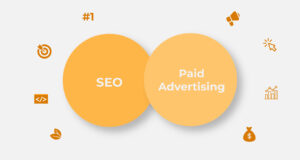
Running paid ads is exactly like renting an office space. You get instant placement at the top of the page and immediate traffic, but you are building absolutely zero equity for your brand. The moment you stop paying the bill, the faucet shuts off and the patients vanish.
If you just opened a brand-new practice and desperately need to fill open chairs to cover rent, paid ads work incredibly well to get people through the door. But once your schedule is relatively stable, shifting your budget to organic search builds a permanent client acquisition machine that won’t dry up overnight (though you have to be patient to see those rankings kick in).
Ultimately, you hold a valuable digital asset that generates traffic independently. When you look at how people actually use Google, organic listings capture a wildly high 94% of all user clicks, meaning most people ignore the paid ads completely.
Even better, the top organic positions get a click-through rate that makes them 18.9x more effective than paid placements.
How to Choose The Right Dentist SEO Agency
You’ve got to treat hiring an SEO agency exactly like bringing on a highly trained clinical specialist. If you approach this like you’re buying a commodity, you’ll end up with copy-paste strategies that burn your hard-earned budget on vanity metrics that don’t help pay your office rent.
Instead of treating this like a software subscription, you should run a sales process on potential partners to figure out if they can actually drive patients to your chairs. Strip away all the fancy sales pitches and focus on one simple question: can they prove they’ve driven real, booked appointments for high-value dental treatments?
Your First Step: Auditing Your Current Online Presence
Before you even think about talking to a slick agency salesperson, you need to know where your website stands today. Go run a basic technical audit of your own site using free tools like PageSpeed Insights and a mobile-responsiveness test.
Your goal is to find at least three critical technical errors before your first discovery call. Having this raw baseline data in your hands means you can easily gauge whether an agency is selling you real improvements or just repackaged air.
Key Questions to Ask a Potential Dental SEO Marketing Agency
The first discovery call is where you separate the real dental marketing experts from generalist agencies that don’t know a crown from a root canal. Put them on the spot right away by asking for case studies that show how they ranked current clients for highly competitive treatments like cosmetic dentistry, dental implants, or Invisalign in tough markets.
A true dental search specialist won’t flinch; they’ll immediately walk you through actual ranking histories and clear patient acquisition numbers.
Another signal you should be looking for is how they plan to adapt as search engines evolve. You need to know if they’re ready to handle upcoming disruptions like GEO, AEO, and Google’s AI Overviews. You must also ask how frequently they will deliver clear performance updates.
Ask them for a clear breakdown of monthly costs and make sure you retain total legal ownership of your website files and domain access from day one.

Identifying Red Flags in SEO Proposals
Run away from any agency that promises guaranteed page-one rankings. Because search engine algorithms are closely guarded secrets owned entirely by companies like Google, no honest marketer can ever promise a specific spot.
I remember Dr. Robert Vance in Dallas, who lost nine months of his marketing budget to an agency that guaranteed top spots but ultimately brought him zero actual patients. If a proposal guarantees rankings, treat it as a massive warning sign.
You must also ensure your practice retains absolute control over your core digital assets (think domain registration and web hosting) because losing access during a contract transition can destroy your entire online presence.
Some agencies will try to host your site on their private servers or block your administrative access to keep you trapped. Never let an agency hold your website hostage like that.
Specialist vs. Generalist: Choosing an SEO Agency for Dentists
Choosing a generalist advertising agency to handle your practice’s digital presence is a major mistake in a competitive local market. While a general firm can easily update your basic meta tags, they don’t understand how to capture premium patients who are looking for specialized procedures.
By targeting precise search terms like “emergency dentist” and “dental implants”, a specialist ensures your marketing spend goes directly toward patients who need high-value clinical work right now.
Too many practice owners still pick agencies based on cheap monthly retainers rather than actual, industry-specific expertise. There’s a massive operational gap between an agency that spends its days ranking local plumbers and one that understands the true case value of a dental patient.
Building a highly defensive practice asset requires a specialized search partner who treats your online visibility as a serious business investment.
Tracking Performance After You Hire an Agency
Watching your keyword rankings climb or seeing a spike in raw traffic feels great, but it is often just a distraction designed to keep you paying your retainer. Those numbers don’t pay your staff or cover your lease.
If those web visitors never pick up the phone, never fill out a form, and never walk through your front doors, your marketing budget is just draining away. You need to demand real transparency from your partner and look past the complex jargon that many search marketers use as a shield.
Traffic is just a minor sign of life, while the only metric that actually keeps your practice healthy is your stream of new patients.\

Key Metrics That Actually Matter for Your Practice
To make sure you get a strong return on your investment, you have to track exactly where every single new patient comes from. Your agency’s reporting dashboard must show you five key data sources clearly, with zero room for ambiguity.
A proper setup has to track phone calls, form submissions, online bookings, chat interactions, and map direction clicks. If any of these channels are left untracked, you are completely blind to which parts of your campaign are actually driving revenue and which parts are just wasting your hard-earned budget.
What to Expect in Your Monthly Reports
A solid monthly report should give you clear proof of what your agency did over the past thirty days to earn their check. It needs to show you exactly how they track your calls and what content they published. Before you agree to any marketing plan, ask them to show you how they set up Dynamic Number Insertion (DNI).
This tool automatically alters the phone numbers displayed to natural search visitors, allowing you to trace each incoming call to its precise origin online while keeping your NAP profile completely consistent and clean for web indexes.
Make sure you also run at least five test calls yourself to verify everything works before you let them run wild with your budget.
If your marketing company says they are optimizing your site but they never touch your blog, they are ignoring the engine of organic search. To keep your practice highly visible and build trust with search engines, you must have a consistent content plan where your clinical blog features fresh articles at least biweekly.
If they tell you that blogging doesn’t matter or that once-a-month updates are fine, they are cutting corners. Google rewards active, authoritative sites, and your clinical blog is the perfect place to show both search engines and potential patients that you know your stuff.
Tracking all of this manually is a nightmare (though you might get away with it if you only receive a couple of calls a day), and as you scale, that system will completely break. To protect your practice from messy lead data, you need to set up Google Analytics and use Dynamic Number placement technology to automate your tracking.
It is the only way to get a clean, honest look at your return on investment. Get ready to ask some tough questions about these metrics during your next performance review with your agency, and don’t accept hand-waving answers.

What Good Dental SEO Services Actually Do
Lasting market control happens when all your digital efforts work together as a single, unified machine. Your technical site health, local visibility, clinical authority, and booking page conversions must feed into one another constantly.
Cheap dental SEO agencies will sell you isolated, basic tasks like keyword stuffing or quick directory submissions because they lack the technical skills to manage a unified strategy, sending your rankings into a slow death spiral.
You won’t get real results until you force your technical architecture, local footprint, structured data, and patient-first content to run as a single, highly coordinated system.
The Foundation: Website Health
If your website has technical issues under the hood, it’ll quietly kill your search rankings no matter how much you spend on great patient-focused writing. Search engine bots will simply walk away from a broken site.
You must completely wipe out outdated, clunky scripts like Flash, Silverlight, or iFrames, and clean up any 404 errors, because these technical roadblocks stop search crawlers from reading your key service details and verifying your professional credentials.
Before you sign a contract for any new marketing help, try running a quick health check yourself. First, run your site through Google PageSpeed Insights to see how fast it loads. Second, go to Google and type in `site:yourdomain.com` to make sure you have at least 15 clean pages showing up in the index.
Finally, pull out your phone and test the mobile layout to ensure a patient in pain can easily find your navigation and tap your phone number to call you instantly.

Winning Your Neighborhood with Local Dental SEO Marketing Services
A lot of practice owners think that just having an address somewhere online is enough to bring in local patients, but that’s a major mistake. You need to actively claim and manage your Google Business Profile and Yelp listings if you want to capture the people searching in your immediate area.
Choosing the right category for your profile will make or break your local search footprint. For instance, Matthews Family Dental in Austin realized this and changed their primary category from Dental Clinic to Dentist, which literally doubled their local search impressions in only 30 days.
It is critical that your NAP (Name, Address, and Phone) information matches 100% across every web directory, such as Yelp, Facebook, Healthgrades, and local listings. Humans are smart enough to figure out that “St.” and “Street” mean the same thing, but search engine algorithms aren’t.
Even tiny differences in formatting will confuse search spiders, drop your local rankings, and send ready-to-book patients straight to the practice down the street.

Attracting Patients with Content and On-Page SEO
Stop grouping all your treatments onto one generic services page that fails to highlight your unique clinical skills and misses out on local search terms. Avoid bundling all procedures onto a single page. Modern search engines want to see highly specific, expert-written pages for your primary offerings.
Publishing detailed, individual pages for high-value treatments like Dental Implants, Invisalign, Teeth Whitening, and Root Canals allows you to speak to patient worries and showcase your actual technology.
Once those pages are built, you need to use a clean, standardized title tag structure on every single one of them to catch high-intent local searches. Make sure your meta titles always follow this clear format: Primary Service + in + City | Practice Name.
Building Authority with Reviews and Backlinks
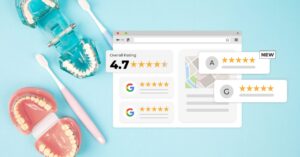
Getting a steady stream of real patient reviews is a huge authority signal that cheap marketing agencies almost never get right. Those reviews are what actually convince people to book. In fact, industry data shows that 84% of people trust online reviews just as much as a personal recommendation from a friend.
Since Google remains your absolute priority for clinical search traffic, you need a reliable, daily system to request feedback on Google, Facebook, Yelp, and Healthgrades right after patients leave the chair, while also making sure you professionally handle any negative reviews.
Showcasing these real patient stories directly on your website will elevate your rankings on both Google and Bing while turning casual searchers into scheduled appointments.
Adapting to AI and Voice Search
To keep your practice visible as search habits shift, you have to format your content for generative artificial intelligence. This is known as Generative Engine Optimization (GEO), and it simply means structuring your site’s information so AI platforms can easily pull your details and credit your practice.
Modern systems like Google’s AI Overviews, ChatGPT, and Perplexity are constantly scanning the web for trustworthy sources, and they want to point users to sites that show clear, real-world clinical expertise.
You also need to adjust your writing style to match the way people naturally talk when using voice assistants like Siri, Alexa, and Google Assistant. During these verbal searches, patients often add location-based terms such as “near me”.
To capture this traffic, write your copy in a conversational tone and build out helpful Q&A sections that address these natural questions.
Building Patient Trust with High Search Rankings
Google holds medical and dental websites to a massively higher standard of trust and safety than typical local businesses. Proving your clinical expertise online means aligning your entire digital footprint with Google’s strict E-E-A-T guidelines. It takes real effort to build this level of content and technical quality, but it’s the only real way to construct a highly defensive marketing asset that protects your business for years to come.
Frequently Asked Questions About Dental SEO
Most highly successful clinics rely on web marketing to fuel the bulk of their local visibility and keep patient chairs full. Instead of writing SEO off as a random, unpredictable cost, you need to view this channel as a strategic asset.
It is the most predictable engine you have to scale your clinical revenue. If you talk to any practice owner who is actually growing, they will point straight to their search footprint as the reason. A healthy clinic should easily pull in at least twenty fresh patients every single month from organic search alone.
What’s the difference between dental and general SEO?
Optimizing a dental website is a completely different beast than marketing a local retail store. When people look for a dentist, their physical health is on the line. Because of this, search engines apply incredibly strict standards to medical content to protect searchers from bad advice.
If you try to get away with lazy tricks like keyword stuffing, Google will bury your site instantly.
Because clinical treatments have a direct impact on how people feel and live, search platforms put dental sites into a high-stakes category called ‘Your Money or Your Life’ (YMYL). To win here, your clinical service pages must show real authority and medical accuracy, which is what Google calls E-E-A-T.
A specialized partner knows how to build this trust while going deep on high-value terms like “emergency dentist” and “dental implants.” These high-intent search terms get actual patients into your chairs for big-ticket procedures, making your marketing spend far more profitable over time.
Can I do my own dental SEO?
Do you really want to spend your evenings fixing website code instead of relaxing after a long day of clinical work? Spend your clinical hours seeing patients (which actually makes money) instead of messing with metadata, schema, map citations, or local directory listings.
A healthy search presence should pull in 25 to 40 percent of your total new patient volume. Against aggressive Dental Specific Organizations (DSOs) backing corporate competitors, a practicing clinician simply does not have the hours to keep up.
How does my website design affect SEO?
The way people interact with your website has a massive impact on your Google rankings. Google pays close attention to how actual humans behave on your pages. If you want to rank, your site must load instantly, work perfectly on mobile, use clear headings, and offer helpful content (think post-op care guides, patient prep instructions, etc.).
Make it painless for people to find what they need, and make sure your online booking button is front and center so they can schedule with one click.
Why are online reviews so important for dentists?
Every star and comment left by your patients directly shapes how Google measures your clinic’s credibility. The algorithm looks at review velocity, recency, sentiment, and volume to figure out if you deserve to sit in the local map pack.
Consistently bringing in new reviews on your Google Business Profile tells both search engines and local searchers that your practice is active and trusted. Digital trust has replaced old-school word of mouth.
To back this up, the 2023 BrightLocal Local Consumer Review Survey found that 84% of people trust online reviews just as much as a personal recommendation. That same study showed that 87% of consumers used Google to research local businesses over the year.
How long does it take to see results from SEO?
Think of search engine optimization as training for a marathon rather than running a quick sprint. You should anticipate preliminary shifts in your search standing within 3 to 6 months.
This ramp-up period is necessary for Google’s spiders to discover updates and verify credentials. Turning those rankings into a measurable, positive return usually takes 6 to 12 months. That said, you do not have to wait a year to figure out if your agency is actually doing their job.
Use this to your advantage. Run a simple test from your office computer today. If you have been investing in search optimization services for over 30 days but your practice remains invisible during a “Dentist near me” search from your office lobby, you need to demand some serious answers.