Social media has become one of the most influential channels in modern digital marketing. Billions of people use Social platforms such as Facebook, Instagram, LinkedIn, TikTok, and X every day to consume content, interact with brands, and discover new products.
This environment creates strong opportunities for businesses to reach potential customers through social advertising. Instead of relying only on organic posts, companies can promote their products and services through paid campaigns that appear directly in social media feeds.
This guide by Golden Owl Digital explains what social advertising is, how it works, why it matters for businesses, and how you can run effective social advertising campaigns.
What Is Social Advertising? The Basics Explained
As part of digital marketing, social advertising, also called social media advertising, means buying ad placements across social networks to put promotional messages in front of a defined audience.
On social feeds, unpaid posts live or die by algorithmic publishing and distribution choices, since those systems decide what people see. Advertising lets a business pay to show up and pick who sees it. A standard post may get buried beneath endless updates, while a paid placement is designed for selected users.
Businesses can promote products or services on Facebook. Instagram and YouTube do too. Rather than tossing generic banners at unrelated audiences, these ads can show up in feeds or stories beside content people already scroll through and engage with, as well as in reels.
Social ads are paid messages delivered through a social network. Advertisers buy placements based on demographics, interests, behaviors, and what users plan to do, reaching beyond the unpaid distribution available to organic posts.
Unpaid activity grows an audience over time. With paid social ads, you have a more dependable way to put your message in front of carefully chosen users, because you control the budget and audience settings. Set your budget and audience settings, then measure the outcomes.
Free posts can have a hard time getting noticed. In feeds packed with competing content, paid social placements can put a company in front of prospective customers who may not know the business exists yet.
Ipsos ASI presents a simple formula for the relationship: Reach = Paid Reach + Earned Reach. Paid Reach covers people who see an ad because the advertiser paid for that exposure. Earned Reach covers the extra visibility created when people engage with an ad, such as by sharing it or commenting on it, then show it to their own networks. The concept appeared in a 2012 presentation and says total impact combines the audience bought with the audience encouraged to respond.
How Does Social Advertising Work?
When people use social apps, those apps log age, location, interests, browsing behavior, device usage, and interaction history. Advertisers don’t see personal data files, though they can build defined audience groups.
Social ads reach people according to the moment they’re in. Keep your website-visitor audience distinct from people seeing the brand for the first time. A site visit, a search for solutions, or a casual feed scroll may each call for its own message, since one ad rarely suits everybody.
Strong creative alone won’t carry a campaign. The audience and message must align with the timing.
That is the basic process.
- Targeting: Advertisers define the intended market with demographics, interests, and behaviors. Social networks offer advanced settings for reaching specific user segments.
- Advertising Content Creation: Advertisers prepare relevant text, images, or videos for the platform and ad format. The material should mean something to the intended audience and support the campaign objective.
- Campaign Setup: Using the platform’s advertising interface, advertisers organize the campaign and set the budget, timetable, and bid strategy that guide delivery.
- Advertising Placement: Ads can appear in user stories, social media feeds, and other locations the platform designates. The chosen network and format shape where each ad appears.
- Budgeting and Bidding: Advertisers submit bids to compete for delivery to the intended audience. They also set a daily or lifetime budget to limit campaign spending.
For marketers running several locations, social advertising provides substantial reporting and audience information. Campaign data can show how ads perform during a run and after it ends, while the platform retains the record, then help guide later campaigns and strengthen general and local social media advertising strategies.
Social media platforms give you ad performance figures and other insights. Track impressions, clicks, conversions, and engagement, then use the results to judge whether the campaign is working and make your decisions.
Performance data arrives through real-time analytics, so marketers can keep adjusting campaigns as it comes in. New results can shape the next adjustment.
Why Is Social Advertising Important for Your Business?
Reach Your Exact Target Audience
Meta Ads Manager gives Facebook and Instagram three distinct audience types, so you have more say over who sees your message. Broad reach only goes so far.
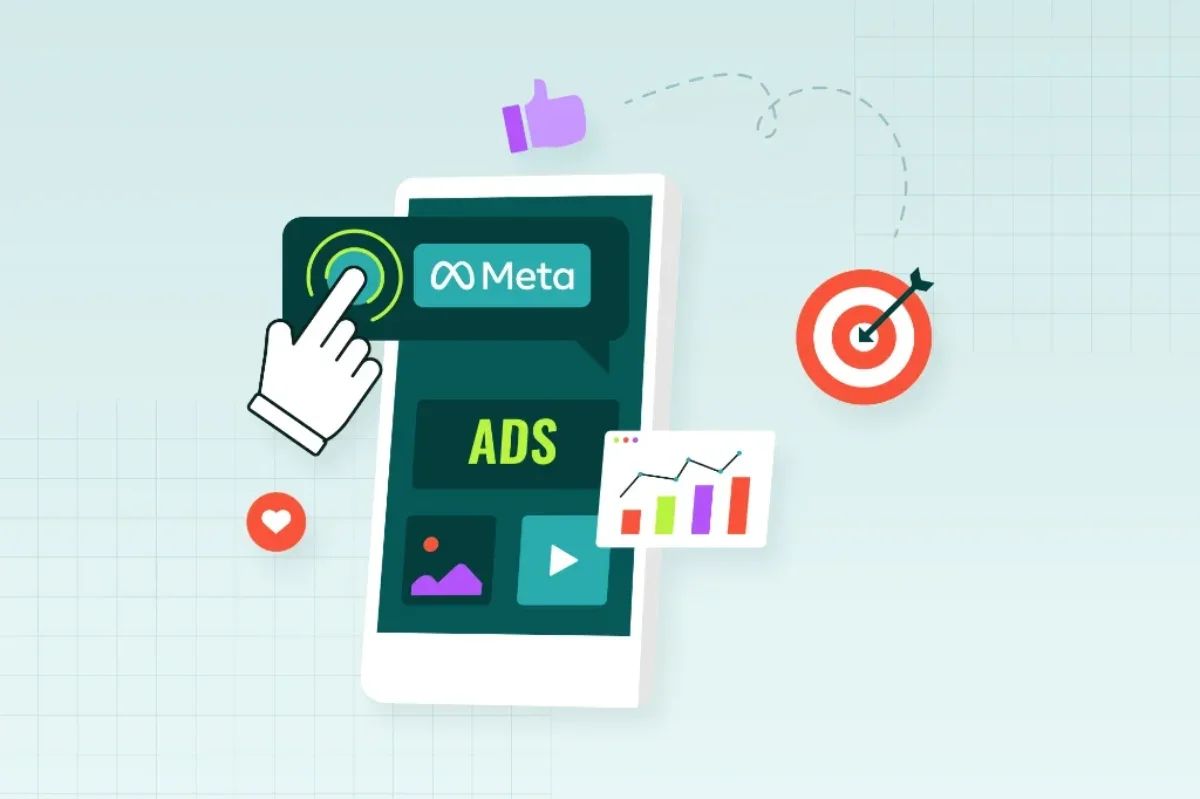
Ads can be directed toward:
- Specific age groups
- Specific cities
- People with certain interests
- People who have visited your website
- People who have interacted with your previous ads
That level of control is precision targeting. Your budget doesn’t have to chase people with no connection to your offer; it can stay focused on users who are more likely to care. A solid grasp of social media advertising helps you define the audience carefully instead of relying only on broad exposure.
Age, interests, behavior, and even likelihood to buy can all tighten delivery through audience settings. Meta offers three main audience categories:
- Core Audiences: Adjust the audience using factors such as age, interests, geography, and other characteristics.
- Custom Audiences: Reach people from contact lists, website visitors, or app users who have already expressed interest in the business.
- Lookalike Audiences: Find new consumers whose interests resemble those of the business’s strongest customers.
- You can refine Core Audiences using several types of information:
- Location: Choose particular countries, cities, or communities where the advertisements should appear.
- Demographics: Define an audience by age, gender, education, job title, and other demographic details.
- Interests: Facebook offers nine main interest groups, each with dozens of interests. Altogether, there are over six million interests available for selection.
- Behavior: Use signals tied to a consumer’s previous purchases and device usage.
- Connections: Include people connected to a Facebook Page or leave them out, depending on whether the campaign needs a broader audience.
Together, these choices shift a campaign from general visibility to a group selected for likely business relevance.
Achieve Higher Conversion Rates
More than 67% of U.S. consumers have made a purchase after seeing a brand’s social media post. Social media sites also let advertisers build custom audiences instead of sending everyone the same message.
Major social media sites give advertisers detailed audience controls and targeting measurements for each campaign. When you build those groups with care, ads are more likely to reach consumers who want, need, or are considering what your business sells.
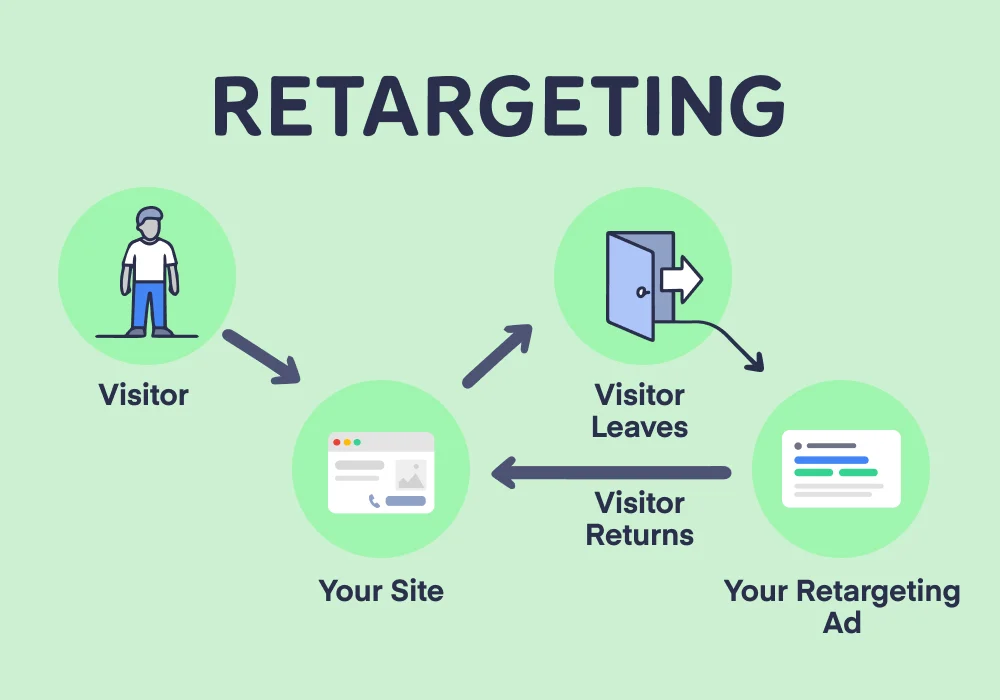
Retargeting gives you another route to stronger results. It can reconnect with leads, bring interested people back into the conversation, and support lead generation. Delivery follows a user’s interests and earlier actions instead of relying on a random spin of the wheel.
For someone already following fitness content, an ad for gym products may feel especially relevant. The sequence usually looks like this:
- Relevant advertisements attract clicks.
- Clicks can become leads.
- Leads can become customers.
- An ad can ask for one clear action, such as downloading an app, signing up for a newsletter, or making a purchase. Those responses can raise conversions and give you a measurable return on investment, or ROI.
Retargeting is especially useful once someone has shown strong interest in buying. Picture a customer visiting your site, adding a product to their cart, getting distracted, and leaving before ordering, a familiar loose end online. A social campaign can remind them about that same product while they scroll through Instagram, after an action they already took.
Get a High ROI on Low Costs
Social advertising can reach a sizeable audience without the spend attached to several older channels. A social advertising campaign can reach approximately 2,000 people for $75.
The numbers make the gap clearer: mail reaches 2,000 people for $900, while a newspaper reaches the same number for $250. Older advertising gives businesses less control over exactly who sees the message.
Social ad campaigns let advertisers check results and adjust ads and selected audiences quickly. Daily, campaign-specific, pay-per-click, and impression budgets can be set across several social media networks.
You can run social advertising in practical stages:
- Start with a small budget.
- Try different creatives.
- Increase spending only on approaches that produce results.
- Monitor every rupee spent.
Real-time reports show which ad creates useful activity. Stop the underperforming ad, then put more attention behind the stronger one; that control over spending and performance helps small and medium businesses.
Access Powerful Data and Insights
Social advertising data can also guide other parts of a multi-location business. Results may reveal the ideal customer profile, how people view the brand, or ways to improve the customer experience promotion strategy.
This data can answer questions like these:
- Which age group buys more?
- Which location converts better?
- What type of content works?
- What time produces more engagement?
What you find can shape more than one campaign. It can improve the wider promotion plan by showing responsive audiences, strong locations, messages that earn attention, and times when engagement is more likely.
Support the Entire Customer Journey
Beyond immediate sales, social advertising can support people through every stage of their relationship with a business:
- Awareness: People discover the brand.
- Consideration: They compare the available options.
- Decision: They make a purchase.
- Retention: The business retargets them and encourages them to return.
- Advocacy: They recommend the business to others.
Customer needs change at every stage. Campaigns can introduce the brand, help interested users weigh choices, encourage a purchase, bring previous customers back, or support recommendations. This flexibility lets campaigns address changing needs throughout the relationship.
Best Social Media Platforms for Running Ads
Several social media platforms provide powerful advertising ecosystems. Businesses choose platforms based on audience demographics and marketing goals.
As of 2025, Facebook has around 2.8 billion users worldwide, an increase from 2.6 billion users in the previous year. This massive user base continues to make Facebook one of the most powerful platforms for social advertising.
Facebook supports a wide range of ad formats, including image ads, video ads, carousel ads, and lead generation ads. These formats allow businesses to present products and services in different ways depending on their marketing goals.
Many companies use Facebook ads to reach broad consumer audiences and promote products or services at scale. For example, a retail brand may run carousel ads that showcase multiple products within a single campaign and encourage users to explore the full product range.
In January 2025, Instagram ads reached approximately 1.74 billion users globally, which highlights the platform’s strong advertising reach.
Instagram focuses heavily on visual storytelling and creative content. Brands in industries such as fashion, beauty, and travel often achieve high engagement because the platform emphasizes images and short form videos.
For example, a skincare brand may run short Reels ads that demonstrate how a product works through quick tutorials or simple before and after results. This format allows brands to present products in an engaging and easy to understand way.
LinkedIn serves as a leading platform for B2B advertising. Companies frequently use LinkedIn ads to generate leads, promote industry content, and reach professional audiences.
For example, a software company may run sponsored content that promotes an industry report to professionals in specific job roles or industries.
TikTok
TikTok is estimated to have nearly 2 billion users worldwide while being one of the fastest growing social advertising platforms.
TikTok focuses on short form video content that encourages creativity and user engagement. The platform’s content style allows brands to communicate messages in a more dynamic and entertaining way.
Many businesses use TikTok ads to showcase products through engaging demonstrations or storytelling videos. For example, a mobile app company may run short video ads that demonstrate how the app works and highlight key features in a simple and engaging format.
X
X supports real time conversations and trending discussions. Businesses often use X ads to promote events, announcements, or industry updates.
For example, a technology brand may promote a product launch announcement during a major industry event to reach audiences following the conversation.
How to Create a Social Advertising Strategy
This kind of campaign takes more than decent creative. Build a plan that connects the goal, audience, platform, budget, and next action, or the platform will make those calls for you.

Define Your Business Goals
Give every social ad or campaign a clear business objective first. It might focus on Brand Awareness, leads, sales, or bringing more visitors to your website.
A defined goal keeps the campaign pointed somewhere. Typical social media strategy objectives include:
- Brand Awareness: Build visibility with the right audience and help people get familiar with the brand, product, or service.
- Drive Website Traffic: Send users from a social media platform to the website, where they can learn about a product or possibly buy it.
- Generate Leads & Sales: Collect the information you need from potential customers and move those prospects toward becoming paying customers.
- Boost Customer Engagement: Encourage likes, shares, and comments while building a community around the business.
- Build Customer Loyalty: Build lasting relationships with current customers and encourage repeat purchases.
Loose goals make the choices that follow tough to judge and leave the campaign hard to guide. “Get more engagement” offers little to measure, while “generating 50 qualified leads this month” or “increase online sales by 10%” gives you a real scorecard. Let that goal steer the audience, platform, creative, budget, and measurement decisions.
Target the Right Audience
Start audience planning with the people you want to reach. Study their traits, interests, and habits, then use targeting options to find the right audience groups.
These steps can tighten that picture:
- Build a buyer persona around the audience’s behavior and motivation.
- Use CRM information, website visitors, and past customers to collect first-party data.
- Find lookalike audiences to expand segments that have already shown promise.
- Review the audience’s combined interest and behavior settings for more precise targeting.
Knowing the target market is only part of the job. You also need to understand what people value and how they behave, since that shapes your settings and message.
Choose and Understand the Social Media Platform
Pick social media sites that suit both the audience and campaign purpose. Usually, the best choice is where those people already spend time and engage.
Each network comes with its own user mindset and place in the customer journey. Its algorithms also shift with user preferences. Treat them all alike, and ad spend starts going to waste.
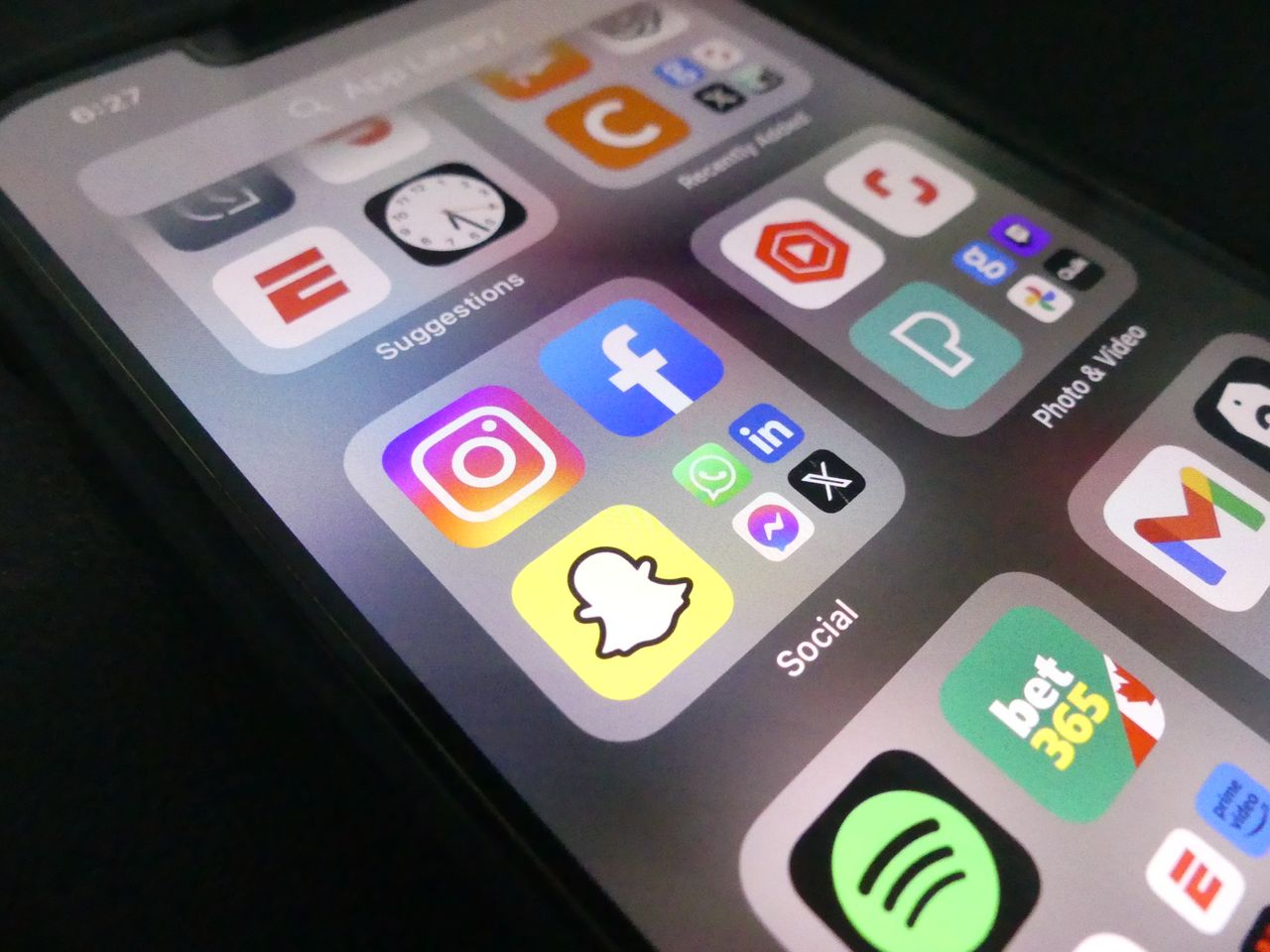
Your creative has to suit the network, too. Give production quality strong attention on YouTube, but TikTok audiences may favor content with a more casual feel.
Match the network with the business objective and audience before spending money. A large user base alone doesn’t make a channel useful. Audience receptiveness does.
Create Compelling Content and Ad Creatives
Good ads pair attention-grabbing copy with visuals that back up the message. Keep the words brief and persuasive, and use images or videos that are relevant and high quality.
Keep creative tied to the campaign objective and familiar to the intended audience. These practical approaches can help:
- Short-form videos should open with a hook in the first 3 seconds.
- User-Generated Content (UGC) can add trust and reliability.
- Clear wording should be paired with a strong CTA.
- Consistent typefaces, colors, and messaging can reinforce brand awareness.
- A specific CTA, such as Shop now or get a quote, tells the viewer what to do next.
A polished-looking ad still needs to do its job. Its message, visual style, and requested action should all lead people toward the same next step.
Set a Budget and Schedule
A set social advertising budget keeps spending in check and links it to the business objective. It should fit inside the broader localized marketing budget and social media calendar.
Set a daily budget or lifetime budget based on the goal. Then schedule ads in the social media calendar to cut down on manual management.
Test budgets need careful thought at the start. A very small daily amount may feel safer, but the platform algorithm may not get enough information to learn and improve delivery. Businesses then decide ads “don’t work” when the test simply failed to create enough data.
Monitor, Measure, and Optimize Performance
Compare each social ad campaign with earlier campaigns. You want to see which content and platform deliver the strongest results against the stated business objective.
Look at whether LinkedIn delivers a lower cost-per-click, then see which channel produces the highest number of conversions. Those comparisons show where results are strong and where changes belong.
Test localized content with target audiences in every market. Put campaigns with similar audiences side by side, then change creative material according to the results.
Regularly review Click-Through-Rates (CTR) alongside Conversion Rates and Return On Ad Spend (ROAS). Run A/B testing throughout the ad, from headlines and images through call to action buttons. Small tweaks can move the results.
The issue can sometimes show up after someone clicks. One campaign earned a high click-through rate but zero conversions. Its ad creative offered a discount, yet the landing page didn’t make that offer clear.
Put a banner at the top of the landing page that mirrors the promotion. Conversion rates rose after the page matched the ad’s promise.
Your First Social Ad Campaign Checklist
Use this seven-item checklist to guide your first campaign decisions.
- Define One Goal: Name the single result you want, whether that is Get 10 new leads or Drive 100 people to my blog post. Keep the objective specific.
- Describe Your Audience: Decide who the campaign should reach, then write down their age, location, and 3-5 key interests.
- Choose One Platform: Pick the place where this audience spends time, such as Facebook for broad demographics or LinkedIn for professionals.
- Create Your Ad: Make one simple image or short video, then add a clear headline and one sentence of supporting text.
- Write Your Call-to-Action (CTA): State the next action users should take, such as Learn More, Shop Now, or Sign Up.
- Set a Small Budget: Start with a small, fixed amount you are comfortable spending, such as $5-$10 per day for a week, to test the campaign.
- Review After 3-5 Days: Check whether you got clicks and achieved the goal. If the ad is not working, stop it and test a different image or audience.
Common Mistakes in Social Advertising
Even experienced marketers may encounter challenges when running social advertising campaigns. Understanding common mistakes helps businesses build stronger strategies.
Not Defining Clear Campaign Objectives
Clear campaign objectives guide targeting, creative development, and optimization. Marketing teams achieve stronger results when campaigns focus on specific goals.
Poor Audience Targeting
Audience targeting plays a central role in campaign success. Businesses benefit from conducting audience research and defining segments that align with their ideal customers.
Weak or Irrelevant Ad Creatives
Creative quality strongly influences engagement. Ads that use strong visuals and clear messaging capture attention more effectively within crowded social media feeds.
Improper Conversion Tracking and Analytics Setup
Accurate tracking systems allow marketers to measure campaign performance. Businesses that implement proper tracking gain valuable insights that support better optimization decisions.
Inefficient Budget Allocation Across Campaigns
Strategic budget allocation helps businesses focus resources on campaigns that generate strong results. Marketing teams review performance data and allocate budgets accordingly.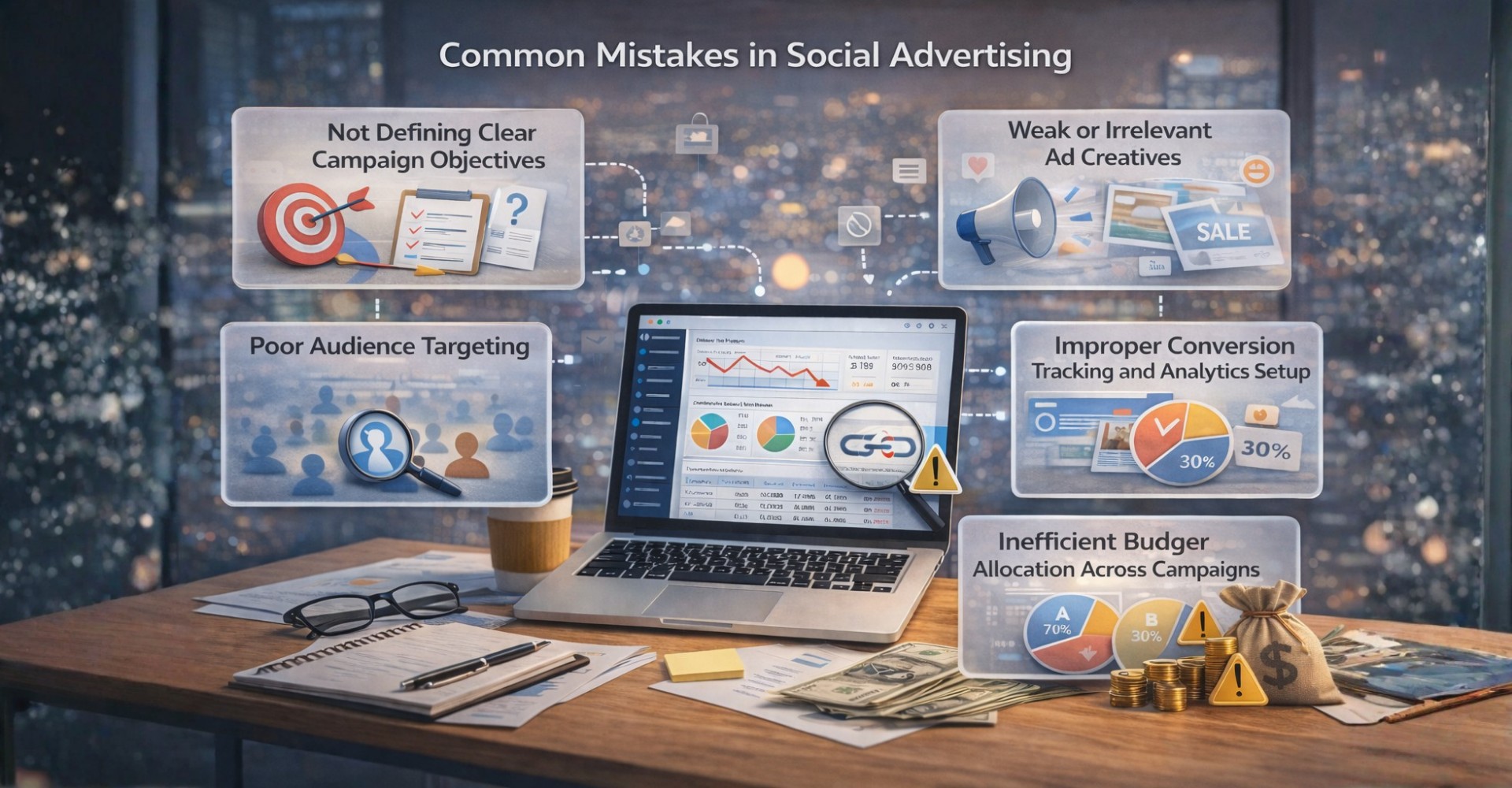
Frequently Asked Questions
What is the difference between social advertising and social media marketing?
Social advertising means buying sponsored placements to reach selected audiences with control over who sees your message, when it runs, and how often. Social media marketing is broader, covering both paid ads and unpaid work like regular posts, replies, and community building. A Facebook page on its own is social media marketing, not social advertising, because the line comes down to buying placement versus relying on organic activity.
Why aren’t my social ads performing well?
Weak results usually trace back to a handful of causes: unclear or thin creative, targeting aimed at the wrong audience, a budget too small for the platform to finish learning, generic messaging that never lands, a rough landing page experience, or ad fatigue from running one creative too long. Sometimes the real problem is simply tracking the wrong metric. Run A/B tests across creative, audience, and messaging, then let the results show you where the fix belongs.
What’s the minimum budget needed for social advertising?
Most platforms let you start with as little as $5-10 per day. For meaningful results, though, marketers often spend $500-$2,000 per month. A monthly budget of $500-$1,000 gives the platform enough data to test, optimize, and move past its learning phase, where delivery usually improves.
Why is my ad getting traffic but no conversions?
High traffic with no conversions tends to point at something deeper: the wrong audience arriving, a weak call to action, unclear messaging, a slow or awkward website, or missing trust signals such as reviews. Your advertising shouldn’t only drive visits; it should bring the right visitors and guide them toward an action.
Which is the most used social media platform?
Facebook remains the most used platform on a daily basis, with over 3 billion monthly active users. That scale makes it a common starting point for businesses reaching broad demographics.
Which social media platform is best to target Gen-Z?
Instagram tends to be the strongest choice for reaching a Gen-Z audience. Match the network to who you want in front of, and the same rule applies here as anywhere: go where those people already spend their time.
Conclusion
Social advertising plays a critical role in modern digital marketing. Businesses use social media platforms to reach targeted audiences, promote products, and generate measurable business results. With advanced targeting tools, flexible campaign budgets, and detailed performance analytics, companies can build advertising strategies that scale with their growth.
Successful campaigns often combine strong creative content, clear conversion goals, and consistent performance optimization. These elements allow brands to reach the right audience and turn engagement into meaningful business outcomes.
If your business is exploring how to improve campaign performance and achieve more predictable results from social media advertising, an experienced digital marketing partner such as Golden Owl Digital can provide valuable guidance.
We help businesses build effective social advertising campaigns through our digital ads service, which include data driven strategy, campaign optimization, and creative performance testing.