
If you’re a digital marketer, you’ve probably seen the buzz around Generative Engine Optimization (GEO) and are wondering if it’s time to retire your classic SEO playbook.
So the big question is: Can GEO replace traditional SEO? Let’s break it down in the simplest, most practical way.
Key takeaways:
|
What is Generative Engine Optimization (GEO)?
Generative engine optimization concept
Generative Engine Optimization (GEO) is the practice of optimizing your content so it appears in AI-generated search results, such as:
- Google AI Overviews
- ChatGPT Search
- Perplexity.ai
- Gemini-powered search engines
Instead of ranking your page on the first 10 blue links, GEO aims to make AI models cite, quote, or pull information from your content.
For example, imagine an online travel agency promoting eco-friendly tours. Traditional SEO would focus on ranking for keywords like “eco tours in Europe” or “sustainable travel packages.” GEO, however, could automatically generate multiple content variations:
- Blog articles about eco-tourism trends in different regions
- Interactive guides optimized for voice search queries
- AI-generated FAQs responding to live customer questions
Key features of GEO include:
- AI-assisted content creation: Generate optimized articles, product descriptions, and meta content automatically.
- Dynamic adaptation: Adjust content in real time based on user engagement and search trends.
- Intent-driven optimization: Focus on understanding and responding to the user’s search intent rather than exact keyword matching.
Think of it as SEO, but optimized for machines that summarize, not just index.
GEO vs. Traditional SEO: The Key Differences
Understanding how SEO differs from traditional SEO is crucial before considering a replacement.
| Feature | Traditional SEO | GEO |
| Primary Target | Google search results | AI engines & LLMs |
| Content Style | Long-form, keyword-rich | Clear, concise, structured |
| Ranking Signals | Links, E-E-A-T, UX metrics | Authority, clarity, factual depth |
| Output | SERP pages with links | Direct AI-generated answers |
| Optimization Focus | Keywords, on-page, links | Data patterns, answer quality, context |
| User Journey | Click to website | Zero-click answers |
While traditional SEO has proven results, GEO offers speed, adaptability, and content diversification, making it an attractive addition for 2026 strategies.
Can GEO Replace Traditional SEO? Pros and Cons
Generative Engine Optimization (GEO) is gaining traction, but many marketers wonder whether it can truly take the place of traditional SEO.
Let’s explore both the benefits and potential drawbacks to see where GEO fits into modern digital strategies.
Will GEO Replace Traditional SEO?
GEO will Not entirely replace traditional SEO. At least not in the next few years. While GEO introduces automation and intelligence into content creation, traditional SEO foundations like technical optimization, site architecture, and backlinks remain critical.
A hybrid approach is more realistic: integrating GEO into existing SEO strategies can enhance content relevance, improve user experience, and accelerate ranking improvements without abandoning established SEO practices.
Benefits of adding GEO to existing SEO strategy
Advantages of Integrating GEO
GEO offers several practical benefits that help marketers work faster and smarter. Here are some of the most valuable advantages businesses are seeing today.
- Faster Content Production – AI can create multiple blog posts or product descriptions in minutes, cutting down publishing time by up to 70%.
- Improved Search Intent Targeting – GEO predicts trending queries and generates content tailored for multiple intents.
- Scalable Personalization – GEO can create different versions of content for varied audiences or geographic regions.
- Data-Driven Strategy – AI analyzes trends and predicts which content will drive traffic and engagement
For Example: A marketing agency used GEO to generate 50 blog posts across 10 different niches. In 3 months, the average engagement rate rose from 3.8% to 7.1%, outperforming manually produced content.
Limitations and Risks
Even with its strengths, GEO also comes with challenges that marketers need to consider before relying on it heavily.
- Dependence on AI Accuracy: If the AI model is trained on poor or outdated data, it may generate irrelevant, repetitive, or factually incorrect content. This can harm brand credibility and negatively impact rankings.
- Search Engine Updates: Google continues to tighten guidelines around AI-generated content. If your GEO output doesn’t meet E-E-A-T standards, you risk losing visibility. Human editors still play a crucial role in ensuring content meets quality, expertise, and originality requirements.
- Potential Loss of Human Touch: AI-generated content may lack personality, creativity, and emotional nuance. Overusing automation can make your brand sound generic and impersonal, weakening user trust and loyalty.
- Technical Implementation: Integrating GEO with existing CMS platforms, optimization tools, and analytics systems requires technical skills. Without proper setup, your team may face issues like inconsistent formatting, tagging errors, or inaccurate data tracking.
A balanced approach works best.
Step-by-Step: How to Build a Strategy that Combines GEO + SEO
Blending GEO with traditional SEO works best when you follow a clear and structured workflow. Below is a detailed, practical step-by-step framework you can apply to any website, from blogs to SaaS platforms to eCommerce stores.
1. Audit your existing SEO foundation
Before adding GEO tactics, your SEO fundamentals must be strong. GEO can amplify performance—but it cannot fix weak foundations like broken technical setups or thin content.

Checklist for reviewing core SEO foundations
Here’s what to check:
- Keyword research – review top-performing keywords, new opportunities, and emerging search patterns.
- On-page optimization – meta titles, descriptions, headings, internal links, and content hierarchy.
- Technical health – indexing, crawlability, redirect chains, XML sitemaps, and canonical tags.
- Mobile and Core Web Vitals – aim for 80–90% “Good” scores across all pages.
- Backlink profile – assess link quality, link velocity, anchor text variety.
- Content depth and structure – ensure your pages offer real insights, not surface-level info.
For example: A niche B2B website tried implementing GEO-driven content but saw no improvements for months. After a technical audit, they discovered:
- 28% of their blog pages were not indexed
- Average mobile load time exceeded 4.8 seconds
- Internal links were minimal, causing content isolation
Once these issues were fixed, their GEO-optimized content started ranking and drove a 38% uplift in organic traffic within 45 days.
→ SEO is the foundation. GEO multiplies results, not replaces them.
2. Add GEO-oriented tactics
Once your SEO base is solid, you can begin adding GEO-friendly content patterns—designed to make your articles easily readable and extractable by AI models.
Here’s what matters most:
- Use short summaries at the top
- Answer questions directly and clearly
- Provide context-rich explanations
- Use factual and structured writing
- Break down text into bullets, tables, and short sections
These formats help LLMs understand your content and cite it more often.
For example: If your article is titled “Best CRM Tools for Small Businesses in 2026”, a strong GEO-friendly intro might be: “The best CRM tools for small businesses in 2026 are HubSpot, Zoho, and Salesforce, depending on your automation needs, team size, and integration requirements.”
This type of intro frequently gets featured in AI responses because:
- It’s concise
- It includes clear answers
- It’s easy for LLMs to quote
→ LLMs love clean, structured, and fact-based content.
3. Monitor both SEO and GEO KPIs
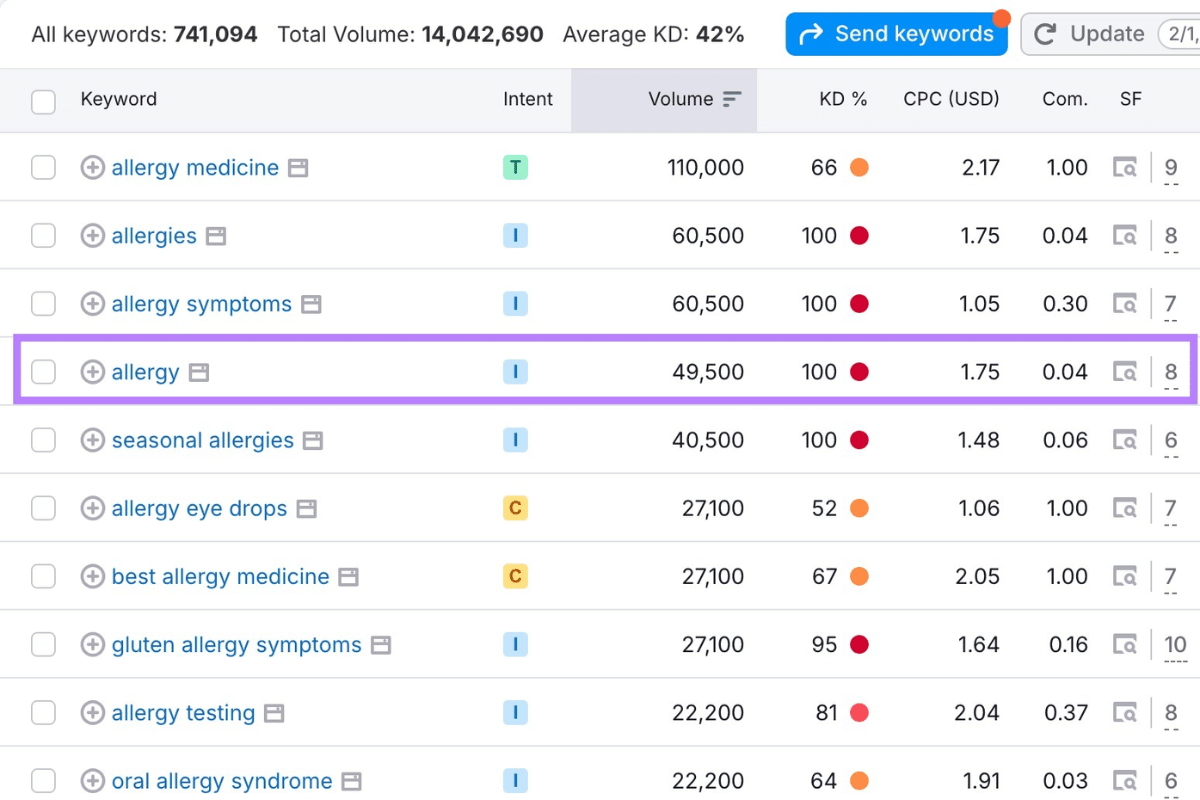
Tracking performance metrics for both SEO and GEO
Monitoring performance requires tracking metrics from both traditional search engines and AI-driven search experiences. The table below helps you compare them side-by-side.
| KPI Category | Key Metrics to Track | What It Shows |
| SEO KPIs | Organic traffic | Measures search visibility and content performance. |
| Keyword rankings | Shows how well target keywords and LSI keywords perform. | |
| Click-through rate (CTR) | Indicates relevance of titles and meta descriptions. | |
| Bounce rate | Helps evaluate user engagement and page quality. | |
| Average session duration | Shows how long users stay and consume content. | |
| Backlinks & referring domains | Measures website authority and trust signals. | |
| GEO KPIs | AI Answer Mentions | How often your brand/content appears in AI-generated responses |
| Zero-Click Queries | Instances where users see your info without clicking | |
| Brand Citations in AI Outputs | Mentions across ChatGPT, Perplexity, Gemini, etc. | |
| AI Referral Traffic | Traffic coming from AI platforms or AI-assisted discovery | |
| Content Inclusion in AI Snapshots | Your content used in “instant answers |
4. Adjust your content creation and optimization workflow
GEO isn’t just a set of tactics—it requires shifts in how your content team writes and updates articles.

Improving workflow for GEO and SEO content production
Focus on these adjustments:
- Build content clusters to strengthen topical authority
- Include expert quotes or commentary to boost E-E-A-T
- Update older articles with better structure
- Add short “AI-ready” summary blocks at the top of each page
- Write fast intent answers for users and AI tools
This helps both search engines and AI engines.
Tools and Metrics for Success: Classic SEO vs GEO-specific
To build a strong search strategy in the AI era, you need both traditional SEO tools and newly emerging GEO-focused systems.
Classic SEO helps you understand rankings, crawling, and user behavior, while GEO (Generative Engine Optimization) focuses on how AI systems use, summarize, cite, and recommend your content inside AI-generated answers.
Tools comparison for traditional SEO and GEO analysis
Using both ensures you’re not just visible on SERPs, but also discoverable inside AI-generated responses, where search behavior is rapidly shifting.
1. Classic SEO Tools (Broad Performance Monitoring)
These platforms help you track keyword movement, technical health, user behavior, and domain authority.
- Google Search Console: Ideal for monitoring index coverage, CTR, impressions, keyword queries, and page performance.
- Google Analytics 4: Reveals engagement, traffic sources, user flow, conversions, and device behavior.
- Ahrefs / SEMrush / Moz: Great for competitive analysis, backlink audits, content gap discovery, and ranking reports.
- Screaming Frog: Critical for technical SEO—crawling issues, redirects, duplicate content, or missing metadata.
2. GEO-Specific Tools (Localized Performance Monitoring)
These tools highlight how your content appears, is interpreted, and is reused by LLMs and AI assistants.
- AI Answer Trackers (SGE, ChatGPT, Perplexity, Gemini, Claude): Measure your appearance inside AI-generated answers, your visibility in conversational responses,…
- Citation & Source Monitoring Tools: Analyze how frequently AI systems cite your content, which URLs are most used as sources,..
- Content Embedding & Semantic Match Tools: Show real-world visibility at different radiuses, often revealing hidden blind spots.
- Entity & Knowledge Graph Optimization Tools: Tools such as Kalicube Pro or structured data validators help ensure: Your brand/entity, understand relationships between people, products, and topic,…
- LLM Retrieval Testing Tools: Used to test how AI systems respond to your target queries.
As the industry grows, more GEO-first tools will appear.
Common Pitfalls When Transitioning to GEO and How to Avoid Them
Moving from traditional SEO to GEO is not straightforward. Many teams misunderstand how AI systems retrieve, rank, summarize, or hallucinate content.
Typical mistakes during GEO transition and how to avoid them
Below are the most frequent mistakes and how to avoid them.
- Treating GEO Like Traditional SEO
Teams try to optimize only for keywords and on-page ranking signals instead of AI retrieval signals.
How to avoid:
- Prioritize entities and facts, not just keywords
- Provide clear definitions, structured information, and authoritative statements
- Create content designed for summarization and direct answers
- Ignoring AI “Source Credibility Signals”
AI models prefer content that is:
- Clear
- Structured
- Trustworthy
- Consistent across the web
How to avoid:
- Use rich schema (FAQ, HowTo, Organization, Product, Article)
- Improve author E-E-A-T and brand transparency
- Maintain strict consistency across all brand profiles and listings
- Overlooking Entity Optimization
AI relies heavily on entity linking to understand context. If your brand/entity is unclear or fragmented – AI will choose other sources.
How to avoid:
- Strengthen entity markup
- Ensure naming consistency across all platforms
- Build internal linking that reinforces topic clusters and entity relationships
- Creating Content That AI Cannot Easily Summarize
Long, unstructured, fluffy content confuses LLMs.
How to avoid:
- Use AI-friendly structure: Definition → Key Facts → Steps → Examples → Summary
- Add data tables, bullet points, and explicit statements
- Include FAQs aligned to user intent and zero-click answers
- Not Measuring GEO Metrics
Many teams still only measure traditional SEO traffic, ignoring AI visibility.
What you must track now:
- AI Answer Inclusion Rate (appearance inside AI results)
- AI Citation Share
- LLM Retrieval Accuracy (how correct the answers are)
- AI Visibility Score
- Cross-model consistency (ChatGPT vs SGE vs Perplexity, etc.)
- Underestimating AI Hallucination Risks
If AI gets your facts wrong, your brand reputation suffers.
How to avoid:
- Publish clear “canonical” information pages
- Correct misinformation online as soon as possible
- Reinforce facts across multiple authoritative sources
- Use schema to explicitly define key details
Future of SEO and GEO: What to Expect in the Next 5 Years
The next five years will bring major changes as search engines evolve, user behavior shifts, and AI-powered search becomes more prominent. Generative search will reshape how people discover information.
- Zero-click AI responses will dominate search behavior
- GEO becomes a core part of every content strategy
- AI assistants will replace many traditional search journeys
- Entity-first optimization becomes the new standard
- Websites will need both long-form SEO content for SERPs and short, structured, AI-optimized content for LLMs
- Tools for tracking AI answer visibility become mainstream
- “Answer-first optimization” will matter more than “ranking-first”
The future of SEO and GEO is a fusion of AI, entity clarity, factual accuracy, and real-time personalization. Brands that embrace GEO early will dominate AI-driven search ecosystems.
Conclusions
GEO will not fully replace traditional SEO, but it will shape how content is discovered and consumed. The best strategy is a hybrid one—build strong SEO foundations while adapting content for generative engines. Brands that learn both will win the future of search.
If you want a team that understands both traditional SEO and next-generation GEO strategies, Golden Owl Digital is here to help. We build tailored search frameworks, optimize your content for both AI-driven and location-based discovery, and track the KPIs that truly impact growth.
FAQ
Q1: Can ChatGPT replace SEO?
No. ChatGPT changes the search journey, but SEO remains essential for visibility, authority, and website performance. SEO is a constantly changing discipline that still requires human decision-making.
Q2: Will traditional backlinks still matter in a GEO-dominated world?
Yes, absolutely. Backlinks remain a critical signal of trust and authority. An AI is less likely to cite a source that has a weak or non-existent link profile. While the weight of a single link might evolve, the overall authority built through a quality backlink strategy is foundational to both classic SEO and GEO success.
Q3: Is GEO expensive or hard compared to SEO?
GEO is an advanced skill set built on top of SEO. It may not require new expensive tools, but it demands more time, precision, and expertise in areas like advanced Schema markup, content auditing for factuality, and A/B testing short, definitive answer formats.
Q4: What Role Does Structured Data Play in SEO?
Structured data helps search engines and AI models understand your content. It improves SERP visibility and also supports GEO performance.
Q5: How Does AI Impact SEO Strategies?
AI changes how users search, how content gets surfaced, and how engines interpret information:
- Competition: AI Overviews compete directly for clicks
- Tooling: AI-powered tools enhance research, analysis, and content generation
Optimization Focus: It shifts the optimization focus from just keywords to entities, factuality, and E-E-A-T.